"ZODL is to Zcash What Coinbase Was to Bitcoin" | Josh Swihart on ZEC’s Awakening
TRANSCRIPT
Josh:
[0:00] As a society, if we don't have privacy or private money on the web, we'll enter dystopia. I think Balaji said it very succinctly somewhere else. It's Zcash or it's communism. I believe that same thing. And so if crypto is really going to be used as money on the internet, as internet money, we have to have privacy for agency to be who we truly are, for security. And even for censorship resistance, you can't have censorship resistance without privacy.
David:
[0:34] Bankless Nation, I'm joined by Josh Swihart. He is the founder and CEO of the Zcash Open Development Lab, otherwise called Zodl, which is the new home for what used to be the core engineering product team at the Electric Coin Company, which is kind of like the Ethereum Foundation for Zcash, where he was previously CEO. Josh, welcome to Bankless.
Josh:
[0:54] Thank you for having me on.
David:
[0:55] Josh, why work on Zcash? What motivates you?
Josh:
[0:59] I found Zcash in 2016. I was looking for privacy solutions. Zcash hadn't launched yet. And so somebody else in the crypto ecosystem had said, I need to check out this project that was launching later that year. I had years before I'd actually built systems that did data tracking, situational awareness in the ad tech, and had a pretty deep understanding of what it meant to have public data exposed. So I built an intelligence system a long time ago using satellite imagery, aerial imagery, UAB imagery, extracting data, metadata from that, being able to kind of get a good understanding of what might be happening on the ground.
Josh:
[1:43] And the architect of that and I started working on another project. And this was all kind of pre-Cambridge Analytica aggregating data, being able to do get a deep understanding of people, who they were, who their kids were, where they lived, how much disposable income did they have? Were they good at their job? And we could get a high degree of probability about people based upon what they were willingly posting online. So when I found crypto, I actually went down the rabbit hole, actually with Ethereum, not Bitcoin initially. I'm in the Ethereum DAO, but I had a need, a friend had a need overseas and I need to be able to send money to them. And I had been shut down by Western Union. They were unbanked and based in India. And I knew I couldn't use, or I felt like I couldn't use Bitcoin because it wasn't private. And I was concerned about somewhat being able to use that information to be able to dox the person or dox me. And so I went looking, I was like, well, crypto should solve this. I went looking for a privacy solution, kind of got involved with the Zcash community in 16, formally joined full-time in the community in 18.
David:
[2:46] And what about just the current moment, 2026, we have AI, we have people chronically online. Why does Zcash
Josh:
[2:56] Stand out in.
David:
[2:57] That environment? What does Zcash mean for you in the modern times,
David:
[3:00] since you've been with Zcash for almost a decade now?
Josh:
[3:02] Yeah, I've been with Zcash around the ecosystem at least for a decade, full-time for more than eight years. So this, you know, this for me became my life's work. So I was the CEO of another company, an owner in the company, since sold it and decided this is what I need to work on full time. Because as a society, if we don't have privacy or private money on the web, we'll enter dystopia.
Josh:
[3:31] I think Balaji said it very succinctly somewhere else. It's Zcash or it's communism. I believe that same thing where like we have an expectation of privacy or some level of privacy on the internet today. So I can choose to disclose information and it's my choice as to what I disclose. But if I want to make a purchase, I have an expectation that that interaction between that vendor is encrypted. So I'm choosing to disclose some information with that vendor, but I'm not choosing to disclose my credit card information or that purchase with my neighbor or anybody else that may be snooping on the internet. And so if crypto is really going to be used as money on the internet, as internet money, we have to have privacy for agency to be who we truly are, for security, and even for censorship resistance, you can't have censorship resistance without privacy. So I think this is existential. I think this is not a crypto thing. I think this is a worlds. I think it's important for the world and I think Zcash is world changing and I think it's best in class and it's the best chance that we have for humanity to kind of realize that kind of freedom online.
David:
[4:38] If you just go back to 2016 when you started with Zcash or just went down the crypto rabbit hole originally, privacy was said a lot more back then than it was in maybe the 2020 through 2025 era. You know, privacy is making a comeback, especially with the context of AI. But I think if you asked me, when I first got into crypto in 2017, not terribly long after you, and you asked me what crypto would be like in 2025 and beyond, I would have said, oh, there'd be a ton of privacy. And I look at crypto now and it's kind of the opposite. We just did an episode with Ari Redboard from TRM Labs. It's kind of like a chain analysis. and he talked about how the FBI, CIA, OFAC, these intelligence agencies are actually kind of into the idea of society moving on chain because it makes their job easier. And, you know, one half of me is like, oh, great, like another force to push everyone on crypto. That's great. The other half of me is very scared that if these controlling agencies are happy for finance to move on chain because they get to trace it more, that makes me just wonder, it's like, wow, what as an industry, what have we been doing? What have we been doing? And so that's kind of my like speed run from 2017 to now. It's like, did you, did you going into crypto way back when it kind of have similar expectations?
Josh:
[6:02] I just fundamentally knew it wasn't private. I think people talked about privacy. I think there was a lot of LARPing. There probably still is a lot of LARPing, but you know, the intention with Bitcoin is private. It all came out of, you know, it came out of the initial crypto wars where we were fighting for online privacy well ahead of cryptocurrency.
Josh:
[6:19] We grew up in this, like I grew up in a world that did not have the internet. I mean, we had chat boards, BBS, ran a bulletin board system. We could be anonymous or pseudo anonymous in those places. You know, but all of our kind of interactions happened in real space, human to human. If I wanted to get a new album, I could go to the CD store, you know, and buy a new album. So when we put everything online, we digitized everything, then all of a sudden that information is like long tail set of information is available. The permanency of it, like it never goes away. It gets captured on the internet, gets captured on the web. And like we hadn't adjusted our, completely adjusted our thinking that we are now like permanently exposing a whole set of activities and who we are to a world where we don't know who's watching. Now there was this fight for privacy from the cypherpunks and famously we won that war.
Josh:
[7:18] But we won that war on kind of communication transactions between with intermediaries. And I think we're back to the same thing. This is just part two of something that's been going on for decades. And so it's a vision that's not realized and for the internet to really work. We're going to have to have this, yeah, we're going to have to have this capability. And I knew it, like I knew it in 2016. I knew it before I saw cryptocurrency or got engaged with cryptocurrency. But with crypto, it became clear, like, we're going to have to have privacy for this to work at all. If it's not just going to be a financial asset that sits on.
David:
[7:53] Somebody's balance sheet. Crypto has been fighting a bunch of wars. We're, especially with a vote, the Senate Banking Vote of Clarity Act, it's like bundled up a bunch of fights that we've been trying to fight. There's the stable coin yield fight. There's the fight for developer protections. There's securities versus commodities. The crypto fighting, the political fight is like well underway. Privacy is just not included in these modern conversations when it comes to crypto and politics in Capitol Hill. Really, the only fight for privacy that I see is Roman Storm and the Samurai Wallet guys and far more mixed results versus anything else versus like stablecoin yield or developer protections. Do you think the fight for privacy for crypto is ahead of us or are we in the middle of it or what do you think happens in the short or medium term future
David:
[8:43] when it comes to crypto, the industry fighting for privacy in Washington?
Josh:
[8:47] I do think we're in the middle of it. Like I've been engaging with policy makers and regulators and law enforcement in Washington, D.C. For as long as I've been working on this project. So while not everybody recognized it, like famously, I won't tell you which agency they were with, but somebody from one of the agencies told me, like, look, we recognize this is a massive national security problem. If all of our citizens' data is exposed to foreign adversaries for everybody, for them to see for all time. We just don't intend for crypto to go mainstream. Prior administration, prior years, recognition that the problem was there.
Josh:
[9:24] But they intended to kill crypto, full stop. And we saw it, we saw it. I've had conversations with DOJ and DOJ years back had said, like they had used kind of the same talking points. Like, aren't you concerned that it will be used for terrorist financing, money laundering and child porn, right? And they said, wouldn't it be better if we had keys and we had access to all the transactions and we could keep everybody safe? What happens when you have an expectation of safety, but somebody has these keys and those keys get hacked, right? It completely breaks down. All that information gets exposed. There's not a government system that has ever been invented that has not been hacked. It's super dangerous. My question back to the DOJ is, don't you have other tools for catching bad guys or do you need just this one? Do you need to run over the top of somebody's Fourth Amendment right to be able to transact freely without unlawful search and seizure? They said, of course we do. Like, we're super smart. We know how to catch bad guys without having to trace all the transactions. So they knew that back then. They still knew it now. And again, that was like close to a decade ago. I had the conversation with the prior administration's White House. That was another one. They knew very clearly that this was a security problem, but they wanted a solution where they had visibility because they were the good guys and they would never do anything evil with any of the information that they would see.
Josh:
[10:44] So I think within the inside of Washington, D.C., it's been known to be a problem. There's been kind of conflicting views. Very, like FinCEN for the longest time was actually like pretty positive. It where, when Mike Moser, who's the former acting director of FinCEN, was like pulling in projects to get briefings to FinCEN on how like zero knowledge cryptography works. Recognizing that there's a problem with how they handle SARS, that they can't even manage that data effectively, and looking for novel kinds of solutions and promoting privacy. So now we have Michael, who's very outside of FinCEN, very active and an advocate for privacy, folks like Michelle Korver, who's a former DOJ prosecutor, prosecuting financial crimes, now working with 16Z, very, very supportive and very pro-privacy.
Josh:
[11:39] So yeah, there have been some of these things going on for a long time. And yeah, for a long time, under the prior administration, it was actually pretty terrifying, right? You don't know as a developer when the same people that came after Roman are going to come after you, the tornado cache or samurai, because they're using these arbitrary rules to make these arrests and make these charges in order to try to shut something down and and make an example of people. So I don't know. I think it's been ongoing for many years. I don't think it's been visible to much of the crypto ecosystem for many years. I know it will still be ongoing. But there are friends that we have that are on the Hill as well as in regulatory agencies that are in support of human liberties and privacy.
David:
[12:25] Are you optimistic that crypto will be able to retain privacy?
Josh:
[12:30] Yeah, I wouldn't be working on it if I thought it was going to fail. so fully intent to win.
David:
[12:36] Do you think that that will come smoothly or easily, or will there be much gnashing of teeth, blood, sweat, and tears along the way?
Josh:
[12:44] Nothing important comes easily. There's always somebody that is wanting to take you down that have other interests in mind, whether their interest is surveillance, whether their interest is in control, whether their interest is purely money. And we saw that with the Current Clarity Act. The banking industry has different incentives than the crypto industry as it relates to stablecoins, stablecoin yields, different issue. Kind of say, you know, everybody's got different incentives, but we are fighting on behalf of humankind. We will win.
David:
[13:18] When I had Mert on the podcast to talk about Zcash, he framed it as we have about a thousand days left before this administration departs and we don't know what administration comes after that. And so we have a thousand days to lock in privacy, legalize privacy, make sure privacy and crypto can stay retained. What do you think about that framing? Is that too black and white? Is there some urgency to get some political process done while the Trump administration
David:
[13:43] is in office? What do you think about this?
Josh:
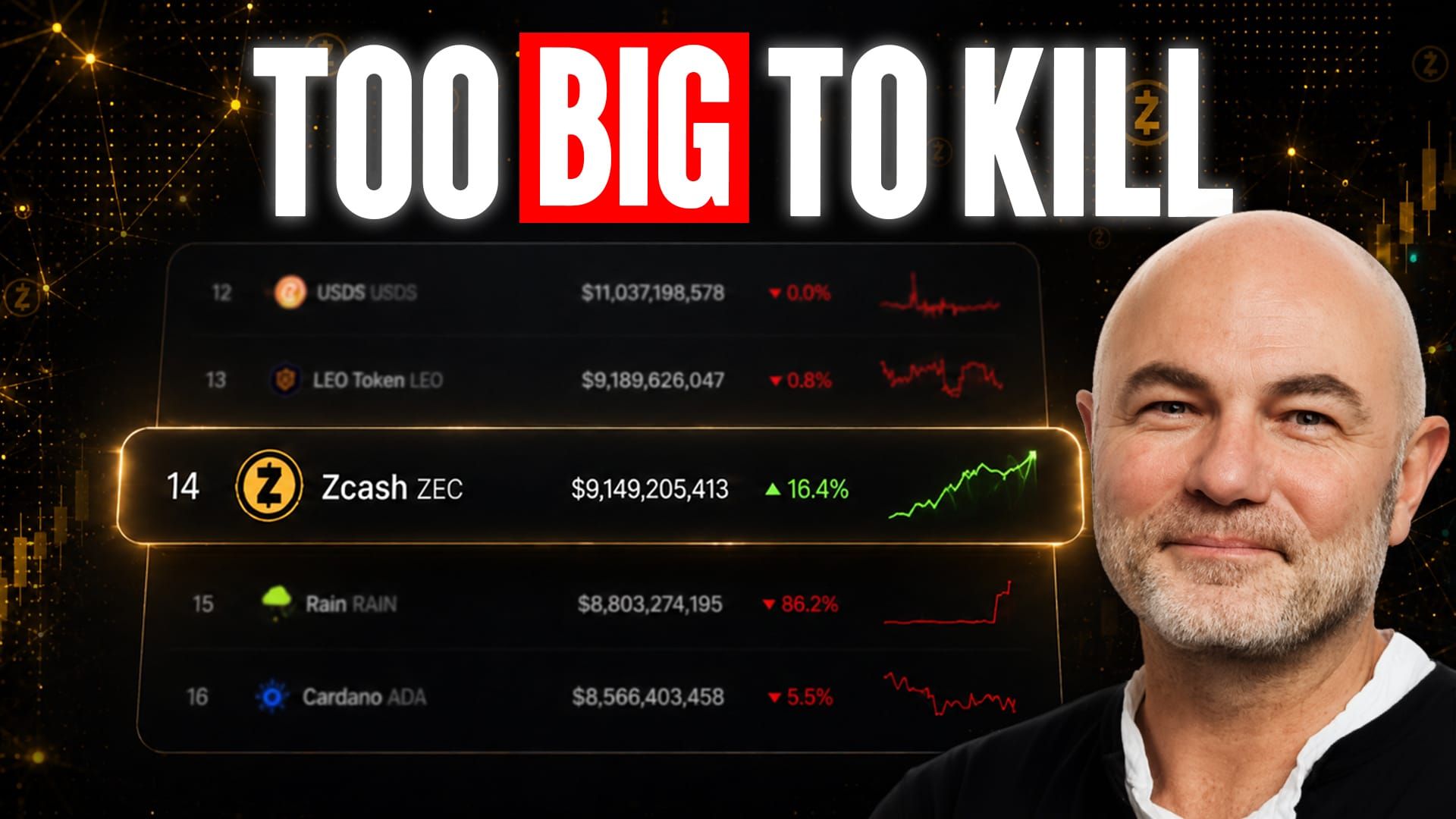
[13:45] You only have so many windows of opportunity in order to make major shifts. And to the extent that we have a window right now, whether that's 900 days or a thousand days or whether it's longer, like I can't tell the future. I just know that we have to get this out into the world and people using it as quickly as possible. It's got to be so big that it is impossible to kill. That's one of the awesome things that's happening within Zcash right now is there's more and more developers coming in. There's more and more organizations that are supporting it that are adding the capability. There's more source code being written. And so we definitely need to be too big to kill and we need to get Zuck in the hands of billions of people.
David:
[14:21] Let's talk about Zashi now, Zadl. I want to learn a little bit about the history of Zcash. Zashi was previously owned by the ECC, the electric coin company. As I said, that was like the Ethereum foundation, but for Zcash. Today, Zashi, which has been rebranded to Zadl, is a privately owned company. You guys recently did a $25 million funding round. You guys raised from Paradigm, A16Z, Winklevoss, We could lost a Twins Coinbase. Some pretty heavy hitters. Can we talk about that story? Just the transition, the history of Azashi to Zottle from being part of the ECC to now being a private startup. What do listeners, including myself, need to know just about the history of
David:
[15:02] all of that so we can kind of just be up to speed with Zcash?
Josh:
[15:05] Yeah, so the Electric Coin Company, which was always the ZeroCoin Electric Coin Company formally, but originally known as the Zcash Company, is the company that brought Zcash to life. Activated in October of 2016. So again, I joined that team in 2018. And, you know, it was when it launched, it's like a, you know, it's like any kind of technology, the things were fairly nascent, it was very difficult to create a shielded transaction, you needed heavy duty laptop and minutes of time to be able to send a single transaction. So there had to be a number of cryptographic breakthroughs in order to make it performant, to get rid of something called trusted setup. And then to just, you know, kind of distribute, you know, governance and cross ecosystem. So, you know, like raise a baby and like Ethereum has gone through like different, projects have gone through kind of those teething pains all the way to maturity. So things had kind of flattened out around 2023 and there wasn't a lot of activity. I think people were interested in other things. They weren't really talking about privacy so much. And the adoption of Zcash was.
Josh:
[16:15] Was slow to flat. And so at that time, I left ECC. So I left ECC so I could speak vocally in the community about what I saw the problems being with the governance structure, the things that were holding at Bath for massive growth. And so I did that. And a few months later, then ECC brought me in as a CEO. And Zuko was out at that point and onto other things. And so since that time, we've done a number of things within the ecosystem to kind of address those issues. We got rid of direct dev funding model. So that doesn't exist anymore. We got rid of the governance structure, which was effectively a two of two multi-sig between the Zcash Foundation and ECC. We open sourced some additional code. And I think most importantly, as it relates to adoption, launched an opinionated wallet. It's become the flagship wallet for Zcash. And so that was originally Zashi. It's now been rebranded to Zadl. And what we've seen with that is a massive increase in adoption where the shielded pool growth and the amount of ZEC that's shielded, which had been flat to declining, was suddenly increasing and on the move. We added hardware support later that year. It went exponential. We added swap support in partnership with Near Intense. And it went vertical in terms of adoption. And we saw during those same milestones, the chatter increase. People start to get more excited.
Josh:
[17:38] Quite frankly, it brought a lot of people back into the Zcash ecosystem that had kind of been dormant, maybe quiet for a while. And then at the same time, things were happening with Bitcoin, right? So people were starting to question the financialization of Bitcoin.
Josh:
[17:53] Whether Bitcoin had really been captured by TradFi and whether it was staying true to its cypherpunk ethos and looking for kind of a hedge. I think Naval put out a tweet in October of 25 and it said something like Bitcoin is a hedge against the US dollar and Zcash is a hedge against Bitcoin. And we've seen an inflow and a migration of Bitcoiners who are either hedged in or who have kind of fully made a transition. Today, there's some people that are more concerned about whether or not Bitcoin can do it to post-quantum in time for Q-Day. I think that's a valid concern. And again, Zcash was born out of Bitcoin. So Zcash was a code fork of Bitcoin plus zero-knowledge cryptography that these scientists had figured out how to make it work on top of Bitcoin. So it's very much a close relative of Bitcoin to begin with. There's definitely just an aligning of the stars as when Zashi really.
David:
[18:51] When private got out of the ECC, started thinking like a for-profit company, and then also the timing of Zcash kind of being branded as a hedge of Bitcoin. Those happened in pretty close timing to each other. Is that correct?
Josh:
[19:03] You know, my team, ECC, historically pretty underfunded, so didn't have a lot of resources. Like there's no big ICO or any big event like that. There were no big VCs involved.
Josh:
[19:13] That we're able to kind of keep it supported. So we've just been freaking grinding for years and years and years and doing it because this is a belief. The mission is a belief. It's not about cryptocurrency, like the broader industry. It's not like maxi, like there's Bitcoin and that's it. It's not like that at all. Very much believe in a multi-chain world. But this problem, there's like nobody else is going to solve it. Like if we're not going to solve it, who else is going to solve it? Because there's nobody else. And so we've been kind of grinding through that thing. I got to token last year and network state and Balaji had me speak and I was talking to Balaji afterwards and he's like, you know, Zcash is one of the most important projects in the world. Not one of the most important crypto projects of the world, one of the most important projects in the world. Like, are you well-funded enough to get to the level of growth that we need to get to in order to make this dent in the universe? They said, no, we're not. He said, all right, let's fix it. So that's when we started working on fixing it and started this kind of process of talking to third-party investors. And I was quite frankly surprised.
Josh:
[20:21] I think many have been kind of realizing with AI, with the things that are going on with Bitcoin, we have this kind of existential threat as it relates to cryptocurrency, how important privacy was as a thesis to these major investors. Now we had to make a change in the middle. There was a little bit of drama. In order to kind of reestablish Zadl, like get Zashi effectively out of ECC.
Josh:
[20:49] But 100% of the former ECC team is now at Zadl and we're continuing to do what we were. We just now have the backing of Zadl, these kinds of players. And what, what, what's really important is when we started, when I was talking to Paul, as you know, about the cap table, I was like, you know what, it's like really important that we get the right people. It's not about the check. Yeah, the check is important, but we need to build a coalition of people that believe in what we are trying to accomplish, that want to be a part of what we're trying to accomplish and that are in positions of power to, to help us do that, to help us push boulders that we just can't do alone. So yeah, it was heavy hitters. And it was people that normally don't necessarily even invest with one another that had been part of that round.
Josh:
[21:34] So it's been really encouraging to see the entirety of crypto kind of come behind this mission.
David:
[21:40] I was curious to see if there was going to be some sort of cause and effect of Zashi turning into Zotel, going private, thinking like a startup, really becoming product-focused, and that leading to a Zcash awakening of the narrative of the price of the UX all because of the work that you were doing at Zotel. But hearing your answer now, it seems a little bit more that the universe just decided that it was time. It created the environment, the need for privacy. People like Naval, Abology, others all kind of identified the growing urgency of privacy at around the same time that you really wanted to spin out of ECC and take Zashi Wallet. Kind of felt like there wasn't any one particular trigger, but just a bunch of disparate factors all kind of came together. To just align stars behind a bunch of momentum and energy behind Ccash. Is that right? No, I don't think,
Josh:
[22:36] I don't believe in accidents. I just, I don't believe, I think there was momentum that was building and the momentum really kind of had started a couple of years before. Like we had to deal with the governance. We had to deal with some toxicity. Like every ecosystem goes through these kinds of governance and toxicity stuff. But we had to get that behind us.
Josh:
[22:53] We had to fix the user experience. The user experience just absolutely just sucked, right? So if you were going to use Zek, Like, fine, go on Coinbase and store it, but you're not actually using ZEC and you're not getting any privacy. And so to use it on a self-custody wallet, these are experiences where like something like a decade old, it wasn't, or very like crypto native. So we had to build a very simple, easy to use, like had a lot of complexity behind Zoddle in order to protect privacy and make it work well. Like I, oh, I can't tell you who it was.
Josh:
[23:24] There's another company that is well-known for privacy. And I was talking to the founder of that company and they said, you know what? I think people don't realize that it probably takes two to three X the engineering to build something that's not private than to build something that's private. So not only do we have to build something that's private, we have to make it super, super simple and easy to use and make it in such a way that people actually want to use it. And they're going to trust their money with it. And so the creation of Zashi and now Zadl and the usability and the capability, I think are really important. Because then what it did is what it demonstrated is there was actually product market fit. People wanted to move off of exchanges onto self-custody because you don't get shielded Zcash on an exchange. You don't get shielded Zcash with a synthetic. You don't get shielded Zcash with a custody provider. You have to self-custody in order to do it and to see the size of the shield pool triple, you know, to now billions of dollars of value being held on people's phones or hardware wallets with something like Keystone.
Josh:
[24:29] High conviction community that was there that was really unlocked as soon as we gave them the tools to unlock it.
David:
[24:35] Can you share what Zotel's role in Zcash is? You guys are something of a protocol steward. You weren't the only one, but a lot of the Zcash protocol is at least in some part in Zotel's hands. Can you just shine a light on what that dynamic is?
Josh:
[24:50] Yeah, still core protocol developers, very deep cryptographic and engineering chops. Built-in have managed the ZcashD, the consensus node that's used most pervasively. The Zcash Foundation has developed a new Rust-based one called ZebraD, which we all want to move to. So we're all going to move to that. Over the course of this next year, we're building the command line wallet that will accompany that called ZLA. So that is built, is being built and managed currently in alpha with Zodl. There's light client services that we built and support and then the wallet. So we are really full stack. One of the great things about it is it allows us not only to have, you know kind of deep understanding the cryptographic the cryptography and the protocol, but to like suggest or or kind of push for changes that allow for the user experience to improve since we're not like a degree or two of separation away from users anymore and just focused on the protocol so for example with a with a keystone wallet work it's an air-gapped hardware wallet it needed something called partially constructed zcash transactions that needed to be implemented in the protocol so we can do that on the wallet side yes but it allowed us to do that on the protocol side as well, which I think is pretty unique. So we've kind of shifted from, cryptography and engineering up in terms of what we build for Zcash to what user demand is and then bringing that back into the protocol.
David:
[26:09] How would you articulate what the actual roadmap is for Zcash? In Ethereum, for the Ethereum listeners, we kind of have this scale layer one, scale layer two, improve UX. Those are like the three swim lanes to meme the whole protocol development roadmap into just three lines. Is there something like that for Zcash?
Josh:
[26:29] I'll tell you what mine are, and there's some others that may have some differences of opinion.
Josh:
[26:33] But yeah, number one is to be able to scale to billions. So there's an effort that's going on with something called Project Tachyon that a guy by the name of Sean Bo is leading and that a number of us are involved with or collaborating on. That will introduce some new user experience elements that have to be kind of incorporated that may be kind of counterintuitive out of the gate, but will be intuitive long term. So we want to be able to scale to billions post-quantum is a big focus in getting that over the line. And then usability is just making it easier and easier for people to get more and more access. And so when I say usability, like I want to build a complete like parallel polis, this kind of system that's adjacent to, but not part of the legacy financial system. So we don't need to be, you know, Zadl in terms of the wallet itself, a single currency multi-chain. So it's access to DeFi services, borrowing, lending, yield, you know, the stuff like that that people want that they would normally expect from a bank account, but without the bank. And so we've already seen the high demand for swaps and have been working with Near and then now with Maya for different paths. And then there's kind of other interoperability that we need to build out on the wallet side to deliver, to truly deliver that user experience people want. What do you think.
David:
[27:48] Technically speaking, is the thing holding back Zcash the most? What do you think is, if you guys should solve one problem and then Zcash adoption goes up, SEC adoption goes up, more privacy transactions happen,
David:
[28:00] what do you think the most important thing is in the Zcash roadmap right now?
Josh:
[28:03] Well, I think the most important thing is the things we've talked about, which is getting post-quantum. I think people want to have that security that when QDay hits, which may even hit earlier than 2030, their money's going to be secure. It's a good store of value. I think we need to, in order to scale the billions, it has to be able to scale the billions. So high TPS. And so people can use it to store, but they can use it to easily transact. And then the user experience where it's just one clicks.
David:
[28:27] So those are three timelines.
Josh:
[28:28] Yeah. So like, even without, you know, it's like you can right now with Zotel, you can swap, it's a single currency wallet, but you can swap in and out with Ethereum, with Solana, with Bitcoin, with stable coins. So I can store my shield exec in the wallet, have security in that. But that if I want to buy a bike for a hundred bucks in USDC, then I can send somebody a hundred USDC on top of Ethereum. But I've kept my balance private. I've kept my transaction history private. And my counterparty can't see any of that information, nor can anybody else that's trying to snoop on my interaction. And you can do that with just a couple clicks in your phone. You don't have to think about, you know, all the complexity of what happens behind the scenes. And so it's important that we kind of drive those kinds of use cases out more.
David:
[29:17] How do you think about Zek the asset then? So like Bitcoiners call, you know, Bitcoin, digital gold.
Josh:
[29:24] Is Zek similar?
David:
[29:25] Is it the same? Is it a store of value? How do you think about just like the classification of Zek as a financial instrument?
Josh:
[29:32] I don't care, you know. I really don't. I don't. So it's like, isn't a medium exchange, it will eventually be a unit of account, you know, and people like, you know, that kind of store value medium exchange economy, I like, I don't, I don't particularly care that much about. It's like, it's like, if I think about it in just in terms of US dollar or money, like I have a bank account, I want to be able to put my money in there. I put my money in there because I want to ensure that it's secure and that it's guarded by people with guns and a big door and that, and that then I can put it to use. so it's not just dying, right? That I can earn some yield on it, that I can get a loan. And then I have that money there and I've saved that money and I put it aside. Is it store value at that point? Probably, but now I want to go buy a car. So I withdraw the money and I write a check or I send somebody a bank transfer. It's now a medium exchange. Like what was the US dollar in that context? I, you know, it's, I care about the utility. Like I want to be able to store it. I want it to be mobile. I want it to be within my own hands. You know, we have Zcashers who were in countries where their assets were seized, they're forced to move. So that mobility, that self-custody is super important. And then, you know, the medium exchange is just based upon time preference for store of value, right? So I just want to spend it now or I want to save it now.
David:
[30:51] Do you think Zek deserves a high price?
Josh:
[30:53] Oh, yeah. So if people are... Look, I mean, like, it's funny, for the longest time, we've had this kind of very purist perspective. It's like, we're not ever going to... When I first joined ECC, it's like, we never talk about price. We never talk about price. And it was good, right? I mean, in that we were focused on delivering the best technology that we could, and we weren't focused on whether or not we could get our market cap up because we had a lot to do to get done and it was not ready for prime time at that point. So it is ready for prime time. There is a need in the world for it. It does have value. It is a scarce asset. It has the same tokenomics as a Bitcoin, 21 million cap supply.
Josh:
[31:36] And things are very reflexive. So I don't care. Like I know we get into these kind of speculative bubbles and people start buying and they're buying just to have exposure to the asset. And yes, there's a benefit of liquidity. the challenge that we have is informing people like what it's really about so once they've like, had price exposure they get in they learn about it they're like shit like i want to i want to have a self i want to self custody and i want to use this privately so they do and then the size of the shield pool rises and people see that size of the shield pool rise and the wallets become very sticky that way and then the price goes up and then it becomes very reflexive so the more we have some of this price volatility, I think it's actually better for people to kind of ultimately learn what this asset is. The price, if nobody's caring about the price and it's in the doldrums, it means nobody's using it and nobody cares. So yeah, I do think it's important and it's terribly undervalued. I mean, you think about, and I know the Bitcoiners hate this and they gripe or whatever, just technically it is better. It is better than Bitcoin. And look at the price, right? So you can say, okay, technically it is, but like we have more reach and more institutions and greater, I think the greater decentralization thing is total BS. I think it's made up, but yeah, so it's just, it's way undervalued what it should be.
David:
[32:57] I love it, I love it. Talk to me about the shielded pool.
Josh:
[33:00] Right now, I think.
David:
[33:01] There's like 32% of all outstanding exec inside of the shielded pool. Talk to me about what the shielded pool is for the listeners who don't know,
David:
[33:10] and then why it's significant and what it means.
Josh:
[33:12] Yeah, so there's two types of addresses, essentially. It gets like, it's a little more complicated. There's like multiple shielded address types, but essentially there's a transparent address type and there's a shielded address. The transparent address works just like Bitcoin. It was part of the Bitcoin code code base. So it's just like a Bitcoin address. You don't have any privacy guarantees. Same, same. Then you have shielded, which uses your knowledge encryption. If you move your deck from a transparent address, Let's see, you bought some Zcash on Coinbase, or better yet, you buy it on Gemini, because Gemini supports sending it to a shielded address. And I send it to my shielded address, it enters something called the shielded pool, which is the cryptography that is being able to guard your privacy. It's a UTXOS-based chain. So in very simple terms, we say this is the number of ZEC, right? That there's 5 million whatever ZEC that's stored in the shielded pool. There's something called the anonymity set and it's based upon the number of UTXOs that are actually in the shielded pool that gives you like increases privacy. So as you increase the size of the shielded pool, you increase the total anonymity set or the number of transactions that are, or outputs of transactions that are, that your kind of transaction is swimming in.
David:
[34:28] Yeah, you increase the size of the crowd that you are hiding in.
Josh:
[34:32] Yeah, yeah, yeah. So that's kind of basically how that works. And so, again, like all the exchanges in the world, all the custody. So the institutional investors, they all have to custody with custody providers, right? Just legally, they have to comply. So all of that is sitting in transparent addresses. The only way to get a shielded Zcash is to use a shielded wallet like Zottle, move it from your exchange or whatever and choose to self-custody. So we went from in the beginning of early 2024 from about 11% of the total supply of ZEC at that time was shielded to now north of 30% has shielded over the last two years as compared with the previous eight. And so that's great. I think that more and more will come online. I'm guessing some custody providers will come online and start to offer that. Ledger is working on adding support for ledger devices. I think there are a lot of people on Ledger's devices that want to keep using them. And so we'll see more hit independent of kind of new user acquisition.
David:
[35:36] Does the percent in the privacy pool, the percent of Zcash in the privacy pool, does that represent some sort of like KPI for you or a target of growth? Like something that you want to go up in number?
Josh:
[35:48] Yeah, it's the most important KPI in my mind.
David:
[35:50] Okay, I figured.
Josh:
[35:51] So like price is great. And like wallet downloads and stuff like that is great. But I know what's going on. I can tell what's going on. And I keep telling people this is the alpha. And so, but if you look at the shielded pool, the shielded pool is generally up and to the right. There's some dips and some things where kind of meet people move in and out. But it is extremely sticky if you look at it over the last, you know, 10 years. There's a ton of data. If you see the shielded pool going up, typically you're going to see the price going up as Zcash supply moves off of exchanges and into self-custody because then there's just less available liquidity. We've had a couple of happenings now, so there's less liquidity that's entering the market, less inflation.
Josh:
[36:38] When you see the price go up exponentially, a huge price, but the size of the shielded pool is flat, then it's speculative, right? Right. Now, the wild card in here is that you have institutions who may be coming in or you have maybe some large whales, individuals that may be coming in, and they cannot move it to a shielded pool because of what I mentioned earlier. So you don't know kind of how to separate those things completely, but it is a leading indicator in my mind. And so once you get to a certain shielded pool, whatever that price point is, it's a pretty good idea that it's a base plus some amount. And so what we want to see is if people are actually finding utility, if they're actually using our wallet, if they're using Zcash or using other wallets that are shielding, then the size of that pool should be growing. And if they're not, if it's not growing, then they're probably speculating.
David:
[37:27] The reason why I like the Zcash shielded pool number is it represents kind of like a political statement of how many people give a fuck about privacy. And when that number goes up and to the right, like the assumption is, and I'm sure technically
Josh:
[37:44] There are probably.
David:
[37:45] Ways around this, but the assumption is, is that when you put your ZEC in the privacy pool, it's not liquid. It's not easy for you to sell. If you want to sell that, you're gonna have to do like two, three, four hops to get that Zek onto an exchange. It's inconvenient. And you are adding, it's kind of a statement of like, oh yeah, I actually care more about privacy than I do liquidity. I care more about privacy than I do convenience. I care more about privacy. And so the Zek shielded pool going, I think it's at its all-time highs right now at 32%, going up into the right is kind of just a reflection of what people care about, at least the aggregate ZEC holders. And so to me, it's like a political statement that I find enjoyable.
Josh:
[38:28] Yeah, mostly though, but the thing that's interesting, is we made it, when we made it easy to move in and out of Shield and ZEC, so I can like single swap in, I can swap in with USDC and ZEC with a couple clicks in, you know, a few seconds, and I can spend USDC the same way. So we actually made it easier to go in and out with the wallet, and the adoption rate spiked.
David:
[38:54] That makes sense to me. That makes sense. Yeah. Yeah. It's kind of like when Ethereum had enabled withdrawals from staking, what happened, more people staked because they had more assurances that they could get out.
Josh:
[39:06] That's right.
David:
[39:07] Yeah, that's right. Yeah, very cool. Let's talk about the raise. $25 million you guys raised from, like I said, Paradigm, A16Z,
David:
[39:13] the Winkle Buy, Coinbase Ventures, Chapter One. What are your guys' goals for Zottle?
Josh:
[39:19] Yeah, I think, again, I think everything is very kind of intertwined in that so even with the investors, the investors that came in, as I mentioned, we want to be very careful about who participated on the cap table. It wasn't just taking checks from anybody. We were very intentional. Two, the investors, and I don't know what the exact percentages are on each investor, and they didn't disclose them to me, but the general sense with most of them as they were putting in, they had an allocation that they want to invest towards Zcash in the Zcash ecosystem. They were taking 75 to 90% of that, and they were buying or had planned to buy or will buy ZEC. And then the remainder 10 to 25 percent they funded they funded zottle because they believe that there's a symbiotic relationship between zottle and and zcash and kind of another balji ism like one of the things he he was he told one he's like he's like look zottle is to zcash what coinbase was to bitcoin.
Josh:
[40:20] And I think people immediately kind of grok what that means if you've been kind of around and what Coinbase meant in terms of onboarding lots and lots of users into it. And so, you know, we intend to build out a full set of capabilities. I think there's a sense that, look, if Bitcoin's able to 10x from here, Zcash is easily 100x from here, Zotl can easily 1,000x from here, as part of a thesis because we'll deliver kind of a rich set of capabilities on top of the Zcash protocol and nobody at the user experience level kind of has the same depth that this team does with the core protocol, depth and history. So I think that's kind of going in where everybody's coming in at.
David:
[41:01] Do you wonder that one of the reasons why Zcash is what it is is because the unshielded side of Zcash is friendly with institutions. It allows institutions to be compliant because they can handle the unshielded sides.
Josh:
[41:15] Yeah, that's total bullshit too. So I think they can be compliant, right? So I think Gemini, like very early, Gemini allowed for shielded withdrawals. Like everybody can do shielded deposits and withdrawals, but only Gemini chose to do it because it took some work with their HSMs, their hardware security managers, to be able to implement the elliptic curve that was necessary to be able to support that function to create a proof. And so there just wasn't commercial demand. So it wasn't regulatory because they still, if you think about it, If you go to a regulated exchange, they still KYC you. They know who you are. If they want to get additional information, then they use EDD and their due diligence. And they ask you your source of funds or things like that where it's going. And so all of those organizations everywhere could be in complete compliance and still support, shielded Zek. They just chose or have chosen not to because it's work and their customers haven't demanded it.
David:
[42:15] So my understanding was that Zek has won the compliant privacy coin brand because of the unshielded half of it. What I'm hearing for you is that's not true. But then my question is, how come Zek did win that brand where Monero, which is the privacy by default coin, won the brand of the criminal coin? How did Zekas get the compliance brand?
Josh:
[42:38] Like a lot of that's memetic. So when we started, for better or for worse, like again, to create a zero-knowledge proof and to create Shielded Zcash when Zcash launched, it was too computationally intensive. So realistically, an exchange, like whether it's like Poloniex or Kraken or whatever, launched it, they couldn't realistically support Shielded Zec because to create a proof for every withdrawal, you know, out of the exchange, it didn't scale. It just didn't scale. So that was kind of solved in 2018. But by then, everybody had onboarded with TransparentSec because it worked just like Bitcoin. The software is basically the same. They didn't have to lift a finger to do hardly any work. And now they've got this other new asset on. So then to go from transparent to shielded, still a ton of work. Now they can do it and they can scale, but they have to make the engineering decision that we're going to update our HSMs in order to make this work. So it took Jim and I. Jim and I did it because they're very ideologic because Kim and Tyler are very ideologically aligned. And so they did the lift to make it work with their systems. So there is this kind of notion, yes, but it did get kind of broad traction with exchanges and access to liquidity because T-addresses work just like Bitcoin addresses. So it's super easy to support where initially T-addresses weren't supported.
Josh:
[43:57] So, and number two, the other kind of fallacy that gets kind of thrown around is this like shielded by default. I think it's better to say that there's, or.
Josh:
[44:08] Private by default. I think it's mandated, certainly, in the Monero ecosystem or the mixing. You have to have a certain, now the level of privacy that you get with Monero.
Josh:
[44:18] Changes dramatically based on how you use it. Likewise, the way that you use Zcash changes dramatically. Zcash itself isn't opinionated as to whether you use Shielded Zcash or Transparent Zcash, right? It doesn't care. You can use either one. So Zodl, as a wallet, we care. So we decided to take an opinion. We want Shielded Zcash. So if you move Transparent Zcash in, you have to shield it before you can spend it, before it can go anywhere else. So we're seeing more and more like that. And I think that's helping with shielded adoption. Ultimately, I think T addresses get deprecated at some point and go away. They're not necessary. Some other people in the Zcash ecosystem have some different views from me, but I don't get their arguments at all.
David:
[45:00] Well, one question I have is, part of the weight behind Zcash's current narrative is it is viewed as the compliant privacy coin. So it has the treasury company from the Winklevai trading on the NASDAQ or the New York Stock Exchange, one of the two. There's the trust from Grayscale, which is being filed to be an ETF. The idea is that it can follow in Bitcoin's institutionalization path. And that's one of the bull cases for Zcash. That's like one of the reasons why people are excited about it. Do you think that that takes anything away from the more cypherpunk side of Zcash? Because this is what I think like a lot of Bitcoiners are pointing at Bitcoin and be like, yeah, it's Michael Saylor owns like 2%. BlackRock is in it. The United States government loves Bitcoin. It's lost. it's like cypherpunk you know counterculture rebellious edge do you think that same thing might happen to zcash is this something you worry about
Josh:
[45:57] Kind of like i think cypherpunk that some people wear cypherpunk is like this badge of honor and and i'm one of them but i i think we interpret it sometimes differently i think some some people interpret it as like this counter cultural like rebellion i'm this shadowy super coder whatever and for me it's that this should be normal like we should not it shouldn't be this like band of Robin Hood and his merry thieves like out in the forest constantly like this we need to normalize it right and it should be available to everybody, it should be easily accessible by everybody I think that's what Eric meant that's true to the cypherpunk roots that's different than an ETF and financialization so if like Backarc decides to do somebody decides to do an ETF you know Grayscale is filed for one and, that's great. People can come in and get price exposure. Like, I love my friends at Grayscale. I really don't care. Like, what we're building is for financial freedom. The protocol won't change. We're not going to change the protocol based upon, like, this kind of institutional, that's not why we're building. It's not why any of the people in the ecosystem are here, and it never has been. So, I don't know if that answers your question, but, like, we are fighting to change the world. We're not fighting to build another financial product that you can put in your 401k. Sure.
David:
[47:20] Sure. Just out of curiosity, beyond Zcash, what else do you do for privacy in your life?
Josh:
[47:26] I'm not going to tell you.
David:
[47:28] That's a good answer. Okay then. All right.
Josh:
[47:34] I will say, I will say this. I will say anything that you do, like privacy, privacy is, is not an absolute, it's a spectrum. You know, and we have this belief that it is basically what you choose to disclose to the world. So by coming on this show with you, right, I've disclosed some things. I've disclosed both have white t-shirts. I've disclosed, you know, I've got a mirror in my background. There's some kind of, and this isn't just a private conversation. This is go out to other people. So I am very cognizant about what I choose to disclose to the world and make very conscious choices about where and how I do that. What I choose to disclose around my loved ones and people around me. And, and I think it's important, like, you don't want to have to walk around in terms of with that kind of cognitive load. There's basic kind of hygiene and best practices that you can do, which is inclusive of like, not oversharing online, you know, or oversharing, only sharing what you're, what you're comfortable, everybody's seeing and everybody's seeing forever.
Josh:
[48:38] When people share online, and it's part of the problem with AI, so AI, now it's not just a human looking for information. Now you have aggregators that are able to aggregate all this data, now aggregating on-chain data. So I'm able to take all this information I know about you, pull it in with your financial, you know, your transaction history, with your balances, with every financial interaction that you've ever done online. I can do very rich searches and queries on you or sets of people in order to try to manipulate people to get to certain outcomes, it's very, very scary. And so by default, we want to have privacy so we can have a transaction. I can pay you that money for a bike and it's between you and me. It's not then part of this graph that gets captured for this big machine to own forever. So I think people just, I think you need to use the tools that are there and that easy to use. We need to make it easy to use and accessible to everybody.
David:
[49:35] Josh, thanks for coming on the show today. Thanks for having me Bankless H, you guys know the deal Crypto is risky You can lose what you put in But if you use Zcash You can make it private This is the frontier It's not for everyone But we are glad
Josh:
[49:46] You're with us.
David:
[49:47] On the Bankless journey Thanks a lot