Why Some Traders Are Rethinking Perpetuals

Crypto’s 10/10 market massacre wasn’t a fluke. It was a warning.
The crypto industry remains torn about who or what is to blame for the now-infamous liquidation flash crash that occurred four months ago on October 10, but if there was one definitive takeaway to be gleaned, it’s that perps are not safe under severe stress.
On that fateful day, many crypto exchanges that offer perpetual futures – including both Binance and Hyperliquid – forcibly “auto-deleveraged” their traders, refusing to pay out on profitable positions in an effort to preserve solvency.
Today, we’re exploring the problematic nature of perpetual futures and examining time-tested alternatives to leverage with less venue risk.
The Perpetual Problem
Perpetual futures may not have been invented by crypto, but they’ve been fully embraced and scaled by the industry. In many ways, perpetuals have become the defining trading instrument of crypto: always on, globally accessible, extremely liquid, and never expiring.
They allow traders to magnify their exposure to the price fluctuations of an asset, and while maximum leverage varies depending on a number of factors, exchanges often enable traders to amplify their position size with hundreds of times more money than they put down.
Perpetuals also operate in a regulatory void. Unlike traditional markets – where the intermediation of a regulated and independent clearinghouse is required – these markets are self-policed, overseen by a single profit-motivated exchange that acts as counterparty to every trade placed through its platform.
There are no standardized leverage caps, no uniform margin requirements, no mandatory disclosures, and no universal risk mitigation policies. Traders must simply trust that their exchange is appropriately managing risk in real time.
Crypto exchanges with too much risk can experience sudden solvency stress when volatility spikes; October 10 served as a demonstration of the systemic vulnerabilities that can accumulate in the absence of proper oversight and controls.
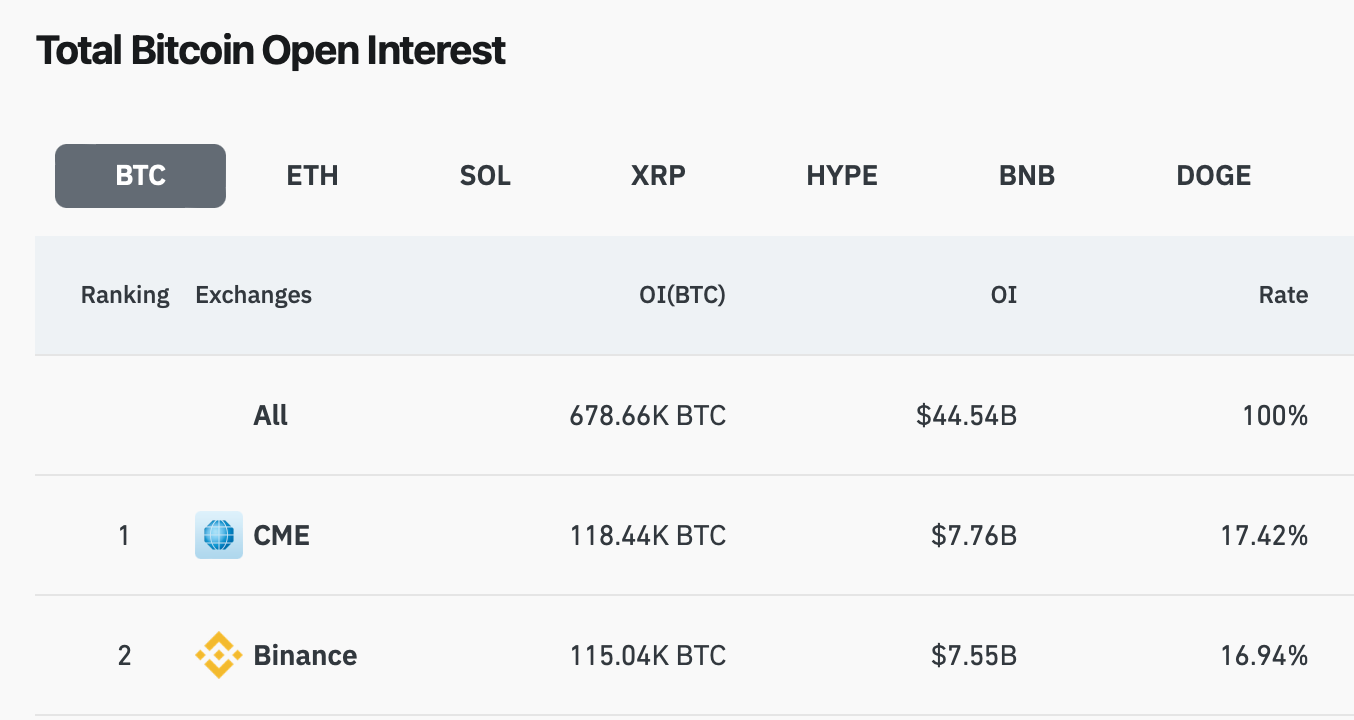
On that fateful Friday – with BTC open interest elevated at historic highs and positive funding rates suggesting stretched longs – an unexpected crypto market crash persisted into the low liquidity post-close trading session, sparking a liquidation cascade into already stressed order books that sent some altcoin prices to literal zero.
In lieu of realizing potentially enormous losses, many perpetual futures exchanges (as per their terms of service) decided to forcibly close short positions and nullify trader payouts under the guise of “auto-deleveraging.”
While exchanges can protect their own solvency and profits through auto-deleveraging, the decision comes at the direct cost of users. This dynamic embeds uncertainty at the core of unregulated and opaque perpetual markets, begging the question: why trade on an exchange where profit is conditional?
The Alternatives
As financial instruments, perpetual futures are not inherently flawed. Their main problems revolve around the venue risk created for traders by opaque balance sheets, blackbox risk engines, and limited protections against insolvency.
When volatility spikes, traders depend on their hedges paying out as anticipated, and fortunately, multiple alternatives do exist.
Regulated Futures
One obvious alternative is regulated futures markets. Exchanges including CME, Coinbase, and Robinhood offer cash-settled crypto futures under CFTC oversight. These markets operate within a traditional structure, offering:
- Exchange execution
- Clearing through a registered clearinghouse
- Margining via regulated futures commission merchants (FCMs)
Although the relatively modest leverage multipliers available in these markets (which get further reduced outside of U.S. market hours) may fail to entice degens, traders appreciate regulated futures markets for:
- Capital-efficient leverage
- Institutional-grade clearing
- Legal recourse under CFTC jurisdiction
- Deep liquidity
Options
While often overlooked in the crypto hedging conversation, options present one of the most structurally sound alternatives to perpetual leverage, with both crypto-native protocols and traditional finance venues offering robust crypto options solutions.
Options allow traders to:
- Access insane leverage
- Hedge downside risk with defined maximum loss
- Express volatility views independent of directional bias
- Generate yield by systematically selling covered calls or puts
Unlike futures, which have price-based liquidation thresholds, options are valid until a specified expiration date, an especially attractive feature during volatile market conditions when futures-based strategies may face liquidation or require re-margining.
Read our guide to learn more about your options for crypto options.
BREAKING: The SEC is approving options for spot #BTC ETFs, starting with @BlackRock’s $IBIT
— Bankless (@Bankless) September 20, 2024
See you degens in the trenches (on Wall Street) 😎 pic.twitter.com/PCbCSTSSKV
Transparent Exchanges
Blockchain technology is designed for transparency, and when perpetual projects embody this ethos, they better serve their users.
While transparency will not prevent auto-deleveraging should a perpetual exchange exceed prudent risk thresholds, it does help reduce information asymmetry by giving users better insights into system health.
In opaque environments, traders discover risk only after it materializes. In transparent systems, they can at least see stress building in advance.
That distinction matters for some traders.
we built a dashboard to shed light on ADL mechanics on HIP3 markets, esp with the silver crash end of jan
— walter (@ringwraith10) February 12, 2026
liquidation on HIP3 is different than regular HL markets. HIP3 has no backstop liquidator vault, so if book liquidity is depleted in the liquidation process, it goes… pic.twitter.com/v2p6EAdYnM
Conclusion
It doesn't matter what truly happened on 10/10, only how you respond.
The widespread and synchronous occurrence of auto-deleveraging across crypto's perpetuals platforms suggests that risk had grown beyond sane limits, even before things started going wrong. When the next crypto market crash comes, the last place you'll want to be is positioned on some blackbox exchange, crossing your fingers in hope that it can and will honor your payout.