Trump's Grand Strategy: Iran, China & The New World Order | Kamran Bokhari
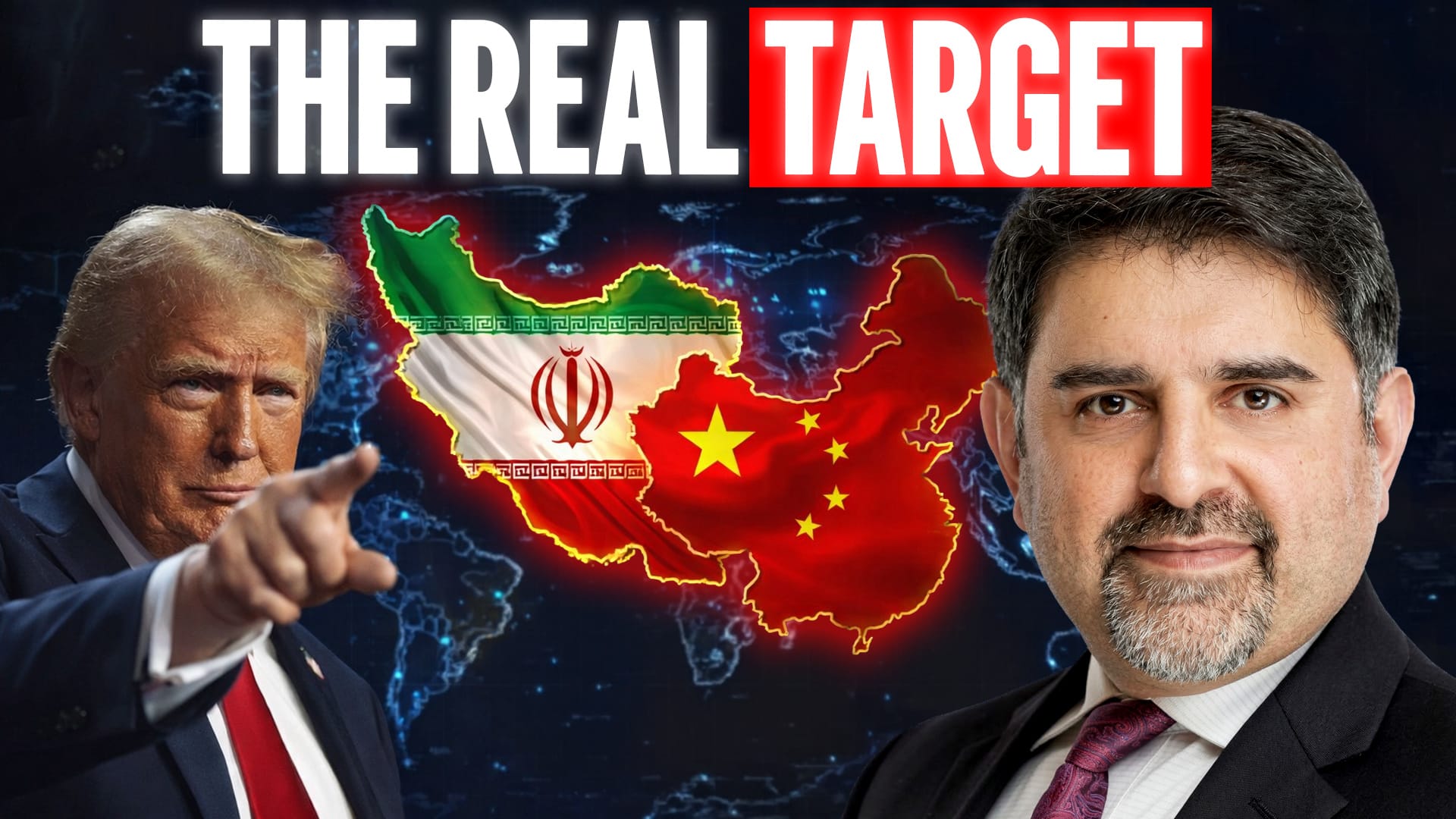
Kamran:
[0:00] And unfortunately, we're in an age where the amount of information available to people has just sort of exponentially increased and continues to increase, while our abilities, our collective ability to analyze in a sort of like a disciplined manner has tumbled significantly.
Kamran:
[0:19] And we now are more prone to conspiracy theories, politicized conversations, partisan discourses, fake news, and so on and so forth. It's a species-level problem, and it is the biggest conundrum that the planet is facing, in my opinion, for the long haul.
David:
[0:40] Bankless Nation, I'm here with Kamran Bakari. He is a geopolitical analyst and foreign policy expert focusing on the politics of the Middle East and South Asia. He also serves as the senior director at the New Lines Institute for Strategy and Policy. Kamran, welcome to Bankless.
Kamran:
[0:55] Thanks for having me.
David:
[0:56] Kamran, there are a bunch of questions that I have that I'll kind of categorize as the second order, end order consequences with the fallout of the war in Iran, which is ongoing. We actually don't really know how that will settle. I'll have questions for you about that as well. But I really want to kind of ask what happens next in the whole Middle East and Asia region. There's the stated reasons about why we went to a war with Iran. Trump gave that eight minute video early Saturday morning two weeks ago about all the reasons why we started this. The 47 years of hostility and terrorism, the historical attacks on America, the urgency to prevent Iran from attaining a nuclear weapon, the need to neutralize the proxy networks. These are all the stated reasons.
David:
[1:42] I want to
David:
[1:42] Learn a little bit more about the potential unstated reasons about why Trump decided to attack Iran, because I think potentially there is a larger story here. I want to get a sense for how large of a story there is. Like one suspect reason that I have is China was buying $30 billion of Iranian oil every year at a severely discounted price, about 15% of all of China's oil purchases. Iran was this captive market to China. it was beneficial. Iran is and was beneficial to China. So this is one of the reasons why I suspect there might be a larger story here. Is there something to this notion? Is there a larger story about what happens next and what the unstated motivations of the Iranian war is?
Kamran:
[2:28] Great question. So look, I will take our listeners back to the national security strategy. It was published on December 5th. I had been talking about and writing about this for at least a year and a half in terms of where the United States is heading in terms of the broader grand strategy, the post-World War II system that needs evolution and has been evolving since the fall of the Soviet Union. So if you look at what the US strategy that the Trump White House has rolled out, it's basically retrenchment from the Eastern Hemisphere. In other words, the United States is not going to be doing the heavy lifting for security on the Eurasian landmass. Focus on the Western Hemisphere, which was, you know, very clearly stated out in the NSS.
Kamran:
[3:17] And the focus on the Western Pacific with regards to China. And that's natural. The United States is an oceanic power. It doesn't need to engage in land conflicts and can only afford to do so as is necessary. But what it can't pull out from are the global commons, the oceans. And so I think that that is sort of the objective here. Now, the way to achieve this is to say burden sharing and burden shifting, which is the terminology of the Trump White House. They're saying, we're going to leave in different regions. We're going to shift this burden and share this burden with allied and partner nations. So you have, you know, European allies, you have allies in Asia, you have allies in the Middle East. But before you can do this, there are loose ends that need to be dealt with.
Kamran:
[4:12] I'm using loose ends in a very generic sense. We're talking about major conflicts here. The major conflicts are the Ukraine war. The major conflict are the ones in the Middle East. It was Gaza. Gaza was brought to, you know, we have a cessation of hostilities there, and there's a process in play.
Kamran:
[4:31] And we are also negotiating with China. noticed that in the middle of the Iran war, we now have reports that Secretary Rubio and President Trump are planning to go to China, along with trade officials and the whole delegation. So.
Kamran:
[4:48] Let's apply that strategy to the Middle East. In the Middle East, you have four major players. You have Turkey, Israel, Saudi, and Iran. These are the four big players in the region. Israel has been engaged in fighting Iran and its proxies for a very long time. I would say for several decades now. Since the end of sort of the Arab-Israeli state-to-state hostility with the Egyptian peace treaty in 1978 and then the establishment of the islamic republic of iran in 1979.
Kamran:
[5:22] Israel has been fighting non-state actors and proxies of Iran. And so that era is coming to a close. And that began in 2024 in the wake of the Hamas effect on October 7th in 2023. And you saw the Israelis weaken the Iranian proxy network and then take the war to Iran itself last June. And this is sort of part two of it that we're currently, the moment that we're in right now. So what you have is, strategically speaking, Iran was still out there. The two pillars of civility that the United States is leaning on are Turkey and Saudi Arabia, and they need to work with Israel somehow. With Saudi, it was the Abraham Accords. Between Israel and Turkey, the president said, look, you need to work things out in terms of Syria, and I can mediate and whatnot.
Kamran:
[6:19] But then there's the question of where is Iran in all of this? And Iran still has nuclear ambitions. Destroying the facilities was a significant, if you will, gain for the United States, but that doesn't end the nuclear program. That's just like buying time.
Kamran:
[6:37] And then you have the proxies and you have the ballistic missile capability. In other words, the burden-sharing, burden-shifting architecture that the U.S. Is trying to build has a pre-existing threat. So it had to be dealt with. That's how I'm looking at it. And in terms of, because in this region, if you notice, the Russians and the Chinese abstained in the resolution in the UNSC. Both Russia and China need to do their own deal with the United States. Russia needs to do it in the context of the Ukraine war because it's under a lot of sanctions. That war is very costly for them. And the Chinese have an economy that's faltering. And they need to have an understanding with the United States. And the United States needs to make sure that while being a major, the number two geoeconomic power in the world, it's not challenging the United States militarily. So the technological advancements that China is making do not translate into future military threats. So I think that those two players, Russia and China, have their own issues to deal with with the United States. So this is why you don't see them playing at all in this conflict with Iran. I mean, none of them came to Iran's aid. So I think that's where we are.
David:
[7:56] Let me repeat back at you what I understood, and you can correct me to make sure my comprehension is correct. You know, Trump got elected under this idea of like the no wars president, like we're just going to keep to ourselves. It was more nationalist, it was more isolationist. But what you're saying is that we couldn't just skip there. We can't skip to the end. there were, like you said, loose ends. And so, you know, completely, you know, stepping back and going full isolationist would leave Iran with these, you know, nuclear aspirations, these ballistic missile aspirations. And so we need to tie this off.
Kamran:
[8:32] But we are.
David:
[8:33] Still going there. And so there's been like some conflict in the Republican Party about like, you know, this isn't what I voted for with Trump. I voted for no more wars and we got ourselves involved in Venezuela. We got ourselves involved in Iran. Maybe the, you know, Trump promise of not getting involved in foreign wars is still what you're saying is still kind of what we're trying to go for. But to be pragmatic, we need to solve the Iranian problem, which is what the Iran conflict is all about. The Iranian war is all about. And then we are just going to leave the rest of the Middle East. We're going to set it up in hopefully a stable equilibrium between Israel, the Saudis and Turkey and hope that that kind of just solidifies and becomes stable and will remove like the largest state sponsor of terrorism through Islamic regime. And with that variable gone, we're kind of just hoping that that region solidifies so then we can do the thing that Trump has been saying, which is we're going to back off and put America first now that that whole variable has been solidified, which gives us room to a less messy conversation when we go and talk to China and Russia because that whole thing has been solved. Is that about what you were saying?
Kamran:
[9:47] Absolutely, and that's a great way to paraphrase what I was trying to explain in detail.
Kamran:
[9:52] So, yes, look, you can't jump from, you know, the current moment to, well, no more wars. You know, that's just not natural. That does not happen. It's not how the human condition works. So you have to get to that point. And this is causing this entire grand strategy, new geo strategy that the United States is trying to operationalize is causing a lot of grief around the world amongst allied and partner nations. So for example, the Europeans are really worried, you know, what is it that the United States is doing? Because they've never had to take the lead for their own security. This is all very new for them. The United States is basically saying, look, we're going to bring the war to an end, this Ukraine war.
David:
[10:34] We're going to reach an arrangement.
Kamran:
[10:36] It's not going to be perfect, but then you have to manage it, okay? Same thing here. We're telling Israel, we're telling the Turks, we're telling the Saudis. We are trying to solve the problem with Iran, but then it has to be managed. The problem with Iran is that, A, there's a lot of hostility with the United States that goes back almost half a century.
Kamran:
[11:01] And so there's a lot of political, if you will, this becomes really political, as you mentioned, within the Republican Party and in America in general, people remember the hostages, the 52 hostages that the Iranians took after the revolution came. Everybody remembers what Hezbollah did to the U.S. Marines back in Lebanon in 1983. And then the long history and the war in Iraq and the war in Afghanistan. on. So this is something that is politically very difficult to do, both in the sense of negotiations and in the sense of war. Notice that there is a sizable, if you will, constituency of the president that opposes the idea of doing a deal with this regime. And this is why the president nixed the nuclear deal one of the reasons that it's and he can't go back to that he just can't he can't just do site like a slightly different version of the JCPOA that Obama did it has to be substantively different for him to be able to keep his base happy that part of it now by keeping that base happy.
Kamran:
[12:11] He then has to use kinetic force. And kinetic force alienates another side of the base that says, well, you know what, are we going back to forever wars? People are confused. I mean, you can see from former representative Marjorie Greene Taylor, I mean, her behavior clearly shows that how strongly many people feel about this within the president's base. This is the broader MAGA base.
Kamran:
[12:39] So it's politically very difficult, but strategically, it does make sense. And the president tried to cut a deal. And he said, if you go back to inauguration, just shortly after inauguration, you remember there was a slew of executive orders that he signed. One of them was adding more pressure and piling on more sanctions on Iran to get them to the table. And when the president was signing it, he said, look, I don't want to do this. I want to cut a deal with Iran. I want to make Iran great again. He used all that political language to explain, look, he doesn't want to go to war and he wanted to do a deal. So that's January and there's back and forth negotiations. They don't go anywhere. And the president in June decided, you know what.
Kamran:
[13:28] These people are thinking that just because I don't want to do a forever war, they're not willing to budge. And, you know, they want to retain the ability to potentially produce nuclear weapons. And I can't allow that to happen. So then, and Israel in the meantime, wanted to exercise the military option. And it was lobbying the Trump White House that we should do this.
Kamran:
[13:50] And then the president decided, okay, let them do it. Okay. And we'll see. And I'll control it. And notice that, you know, he'd let it go for 12 days. There were those three nuclear facilities that the United States struck, very limited operation, did not get involved in the 12-day war, hoping that this would then change the mood in Tehran and they would be willing to negotiate. Once again, end of June till end of December, you have negotiations ongoing back and forth that, okay, let's negotiate this. Still no progress. And then on December 28th, protests broke out because the value of the riyal plunged to a historic all-time low of $1 to 1.45 million Iranian riyals. So that created a new situation. How do you negotiate with this regime that doesn't seem to have its own house in order? Is it too weak? Do we really need to negotiate with it? Is it going to topple? These are things that you don't know. This is a very dynamic situation. But you still continue to have those negotiations. You have three more rounds.
Kamran:
[14:53] One in Oman, two in Geneva with Kushner and Steve Witkoff talking to Abbas Araqchi, who is the foreign minister of Iran. Didn't lead anywhere. And then the president decided, you know what? Okay, this is not working. We're going to need to use kinetic force.
Kamran:
[15:08] But again, it's not regime change. I mean, it's trying to use sort of the lessons learned from Venezuela, the model there, the baseline model is you leave the regime as is. You do not demolish anything. This is not Iraq. This is not Afghanistan. You take out the irreconcilables. In the case of Venezuela, it was very easy because it was just Maduro.
Kamran:
[15:31] And you could come in and arrest him. And then, you know, the rest of the regime went on. Life went on and, you know, this man used to rule Venezuela and now he doesn't. And it's like taking a card out of a house of cards and the house of cards doesn't collapse. Here, it's not possible. A, it's too far, too big. Iran is the size of UK, France, Germany combined, area-wise. It's 93 million people. It's at a distance. It is internally divided. It has two militaries, and it has a complicated political system of theocracy, elected officials, officers, and so on and so forth. So how do you deal with this? And this regime has the ability to attack using ballistic missiles and drones.
Kamran:
[16:19] So it was always going to be complicated.
David:
[16:23] I guess just to continue on this thread, like one of the reasons that is stated by Marco Rubio, like our foreign policy guy, was that Iran was militarizing at a crescendoing pace. The drones that I believe, correct me if I'm wrong, were coming in from China. They were able to produce even more drones. And so the state of reason is Iran was just going to be this hedgehog with knives, 10,000 knives pointing in every single direction that no one would ever be able to deal with it. And so they were approaching, the words that Marco Rubio used was a point of immunity, that they had just so many knives pointing in every single direction that it was going to be impossible to deal with that situation. So hence the urgency of going after Iran.
David:
[17:10] So as I understand, and I need information here, is that that was enabled by China. A lot of materials, military weapons was coming from China into Iran to help Iran protect itself and to like remain in power and the regime remain in power. Because again, as I understand it, Iran's economy, the Islamic regime of Iran, is a very beneficial asset to China. China buys a lot of very cheap oil. Basically, the economy is captured by China because China just doesn't really care about our sanctions that much. And so China was really trying to bolster up Iran as sort of a proxy to not really a proxy is like too strong of a word, but nonetheless, an asset that is a buffer between the United States and China that China gets to just leverage economically. And so maybe that wasn't the motivation. Maybe everything that you said about why we needed to deal with Iran is like true and stands on its own. But there's also the China thing, too. To what degree was like the need to displace the strength of China in the region also a motivation? Or is that just more of like a positive cherry on top for us in the United States?
Kamran:
[18:28] I think it's more of the latter than the former, but let me explain that. So look, first of all, both the Russians and the Chinese have long used Iran as a way to.
Kamran:
[18:43] Get what they want from the US. So they've leveraged Iran and they've leveraged that relationship. Yes, it's a source of oil imports for the Chinese, but the Chinese are also buying from the Russians oil. So it's not the only source. The Chinese also have to balance their relationship with Iran. They need Iran or they would like to use Iran as leverage against the United States, but then they also have relationships with the Gulf states, the Arab Gulf states. And so they can't go too far in that. And that's where you see the variance between the Chinese relationship with the Iranians and the Russian relationship with the Iranians. The Russian relationship is far closer. The Russian intelligence has a very close relationship with the Iranian intelligence. There are military to military relations, political relations. There are defense production relations.
Kamran:
[19:38] So drones were supplied to Russia for the Ukraine war. and so on and so forth. And likewise, technology sharing and whatnot. But that said, notice even the Russians have not sort of gone beyond a certain limit. So in 2007, the Iranians cut a deal with the Russians to acquire the S-300 defense system, where you could have the ability to shoot down missiles and planes that are attacking you. This was crucial for the Iranians. they don't have an air force. But notice what the Russians did. The Russians delayed that almost a decade.
Kamran:
[20:18] Deliberately because they knew that this is something that's not going to sit well with the United States. And it's not that they want to arm Iran necessarily. They're using Iran as leverage to try and extract concessions from the United States on things that are more important to them. Ukraine has always been much more important to Russia. And Iran is a tool from the Russian point of view. So it was only in 2016 that the first components of the S-300 missile systems were delivered. And by that time, they had become obsolete. So you can see an actual behavior.
Kamran:
[20:56] Rhetorically, you can look at any meeting and it looks like a very close relationship. But if you drop altitude and you go into the details and you see that, hey, this is not all that it appears to be. Same thing with the Chinese. The Chinese have supplied the precursor material for the solid fuel for the ballistic missiles. And it's not really clear what they're doing right now in terms of, you know, continuing to produce that. There are reports that the United States has interdicted a lot of those shipments and the Iranians don't have access to that precursor material to replenish their stockpiles. So this is a much more complicated thing. I'll give you another example with the Chinese. And this has had less to do with Chinese intent, more to do with Chinese capability. The Chinese in March of 2021, the Chinese foreign minister met with the Iranian foreign minister. I think the Chinese foreign minister was in Tehran for that meeting. And they announced this massive deal of $400 billion that the Chinese would invest in infrastructure projects in Iran over a period of 25 years. In other words, it was extending the BRI from Central Asia into Iran to all the way connecting it to the Persian Gulf.
Kamran:
[22:17] Now, obviously that's an MOU and we all know what happens with MOUs. Some of those MOUs stay MOUs and never become deals. Many of them don't. But five months later, you have the US withdrawal from Afghanistan and the Taliban come back to power. So now all of a sudden, the Chinese have a problem. They built BRI in Pakistan and in Central Asia because the US was paying for security in the region. The US was occupying Afghanistan post 9-11 because the Chinese don't deploy multidivisional forces anywhere beyond their borders. And so they were relying on the American military to provide security, a secure environment in which the Chinese could develop these geoeconomic relationships. The Chinese were also eyeing the slow-moving, receding Russian footprint from Central Asia. So they said, okay, we'll connect this. Now, all of a sudden, the US forces pull out. Your pre-existing BRI projects are now at risk, certainly the one in Pakistan. And you have second thoughts about Central Asia. And all of a sudden, this $400 billion deal that you want to make with Iran is now, oh, well, it's not going to happen.
Kamran:
[23:35] And so the Chinese have limitations that have to do, are a function of their own capabilities, and geopolitical arrestors. So I think that from that point of view.
Kamran:
[23:49] I don't think China is a big consideration in the short term for the U.S. Move to wage war against this regime. It may be a future thing. It may be sort of one of those, you know, unintended consequences that are favorable, but I don't think it is a driver. I wouldn't call it a driver, if that makes sense.
David:
[24:11] Sure. Yeah, there are, it just happens to be that there are a lot of geopolitical events that are happening in a short period of time that do represent this mediated relationship between the United States and China, Iran being the very big one, but also Venezuela, which also had substantial economic ties,
David:
[24:31] at least from the Venezuelan side to China. It's a different story also.
Kamran:
[24:35] It's a different geopolitical calculus because Venezuela represented an opportunity for a Russian, Chinese, and even an Iranian outpost in the Western Hemisphere. And so, sorting out Venezuela was crucial also because of the location of Venezuela. It's on the, while China is thousands of miles away, but that's today. They're already trying to establish blue water navigation capability. We're trying to keep them contained within the island chain strategy, the three island chains strategy, but we can't assume that. So you have to remove sort of that opportunity that the Chinese have because the Russians are a much weaker player post-Ukraine. Iran is still a third world country, but China is the second largest economic power in the world and with a growing military capability. So you need to insulate yourself because of the oceans that provide access or potentially could provide access to Venezuela.
David:
[25:47] Yeah. Yeah. And then even Cuba gets its way into the conversation there because Cuba is also an even better, you know, smaller landmass, but far closer, like 90 miles off of Florida. An outpost for whatever China might want to do in the future. And so all of these things are happening. In the last 18 months, it seems like a lot of geopolitically relevant events are happening as it relates to US and China relations. As you said at the very beginning, the Trump administration is planning to go to China to have some sort of negotiation, some sort of discourse, some sort of conversation.
David:
[26:23] And now, before those conversations were planned, before when they're actually going to happen, you know, Venezuela happens, the Iranian war happens. And now as of today, just like an hour before recording, apparently it's been announced that Cuba is entering negotiations with Donald Trump. So we're about to go into those conversations with China. And the geopolitical context is very different than when those initial conversations
David:
[26:46] were planned in the first place. And so the thing, the question I have is like, when we When we have a stance towards China, are we like, you know, 180 degrees directly opposed? Are we not completely opposed, but clearly we're not aligned? Like how antagonistic is our relationship with China? Are we just butting heads to head? You know, there's just no daylight between us. Or are there like things that we can compromise on that we're trying to, you know, be friendly to? Or is it just like under the hood, we know that this is our enemy. And, you know, Harry Potter rules, you know, neither can live while the other survives. Like, what is it?
Kamran:
[27:27] I don't think it's black and white. I think there are a lot of shades of gray. There's a lot of nuance there. I do think that the relationship with China is substantially different than the relationship we have with Russia or anybody else. China is a big player. But China, we have to look at the imperatives of China and the constraints. Right now, China is under a lot of constraints. Its economy isn't doing well. The housing market situation is for everybody to see. Their growth rates are not what they used to be. And, you know, so there's a correction happening inside the Chinese economy that doesn't get a whole lot of attention in the sense. So it's very interesting that the public discourse, while there is lots of reporting about what's wrong with the Chinese economy, but somehow the net assessment is China is still rising and China is this threat. We don't factor in what this political economic situation in China is doing to its ability to challenge the United States. I think that Washington, and it doesn't matter today, it's the Trump administration, tomorrow it could be somebody else.
Kamran:
[28:34] In the past, it was Biden, irrespective of what administration is in office. I think Washington does pay enough attention to the evolving situation in China to have a good grasp of what are the constraints that the Chinese face. So, the Chinese need to make a deal.
Kamran:
[28:53] Xi has turned what used to be a bureaucratized, institutionalized autocracy under the Chinese Communist Party into a personal sort of fiefdom. Look at the continuing purges that are happening. Just three days ago, he gave a speech saying, the PLA must be loyal to the Chinese Communist Party. And so why are you saying that publicly? Because you're engaged in a lot of purges. You feel a threat from there. So we need to keep in mind that it's not just the economy of China that's facing problems. There are political effects as well. And so I think the US is mindful of these things.
Kamran:
[29:34] But because the global dependency and the U.S. Has a integrated relationship with China over the decades, that it's not in the U.S. Interest to see this country spin out of control. So it's not a zero-sum game that we want just them to be defeated or whatnot. I would say that we don't even want regime change in Iran. I mean, we want to cut a deal, which is why this is not an Iraq-Afghanistan-like war, the classic forever wars.
Kamran:
[30:05] Even in Russia, do we want Russia to get to the point where the regime collapses and you have loose nukes all over the place? This was one of the problems that we faced when the Soviet Union imploded that, what about, and we tried, and for Kazakhstan, had a huge nuclear arsenal that we had to denuclearize. It took a dozen years to do that. And so these are things that, you know, don't make the headlines, don't make the public discourse. These are broader strategic considerations that the United States government continues to think about and sort of figure out how do we operate within these broad, big picture constraints? Because there's only so far you can go. And so I think that that needs that needs to be part of the public conversation. And unfortunately, we're in an age where the amount of information available to people has just sort of exponentially increased and continues to increase, while our abilities, our collective ability.
Kamran:
[31:13] Analyze in a sort of like a disciplined manner has, you know, tumbled significantly. And we now are more prone to conspiracy theories, politicized conversations, partisan discourses, fake news, and so on and so forth. So I think that's some, that is probably, it's a species level problem. And it is the biggest conundrum that the planet is facing, in my opinion, for the long haul.
David:
[31:41] Is one way to articulate our relationship with Iran, or excuse me, our relationship with China is that there's maybe like two different strategies that we will selectively employ. There's the zero-sum strategy, which is we need China to not have a foothold in Venezuela or Cuba. And so we are directly opposed to China in these circumstances. Maybe we are directly opposed to China in the case of Iran control over Iran. And then there's the positive sum relationship with China. It's a major trade partner. It is the second largest economy in the world. We don't want that to crumble. That would just be bad for everyone. And so there are some instances where we will have positive sum relationships with China. And as a foreign policy, we will just swing between the two whenever it benefits us the most. Sometimes it's time to go head to head with China. Sometimes it's time to be a trading partner with China. And we will simply optimize between these two strategies, given the circumstances.
Kamran:
[32:41] Absolutely. And as a superpower that is trying to, and this is why I don't think we're going into an isolationist mode. I think the isolationist vocabulary, that whole terminology is misleading. You can't be isolationist. I mean, look, after World War I, there was an attempt to go back. And say, okay, we're done. Now Europe can fix it. But what happened? World War II happened, we got involved again. And so if you're going to be a superpower, which we are, and we will remain, and we need to remain, then we need to be able to adjust course. What worked post-World War II through the Cold War doesn't apply anymore. This is a completely different age. Russia is not the Soviet Union. China was not existent at that time as this kind of threat. It is now the second largest economy of the world. There was no EU.
Kamran:
[33:39] The Europeans and Europe and Asia were devastated by two world wars back to back. And you didn't have 200 independent countries on the map. It was the age of empires. So what worked back then does not work right now.
Kamran:
[33:56] The state of technology has gone so far ahead that we're still trying to adjust. I mean, we will still be dealing with the challenge of swarming drones while we're still operating aircraft carriers. The aircraft carrier is a technology from World War II. And so it was not, when it was designed, nobody thought that there would be drones that could come in and attack. So there needs to be changes. And that's why I think the relationship with the Chinese has to be calibrated. And if we're going to be a superpower, then, and we're going to sort of say, okay, how do we do this effectively and efficiently? Where we're not doing everything in the world, we're not fighting every war in the world. That means having a relationship with China and managing it. Having a relationship with Russia and managing it. We need to have a relationship with Iran. It's a bit difficult because this regime, its ideological makeup is as such that it makes it very difficult. And then the imbalance of power in the Middle East further complicates it because we have to balance this out with Israeli imperatives, Turkish imperatives, Saudi imperatives, and so on and so forth. So I think that, yes, we're not in a zero-sum game. We're not wanting to do everything in the world anymore. So how do we deal with this? We have to work with China because China is now the main player that the United States has to deal with.
Kamran:
[35:23] Europe is not, first of all, Europe still has to figure itself out without, you know, an America protecting it, you know, full time, if you will. And then, you know, post-Ukraine, what will become of Russia? That has to be factored in. But this Chinese relationship, yes, it has to be managed. I mean, we keep talking about will China invade Taiwan? Well, you know, what does China get out of invading Taiwan and what does it lose? That's a question that we have to answer. And my own view is there's a lot more to lose and a lot more to gain. And then- There's a lot more to.
David:
[35:59] Lose than there is more to gain? Is that what you said?
Kamran:
[36:01] Yes, because if China were to invade Taiwan- imagine the amount of sanctions that have to be placed on China. The Chinese economy would suffer consequences because of that. So this is something the Chinese think about, and they know this is a major constraint. And what is it that they really do want from Taiwan? And is there another way to have it? Or is this going to be still, we need to counter China, pivot to Asia, that whole discourse? Or is there another way to deal with this? Can we reach an understanding on Taiwan where, okay, we already have a one China policy. So we don't recognize Taiwan as an independent state. So can we modify that to where we resolve the irritant between us and the Chinese so we can actually do business with them? These are things that have to be sorted out and They're difficult,
Kamran:
[37:00] but there's no other way around it.
David:
[37:02] You said that you don't think we want regime change in Iran. The way that I'm interpreting that is it was easier for us to just deal with the current regime in Venezuela. We'll just pop out Maduro, have that be a statement of our seriousness on the matter, and we'll leave the rest of the Venezuelan regime intact. But now there's like a just a different constitution that Venezuela must have towards us because we've proven that we'll come in and do whatever we want. And so that's kind of like the effect. As you said earlier, it's not really the same with the Islamic regime because it's just like so multi-layered. It's interconnected moving parts. There's, like you said, two militias, two militaries, many different leaders. And so we've been a lot more destructive when it comes to our war with the Islamic regime, with the leadership. Yeah. Because there's the entrenchment of an anti-American disposition in the regime in Iran is just so much more deeper than I think it is in Venezuela. So we've had to go in much harder. But you say that you still want to, not want, but think that it's best that the regime stays intact because we need to have something to negotiate with. Walk me through your thought process there. I'm not saying
Kamran:
[38:16] What I think should be done. I'm explaining the logic of the administration. What is the administration trying to do here? Because look, air power alone, and I've written extensively on this, does not lead to regime change necessarily. It could lead to a regime collapse. That's different. That's anarchy then. You don't have another regime. Now, ultimately, you want to have a deal. You want to settle with somebody. So you need to talk to somebody. If you demolish the entire edifice, there's nobody to talk to anymore.
Kamran:
[38:49] And so then, and this isn't, this is a very difficult country. It's a complicated place in the sense that there is no opposition group here. There isn't a coherent opposition group that can go in that you can say, okay, get these guys out and help the others and they'll win and they'll take over. I'll give you an example. Syria. Assad fell and it was seamless. The opposition group called HTS, led by the current president, backed by Turkey and Qatar, took over. So we don't have anything comparable in Iran. Okay. Right. And so... But... What is our interest? Is our interest to, you know, bring democracy to Iran? You know, surely, you know, we would love for that to happen in terms of an aspiration. But do we have the ability to do that? Iraq and Afghanistan are cases in front of us. We can, in my view, personally, what I think is that, you know, we don't have the ability to democratize anybody. We can sort of promote our values and hope other people will take them and repurpose them for their own circumstances.
Kamran:
[40:00] If there is to be democracy tomorrow, you know, in the future in Iran, it'll look very different from other places. It'll be very unique to Iran. And it may be that it doesn't come. You know, we don't know. So that's not something that's an achievable goal. What we need is a deal that, hey, what are our demands? Our demand is we don't want you to have nuclear weapons, okay? Our demand is that you do not have ballistic missiles that could threaten our allies and regional stability because we're trying to put together a new regional architecture. Number four is that your proxies, and then number three is your proxies. Those are the only three things. And so in order to reach that deal, we need to do some sort of, you know, apply some level of military pressure. And here's the challenge, that you can't calibrate military pressure so finely that you can get rid of the irreconcilables and bring forth the reconcilables and then take it from there. This is a messy process. There are so many unintended consequences that happen. So I'm sure that the administration was well aware that, you know, the oil would not flow, gas would not flow through the Straits of Hormuz because of the rocket, the ability of the Iranians to fire their rockets, their missiles, and their drones at the Arab countries. But.
Kamran:
[41:21] You know, that's something you have to deal with. It's a complication in the war. I'm not sure what the exact understanding was, how confident were they? These are things that are still coming out in the media. And you have to sort of read through the lines because there's a lot of editorializing and there's a lot of sort of biased reporting as well. So what I'm trying to say here is that There is no good fit. What I do think I am convinced of is regime change was not the goal. The goal was to bring forth, keep this regime, but change its behavior. How do you change its behavior is partially by getting rid of people who are irreconcilable.
Kamran:
[42:04] And partly by working with those who are reconcilable. Now, we're between that space. So you've done a decapitation strike, but that has triggered a bigger conflict. You need to bring that conflict to an end to get to the table, and hopefully when you get to the table, the other side, the configuration, the internal balance of power will be as such where pragmatic officers from the guards, from the regular armed forces, from pragmatic elements of the military, sorry, the clergy and the political class can come together. Will it come together? We'll see. I mean, it's in war, you know, one of the biggest things is uncertainty.
David:
[42:47] Yeah, I absolutely take the point that the steps to getting to regime change is just a complete fog of war. There's no way to like cleanly hop without getting boots on the ground. There's no way to actually do that.
Kamran:
[42:58] Even with boots on the ground, what do we achieve in Iraq and Afghanistan. We toppled the Taliban, spent a couple of trillion dollars and gave the country back to the Taliban.
David:
[43:08] And so I understand that. At the same time, the Islamic regime has also proven to us that it does not want to be reformed. If there's one thing that we know over the decades is that negotiations with the Islamic regime are not really negotiations. It's them buying time so that they can amass leverage in a different direction. Granted, there has never been this level of conflict in Iran, so maybe, hopefully, their calculus does change after we completely destroy all of their military capabilities and decapitate their leadership. But I would attest that it's also taking it on faith that we would be able to come to negotiations now because they've proven to not actually be faithful to their negotiations. How would you respond to that?
Kamran:
[43:57] That's a potential scenario that we have to live with. But I think that it all depends on their constraints. Let's look at the constraints of the stakeholders of this regime, the various factions. You have a population that every few years is protesting against you. Your economy is completely collapsing. You don't have an economy that you can sort of turn around in the short term. You need sanctions respite. You can only get sanctions respite if you do a deal with the United States. Otherwise, it's not going to happen. Even if this war didn't happen, and I wrote a report called Post-Khamini Iran two years ago, looking at that, hey, the supreme leader is aging. Meanwhile, power has shifted from the theocracy. Theocracy is no longer the center of gravity. It's the military. It's the revolutionary guards. But then the regular armed forces are asserting them as itself. So you already have a transition taking place that you have to sort out. And you've been dealt with, you know, dealt a blow to your regional influence with the war in 2024, 2025.
Kamran:
[45:12] And now you have a war brought to your own home. So this isn't the same regime. I mean, we can't assume that it'll continue to behave the way it has for so long. As pressures mount, there are breaking points. When do you move to a point where what you thought was achievable is no longer? These are calculi that has to happen. There are factions jockeying for power inside Iran. So this is an organic process that has to move forward. So I'm not so sure that this regime will continue to resist and defy. It will have to compromise. Now, we shouldn't confuse, it's not being defiant, it's not binary, either you're defiant or you capitulate. See, this is the political language that the Iranians say we will be defiant. And the Americans are saying, well, hey, we need you to capitulate. Or why haven't you capitulated so far? Why haven't you surrendered? Or you need to surrender. Reality is always somewhere in between. And I think that the Iranians know they have to do a deal. it's the engineering of the deal. They can't look like they've capitulated.
Kamran:
[46:27] And so they need to save face. In other words, for... The regime to compromise and maintain power, it has to have a formula that works for them. And that's what the negotiation is all about. And I think that that will happen, but it will take time because it's not like.
David:
[46:49] The United States says,
Kamran:
[46:51] Oh, well, I mean, technically the United States can basically say, well, look, you know, we did what we wanted to do and we're out. This is the end of the war. The United States can possibly come back home. The Iranians can't live with those consequences. They need to have a deal. And then even from our point of view, we can't let this thing fester. We have to bring closure to it because we're trying to come up with a new strategy for the region and for the world. This isn't the only problem that the United States has to deal with.
David:
[47:20] As I understand the Islamic regime, they have a north star of jihad to some degree. Like the death to America is chanted in the Islamic parliament in Iran. They want to have, they've always had nuclear aspirations stated to defend themselves. But like our fear is to attack Israel or us. Those things they will have to capitulate on. Those are like clear hard lines that they will have to capitulate on. And the concern that I have is that if you leave, you know, Islamic leadership in power with jihadi aspirations, that's their faith. I don't know if they're capable of capitulating on that. And so if the transition of power, as you say, is going from the theocracy to the military, maybe that's indicative of that. But it would have to represent a complete reprioritization of what the Islamic regime of Iran actually holds valuable to themselves and their ideology. Wouldn't it require a capitulation on their ideology in order to remove the sanctions, join the West in the economy, not necessarily have democracy, but actually be able to grow up and prosper in a way that doesn't result in us just attacking them again in 20 years?
Kamran:
[48:45] No, you're right. But I mean, we also can't assume that that's sort of like a monolithic ideological permanent condition. The ideological spectrum in Iran has lots of shades of gray. There are reformists, there are centrists, there are pragmatists, there are hawks. And even within the hawks, there are multiple factions. So this isn't sort of like a monolith. But yes, it will have to change is its orientation. Look, the People's Republic of China, when it did a deal with the United States in the 70s, they essentially gave up communism.
Kamran:
[49:26] Did they have to come out and declare that we're giving up communism? No. Even today, it's called the Chinese Communist Party. But effectively, they are a, well, it's not a fully capitalist economy, but it's a party trying to impose command style capitalism, if you will. So it's complicated. They're not going to look like us. They're not going to think like us. But we get to a point where you can do business with them. And we've done that. And so I think, and this is what I wrote in my report, the forecast report from 2024, is that I see an evolution taking place. I didn't know that we were going to go through a war like this, but the war has accelerated the dynamics that I had outlined. And I do think that over time, slowly, because this is what their people want too. I mean, do their people want to, I mean, the regime chants death, its leaders chant death to America in their parliament, but for the people, they're being suppressed.
Kamran:
[50:28] They don't want that. And they cannot continue to alienate. You can't continue like this. Like how long before every year or every other year protests grow bigger and bigger to where you can't control them? And now you're much weaker because of the war. So I think that this is a complicated transformation. Let's just put it this way. China did not become friends with the United States after rapprochement, after detente. We will have something similar with Iran. They're not going to be our friends. They will do what they need to do, but we don't want them threatening us or our interests and their neighbors because Iranian regime has been a revisionist power. It wanted to alter the security architecture of its strategic environment, largely the Middle East. That has to stop. And if you don't have the wherewithal, then that becomes sort of those things that, oh, you know.
David:
[51:29] We can't do this anymore.
Kamran:
[51:31] And so what I'm saying is this is not something that will happen in the short term. This will slowly, gradually happen. But we won't find a friend in Iran, but we will find an Iran that is less hostile, more manageable. And then you know what? If we're going to really retrench, then the Turks have to step in. The Saudis have to step in. We don't know what the relationship of Israel would look like with a future Iran or Israel's relationship with Turkey or Israel's relationship with its Arab neighbors. So all of this has to be sorted out. We can't do everything.
Kamran:
[52:10] All we can do is what's in our interest. And then this is the whole concept of burden sharing and burden shifting, which to me makes sense because what is the alternative that America does everything and then pays for everything? You know, our debt is going through the roof, has already gone through the roof. So we can't continue ad infinitum at that pace.
David:
[52:33] Understood. Understood. This all makes quite a lot of sense to me. One last variable on this thread.
David:
[52:40] How misaligned is Israel's aspirations for Iran with the United States? Israel, I would expect, would be more interested in taking the conflict, the war with Iran further than the U.S. would. That's my intuition. Maybe Israel is willing to go as far as possible to get regime change in Iran to just permanently solve one of their biggest thorn in their side. Is there any misalignment that might throw a wrench into the gears of this whole process between Israel and the United States?
Kamran:
[53:11] So it's not, you know, either it's misaligned or we're fully aligned. Again, it's in the middle somewhere. Look, Israel is Israel. It's not the United States. Israel is a small country in the Middle East that has its own threat perceptions. It needs to protect itself against its enemies. So it will operate differently. It will have a different calculus. The United States is a superpower. This is one region, albeit the most volatile region of the world. But we have to deal with other issues as well. We can't have the constantly thinking about this. So yes, all things being equal in an ideal world, Israel would want a complete change to this regime. The question is, can that happen? Can Israel accomplish that? Alone it cannot. It needs the United States. Here's where US interests come into play. That, hey, we don't want, we've gone through this with Iraq and Afghanistan. and those were some very painful lessons that were learned, we're not going to do that again. So we need to find a way to fix this problem that works for our allies in Israel and us as well. And we have to also bring in other allies, the Saudis. The Turks, look at the Board of Peace. We're now in Southern Caucasus, which is unprecedented.
Kamran:
[54:33] The United States, for the first time, is now operating in the Russian sphere of influence, traditionally the Russian sphere of influence. You have countries like Armenia, Azerbaijan, Kazakhstan, Uzbekistan attending the Board of Peace of Gaza. We have Pakistan in the Board of peace of Gaza. Pakistan is a neighbor to Iran. It has interests as well. So from our point of view, we need to make all of this work. And Israel, while it has its own threat perception, I think Israeli threat perception is also evolving. You can see in their public discourse that there is now a considerable amount of conversation going on in terms of, okay, is Turkey going to be a threat to Israel's interests? They haven't quite figured that out, That's a debate that the Israelis are having amongst themselves. And it's going to be very different from the situation with Iran because Turkey is a NATO ally. It's an ally of the United States. It's a partner of the United States in multiple regions. And so I think the Israelis know this, but they will pursue their interests to the extent that they can. And it depends. You know, it also depends on leadership. This particular government is quite far right.
Kamran:
[55:46] And it has a constituency that it needs to satisfy. You know, there's politics involved and elections are coming up. Let's see what happens in the elections and the future government and its makeup. Will it be this, you know, right wing or will there be more centrist elements
Kamran:
[56:02] coming in? We don't know. So these are very dynamic variables that we just have to factor in and see how they come and, you know, over what time horizon.
David:
[56:13] Cameron, I know you're more of a foreign policy expert, but I don't think this will questionably be too far out of your wheelhouse. There's been a rise of support of Marco Rubio domestically. Marco Rubio has gone for something like 6% to 18% likely to win the presidential election, if you believe the Impali market prediction odds. There's no specific question here, but do you have any commentary on Marco Rubio as a leader or what he's been doing or what he's up to?
Kamran:
[56:45] Yeah. I mean, I think the Secretary of State has emerged as a key figure in the Republican Party. And, you know, of course, the current Republican Party, because when we talk Republicans, there are still those who are opposed to Trump as well, even though they're not as powerful. So I think that Marco Rubio has emerged because of his portfolio, because of his portfolio as Secretary of State.
Kamran:
[57:13] The diplomacy that he's been engaged with in and as national security advisor, interim national security advisor, he's dual-hatted. So, yes, that's giving him a lot more public profile, a lot more visibility. People tend to see him and in action, and that shapes opinions. And of course, let's face it, he didn't leave his Senate seat for a one-term being Secretary of State. So obviously, he has presidential aspirations. But then the question is, Trump already has a vice president. And vice presidents normally are the ones that sort of are seen as, if you will, going to be running for the next election once the two terms are up. And in 28, J.D. Vance hopes to be able to run for president as well. How these two competing aspirations come together, we just have to wait and see. I mean, we have something to go by in terms of the dynamic between then-candidate Obama and candidate Hillary Clinton. And they, you know, competed with each other.
Kamran:
[58:26] Eventually, Obama was the one who came out ahead and they sorted things out and Hillary Clinton became Secretary of State. And she said, okay, you know what? I'll try later in 2016. So this is only natural. How will this work out? I mean, it could be that Vice President J.D. Vance becomes the candidate and Marco Rubio becomes his running mate. That's one formula. Yeah.
David:
[58:54] It could be that,
Kamran:
[58:56] You know, J.D. Vance picked someone else as a running mate, assuming he has the numbers and he has the, you know, the support of the Republican Party behind him. So, and it could go the other way around. So, we're just very early on. But yes, I mean, this is the next apex level leadership emerging post-Trump. So, and this is important. We need to watch for it. But again, you know, as an analyst, I'm just one guy. And this thing depends more on public sentiment than geopolitical analysis.
David:
[59:29] Sure, sure. Yeah. Ultimately, at the end of the day, foreign policy, as I understand it, does not move that much of the election process for president. It's actually lesser on the priority list for voters domestically.
Kamran:
[59:43] And that's the challenge for Marco Rubio is he's been focused on foreign policy. Right. Yes, there's a bit of domestic policy in terms of, you know, immigration and whatnot and visas and how it sort of filters into domestic policy arena. But I think that it's going to be interesting to see how these two gentlemen sort of move forward with their presidential aspirations, because the vice president is still sort of plugged in. And he's not taking the lead on foreign policy in that sense. He's in the room. He's involved. He has a big say in it. But Marco Rubio is the point person on foreign policy. So it's going to be interesting to see how voters who look more at domestic policy will say, okay, so how good will Marco Rubio be for domestic policy? Because we haven't seen him in action. Of course, his record in the Senate is still there. Yeah.
David:
[1:00:38] But this is something that's more in the here and now.
Kamran:
[1:00:41] And as you know, the news cycle moves so fast, people forget about what happened in the past. And they're looking at the here and now.
David:
[1:00:48] Right, right, right. Speaking of the news cycle moving so fast, what are you paying attention to? As we round out this podcast episode, things are happening every single day. So there's short-term things to look at. There's medium-term things to look at. When you're trying to get a signal for what happens next in Iran or as it relates to China or generally anything in your wheelhouse, So what are you paying attention to? What should listeners pay attention to if they're just trying to keep their finger on the pulse?
Kamran:
[1:01:13] Yeah, so I'm definitely looking at, you know, what will be the outcome of the diplomacy with China.
David:
[1:01:18] Mm-hmm.
David:
[1:01:19] How does that ease tensions between the United States and China?
Kamran:
[1:01:23] And it's beneficial, you know, on the trade front for both countries or not. That's one item. And so that's something that I wake up every day to try to track. The Ukraine war is absolutely important because the future of Europe is tied to it.
Kamran:
[1:01:39] What will become of Russia is tied to the outcome of the Ukraine conflict. So that's another thing that I watch. The Middle East is something that I watch because it's an area that I'm personally very interested in and I've followed for many decades. I'm also looking on the technological front. I mean, how does AI intersect with geopolitics? How will geopolitics shape AI and vice versa? And what does this do to great power competition? What does this do to the rise of, you know, middle powers and how? Because, look, technology is not just a monopoly of the big powers anymore. Those days are long gone. We now have middle powers in even smaller countries like third world countries that are also engaging in this, you know, technological innovation and application of technology to solve their problems. So these are the things that I'm looking at. And of course, you know, space is always something I keep a close eye on. I'm a big Star Trek aficionado. So, yeah, I keep an eye on space as well.
David:
[1:02:38] Yeah, well, I'm certainly in the coming years, there's going to be a lot more to talk about up there as well. Kamran, thank you for coming on. This has been incredibly educational. I really appreciate your guidance here.
Kamran:
[1:02:47] Thanks so much, David.
David:
[1:02:49] Where, if people just want to read what you put out, you're a writer. I was reading some of your content this morning, or if they just want to follow you on Twitter, where should we point the listeners to?
Kamran:
[1:02:58] Yeah, so I'm on X, Kamran Bukhari. I have a LinkedIn profile as well, but mostly I'm on X. I write for New Lines Institute. I write for Geopolitical Futures, and I have a column in Forbes magazine.
David:
[1:03:09] All right, we'll get all of those links in the show notes. Kamran, thanks for coming on.
Kamran:
[1:03:13] Cheers.