The New Bitcoin Mining AI Play

Bitcoin mining stocks are in the midst of an AI-led renaissance. Investors are flocking to the sector, with hopes of capitalizing on the modern world's unrelenting demand for data centers.
Data center delays are now so severe that new construction is declining for the first time since 2020 despite soaring demand for AI compute, transforming miners into the fastest pathway to new compute capacity and prompting markets to reimagine these companies as critical inputs of the AI economy.
Today, we're exploring why AI's swelling data center logjam presents a refreshed bull case for crypto mining stocks. 👇
🤖 Mining’s Early AI Bet
ChatGPT was released in November 2022, and markets almost immediately recognized the potential synergies between BTC mining operations and artificial intelligence.
During the first half of 2023, valuations ascribed to Bitcoin mining stocks expanded by multiples before going parabolic into the summertime as investors began to price in the sector’s newfound value.
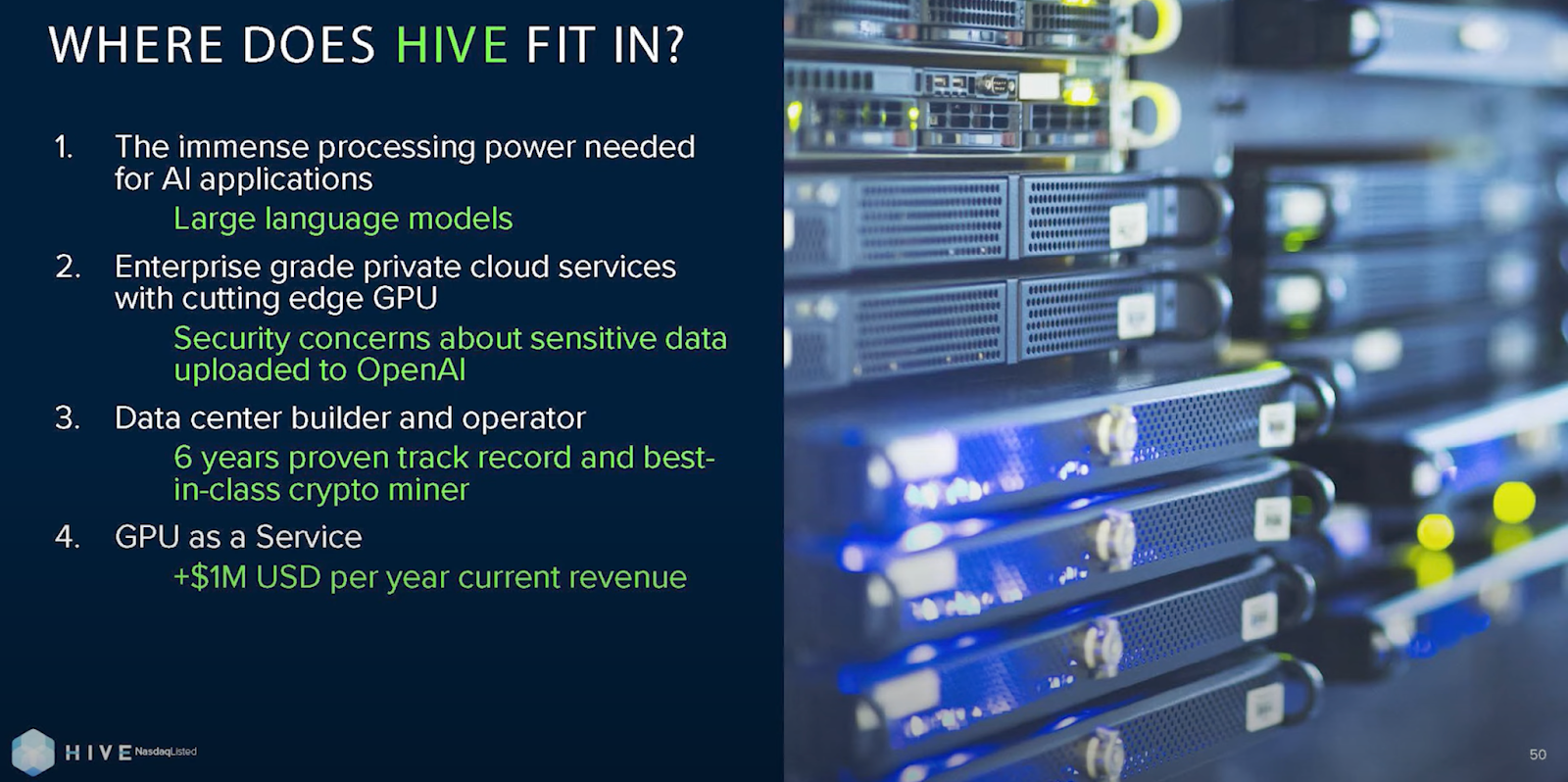
To shore up their revenue streams in the aftermath of FTX’s collapse, many Bitcoin miners had already transitioned from crypto specialists into high-performance computing (HPC) generalists to shore up their revenue streams. As demand for AI compute accelerated, many of these generalist miners began explicitly marketing infrastructure and launching services tailored toward the nascent sector.
 Jack Inabinet Jul 3, 2023 • 6 min read
Early efforts were largely disappointing:
- The construction of a new AI-compliant facility in North Dakota by miner Applied Digital reportedly cost the company 10 times more than building an equivalent one for crypto mining.
- Facility conversion proved equally difficult. The specialized compute supplied by mining-specific GPUs and ASICs is largely incompatible with the diverse needs of AI applications, requiring the replacement of existing hardware and additional facility infrastructure upgrades.
- While some miners attempted to repurpose some of their GPUs to train large language models, early revenue disappointed, indicating the limited prospective demand for lower-quality AI compute.
📄 The Permit Pivot
Since crypto miners first began exploring how to capitalize on the AI craze more than three years ago, the sector’s demand for compute has exploded, unlocking trillions of dollars of capital and creating incessant demand for more data centers.
Yet while AI funding continues to set records and compute demand grows exponentially, the industry has run into a less glamorous bottleneck: physical infrastructure.
In total, it can take eight years to construct a new data center.
The most variable portion of that timeline is the permitting and approval process, which is often framed as an issue with "doomers" and redtape-toting bureaucrats, but the reality is that these projects often aren't popular with local communities who are blocking the projects on environmental, economic, and quality-of-life grounds:
- Data centers typically create only a few hundred permanent jobs, compared to thousands for similarly-sized factories, a reality which makes these a much more difficult sell to the communities where development is being proposed.
- A single hyperscale facility can require ten million gallons of water and one hundred megawatts of power per day, taxing municipal water and energy sources with the same amount of demand as an additional 100k homes.
- Beyond resource use, data centers are often criticized over aesthetics and noise pollution issues, which introduces quality-of-life concerns but are often also seen as negative weights on local property values.
All of this to say that the structural barriers for quickly scaling data centers stateside are very real, and likely won't be changing anytime soon. In the United States, permitting and power procurement delays have become so severe that new data center construction declined for the first time since 2020 despite soaring demand for AI compute.
 John Gittelsohn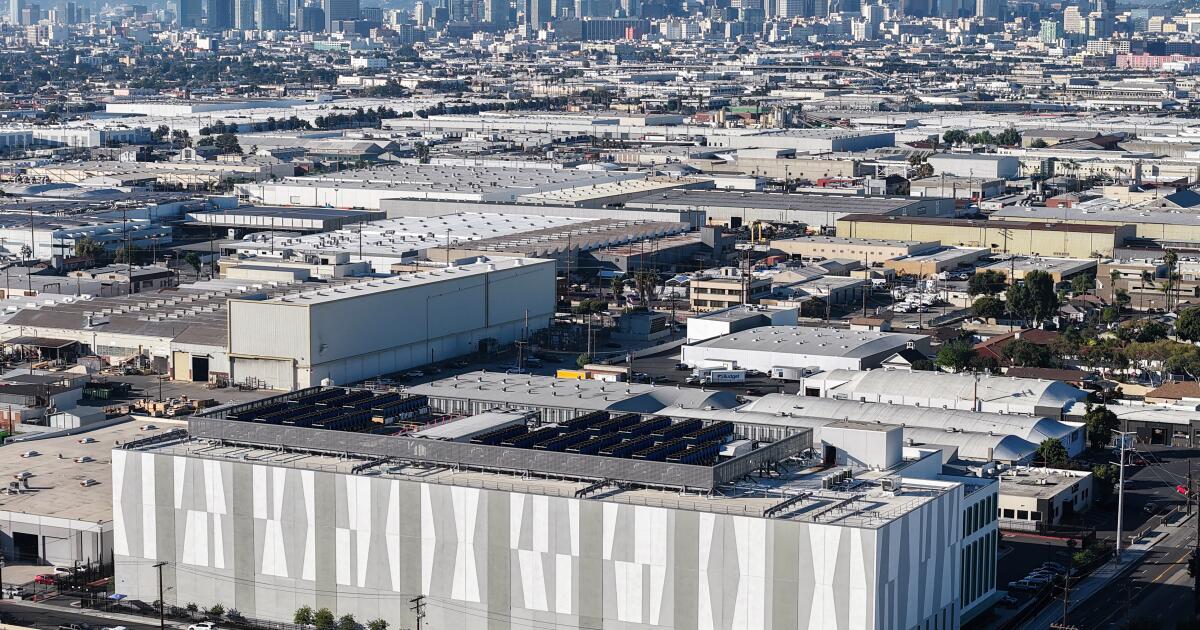
Power-hungry LLM players are desperate to fast-track workarounds. Elon Musk has pioneered some of these efforts including an ambitious pitch to launch data center satellites into low-earth orbit. Meanwhile on planet Earth, his efforts to feed xAI's growing data center needs led him to fly in truck-sized mobile gas turbines in an effort to skirt lengthy permit processes (the EPA busted these efforts).
The desperation around various elements of the AI physical infrastructure stack has transformed cryptocurrency miners with established data centers into prime targets for permit arbitrage plays, in which miners are increasingly valued for their access to natural resources (particularly power and water) as opposed to their core business operations.
Generative AI applications demand immense computational power, and cryptocurrency miners stand ready to supply the capacity; the sector is equipped with 6 gigawatts of grid-connected capacity and has plans to double its pipeline by 2027.
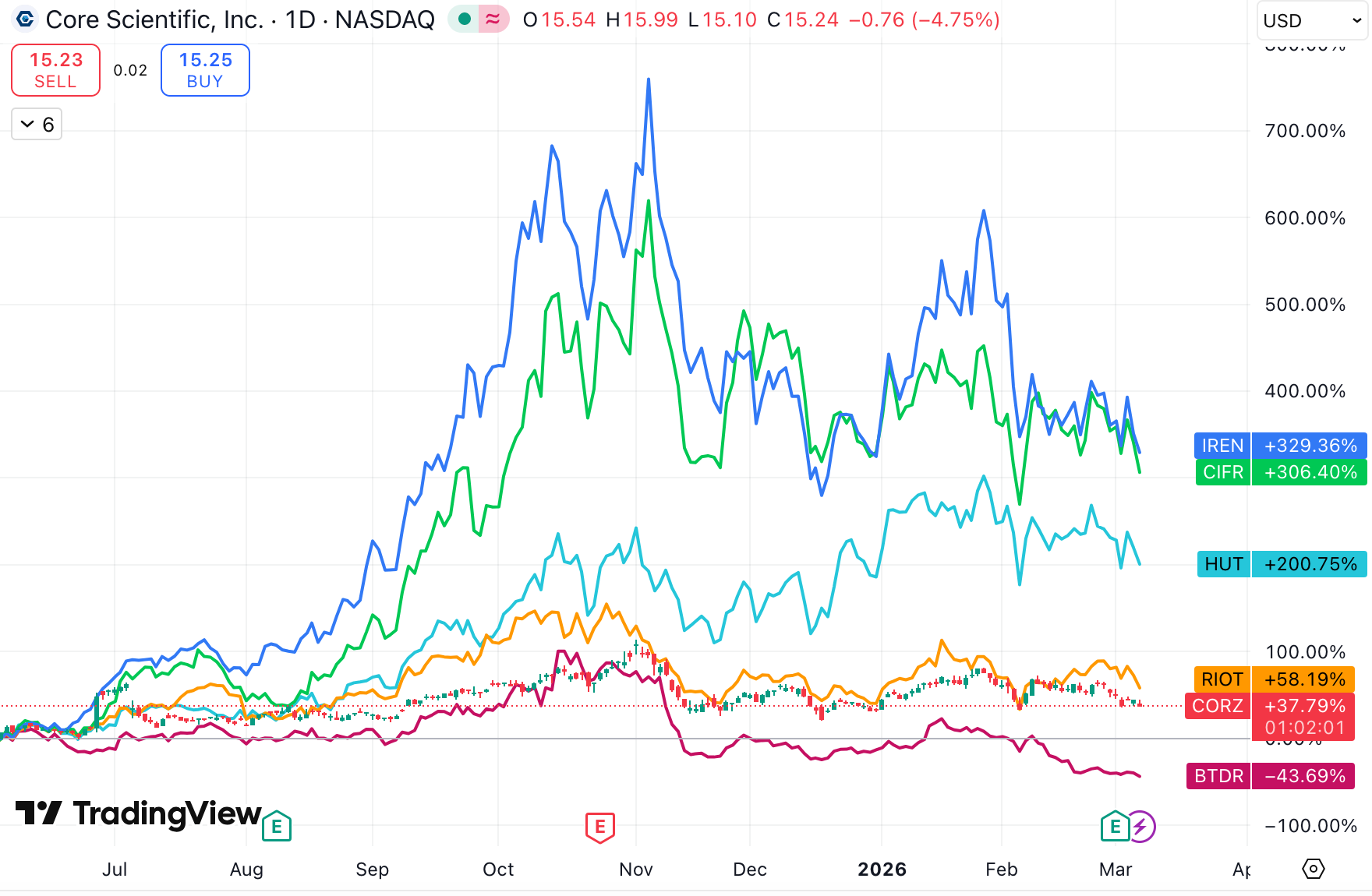
Some investment firms recognized the birth of a new investment narrative and have already started betting big on cryptocurrency miners, scooping up stocks like CORZ, IREN, and RIOT in an attempt to profit off the embedded value of their power contracts and development permits.
So there's this 24 year old who got fired from OpenAI named Leopold Aschenbrenner who raised $1B then grew it into $5.5B... IN ONE YEAR
— Josh Kale (@JoshKale) March 4, 2026
He dumped his Nvidia position and now he's buying every Bitcoin mining company in America. But not because of Bitcoin...
Because they already… pic.twitter.com/Y4SvAsZwGz
🧐 New Paradigm?
The idea that Bitcoin miners could ride the AI wave is not new. While the first version of that trade fizzled out, the thesis this time around has evolved.
Mining stocks no doubt enjoyed a secular bull market from June through October of last year, but the sector has barely been treading water to begin 2026.
Whether this newest narrative ultimately unlocks sustained miner value remains an open question, but should the AI arms race progress, permitted power might quickly become one of the scarcest assets in the compute economy.