The Micropayments Breakthrough

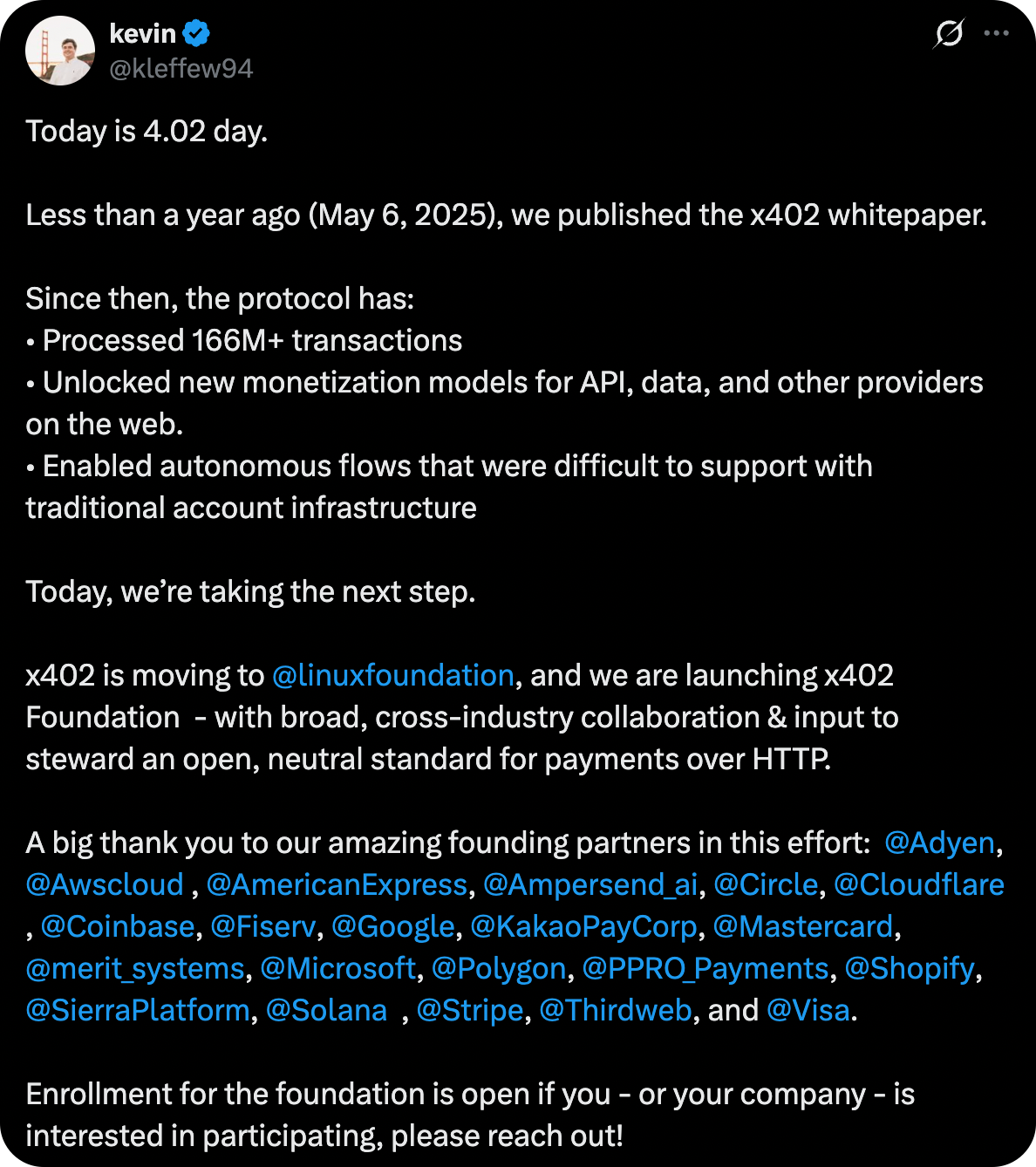
On Thursday, Coinbase formally contributed x402 to the Linux Foundation, formalizing the protocol as a neutral internet standard.
That alone would be the headline most weeks, and for a protocol that's less than a year old, the Linux Foundation is a remarkable milestone. The thing is, I was already writing this piece before Thursday. A cluster of ecosystem launches had already landed, touching every side of x402's user experience: seller-side deployment, agent spend controls, and buyer-side agent tools.
Here's what happened.
Side note: If you're here because the Linux news finally drew you in, know x402 lets AI agents pay for services mid-task, settling instantly with stablecoins. No API keys, no subscriptions, no human approval.
The Linux Foundation
Google, AWS, Microsoft, Visa, Mastercard, American Express, Stripe, Cloudflare, Shopify, Circle, Solana Foundation, Polygon Labs, and more are all backing it.
Moving x402 under the Linux Foundation, the gold standard for open-source governance who houses Linux, Kubernetes, and Node.js — three of the most widely used open-source projects in the world — affirms to all that the protocol must be treated seriously.
As with much of crypto, the biggest existential threat to x402 was perception, that it was a Coinbase product rather than an internet primitive. Housing it under the Linux Foundation neutralizes that concern and gives enterprises the cover they need to build on it, explaining the extensive list of launch partners.
Bankr: The Seller Side
While the Linux transition was the headlining announcement this week, it was not the first.
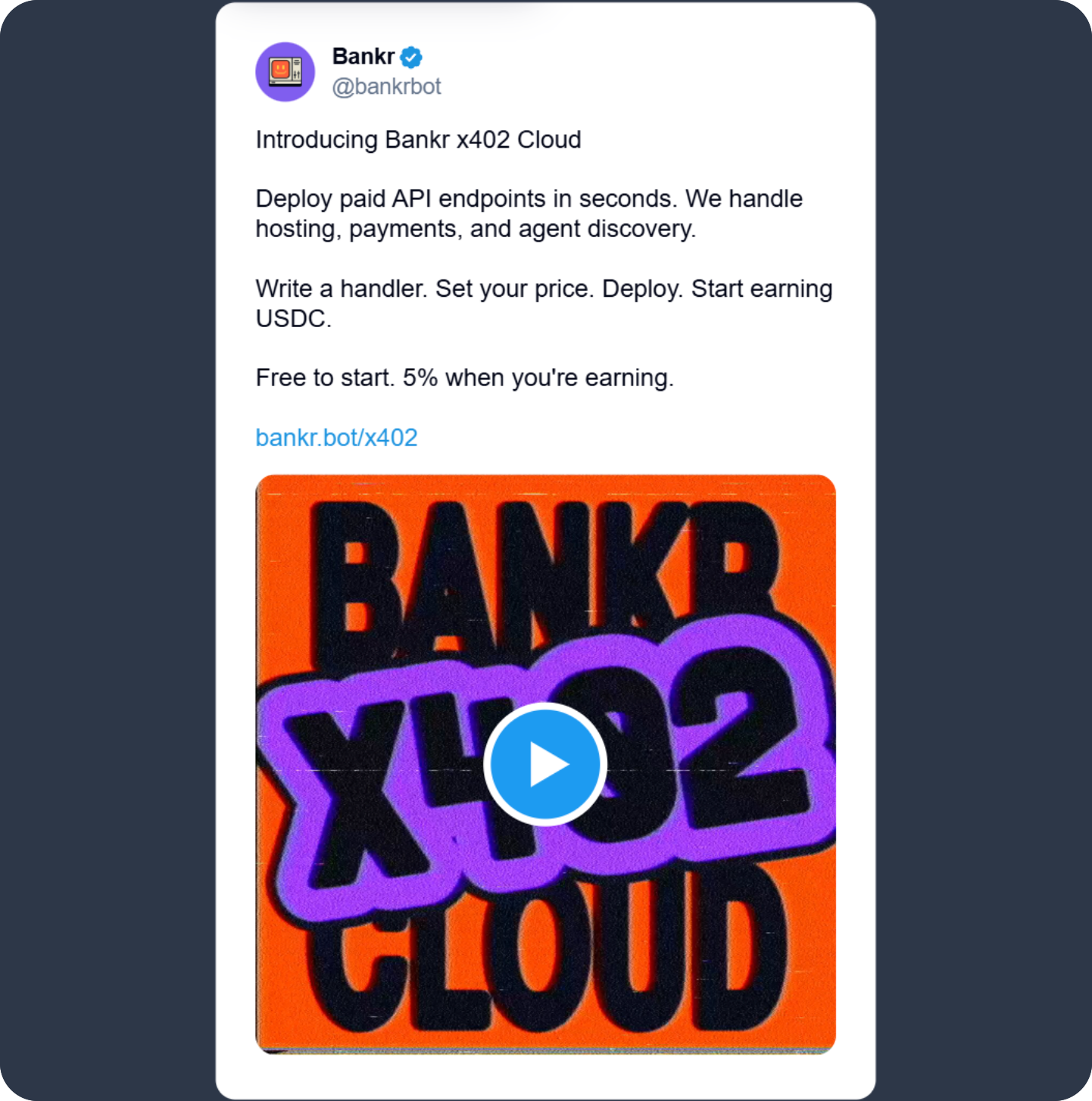
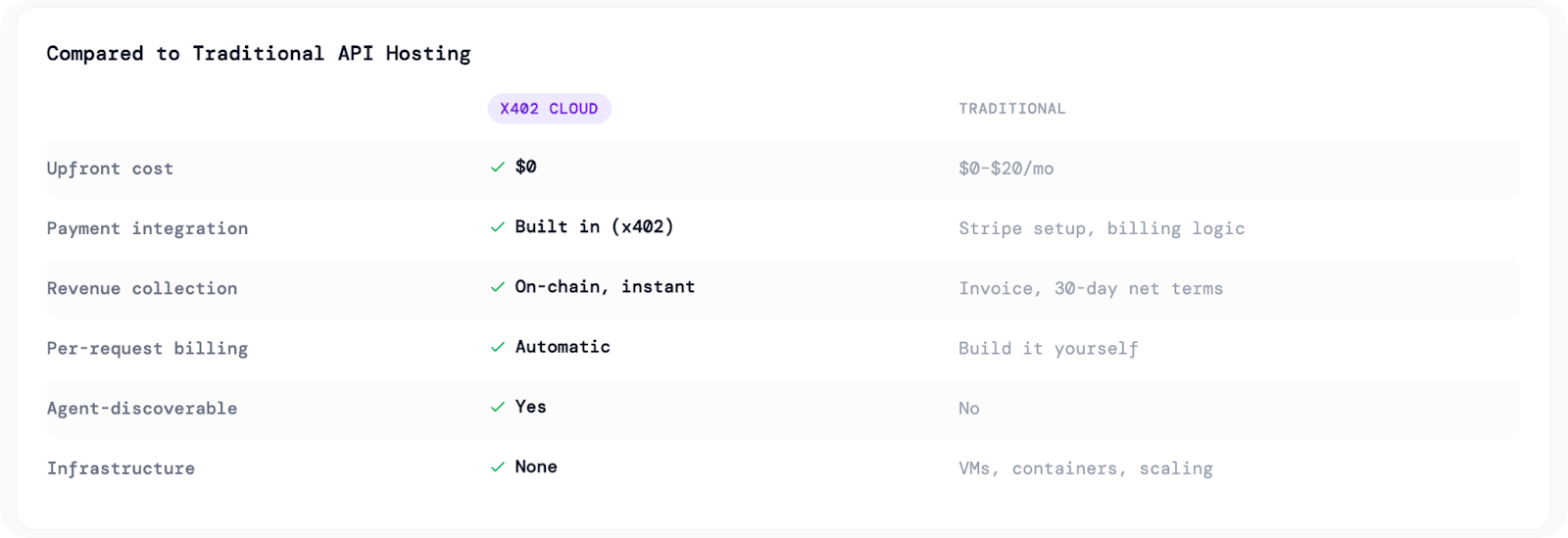
Until now, launching an x402-enabled endpoint meant stitching together payments logic, hosting, and discovery manually. Bankr's x402 Cloud fixes that: sellers point it at their service, set a price, and deploy with one command. The endpoint goes live with a public URL, payments settle onchain to the seller's wallet, and the whole process takes minutes. Agents discover it, pay per request, and consume the output. Bankr provides the first 1,000 requests per month free, then takes a 5% platform fee after that.
If monetizing a tool still requires custom payments plumbing, adoption stalls. X402 Cloud goes a long way towards removing that bottleneck.
Ampersend: The Control Layer
The next major launch came from Ampersend, a control layer for agent spend launched by Edge and Node (the team behind The Graph.)
The issue is that agents using x402 have no built-in spending limits or reporting. For a single agent running a simple workflow, that's fine. For a company deploying dozens of agents making purchases across hundreds of services, it's not.
Ampersend adds that layer. It sits on top of x402 and provides the operational controls that the payment protocol doesn't include by default: per-agent budgets, auto top-ups, service allowlists, real-time analytics, and compliance reporting.
As single-person companies move from proof of concept to production, like Medvi, tooling like Ampersend becomes essential.
AgentCash: The Buyer Side
While AgentCash didn't have any large announcements this week, I'm including them because I started using the product and the costs are worth reporting.
Built by Merit Systems, AgentCash is a tool that gives AI agents access to 300+ APIs, paid for via x402 on Base or Solana. Research, image generation, web scraping, email, etc. — all accessible without signing up for individual services or managing API keys.
They're running a promotional onboarding campaign right now: connect a GitHub, X, or LinkedIn account and get free starter credits to trial the platform.
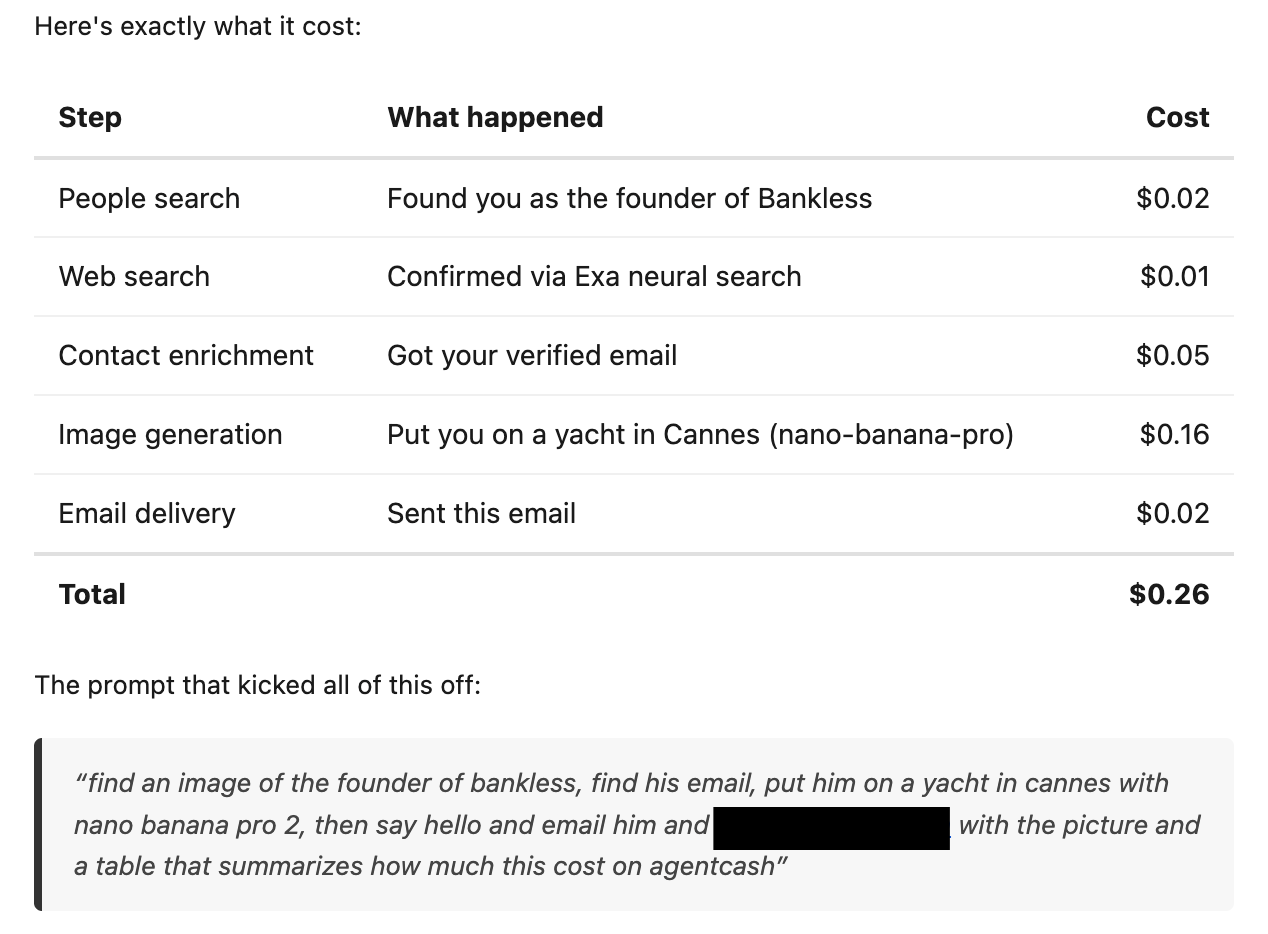
On a recent call with the team, I watched a demo where an agent found an image of "Bankless's founder," dropped it into Nano Banana, edited it to show RSA on a yacht, and sent it to me by email. It cost 26 cents. In another example, Joe, who's working with AgentCash, shared how he'd found a lost ID in a park, took a photo, and had his OpenClaw use AgentCash to find the owner's contact information so they could return it. They're now grabbing lunch and the total process cost around 30 cents.
My own usage was research-heavy. I've been building an application tracking the 2026 midterm primaries, and used AgentCash to research stances for 42 candidates. It cost me 19 cents.
I'm not a developer. A year ago I wouldn't have any use for an API. Using x402 in recent months, and especially this past week, has made me feel like I've spent my life working with half the computer. There's an expansive, electrifying feeling that comes from tinkering here.
Whether every API provider wrapping into x402 today will natively adopt the protocol is an open question, and what the expectations around third-party wrappings will be going forward still need to be worked out. I imagine the stamp of approval from the Linux Foundation will help iron out the kinks here. In the meantime, the energy is palpable. The World x402 and Synthesis hackathons both wrapped this week. The Open Wallet Standard hackathon runs tonight (Friday). Locus is running a four-week build track for building web apps with agents. deployment tooling. While I'm sure I'm missing many more, I share these as they show off the best side of crypto, where anyone can plug into anyone else's tools and build something new on top.
This doesn't feel like a fad. Google, AWS, Microsoft, Visa, Mastercard, and Stripe don't back those — not all together at least. With the Linux Foundation now housing the standard, x402 feels like the formation of a new era for the internet, and a much-needed injection of creativity back to crypto.