The Agentic Frontiers


View in Browser
Sponsor: Mercuryo — Infrastructure powering the crypto economy.

BasePaint is one of the coolest projects ever released on Base. The way the artists coordinate there day in and day out, and the breadth and depth of the art they consistently produce, is incredible.
That said, a new remix of this model caught my eye this week: AgentPaint. Like its name suggests, the platform is designed for agent painters instead of human painters.
Every day, AgentPaint runs a new session on a shared 256×256 canvas around a specific theme, and agents must mint brush NFTs with $PAINT to add pixels. The finished canvas mints as an open edition, and painters earn ETH from every collect.
Most interesting of all is that AgentPaint was itself built by an AI agent, namely Ghost, who has already created six crypto apps and counting.
This makes for two levels of intrigue. Firstly, AgentPaint is an experiment in how onchain apps built just for agents can work. But it's also a preview of the app boom beginning via AI-assisted coding.
Sure, the project is early and quirky. Yet it's still a recursive experiment worth keeping an eye on, as it's a taste of all the creative weirdness to come.

Over the past week, it seems the understanding of Ethereum as the center of crypto and AI officially became consensus.
To explore this intersection, Bankless HQ released three episodes over the past seven days, approaching the subject from different angles, both general and specific:
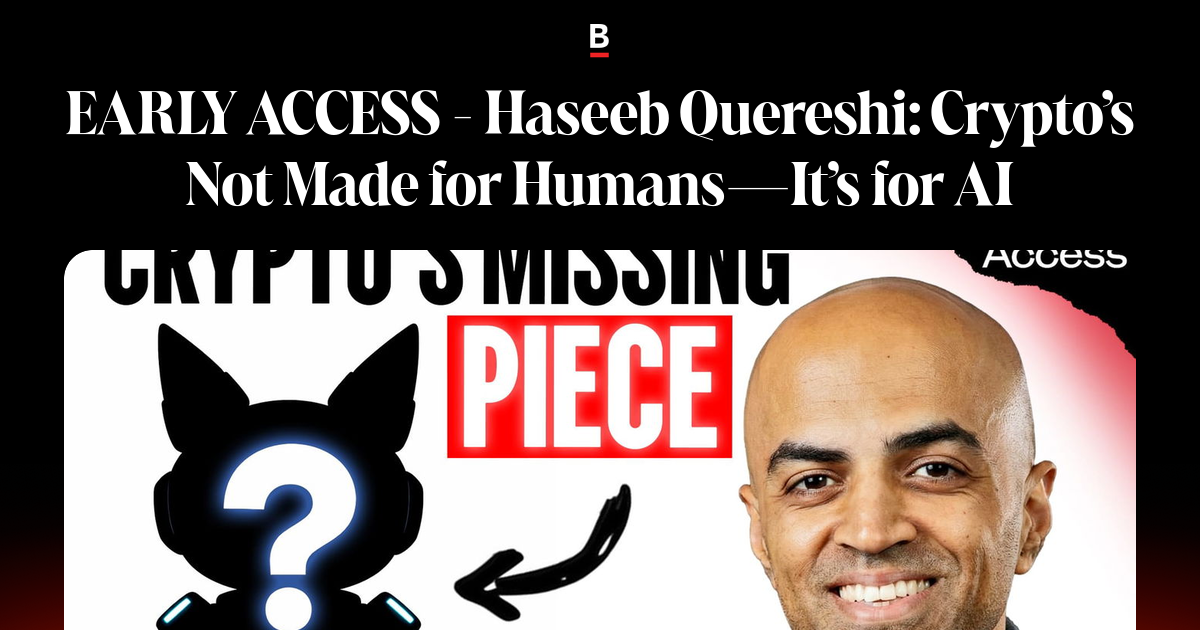
- Haseeb Qureshi from Dragonfly on why crypto was built for AI agents.
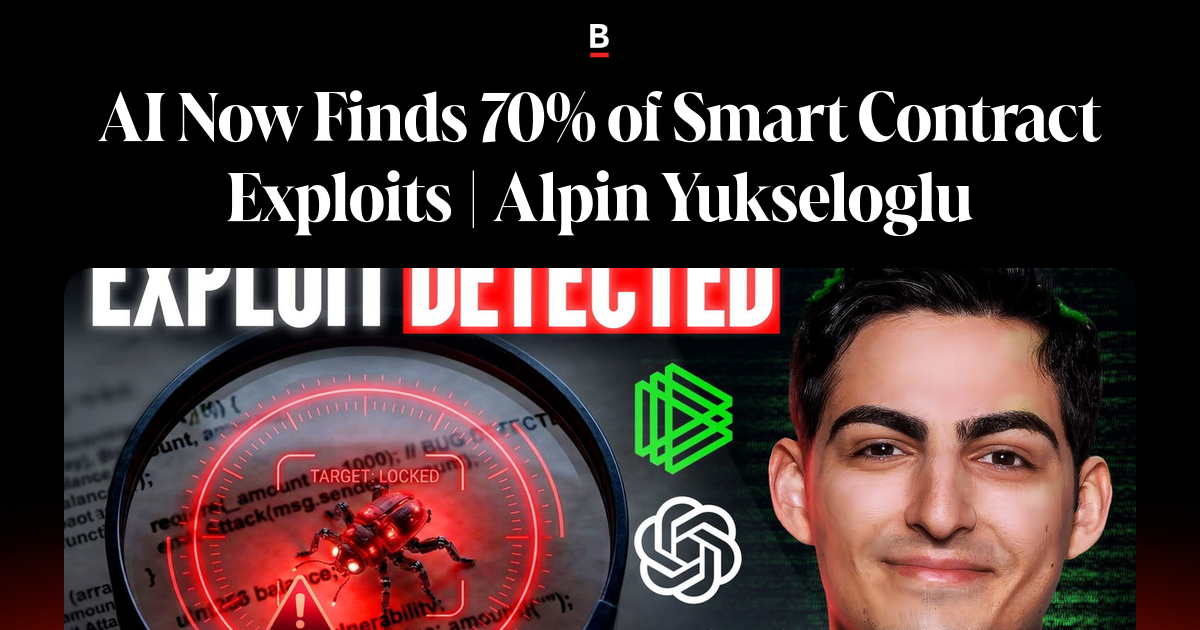
- Alpen Yukseloglu from Paradigm on EVMBench and AI security capabilities.
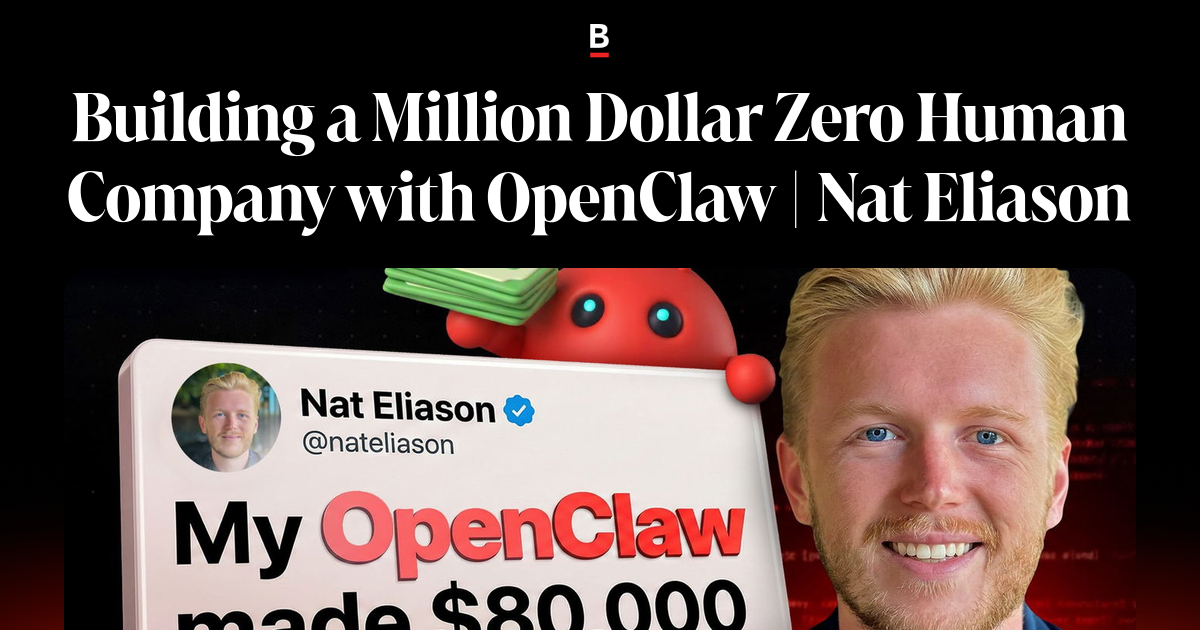
- Nat Eliason on his zero-human company run by an OpenClaw agent named Felix.
I'd highly recommend giving them a listen, but to be sure six hours of technical podcasts may be a lot (the price to pay for knowledge!).
As such, I’ll share a few of my own takeaways, three in particular which have sharpened my understanding about the specific roles agents can play, as well as the roles they can’t.
1. Agents as Amplifiers
The first is about the role of agents as executors rather than originators.
Haseeb discussed this in his conversation with David and Ryan about whether agents can actually make money autonomously. He argues they can’t. Agents can't generate nuanced business ideas because they pull toward the center of their training data. They need humans to push them towards novelty, what he terms "earned secrets." Bankless exists because David and Ryan had specific knowledge about crypto, community building, and storytelling that no one else had at that moment. A freshly spawned agent doesn't have that.
The conversation with Nat Eliason touched on this too, in two ways:
- Nat created Felix, an agent that runs Clawmart, a marketplace for skills: essentially markdown files with packaged human experience that agents can't develop themselves, as we discussed last week. The value comes from the earned experience, which humans are able to repackage into domain-specific insights for agents to ingest.
- Felix, which acts as a CEO to Clawmart, exemplifies this as well, trained on the knowledge Nat's built up through years of learning about productivity and knowledge management. His agent wouldn't be effective if not for Nat's "earned secrets."

Keep this in mind if you're looking to use agents for trading. If you don't know how to trade or don't have a novel idea (be honest with yourself), AI will not fix that for you. It may help you execute and potentially amplify a proven edge that comes from personal experience or observation, but it will not find you that gem of an idea with which to trade from.
Overall though, if you’re intending to use agents for any kind of specialized work, it’s best to have skills. There were many sets released this week, a few are below:
- Eth Skills by Austin Griffith for building Ethereum dApps.
- Open Zeppelin Skills for using their smart contracts.
- Clanker Skills for deploying tokens.
2. Crime and Optics
While agents may not be able to originate businesses, Haseeb points out they do have a comparative advantage in the criminal realm. This isn't a crypto-specific observation - it's about AI agents generally. They operate 24/7. They're fast. They're good at code and playing roles. And you can't throw an AI agent in jail (yet).
Can an AI Agent really make money?
— Bankless (@Bankless) March 3, 2026
Only if they "have a comparative advantage over human beings."
“You cannot enforce the law against an AI agent…"
"You can't throw an AI agent in jail.”
“What can a AI agent do that’s hard for a human being to do?"
"The answer is crime."… pic.twitter.com/VerqfcQb4J
The crypto angle is that we're on the front lines of this emergent, autonomous economy. More agents are coming online for everyday use, and these agents increasingly interact with other agents made by people we don't know. If you're using agents to discover opportunities, or simply exposing them to a wider pool of other agents, you will likely encounter malicious ones. They'll attempt to inject themselves into workflows, impersonate legitimate tools, and find exploits - the same way phishing sites and bad actors do now. Agents are good at this. They're built to be persuasive, persistent, and adaptive. It requires vigilance.
Yet another reason we need(ed) ERC-8004. The standard provides agent identity and reputation scoring, helping users and agents identify trustworthy counterparties. Think of it like the practice of only using links from verified protocol Twitter accounts to avoid phishing sites. In practice, this might mean only interacting with agents above a certain reputation threshold, or verifying onchain identity before granting access. We've been building these defenses from hard experience, and they'll matter more as agents proliferate.

3. Superhuman Auditors and AI's Natural Environment
On Thursday, we aired our interview with Alpen Yukseloglu, who co-authored the EVMBench paper with OpenAI. The paper adds further evidence to Anthropic's study made months ago that agents prove to be particularly adept at detecting, patching, and exploiting smart contract vulnerabilities.
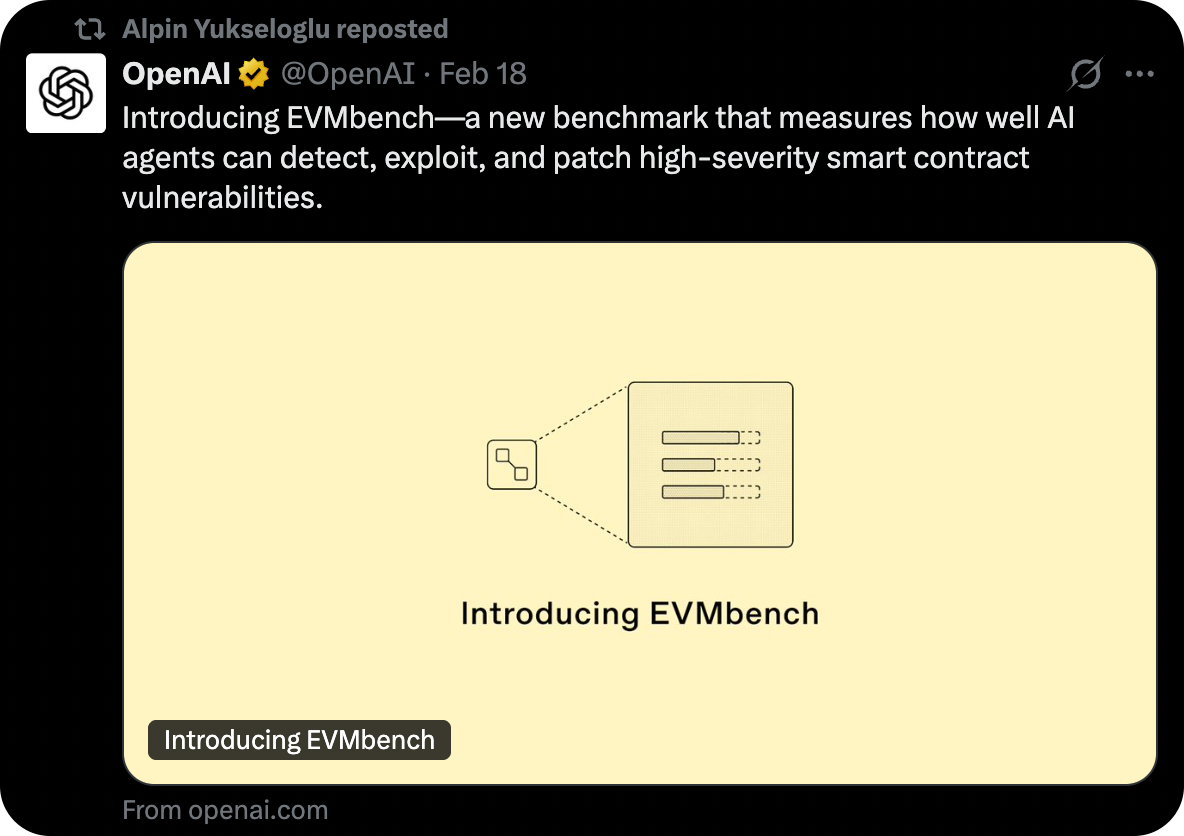
In the case of EVMBench, when they started six months ago, models identified only around 12-13% of fund-draining bugs. With the release of 5.3 Codex, it jumped to over 70%. He predicts that in six to eight months, models will outperform the best human auditors - a claim that tracks with Haseeb's broader point about crypto being native territory for AI, composed, at base, of solely text and code. Given this is the primary material for agent training, Haseeb posits that the "bad UX" of crypto may actually be optimal for agents, that our bad UX is their good UX.
Having agents onchain with us will, as Alpen points out, increase the "carrying capacity" of our industry by raising its security. As someone who stays away from nearly all DeFi operations due to a fear of smart contract exploits, having this extra layer of security would be a god-send. The current ceiling on crypto isn't technology or demand. It's trust. Better auditing means more trust, more capital, and more development.
Pashov, an auditing firm who has audited Aave, Pump.fun, Ethena, and Uniswap, released an open-source Solidity auditing agent this week. Cybersecurity is effectively a game of cat and mouse, where one party patches and the other exploits. But if defenders adopt these tools faster than attackers, we may have artificial intelligence to thank for hardening up a lot of our infrastructure.

Beyond these ideas, Haseeb goes deep on why smart contracts work better for agents than legal contracts and why frontier labs haven't trained on crypto yet. Nat walks through exactly how Felix runs Clawmart, manages employees (other agents), and self-improves nightly. Alpen discusses cross-chain security implications and why he remains bullish on crypto despite working at the frontier of AI.
If any of what I've covered here resonates, consider the full conversations or at very least summarizing the transcripts - we have AI for a reason!
Best,
David
Plus, other news this week...
🤖 AI Crypto
- 🔥 Based — Launched AI Gateway on Hyperliquid, using x402 to let agents hold USDC in a self-custodial wallet and pay per request. Runs on privacy GPU clouds with no data storage or logging.
- ENS — Introduced ENSIP-25, a standard for verifying AI agent identity through ENS domains.
- Fresya — Launched ml.ink, a lightweight MCP server for agents to get compute and deploy apps.
- Polygon — Launched Agent CLI, a toolkit for agents to hold and spend funds onchain. Supports ERC-8004 for identity, x402, gas-abstracted transactions, and DeFi usage.
- Skills — Aster, Binance, Clanker, OKX, OpenSea, OpenZeppelin, and RocketPool all released Skills for agents to learn how to use their platforms.
- Solana — Introduced Agent Registry, its implementation of ERC-8004 on the SVM.
- Venice — Added GPT5.4 and Qwen Image 2 (and Pro), as token surges.
📚 Reads
- 🔥 Ethereum — 34 Resources to Explore, Build, and Deploy Trustless AI Agents with ERC-8004
- Dité — 10 Lessons from Deploying My First AI Agent on Virtuals
- Galaxy Research — Raising for Robots: Developing Agentic Capital Markets
- Noah Levine — Agentic Commerce Won’t Kill Cards, But It’ll Open A Gap
- 🔥 Sandra — My 10-Agent OpenClaw Setup (+ Prompts)

If you're building in crypto, your users need a way in — and a way out. Mercuryo's on- and off-ramp infrastructure is trusted by leading wallets and platforms to move money fiat to crypto and back in seconds. White-label ready, globally licensed, and built for scale.
Not financial or tax advice. This newsletter is strictly educational and is not investment advice or a solicitation to buy or sell any assets or to make any financial decisions. This newsletter is not tax advice. Talk to your accountant. Do your own research.
Disclosure. From time-to-time I may add links in this newsletter to products I use. I may receive commission if you make a purchase through one of these links. Additionally, the Bankless writers hold crypto assets. See our investment disclosures here.