Stripe's Tempo Makes Its Case
Tempo hit mainnet last week, cementing a reality that would've been absurd two years ago – Stripe just launched a blockchain.
Alongside mainnet, Tempo shipped Machine Payments Protocol (MPP), and Stripe hosted Commons, their first explicitly crypto event. With Tempo, Stripe now controls a full crypto stack: Bridge for cross-border settlement and stablecoin issuance (SpaceX and Meta are already using it for cost and speed), Privy for wallet infrastructure (now powering stablecoin cards in 100+ countries), and Tempo as the chain itself.


Tempo Refresher
Tempo is a payment-optimized, Stripe-developed L1 EVM built on Reth – Paradigm's high-performance Ethereum client. The chain launches with a permissioned validator set, but supports roughly 10,000 TPS (with 100K ambitions), comes with 400-600ms block times, and offers support for parallel transactions to increase throughput.
To be “payment‑optimized,” the chain incorporates a range of design choices across execution, fees, and privacy.
A few examples include:
- Payment Lanes: Reserved blockspace for stablecoin transfers so DeFi activity can't crowd out payments or spike fees.
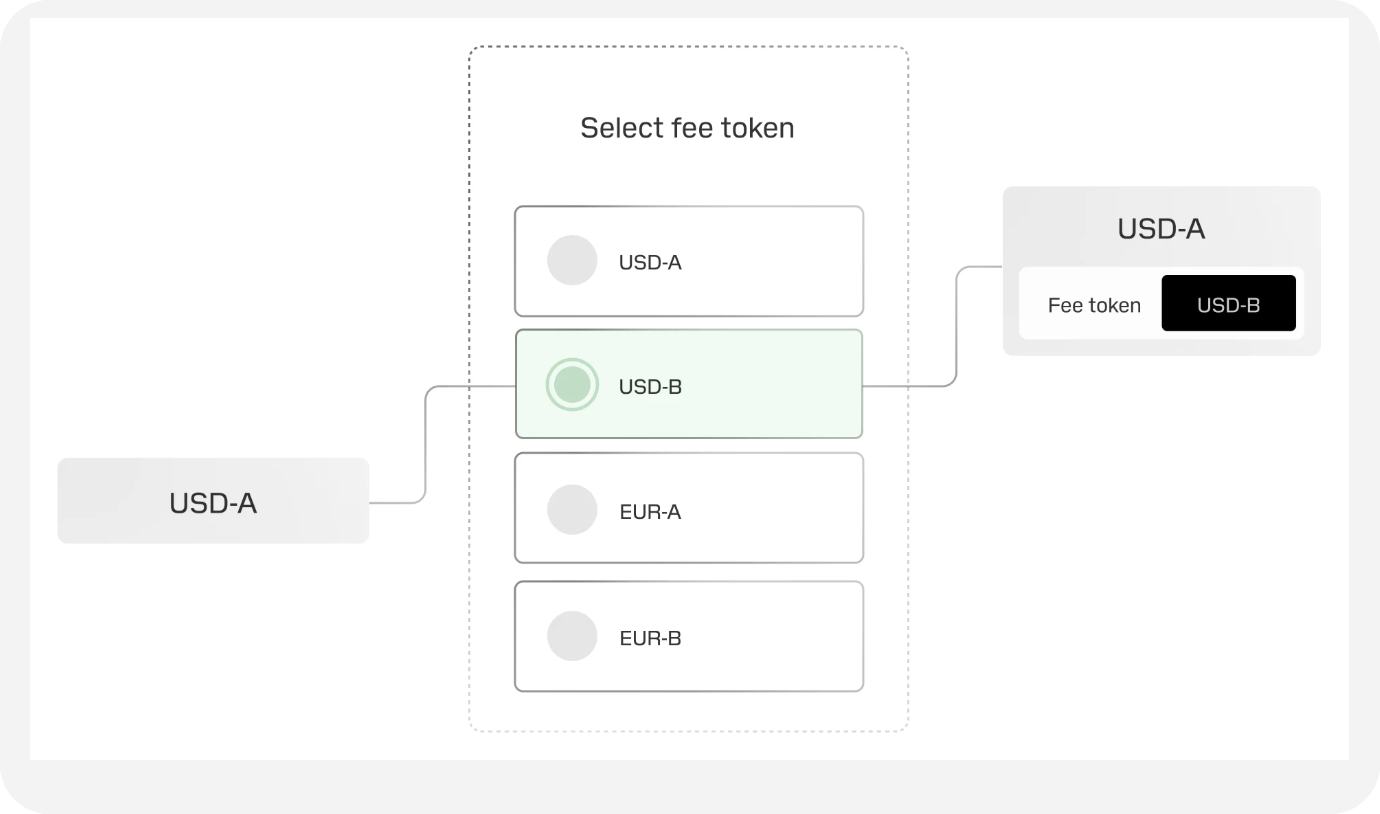
- Fees in Any Stablecoin: No native gas token required. If you hold USDC but a validator wants USDT, a DEX baked into the protocol converts automatically. In other words, users don't swap manually; interoperability happens at the protocol level.
- Opt-in Privacy: Private balances and confidential transfers while maintaining issuer compliance.
It's not only the protocol that's tailor-built for payments. Tempo has its own token standard TIP-20, a modified version of ERC-20 with features like:
- Transfer Memos: Attaching invoice IDs, customer references, or other metadata directly to payments. Backend systems can auto-match transactions without manual reconciliation.
- Built-in Compliance: Issuers can enforce whitelists or blacklists via a shared policy registry. Updates propagate automatically across all tokens using that policy.
- Reward Distribution: An opt‑in rewards mechanism that lets issuers distribute yield or incentives directly to TIP-20 token holders.
The last feature I’ll mention is that Tempo wallets have passkey support embedded by default, meaning support for Face ID, Touch ID, or other biometric authentication is baked into the protocol. This means no seed phrases or browser extensions, and thus an overall smoother experience for using the chain.
honest review of @tempo. its legit. not another L2. its the future
— ◥◣ N I C O L E T T E ◥◣ (@nicoletteduclar) March 19, 2026
was hacking a quick game @tempaitown. expected the usual Metamask connect wallet sheningans. but no. blew my mind
you create a wallet with passkey. one click. was lowkey bracing for the Privy upsell. never came… pic.twitter.com/tlaC918JBf
MPP vs. x402
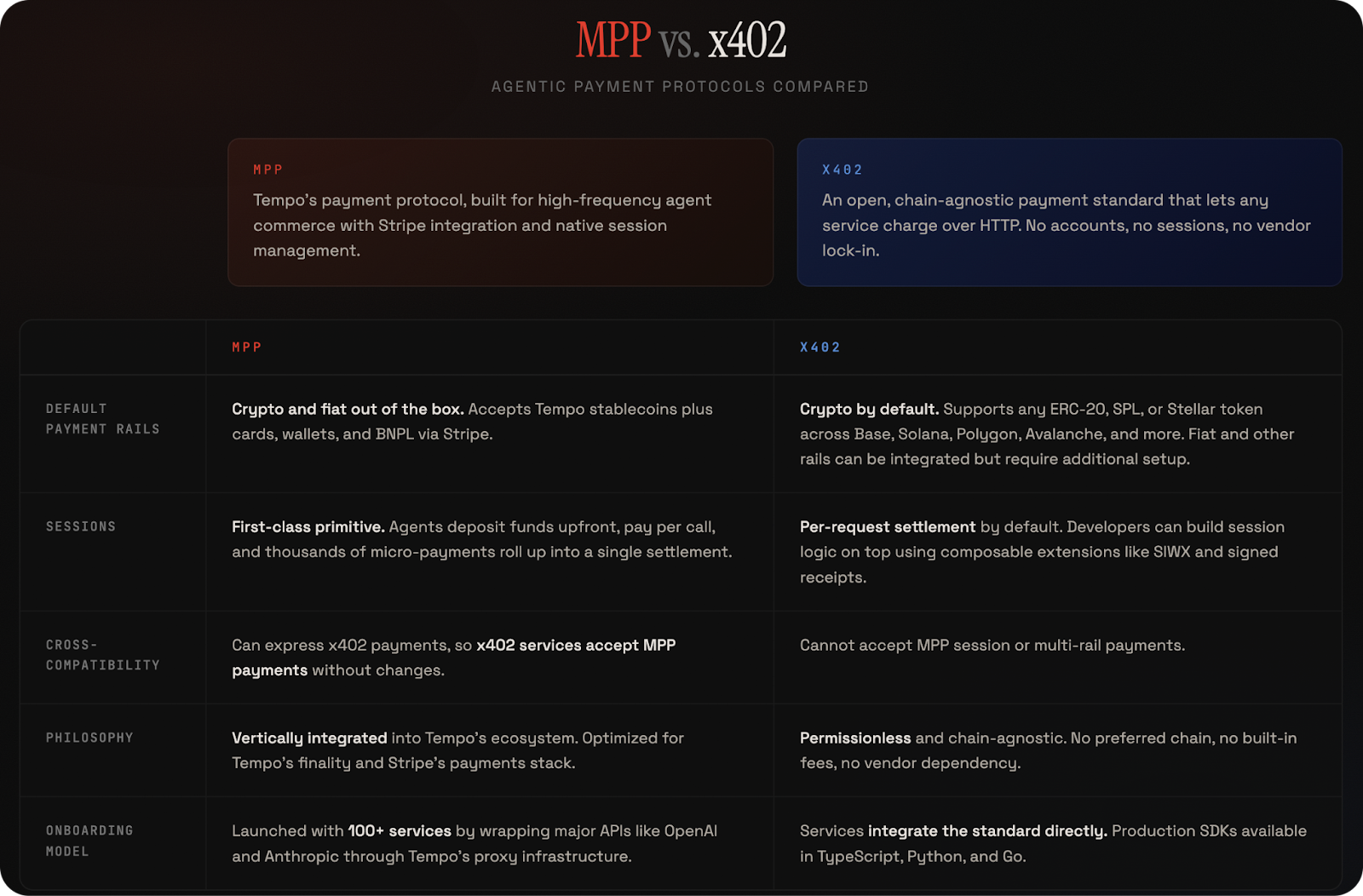
As I mentioned, Tempo debuted MPP with mainnet, taking aim at agentic payments. Whether competitive or complementary to x402, there are differing opinions but both protocols use HTTP 402, the "payment required" status code, to let agents pay for web services.
MPP's key differences are:
- Sessions: Pre‑authorized spending caps that let agents make many small payments without settling each one on‑chain. An agent deposits funds upfront, pays per API call, and thousands of micro‑payments roll up into a single settlement. This is MPP’s main throughput solution for high‑frequency use cases, and the feature most often cited when comparing MPP to x402. While x402 can support similar behavior, it requires more configuration and isn’t as native; sessions are a first‑class primitive in MPP rather than an added layer.
- Hybrid Rails: Built‑in support for crypto (Tempo stables) and fiat (cards, wallets, BNPL) via Stripe, who’s wired Tempo into their full payments stack. This is certainly a nice to have in terms of adoption, especially since, for fiat, funds settle into the merchant’s existing Stripe balance with taxes, fraud checks, and refunds handled automatically.
- x402 Compatibility: MPP can express x402 payments, so x402 services can accept MPP payments without changes. The reverse doesn’t work: x402 doesn’t support MPP’s session model or multi‑rail payments.
Overall, the differences between the two can be summed up as: x402 stays more permissionless and chain‑agnostic, while MPP is stickier and designed for Tempo’s ecosystem, bringing more integration ease out the gate.
Builder Momentum
Tempo’s initial momentum feels like one of the strongest launches in a while. Given that it’s Stripe at the wheel, anything less would probably have been embarrassing, but it’s still noteworthy.
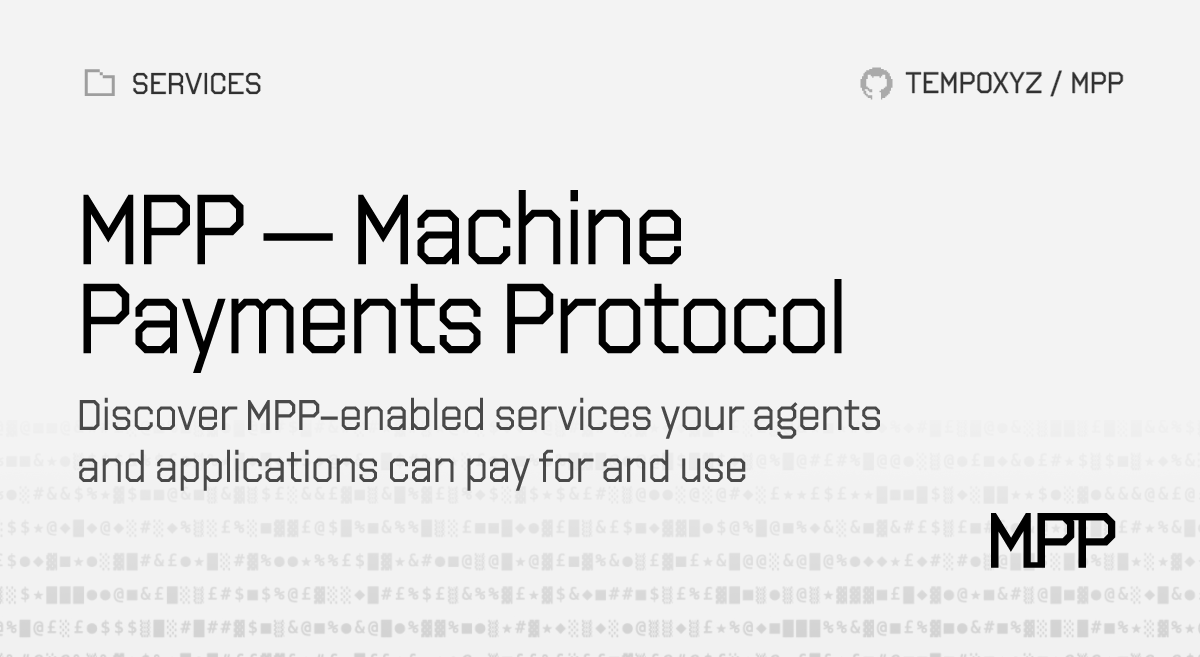
MPP shipped with 100+ compatible, web and crypto, services from OpenAI, Anthropic, Perplexity, and others on day one. While these services can all be wrapped and deployed via x402, the sheer breadth of native integrations at launch is genuinely impressive, and you can find the full list in the directory below.

Further, the day after Tempo’s release, Stripe ran an MPP hackathon. Projects from that event have been circulating across my feed for days, with many participants explicitly calling out the onboarding experience as unusually smooth and intuitive.
That said, it’s important to separate builder momentum from onchain adoption metrics, especially as early narratives start to solidify. While there is strong qualitative and anecdotal evidence of excitement around Tempo and MPP, current onchain activity does not yet reflect broad, organic usage. Recent analyses of the widely cited “2.3k sellers in five days” stat show that the vast majority of those addresses stem from $0.01 test transactions, often sent by a small number of wallets, inflating raw seller counts. Only a fraction of sellers have earned more than $1 total, and fewer still show evidence of repeat payers or meaningful commercial activity.
pretty much exactly what I expected tbh
— Joe (@0xosprey) March 23, 2026
falls squarely into vanity metric imvho pic.twitter.com/d04nN8H4j3
None of this negates the real builder energy behind MPP, but it does suggest that “adoption" today is better understood as qualitative and developmental, rather than quantitative or usage‑driven. Reports that frame early seller counts as proof of breakout usage are, at best, premature.
Just the Beginning
What’s most striking for me about Tempo isn’t the tech, but rather the initial reaction to it. Over the past few months, much criticism has been aimed at Tempo: its centralization, its tight coupling to Stripe, and the fear that it might prioritize control and distribution over crypto’s more open instincts. And yet, Tempo’s launch during bear market depths has seemed to largely be met (on my timeline at least) with cautious excitement rather than overt resistance.
There’s of course a real sense of affirmation in seeing Stripe not merely sponsor crypto infrastructure, but stand behind Tempo, launch MPP alongside it, and speak so openly and confidently about crypto’s future at Commons.
There’s also the fact that Tempo and MPP both boast toolkits and features that feel unusually smooth. Reinforced with a partner list consisting of DoorDash, Mastercard, Ramp, and Klarna, to name just a few, it’s clear crypto is entering a new era with this launch.
Of course, the centralization trade‑offs are real. Tempo is opinionated, tightly integrated, and very much Stripe‑shaped. The hope is that decentralization follows sooner rather than later. Whether that plays out in reality, we’ll see. For now, what stands out is the arrival of serious infrastructure players who see agents, programmable money, and global settlement as part of the same stack. The challenge is ensuring this evolves on our terms.