Saving Compromised Tokens


View in Browser
Sponsor: Mantle — The Mantle Global Hackathon, running 10/22 to 12/31, invites devs & founders to design, build, and deploy scalable RWA and DeFi products on Mantle.

Compromised wallets are dreadful. Even if your liquid funds get stolen this way, you can also get stuck with unclaimed airdrops, NFT allowlist spots, etc., in a wallet you can’t safely transact from.
Why? Once an attacker has your private key, they can deploy a sweeper bot that monitors that address across networks. The moment you send in any gas, the bot will pounce and drain it out. So even if you still technically “own” the wallet, it can feel nearly impossible to retrieve any remaining assets.
But what about a workaround?
EIP-7702 as a rescue primitive
Here, cue in EIP-7702.
EIP-7702 introduced a transaction type that lets regular Ethereum Virtual Machine (EVM) wallets temporarily behave like advanced smart contract wallets.
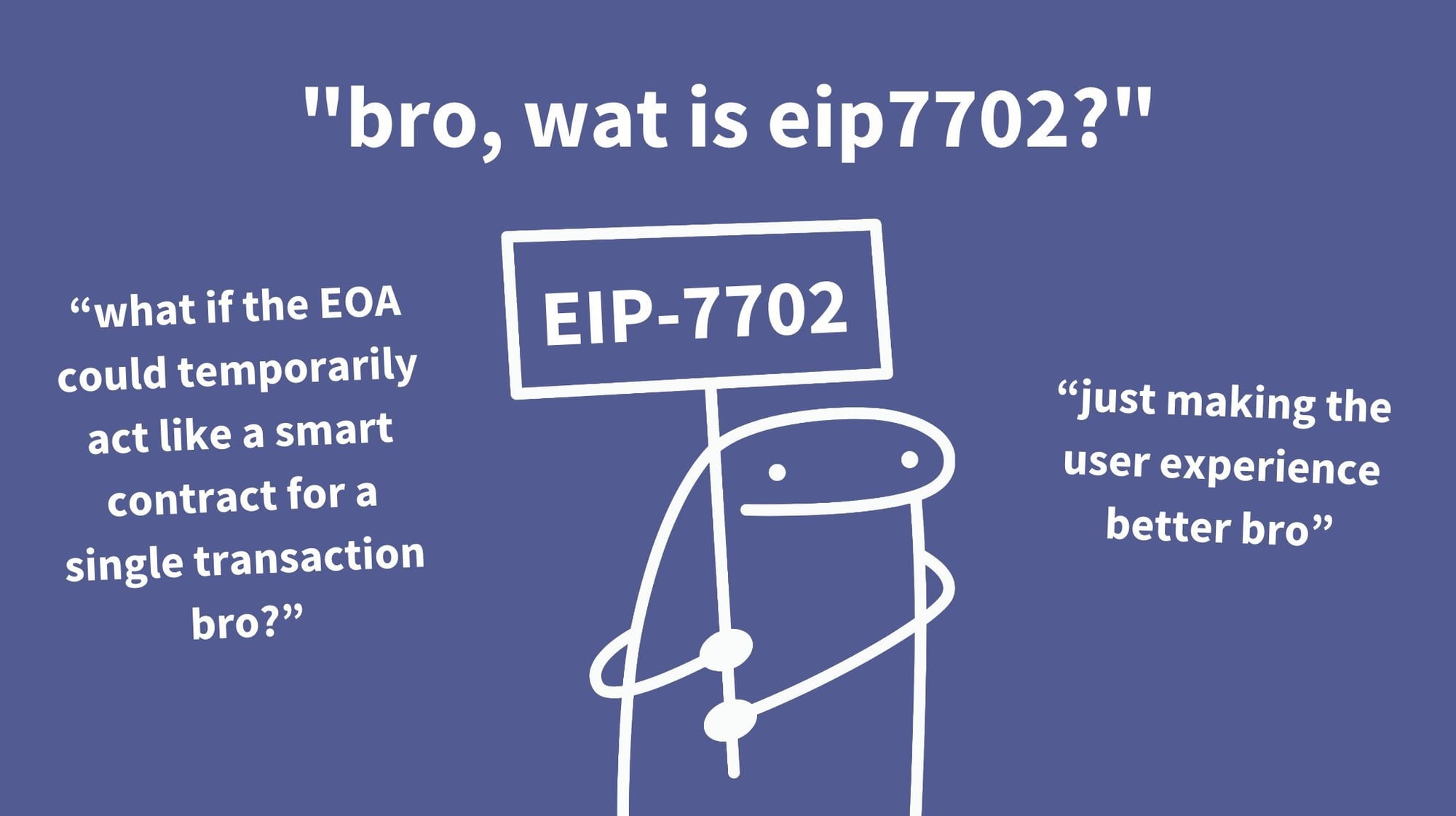
Notably, this design offers a rescue path for partially recovering assets from compromised wallets. With EIP-7702, you can:
- Use a separate sponsor wallet to pay gas
- Delegate the compromised wallet to a batch contract
- Have that batch contract execute a claim + transfer on behalf of the compromised address
- Then revoke the delegation
This way, since the compromised wallet isn’t directly sending the transaction (it’s only authorizing once via EIP-7702), you can slip past sweeper bots and evacuate tokens that would otherwise be unrecoverable.
The Antidrain example
This sort of recovery flow is exactly the thrust of Antidrain, an EIP-7702 rescue tool built by Zun and released earlier this year. It's positioned as a last-resort, client-side recovery app for things like airdrops and NFTs.
For instance, one user, Moei, said on X this week that they used Antidrain to save their Fwog NFT allowlist spot, successfully minting it and transferring it to a safe wallet after a private key compromise. It's a non-trivial recovery, considering how Fwogs are currently trading around ~$700 on OpenSea.
In other words, this tool builds EIP-7702 delegations and batch transactions locally in your browser (i.e. no backend server, no key transmission), allowing you to execute rescue operations across supported EVM chains.
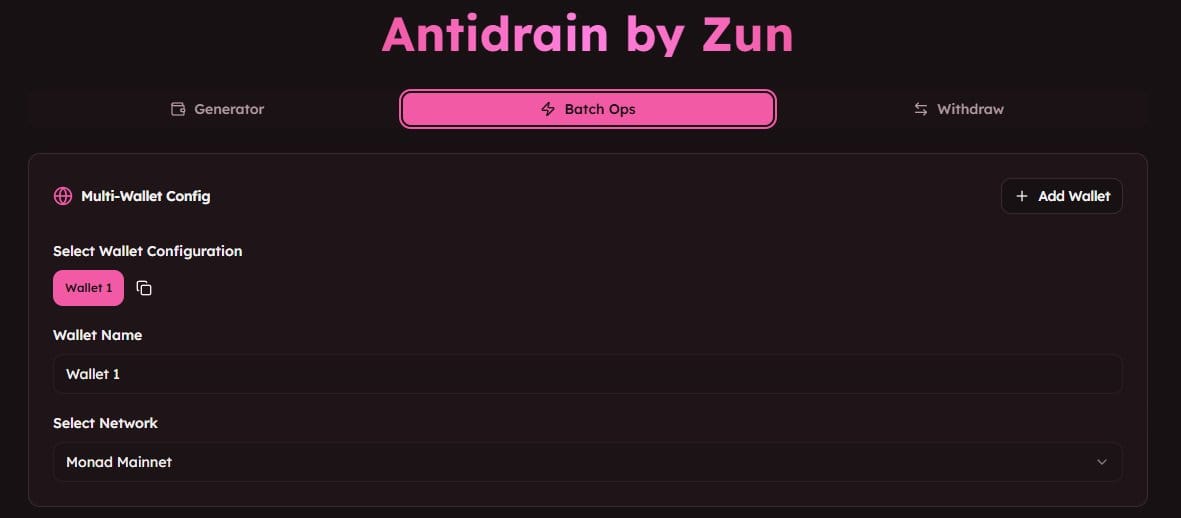
All that said, this is one of those “break glass in case of emergency” tools. Crucially, Antidrain does ask for the private key of the compromised wallet during setup. Under normal circumstances that’s an instant hard “no.” Here, the idea is:
- The key is already compromised, so the attacker has it anyway.
- You’re just using it one last time to claw back anything that’s still recoverable.
- The tool’s design is entirely local, or at least it appears to be upon inspection. As a static client-side app, it builds and signs transactions in your browser, and after digging through the site's code, I didn't find evidence of it sending sensitive data to any backend.
That last point doesn't make for a formal security audit, of course, but the app appears to work per its stated design.
Fortunately, I haven't had a need for this sort of resource yet, so I haven't personally used Antidrain myself. And to be clear, pasting a private key into a website is virtually always a terrible idea. This avenue is meant only for already compromised wallets as a last ditch resort to bypass squatting sweepers.
Hypothetically, if Antidrain were malicious, the worst-case scenarios would be losing whatever remains in your compromised wallet or having your sponsor gas or rescued tokens redirected to an address you don't control. None of your uncompromised wallets would be at risk, as you don't download anything here and you don't import or sign anything with your safe wallets.
The bottom line is that if your wallet is compromised and you're facing a sweeper bot, a tool like Antidrain may be worth a shot. If your wallet isn't compromised, you should never consider pasting your private key into any web app.
Use at your own risk, then, and only for wallets that are already burned. But if you ever have the misfortune of needing a tool like this, the configuration process on the site appears straightforward. You would:
- Create and fund your sponsor wallet
- Input your desired wallet configurations
- Set your rescue details and receiver address
- Press "Execute All Wallets" to fire off your batch transaction
- Withdraw any remaining gas from your sponsor wallet
And that's it. This system works best for one-shot rescue flows, like "claim this airdrop and send it straight to my safe wallet." A 20% service fee is charged on any ERC-20s rescued for ongoing development, so keep that in mind too.
To be sure, a tool in this vein won't magically expel an attacker from your wallet, but it is interesting to see EIP-7702's potential in giving drainer victims a fighting chance. On a dark day, it could be the difference between salvaging something and losing everything, so keep this capability in mind going forward.

Mantle Global Hackathon 2025: Mantle has entered a new phase in its roadmap – becoming the distribution layer to connect TradFi and onchain liquidity for RWAs where real-world finance flows. To accelerate this vision, Mantle launched the Mantle Global Hackathon 2025, running from October 22 to December 31, 2025, inviting developers, founders, and innovators to design, build, and deploy scalable RWA and DeFi products on Mantle.
- ⛓️ Being "Chain Agnostic" — Fred Wilson
- 💡 The Light Within the Blip — m-j-r.eth
- 🤳 The Era of the Crypto App — Rani Haddad
- ⚖️ Why Ethereum Needs Its Own License — Lighthouse Labs
- 📱 The Future of Prediction Markets Is in Group Chats — Shane Mac