ROLLUP: Wartime Markets | Kraken Gets Fedwire | Trump vs Banks | AI vs Pentagon | NYT Says Crypto Is Dead
TRANSCRIPT
Ryan Sean Adams:
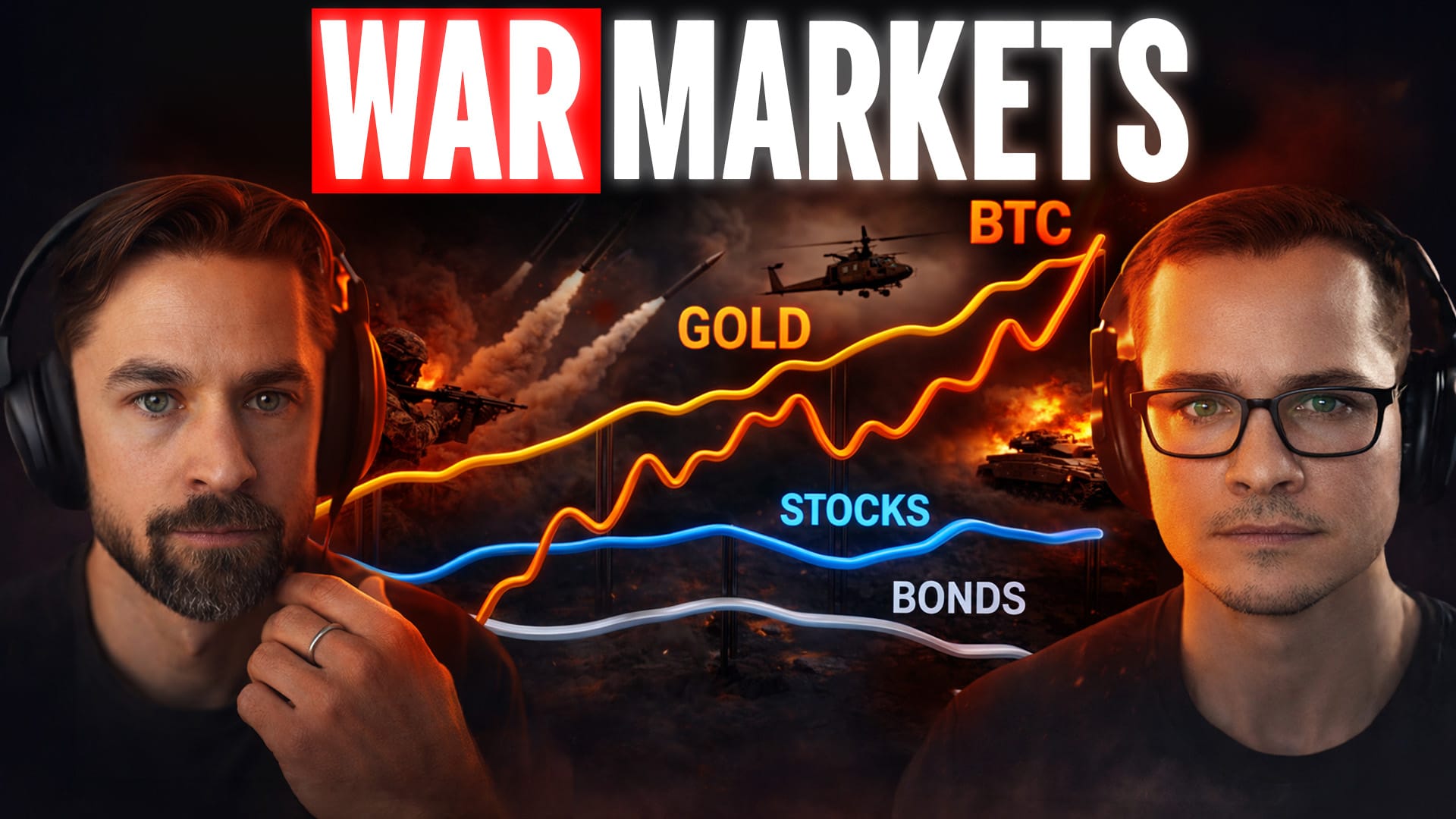
[0:04] Bankless nation is the first week of march it's time for the bankless weekly roll-up we've got a war going on and so what are the wartime markets look like how did the markets react to the conflict in iran we also have to talk about the flight to safety asset what was it was it gold was it
Ryan Sean Adams:
[0:21] bitcoin was it something else and.
David Hoffman:
[0:24] Then trump domestically has taken a side on stablecoin yields, choosing crypto over the banks. Some very loud tweets, both from Trump and Trump Jr. About the Clarity Act and how the banks need to fall in line. Some real good drama on the timeline this week.
Ryan Sean Adams:
[0:39] More bad news for the banks too. Kraken is going bankless. They get a bank license of some sort, access to Fedwire. And I think that's pretty bullish, a historic first.
David Hoffman:
[0:49] Can you go bankless by becoming a bank? Does that work? They don't have any banks anymore. They are one.
Ryan Sean Adams:
[0:59] Yes. I mean, this is a longstanding bankless prediction, let's say. I mean, we always thought that crypto banks, the exchanges, we called them crypto banks from the very beginning, would become more bank-like over time. And now they're actually becoming banks at this point. It's pretty bullish, though, for crypto, I'd say. Also, Eric Voorhees' AI Crypto Privacy Project, we're going to talk about that. Is this the AI plus crypto fusion we've been waiting for?
David Hoffman:
[1:22] Also, Aave loses a key contributor just after it lost another one just a couple of weeks ago. Zach, XBT, catches a criminal who stole $46 million from the government. And then, of course, the bottom signal of all bottom signals in the New York Times writes a crypto is dead. Article. So we're going to read that article to you on the show.
David Hoffman:
[1:40] But before we do, we're going to talk to our friends and sponsors over at...
Ryan Sean Adams:
[1:42] David, let's talk about the big news on the week.
David Hoffman:
[1:44] Saturday morning, February 28th, all of the U.S. woke up realizing that we had gone into conflict with Iran. We had killed the Ayatollah Khamenei not like a few hours into the conflict. There's a joint conflict with both the U.S. and Israel doing targeted strikes all over the entire country. I told a comment I killed in just a few hours, but the conflict has been going on and on and on. It continues today. If we were five, now six days into it, the Iranian response, they just launched missiles and drone attacks against the United States, Israel, and then also a lot of the allies in the region. So Qatar, the United States Arab Emirates, the Saudi Arabia, Bahrain, Kuwait, kind of just like spraying their drones all over the region. The Revolutionary Guard, the way that they started to impact financial markets, closed the Strait of Hormuz, which is the large artery of oil that comes out of Iran, shutting that down, which when that happens, the perceived price of oil is about to go up. So the markets had to digest that. About 20% of globally traded oil moved through the Strait of Hormuz.
Ryan Sean Adams:
[2:53] Yeah, that's not just Iranian oil, is it? It's like oil from the entire region, right? Yeah, the entire region, that's right.
David Hoffman:
[3:01] Yeah. Oil jumped to about $80 a barrel. Some speculators, some analysts speculated that prices could go up to $120 if the straight remains blocked or dangerous.
Ryan Sean Adams:
[3:13] That was up from like $65 per barrel, right?
David Hoffman:
[3:17] Yeah.
Ryan Sean Adams:
[3:18] That's quite a jump.
David Hoffman:
[3:18] So I think that is something that the markets are watching very closely. I think, Ryan, the markets are pricing in that the straight won't be closed for that long, mainly because the entire Iranian fleet is completely decimated. So their means to keep the straight overviews closed is likely not that substantial.
Ryan Sean Adams:
[3:36] It's still closed at the time of recording?
David Hoffman:
[3:38] I believe it is still closed at the time of recording. I looked it up this morning and there was nothing to suggest that it was open.
Ryan Sean Adams:
[3:42] Okay, so this is year to date. The price of oil has spiked almost 40% year to date. I mean, on the one year, though, it's not kind of at, well, it's close to all-time highest, let's say. But on the five-year timeline, in 2022, actually, in June of 2022, oil was up to $115 per barrel. I'm going over these numbers because I don't often look at the oil prices. I don't know if you do, but most of the time oil manifests in my life at the price of the pump when you're refilling the car or something like that. So that has definitely been part of the market reaction to this. Oil has increased. What about the safe haven asset? Because if there's wartime, there's usually a class of assets that respond in kind that people, you know, investors pour money into them as sort of the safe haven in times of uncertainty. You'd think one of those assets would be gold, the historic multi-thousand year safe haven asset.
David Hoffman:
[4:43] The safe haven asset. Yeah, right. What happened to gold?
Ryan Sean Adams:
[4:45] It was not the case. Spot gold actually fell below 5,100 per ounce and silver also fell. At first, gold was up after this news, but then it kind of spiked down, not by a large percentage. I mean, we're talking like one to two to three percent or so since the conflict began. But gold was not a safe haven asset for this particular news. Here's a quote from a Reuters article. Instead of piling into gold, investors seem to sprint for dollar cash, offloading anything that caught a speculative head of steam before last weekend's attack. So that gives a hint to what the safe haven asset actually was. David, it was the dollar, the good old fashioned greenback. OK, so the DXY.
Ryan Sean Adams:
[5:35] Went up, approached 100 or so. So it was up about 2%. And dollars actually proved themselves to be the safe haven asset, at least in the initial phases of this conflict. So you got oil spiking, you got dollars doing fine, gold trading down a little bit.
Ryan Sean Adams:
[5:54] US bonds, they were also down. So bonds were not the safe haven asset. Normally in a crisis, like a geopolitical crisis, people would buy bonds and prices would go up. The U.S. government bonds would be a safe haven asset. That's the classic flight to safety. But this time, the 10-year treasury yield actually rose to about 4.12%. So yields are rising and bonds selling off. And a lot of analysts are saying the reason for this is because the market's primary fear isn't entirely risk off or recession, it's more inflationary, right? And so inflation as a result of-
David Hoffman:
[6:35] When oil goes up, when energy costs go up, that increases the price of everything, which is inflation, which means that you don't want to have your capital as exposed to inflation, which is where bonds are.
Ryan Sean Adams:
[6:48] That's exactly what the market reaction has been. So the oil spike is causing people to think inflation is going to stay for longer. And that gives the Fed less leeway to actually cut the new Fed chair. Maybe he's not able to cut as much as he would have if inflation was going down. Okay. Now, how about stocks? How did they react to this?
David Hoffman:
[7:09] Yeah. So there was definitely some volatility in the morning. S&P on Monday. So we announced the conflict Saturday morning. So we had all of Saturday and Sunday to go through. S&P opened up on Monday down pretty hard, but then it closed essentially flat on Monday. On Tuesday, the stock market fell once again, pretty strongly, felt like 1% as like, I think the market started to digest like, oh, this is not a simple operation. This is not a weekend operation or a week-long operation. We're going to be here for a while. So like Tuesday was a pretty bad day in the market, kind of a bloodbath. Wednesday, yesterday, from the time of recording, everything recovered. So I think we actually are higher now than when we opened up on the week. And so Wednesday was a very, very green day, one of the greener days I've seen in over a month, really. So far on the week, Ryan, SPY, the SPX and QQQ, the S&P 500 and NASDAQ indices, both up a quarter of a percent on the week, which I would consider in the grand scheme of things inside of the range of noise. And so definitely some volatility in the market, but ultimately we're doing okay. Interestingly, Bitcoin up 8%. Ether... Up 10%. Like, you know, crypto assets are volatile, so 8%, 10%, you know, that can happen in any given week. But the fact that it happened on the week that one of the most major conflicts in the Middle East has happened in decades, kind of notable.
Ryan Sean Adams:
[8:37] Yeah, I saw an analyst talk about the stock, you know, performance as surprisingly benign. Like, stocks just kind of shrugged it off, didn't do a thing. We're not worried about this. It is sort of weird that crypto had such a rebound and much of this rebound came on Wednesday. I don't know if that's noise in the market or just some sort of mean reversion or if this is, I don't know, this speaks to how the market is actually thinking about crypto assets like Bitcoin and Ether.
Ryan Sean Adams:
[9:08] But certainly from a stock trader perspective, not worried about this conflict at all.
David Hoffman:
[9:13] Yeah, I am. I don't know if we're ever going to get this, but the IRGC, the Iranian military, is one of the biggest users of crypto because of all the sanctions that are placed on Iran. And so they absolutely have stockpiles of Bitcoin. Really? Yeah. Oh, yeah.
Ryan Sean Adams:
[9:31] You have sources for that? You've seen this? I knew that they were using like Tether and there was some freezing related to that. I've not ever read anything or seen any data on how much Bitcoin or Ether or other crypto assets they actually had or are using.
David Hoffman:
[9:49] I think a lot of the data is just missing or incomplete. But we do know that crypto broadly is used to facilitate oil trades between China and Iran. I don't know if it's like every single deal or yeah, yeah, yeah, yeah, yeah. Again, we don't know to the scope. Maybe it's small, maybe it's large. We do know that the people of Iran have a distaste for crypto because the IRGC, the military that like murders those people, uses crypto very heavily to finance their operations. Again, we don't know the full scope of those things, but like that is a thread that I'm hoping kind of gets pulled just for just what like post-mortem when hopefully the IRGC is gone and we can like actually do an autopsy of like everything it's like how what were they doing how were they doing it what were they using bitcoin or stable coins for so like we're kind of just seeing whatever to whatever degree that they were using bitcoin we will be seeing the you know results of that the shape of that in the market today but we don't really know about it until the future so
Ryan Sean Adams:
[10:50] The story here the big story when i see this market reaction is that the the hierarchy of what is a safe haven asset has really shifted the flight to safety it was the dollar it wasn't uh u.s bonds um gold went down so this this shows maybe some inflation worries uh and stocks pretty much benign crypto had a bounce that could be market noise that could be for some other reasons but um it definitely not what i would have anticipated in this type of conflict war type scenario. There was a lot of market activity on Polymarket. So Polymarket had its second largest day ever, Daily notional trading volume spiked to almost $500 million. And a lot of this was the war-driven, the conflict-driven flows. Geopolitics. Yeah, geopolitics. The markets alone contributed about $220 million that day. And indeed, there's a lot of fantastic information markets on Polymarket predicting various outcomes of this war. So this is one. Will the Iranian regime fall by March 31st? This has been spiking in different ways throughout the week. It was as high as 30%. It's now trading lower to 12%. In the grand scheme of things.
David Hoffman:
[12:07] March 31st is not far away. That's 25 days for an entire regime to fall. So I think you would expect volatility in this market.
Ryan Sean Adams:
[12:14] Well, there's an April one. Here's April's 23% chance, June 40% chance, and by the end of this year, 50% chance.
David Hoffman:
[12:23] There is millions of dollars evolving. On the March 31st, I think there was something like $20-plus million of volume on this one on December 31st, $7-8 million of volume. The second largest day ever of polymarket volume, as you said, the first being U.S. Election Day. So daily notional volume on one particular day this week, $487 million. U.S. Election Day, $531 million. Wow. Also, it does kind of like throw a flag at the notion that prediction markets are all sports gambling. Polymarket has a very distributed volume categories across all the different categories. And global geopolitics is one of the biggest ones.
Ryan Sean Adams:
[13:04] Yeah, and these are fascinating markets, I've got to say, whenever there's conflict going. How about this one? Well, you know about this story. So Reza, how do you pronounce Reza's last name?
David Hoffman:
[13:15] Reza Pahlavi. Okay.
Ryan Sean Adams:
[13:18] Will Reza Pahlavi lead Iran in 2026? And there's an 18% probability of that. He was, is he kind of an ousted?
David Hoffman:
[13:28] He is the son of the former crown, the former Shah. He's the son of the former Shah. So people call him the crown prince.
Ryan Sean Adams:
[13:35] And he's an exile in the U.S. right now?
David Hoffman:
[13:37] Exile in the U.S. Yeah. So he's been like, he is the name that the Iranian protesters are chanting in the streets. And he has a team of people to establish a, what he calls a democratic transition. So he just wants to be this figurehead to transition Iran from where it is now to a democracy. So when I see this polymarket market saying an 18% chance that he will lead Iran, that's like 18% chance that Iran gets democracy this year, which is higher than it's ever been in the last 47 years.
Ryan Sean Adams:
[14:09] One interesting tie off from our story last week. Remember, we ended the week and we were talking about the DOD versus Anthropic and they were in a scuffle. Well, that escalated on the Friday that we finished recording. And what's interesting about this is Claude was actually used in the Iranian strikes. So for things like intel purposes, U.S. Central Command in the Middle East used Claude for intel purposes. Claude was used for intelligence assessments, target identification, simulating battle scenarios. The U.S. government, though, is phasing Claude out because on Friday, I guess the scuffle that the DOD had with Anthropic escalated to the point that Trump and Pete Hegseth, the Secretary of War, said that they were banning Claude from all government use. And they were also going to put them, designate them as potentially a supply chain risk, which that's somewhat vague, but it means that other U.S. Government contractors can also not use anthropic and clod. Yeah.
David Hoffman:
[15:17] Yeah, this was, and this was just a threat, by the way, this was not actually gone through in an actual like court order or whatever that would need to become to become reality. So, so far that is just a threat. But, but Dario, the, the founder, CEO of Anthropic, they requested a unadulterated version of Claude, the US government, the Department of Defense did where there was basically no constraints on Claude. And Dario said, no, our two hard lines are no mass surveillance of United States citizens and no autonomous weapons. And then Pete Hegseth, the Department of War guy, was like, you don't get to tell us what to do. And Dario said, well, I'm not giving you what you want. And so that's what escalated everything.
Ryan Sean Adams:
[16:01] And they canceled the contract. And they also said that potentially they would be a supply chain risk. The U.S. Government labeled Anthropic as hostile software. This is Trump.
Ryan Sean Adams:
[16:12] Anthropic better get its act together. I will use the full power of the presidency to make them comply.
David Hoffman:
[16:20] That is the largest like targeting threatening of a united states company that doesn't that doesn't happen like we don't just like randomly or not randomly but we don't just like say this company is a risk to american national security that has never happened unprecedented a large
Ryan Sean Adams:
[16:38] Number of things going on uh here of course with this story it's like one is ai clearly is military technology, isn't it? I mean, it was used.
David Hoffman:
[16:45] I want to know what it's like to use Claude for military purposes. Are they typing in like, how do I strike the IRGC base?
Ryan Sean Adams:
[16:56] Oh my God. I have no idea. I have no idea. I imagine it's more sophisticated than that. There's also an open AI thread line here too. So Sam Altman came in and said, okay, well, if Anthropik's out, then...
David Hoffman:
[17:10] Sam Baldwin sees the opportunity.
Ryan Sean Adams:
[17:12] It's my opportunity, so...
David Hoffman:
[17:13] He's like, Claude is out, ChatGPT is in.
Ryan Sean Adams:
[17:16] So OpenAI submitted a bid to replace Anthropik in a deal with the Pentagon. So basically, if Anthropik's out, then maybe it's OpenAI's opportunity. But there's many users actually migrated off of ChatGPT in favor of Claude just in, you know, given this news in protest. So Claude hit the number one spot on the Apple App Store and ChatGPT uninstalled search by about 300%. This is costing ChatGPT in the PR department, isn't it?
David Hoffman:
[17:50] Yeah. So ChatGPT won the contract, the like $200 million plus contract. Uh anthropic lost it but but anthropic is gaining all of the retail users who are in support of anthropic giving the middle finger to the department of war saying no you can't use our software for weapons there's
Ryan Sean Adams:
[18:10] Actually a crypto chart for this that where anthropic is trading on a platform called um uh ventuals so this is bringing real world assets to hyper liquid perps, I believe. And Anthropic is trading there.
David Hoffman:
[18:23] Not just real world assets, but like Anthropic is a private company and somehow they've made you able to trade on that private company. It's got to be a synthetic market. So like unsure what is actually being traded here, but people are allegedly trading on private shares of Anthropic on a hyper liquid derivative market.
Ryan Sean Adams:
[18:43] So this is, Anthropic is implied valuation right now, about $614 billion. And you can see here on the 28th, it's spiking down to $470 billion or so before fully recovering, fully recovering to almost all-time highs. So Anthropik, from a price perspective, at least if this price discovery is true, somewhat unbothered by all of this back and forth with the DoD. In fact, maybe is benefiting from it.
David Hoffman:
[19:10] Yeah. So I switched from ChatGPT to Claude on the backs of this just because, like, I mean, we did our AI safety episodes. I understand that AI plus military weapons, that's a thing that scares me. Is it inevitable? Probably. But, like, Claude's just better, dude. It's just, like, a better product.
Ryan Sean Adams:
[19:28] I'm finding it so as well. I mean, the new Opus model, seeing how it's being used with OpenClaw, using it in CloudCowork, which is a lot of my use case for it nowadays. It's definitely surpassed everything. For me personally, I was a ChatGPT power user, but Cloud is just a better product.
David Hoffman:
[19:50] It's just a better product.
Ryan Sean Adams:
[19:51] Yeah, I didn't do anything out of protest, but I guess it was more that it's just drawing me. because it's a stronger product at this point.
David Hoffman:
[20:00] All right. Coming up next, the power shift going on in D.C. Crypto banks are gaining power versus the trad banks. Oh, man, this is it was a bad week to be a bank, Ryan. Let me tell you that. Kraken gets the historic first a skinny master account to Fedwire. We're going to talk about what a skinny master account is. I know you're dying to know. And then Trump and Trump Jr. tell banks they need to bend the need to coin pace and give people their stable coin shields. Like I said, Bad Day to Big Bang. We're going to talk about all that and more, but first a message from some of these fantastic sponsors that make this show possible. Kraken becomes the first digital assets bank inside the United States. So there's Kraken Financial, which is not the same entity as what Kraken Exchange
David Hoffman:
[20:42] is, but it doesn't really matter, subsidiary. It's a Kraken Wyoming chartered bank. It becomes the first digital asset bank in the United States to plug in directly to the Fed, to the Fed's payment infrastructure. This operates Kraken on the same rails as traditional banks. And there's a clip from Cynthia Lemmes, Senator Cynthia Lemmes, about this. So let's go hear from this clip, and then we'll talk about why this is a big deal.
Ryan Sean Adams:
[21:07] This is going to be a huge asset, and today's announcement by Kraken that they now have access to a Skinny Master account is going to add another opportunity for the new integration of the fiat dollar with digital assets. This is a huge step forward. Very happy to see the Fed finally realize that we can integrate these financial products in a way that benefits Americans. Senator Lummis, of course, is a Wyoming senator. That's part of the reason she's so excited about this. And she's also been a longtime crypto advocate. But why is this such a big deal?
David Hoffman:
[21:50] So you remember Operation Chokepoint 2.0, Ryan, where we were getting cut off from the banking industry. And so if you wanted to get money into a crypto exchange or anything... Well, you couldn't because they lost all of their banking access.
Ryan Sean Adams:
[22:05] Yeah, that was the choke point, right?
David Hoffman:
[22:07] You can't, yeah. Like they were choking us out. They were disconnecting us from the banking rails. You can't, if Kraken and other crypto exchanges have direct access to the Fed, there's nothing to choke. They are the bank. So we have completely, there's a famous Elon Musk quote where like the best part in a machine is no part. We took out the part of needing to have a bank to deposit money into so people can finance their accounts on Coinbase or Kraken or whatever. So, you know, like, I don't know when's the last time you sent money to a crypto exchange, but like if you send money to Coinbase, you send money to like One River Financial or something like that.
Ryan Sean Adams:
[22:48] It's a correspondent bank that services Coinbase because Coinbase doesn't have this Fedwire account. Exactly.
David Hoffman:
[22:54] If you want to send now, today, if you want to send money to Kraken, you send money to Kraken. You send money to Kraken Financial. And so we just cut out the banks because now Kraken is a bank. Now, how did we get here? What was the unlock that allowed for this? There's this thing called a skinny master account at the Fed. This was created in December of last year, so four months ago. So this is a brand new type of Fed account. and Kraken Financial is the first and only entity who has a skinny master account. What is a skinny master account? What does it get you? What does it not get you? It does get you direct access to Fedwire, the real-time settlement system, and the ability to clear and settle payments without any other intermediary banks. What it does not get you, this is the skinny part, is you don't get interest on reserves. You don't get access to the Fed's discount window, so no emergency lending. You don't get daylight overdraft privileges, So if your balance hits zero, payments just get rejected. So you don't have, I guess, like a buffer or whatever. And then there's also some potential balance caps. So like the way I'll describe this is they get the payments. They don't get any of the banking. So there's like extra banking service products that Kraken will not be getting. I don't think they really care. They mostly just focus on the payments side of things. They get access to Fedwire and they can make payments using Fedwire.
Ryan Sean Adams:
[24:19] The payments is a big deal. A Skinny Master account is a big deal because the way the banking system works and access to Fedwire works is there's about 4,500 different banks and credit unions that act as almost like proof-of-stake validators on a permissioned Fedwire network, right? These are the only validators... Can actually submit transactions for Fedwire. And now Kraken is one of those validators.
David Hoffman:
[24:45] They're like, hey, we get to write the deposits and the credits in the books, and you guys have to write those down too.
Ryan Sean Adams:
[24:51] Yeah, it's very cool. And as you said, this is just payments only. So some people might think of the idea of like, oh, what about the idea of a narrow bank where you not only get Fedwire access privileges, but you also get some of those other bank privileges, the ability to get interest, the ability to participate in the Fed's discount window, that sort of thing. And if you had that next level of access, something that Kraken's not being given here, but if you had that, then you could create what some economists have called a narrow bank, which is essentially.
Ryan Sean Adams:
[25:23] You wouldn't do any lending and borrowing, but you would give consumers and users access to the Fed fund rate, and they could just keep their deposits in your bank. It would almost be like a stablecoin with yield type of apparatus where you're just passing on the Fed funds rate. The Fed has previously been very against this. So there have been narrow banks that have tried at this before. One was called TNB USA and the Fed denied them and TNB actually sued the New
Ryan Sean Adams:
[25:55] York Fed over the denial. They lost in court. So the Fed has been very resistant to the whole narrow bank idea because they think it will destabilize the system, undermine monetary policy, right, because you're taking the banks out of the loop and create some systemic risk. I somewhat wonder, though, if this step of getting Kraken on a skinny master account is a step towards a narrow bank license, maybe at some point in the future, maybe the Fed will actually open up to that. And if so, that will fundamentally change monetary policy and banking in the U.S. You think the banks are happy about this, David?
David Hoffman:
[26:32] This brings us to my favorite part of this part of the story. So within hours of the announcement that happened on Wednesday, the Bank Policy Institute said that it was deeply concerned that the approval came before the Federal Reserve finalized its policy framework, arguing the decision ignores public comment and was issued with no transparency into the process. And they are worried that this innovation might destabilize the banking sector. Like when the banks tell you that they're worried something is destabilizing the banking sector, they're basically saying, hey, our business model is under threat. Like we're going to make less money from this. The other favorite part of this story here, I think is this Jesse Powell tweet where he tweeted out the Cynthia Lemmas clip that we just shared.
Ryan Sean Adams:
[27:17] The founder of Kraken.
David Hoffman:
[27:18] Founder of Kraken, yeah. He goes, sorry about your monopoly. Okay. Thank you, Senator Lummis. Great state of Wyoming and the Kraken team. We're the bankers now. Saddle up.
Ryan Sean Adams:
[27:30] Yes. Oh, my God. This is so good.
David Hoffman:
[27:33] Yeah.
Ryan Sean Adams:
[27:34] This is Mike Ippolito commenting on this. Kraken gaining access to the Fed's payment system. Trump openly berating the banks to get clarity paths. We're about to talk about this. This would have blown the expectations of even the most bullish crypto evangelists in 2017 out of the water. Crazy how many people in crypto are giving up on Eva Victory. This is another case of all of the crypto prophecies, wildest dreams are starting to come true. You know, the crypto exchanges, which were kind of ostracized on some periphery of the financial system are now being admitted as validators to, you know, the Fed, Fedwire. I mean, this is a big freaking deal. And this goes to kind of our next story on the week, which is Trump slapping back the banks and coming out in support of crypto and stablecoin yield. So he tweeted this just days ago. The Genius Act is being threatened and undermined by the banks. And that is unacceptable. We're not going to allow it. The U.S. needs to get market structure done ASAP. Americans should earn more money on their money. The banks are hitting record profits. We're not going to allow them to undermine our powerful crypto agenda that will end up going to China and other countries if we don't get the Clarity Act taken care of.
Ryan Sean Adams:
[28:54] This industry cannot be taken away from the people of America when it's so close to becoming successful. And they need to get in line and let stablecoin yield go to consumers. This is something that Brian Armstrong and Coinbase has been arguing for in the Clarity Act from the very beginning. But this is Trump using the truth social bully pulpit to absolutely slam the banks over the head on this issue.
David Hoffman:
[29:20] He literally says, they need to make a good deal with the crypto industry. And Trump wasn't the only one. Trump Jr., Eric, he tweets out, big banks are lobbying overtime.
Ryan Sean Adams:
[29:31] That's not Trump Jr. Wait, actually, which one is he? I guess they're both juniors. Never mind. There's Donald Trump Jr.
David Hoffman:
[29:39] Little Trump, you know? Eric, whatever. Eric Trump tweeted out, big banks are lobbying overtime to block Americans from getting higher yields on their savings while trying to block any rewards or perks from being given to customers. So like Eric Trump also comes in with the second of the two punches. He goes in like, you know, today the banks are desperately targeting crypto sable coins where platforms plan to offer 4% yields or rewards. The ABA and other lobbyists are spending millions trying to ban or restrict those yields via bills like the Clarity Act, crying fairness, and using words like stability, which that's what I said. Like if it's a threat to the stabilization of the finance sector, That just means they're profits. Yes. It's really about protecting their low rate monopoly and preventing deposit flight. So the timing on this whole thing was interesting. Right. So like we had these two tweets back to back Trump on truth social, Eric Trump on Twitter. The hours before or maybe maybe the day before. President Trump had a meeting with Brian Armstrong. And so the Politico reported that Trump and Armstrong met behind closed doors at the White House on Tuesday. Yes, just hours before the Trump's Truth Social post blasting the banks. And so that's it. That's interesting. The timing is very, very interesting. So Brian just pill Trump here?
Ryan Sean Adams:
[30:56] Definitely. I mean, this is what it seems like. This is what the timeline is revealing. Of course, this is Brian Armstrong's issue and Coinbase's issue. This is why they withdrew support from the Clarity Act. And a lot of other people in the crypto industry said, guys, we have to compromise Coinbase.
David Hoffman:
[31:12] Look at all the other good things in the Clarity Act. We can't die on this one hill of stable coin yields. And Brian was like, I'm going to do it.
Ryan Sean Adams:
[31:21] Yeah, I'm going to do it. And it's kind of a gambit. But now he's got Trump weighing in on his side on this. So it's paying off for him, I suppose. This goes back to remember a few weeks ago we were talking about Davos. And Jamie Dimon apparently getting in Brian Armstrong's face, wagging his finger over this issue.
David Hoffman:
[31:40] What did he call him? You're full of shit. He said you're full of shit.
Ryan Sean Adams:
[31:43] You're full of shit. I guess, I mean, good on Brian for getting in there and playing the D.C. Lobbyist game and fighting on this issue. It looks like it's paying off.
David Hoffman:
[31:55] Yeah, it's not over yet. This is a tweet from Ron Hammond. He's a pretty trusted political commentator. He tweeted out, the closer we get to election, the midterms, the odds for the Clarity Act passage gets lower. The banks know this. Stall for long enough till election politics takes over. It's a classic lobbying tactic, but Trump is the kind of X factor that could force the political calculus to change. And so this is just like some good old clarity commentary about the timing and the strategy of this whole thing. If you go to Polymarket, we are at a 71% chance that the clarity gets signed into law in 2026. It's up 6% on the week, but it's just been like kind of creeping upwards for a while. Alex Thorne, who also definitely absolutely pays attention to this matter, he tweeted out, Is there alpha and the delta between these two images? The one image is the 71% chance on Polymarket. The second image is crypto bill hits new impasse, raising doubts over its future, which is an article on Reuters. So he's pointing out that Polymarket is pricing in a lot of optimism on the clarity passage than what reporting is suggesting. So there is a dislocation between these two things. Unsure as to how it resolves. The game's not over yet. We haven't won yet.
Ryan Sean Adams:
[33:08] Yeah, no, we haven't won yet. And it's... I don't know. It does feel like a long shot. Although I will say, I mean, Polymark is generally right on these things. Maybe 7% odds is kind of accurate.
David Hoffman:
[33:24] Yeah. Let's see. $300,000 of volume. So not a crazy amount of volume here. So that could be a little bit better to just have better signal. I don't know what it's like to be behind these closed doors. But also, like, this is everything for the banks. Like, yield on deposits and who gets that is the whole thing for the banks. So, like, it's optional. This is the same calculus we were talking about two weeks ago. It's optional for the crypto industry to die on this hill. It doesn't seem optional for the banking industry to die on this hill.
Ryan Sean Adams:
[34:03] Yeah, and I mean, are they going to let some little upstart industry, upstart company?
David Hoffman:
[34:08] $60 or $100 billion Coinbase company.
Ryan Sean Adams:
[34:12] Yeah, are they going to let them kind of steal their golden goose? I don't know. I'm sure we haven't heard the last from them, but getting Trump.
David Hoffman:
[34:20] Weighing in on this is a big deal. It is really nice to have Trump on our side.
Ryan Sean Adams:
[34:22] It's a big deal. All right, we've got a lot more to cover coming up next. Voorhees project. It's a crypto project for private AI. Was it recommended by OpenClaw this week? It kind of was. We'll talk about that. Also, X is rolling out X money. Well, this includes stable coins and crypto. And David, the story. Remember the kid who stole $46 million from the government? Well, he got apprehended by special forces. He didn't get away with it. By special forces? Yes, yes. French special forces. How did we think this would end? How did he think this would end? We'll talk about all that and more. But before we do, we want to thank the sponsors that made this episode possible. So, David, have you been following Eric Voorhees' project? It's called Venice. It's a LLM. It's an AI project. Have you been looking at this at all?
David Hoffman:
[35:10] I wouldn't say I have both my eyes on it. I think I have one eye on it every once in a while, which is to say not much. But like, I understand that sometimes, Ryan, just hypothetically, I'm typing a prompt into Claude or ChatGPT and I'm like, you know what? Maybe I'll take this one to Venice. I'll do this one in Venice. I don't want to do this one in chat.
Ryan Sean Adams:
[35:30] This is a little private, right? I mean, yeah, this is.
David Hoffman:
[35:33] Yeah.
Ryan Sean Adams:
[35:33] Yeah, it's well known that private AI really doesn't exist outside of some small pockets, maybe ProtonMail as kind of an instance. That's what Venice is trying to deliver. Actually, I've started hearing about it more in mainstream podcasts. So I think Venice has been running some ads in mainstream podcasts. And Venice is actually pulling in some pretty impressive numbers. So this is a tweet from Eric Voorhees. Each color is a different model. So what Venice does is it runs private AI instances, generally open source models in kind of a cloud type of environment, and it can run anything. So it can run, you know, Kimi, here are actually some of the top models, the top five.
David Hoffman:
[36:18] Yeah, there's a lot of colors here.
Ryan Sean Adams:
[36:20] Yeah, a lot of colors and a lot of different models. GLM 4.6, Venice Uncensored 1.1, Kimi K2 2.5, Grok 4.1. Its specialty is really these open source modules and it's running them in its cloud. And Venice's claim is that everything is run in a private way. So there isn't a third party that can actually access your transcript and your chat logs and what you're doing inside of the interface.
David Hoffman:
[36:52] Just for the podcast listeners out there, last October, Venice was clocking in about 8 billion tokens per day. they were running for their APIs or people who've shown up to their website. Today, March, 36 billion per day. So quite the growth.
Ryan Sean Adams:
[37:08] Now, Eric Voorhees claims that Venice neither observes nor stores prompts or responses, so there's no eavesdropping, there's no records of convos, conversations of any kind. Of course, those are with the open source models that are run by Venice specifically. You can also use Venice to sort of almost provide a VPN layer on top of your query, but then it would route to a cloud model like an OpenAI, a Google Anthropic. Of course, those companies can see the chat lock, but they don't see the metadata, so they don't know who it comes from. But you kind of have to, right now, trust that Venice is actually keeping these things private and is not storing any of the prompts or responses.
David Hoffman:
[37:52] If there is one person I'm going to trust in this industry to uphold the values that he talks about and espouses publicly and has for decades, it's Eric Voorhees.
Ryan Sean Adams:
[38:02] I agree about that.
David Hoffman:
[38:04] I don't have a doubt in my mind that that man actually believes this thing that he says.
Ryan Sean Adams:
[38:08] Sure. I agree with that. But also, it's just like that's not good enough for people in crypto. It shouldn't be the status quo. We should not trust an individual.
David Hoffman:
[38:17] That wouldn't be good enough for Eric either.
Ryan Sean Adams:
[38:19] It wouldn't be good enough. And so Eric responds to some of that criticism, basically a little bit of the trust me bro privacy. And he said, lots of discussion around Venice's privacy model in the past few days. To date, Venice is private in that prompts and responses are not stored on Venice servers. This is private today, but it's not provable. Venice users are not mainly crypto people. And for them, as we just said, the above has been sufficient empirically given the growth, but proving the privacy is much better than we need to do so. This has been on our roadmap since inception. So you get the sense that Venice is going to deliver some proof of privacy as well. So it's not just a trust me, bro type of model. But anyway, this is the only place you can really get private LLMs unless you're running it locally, which is why I think it's such an attractive service.
David Hoffman:
[39:09] Yeah. I'm sure Eric understands the trade-off between like building a product that is 100% committed to like principles and like transparency and all that kind of stuff. And like the UX UI trade-offs that that presents where I'm sure he's thinking like, I need to get this product into the hands of as many people as possible because, you know, a private product like this is harder than Linda Claude or a ChatGPT, you know, very much in the same vein as like Moxie and Signal. It's interesting to me how similar this product is to shapeshift his first crypto project, which is just like, let me basically run a private, no sign up, no KYC exchange. I'll do the work for you in the background by routing your crypto trades to the right order. And then I'll give you the tokens you want back and you don't have to sign up for everything. Same thing, but this is just LLM models.
Ryan Sean Adams:
[40:07] Yeah, similar ethos. I think some of the growth has been the usage of venice with open claw so if you want a completely private open claw with an open llm model like where else do you spin this up and venice has provided that so much so that some of open claws onboarding docs actually recommended venice as a private llm that was since rescinded so open claw said we want to maintain a neutral um you know platform and we don't want to recommend.
David Hoffman:
[40:38] I listened in for the reasons you said where like you don't know that it's actually private. Like they don't have assurances. That's part of it too. Eric in the thread saying like understood we're working on that.
Ryan Sean Adams:
[40:48] Yeah. Have you looked at the Venice token and what this thing does?
David Hoffman:
[40:51] Yeah. Yes. Very briefly. I kind of understand it that it represents just like a share of the compute of the whole system. Yeah.
Ryan Sean Adams:
[40:59] That's right. It's a true utility token, I suppose, from that perspective. So instead of paying per API call, you can actually stake these Venice tokens, these VVV tokens, and you get a prorata share of Venice's inference capacity indefinitely.
David Hoffman:
[41:16] Which reminds me of the EOS token model, bro. That's EOS. You own a percentage of the compute of the network, yeah.
Ryan Sean Adams:
[41:26] And the reason this is somewhat interesting is as compute gets cheaper over time, the inference capacity, like the intelligence behind each token or each prorata portion of all of Venice's compute, that's got to grow. Yeah, yeah.
David Hoffman:
[41:44] Does Venice own a data center somewhere or are they renting it from someone? How does that work?
Ryan Sean Adams:
[41:51] Yeah, I still have a lot of questions about this. I have a lot of questions. Yes, you don't have to stake VVV in order to participate in this. You could just like buy Venice instances, I believe. They have a separate token called Diem, which represents AI inference credits.
David Hoffman:
[42:07] So I don't know. Oh, we tokenize credits. Oh, that's cool. Honestly, like usually when I see a token, I'm just like, why do we need a token? And for this, I'm like, oh, this makes total sense. One token is a credit. One owns the actual compute and hardware. I think it could.
Ryan Sean Adams:
[42:21] I think that makes sense.
David Hoffman:
[42:22] Dude.
Ryan Sean Adams:
[42:22] Yeah. And good for Voorhees for stepping into this, like applying crypto values to LLM, certainly much needed. David, we got more drama from the Aave space. What is this on the week?
David Hoffman:
[42:33] Okay. So Mark Zeller's ACI, the Aave Chan initiative, which is kind of like a governance delicate platform. Think of it like a voting block inside of the Aave DAO. They are leaving. They are leaving Aave. They have decided to not renew its engagement with the Aave DAO and will wind down operations over the next four months, exiting by July. This is kind of the second high-profile departure from Aave, the system, Aave the DAO, downstream of just like the governance tensions inside of Aave. This happened after Aave Labs introduced the Aave Will Win proposal.
David Hoffman:
[43:12] And that caused, you know, some people liked it. Some people didn't like it. Mark did not like it, I'm guessing. Mark highlighted that three labs-linked wallets, when they voted on the temperature check for the Aave Will Win proposal, realized that the Aave Labs can simply vote. They have enough voting power to dictate things. and then especially if the Aave Labs Aave will win proposal goes through they will be rewarded with even further Aave so it kind of functionally enshrines Aave Labs voting power. And so Aave becomes essentially Aave Labs is the critique that Mark has. And so he decided that he doesn't want to be under the governance authority over Aave Labs because what if they just cancel ACI's funding stream whenever they want? That was something that Mark put into the governance forums. And so instead they are electing to wind down uh mark zeller has been effectively the pseudo ceo founder uh operator operator in chief of the of the dow uh and so a very key person like it's like stonnie on one side and mark on the other and mark is saying like i don't want to work under these conditions and he's throwing in the towel uh which is so not great dows are so
Ryan Sean Adams:
[44:33] Messy that's just so messy i wish it wasn't this way. But I guess the question is, is it over now?
Ryan Sean Adams:
[44:40] Are the remaining parties aligned with the proposal?
David Hoffman:
[44:45] I would assume so. Yeah. Like the defectors need to defect so that all the people who have consensus can coordinate together.
Ryan Sean Adams:
[44:53] Yeah, yeah.
David Hoffman:
[44:54] It's like a messy way to lose talent, but like maybe that was inevitable.
Ryan Sean Adams:
[44:59] Yeah, and I wonder if Mark is leaving the space entirely or if he's just leaving Aave.
David Hoffman:
[45:05] I think just, I think the latter. I think the latter.
Ryan Sean Adams:
[45:08] Okay, okay. This was big news. The New York Stock Exchange parent company, Ice, invested in the crypto exchange, OKX, at a $25 billion valuation. The reason for this they gave was a push towards tokenized stocks. I did not see this one coming, kind of a out-of-left-field investment. But I think it makes sense to have some share in one of these emerging new crypto banks, crypto exchanges.
David Hoffman:
[45:36] I think really what we're starting to see is that there have been just the exchange wars since the genesis of crypto. And now I think if you are still alive and operating in 2026 and you have like, you know, if you're profitable, you are starting to be gobbled up by traditional institutions or you have now made it over the threshold. And so profitable exchanges in 2020 fixed, which are far fewer than they've ever been before, are now working their way into the economy. Exactly, yeah. They're actually working this way into the economy.
Ryan Sean Adams:
[46:09] A threshold is about to be reached, David. We are about to mine our 20 millionth Bitcoin. Okay, so we're about to hit that. That's going to happen. I believe, sometime next week. So that would be 95%.
David Hoffman:
[46:25] March 9th or 10th or something? Yeah.
Ryan Sean Adams:
[46:27] Yeah. That would be 95% of the eventual 21 million Bitcoins that have been mined. So only 1 million left to go. And that last 1 million will take roughly 114 more years for that remaining 5%.
David Hoffman:
[46:44] It's funny, out of the 21 million Bitcoin, Total Bitcoins. One million of the Bitcoins will pay for the security budget for 114 years.
Ryan Sean Adams:
[46:53] That's all we got left. And the only question is how much will those one million be worth in fiat terms? That's a question that's still unresolved. But big milestone next week as we hit the 20 millionth number. Also, David, XMoney, the Twitter X platform, their long-awaited financial service, I suppose. there were some leaked screenshots from that what are we seeing here?
David Hoffman:
[47:19] This has been a long time in the making. I think Elon said that he wanted to do this with X since buying it in the first place. But we're seeing screenshots of an account with a balance. William Shatner is the one tweeting this. Don't know how that happens. Why is William Shatner tweeting this? I don't know. I don't know. But there's a deposit button, a request button, and a send button. These are all buttons that very much look like crypto buttons. The request is a QR code. Nothing in here is explicitly talking about crypto, but you could only imagine, especially if there's a request with a QR code. The rumors are, there's a tweet with rumors. What I'm hearing, it seems like Cross River for holding funds with FDIC insurance, same bank that Coinbase uses. X Payments LLC has money transmitter licenses in 40 states. Visa for money movements and Sardine for AML. Who cares about that part?
Ryan Sean Adams:
[48:10] So it's kind of a neobank though. That's the stack that they're using. It's like a Mercury TradFi kind of neobank approach. I don't see anything about crypto or stable coins here yet.
David Hoffman:
[48:19] I don't quite see anything, but it would be hard to imagine that stablecoin payments would not be in here.
Ryan Sean Adams:
[48:24] It's got to be at some point. It's got to be in here, right? They're taking the fintech route, at least first, it looks like. Speak of Elon Musk, SpaceX, they're getting ready to IPO. Did you remember that they have a pretty substantial Bitcoin stack on the balance sheet? Yeah. I remember reading about this, but it's going public. They had about, at one point in time, $780 million worth of Bitcoin, so almost a billion in Bitcoin. That's worth about half that now, just given prices in the market.
David Hoffman:
[48:55] I know that SpaceX does a ton of stablecoin commerce because they sell. Wait, do they? Oh, yeah. Because they own Starlink, right? And Starlink sells a lot of Starlinks all across the world, across different fiat currencies. And stable coins. So they just use stable coins to rectify everything and just have that be seamless. Yeah. What does that have to do with Bitcoin? Unsure. Unsure.
Ryan Sean Adams:
[49:20] Are you asking why they own Bitcoin?
David Hoffman:
[49:22] Yeah, I'm asking why they own Bitcoin.
Ryan Sean Adams:
[49:25] Maybe they just, you know, heard Michael Saylor talking about it and they were very excited about that.
David Hoffman:
[49:29] All the normal reasons.
Ryan Sean Adams:
[49:31] Yeah. I mean, it is interesting. And we'll see how investors react to that portion of the balance sheet. Maybe they'll ask about it on future earnings calls.
Ryan Sean Adams:
[49:41] David, if you are excited about justice, then you should be excited about this news on the week. Zach at XBT got another one. Do you remember that story of this guy?
Ryan Sean Adams:
[49:52] His nickname was Lick, but his name is John DeGita. We were talking about him, I don't know, six weeks ago, something like this. This was the son of a government contractor. So this government contractor was contracted by the U.S. Marshals for custodying seized crypto assets, I think primarily Bitcoin. Suddenly, the son of this government contractor who was supposed to be doing that, it was revealed that he had stolen Bitcoin.
Ryan Sean Adams:
[50:24] Approximately $46 million worth of crypto assets from the U.S. Marshals, from the U.S. Government. Okay, so ZachXBT revealed this, published a thread about it. This guy has been on the run ever since, and he was just caught. This is a tweet from FBI Director Cash Patel. Last night, John Gadita, a U.S. government contractor who allegedly stole more than $46 million in cryptocurrency was arrested on the island of Saint-Martin by the French Premier Elite Tactical Unit. I wonder what that was like. And he goes on, the FBI will continue working 24-7 to pursue these apprehenders no matter where they hide. Zach XBT tweeted this out. He said, In late January 2026, I exposed how John stole 46 million in seized crypto assets from the U.S. Government by abusing access to his father's company. John then taunted me multiple times via Telegram channel.
David Hoffman:
[51:27] This is the most wild part.
Ryan Sean Adams:
[51:28] And dust attacked my public wallet address with stolen funds. Thanks for the last laugh, John, he says. Though after ZachXBT revealed all of this, Lick apparently started dust attacking ZachXBT and taunting him via Telegram. What, like, you'll never catch me?
David Hoffman:
[51:52] Yeah. Uh-huh. Yeah, and there's, like, screenshots of the chat between Zach and this guy. It's like, man, if you stole, first you stole $46 million from U.S. Marshals. And then you're taunting crypto's most sophisticated on-chain sleuth who is just, like, I don't know what Zach XBT's capabilities are, but they are incredible, I'm sure. He's developed the craziest skill set out of anyone in this industry.
Ryan Sean Adams:
[52:20] Yeah, this is insane behavior. This is absolute mad lad behavior.
David Hoffman:
[52:24] Other than the fact that this guy is going to jail, sometimes I kind of wish I was this dumb because it seems like a good time.
Ryan Sean Adams:
[52:32] Well, the other thing, do you recall this original story? I mean, the reason ZachXBT caught him was because he was basically flaunting his wealth on Telegram chats and videos and all of this tied back to addresses that you were obviously tied to him. I mean, he's just a dumb criminal, David.
David Hoffman:
[52:53] He's just a complete idiot. I mean, is this kid even 18? How old is this guy?
Ryan Sean Adams:
[52:57] I don't know how old he is. I mean, he looks pretty young. He looks pretty young.
David Hoffman:
[53:02] He looks pretty young. Yeah.
Ryan Sean Adams:
[53:04] So, got another one. Justice is served.
David Hoffman:
[53:06] One by one. We're making crypto better. All right. I've got another server for you, Ryan. Okay. So, the South Korean police also came up on some crypto recently. They seized some crypto. The National Tax Service, excuse me, accent... The National Tax Service of South Korea seized about $5.6 million in crypto from about 125 high-value tax evaders. So they got some crypto assets from some tax evaders and put a large amount of that crypto in ledger hard wallets as evidence in custody. Or maybe they seized the ledger with the wallets. You know how the police will sometimes take pictures of their perpetrators or they'll take pictures with all the drugs that they seize?
Ryan Sean Adams:
[53:51] Oh, yeah, they always do this.
David Hoffman:
[53:52] But we've got a way, like, we've, like, seized these assets.
Ryan Sean Adams:
[53:56] Confiscated haul. Yeah, exactly. I don't know why they do that. Why do they do that?
David Hoffman:
[54:00] Kind of proof that they're doing a good job, you know? They're kind of, like, proving that, like, hey, we are worth our tax money. So that's what South Korea's tax service did. They took a photo of the ledgers and the seed phrases associated with the ledgers. And then they posted them online. Wow. Do you know how quickly it took people to drain those wallets?
Ryan Sean Adams:
[54:24] How quickly?
David Hoffman:
[54:25] About four minutes.
Ryan Sean Adams:
[54:27] Four minutes?
David Hoffman:
[54:28] Four minutes after they posted the unadulterated, uncentered seed phrases next to the ledger in question. Four minutes later, those wallets were drained. The agency followed up with a statement offering a deep apology.
David Hoffman:
[54:41] They took the photos down, by the way. Not that it matters anymore. And then they offered a deep apology admitting there was no excuse for failing to mask the wallet password.
Ryan Sean Adams:
[54:52] Wow. Oh my God, that's hilarious. So it's 5.6 million and somebody new has that.
David Hoffman:
[54:56] Somebody somewhere in the world, no clue.
Ryan Sean Adams:
[54:59] That's a criminal, right? That's a criminal. Somebody stole it. They are now. It almost felt like the authorities were giving someone that. But technically that was a criminal act, I suppose.
David Hoffman:
[55:11] Oh, you know what was a good conspiracy? is somebody who had access to those private keys first, seized it, Then posted it online. And then they were like,
Ryan Sean Adams:
[55:24] Whoops, whooops.
David Hoffman:
[55:25] Yeah, exactly.
Ryan Sean Adams:
[55:26] Exactly. We may never know unless ZachXBT gets involved. And then we certainly will know in a few weeks.
Ryan Sean Adams:
[55:32] David, last to close out the week. I was actually bullish about this because this is the New York Times opinion article with something about crypto saying crypto is pointless. Not even the White House can fix it. Since its peak last fall, Bitcoin, the world's largest cryptocurrency, has lost almost half its value. That's how the article starts. Nearly $2 trillion in wealth has evaporated from crypto since October. We have just one question. What took so long? Outside of crimes and scams, the technology is useless and its economics are even worse. These are two economic advisors for the Biden administration giving an opinion piece on how pointless crypto is and how not even Trump and Trump's favors for the industry can actually save it because it's a pointless technology that is only good for crimes and scams. And this is the type of bear market opinion piece from the New York Times. I see every single cycle during the bear and it's just a good sign. It's just a good sign for things ahead.
David Hoffman:
[56:42] What took so long is right. Like, why haven't they written this article sooner, man?
Ryan Sean Adams:
[56:47] I feel like we're going to make it, David.
David Hoffman:
[56:49] This is a rite of passage. Like, we get to clown on people like this at the top. They get to clown people like us on the bottom. The cycle repeats. We get richer. And they stay the same.
Ryan Sean Adams:
[57:02] Yeah, it's definitely a bottom signal confirmed and a signal to me that we're going to be okay. Let's end it there. You guys know crypto is risky. You could lose what you put in. The frontier, it's not for everyone. but we're glad you're with us on the Bankless journey. Thanks a lot.