TRANSCRIPT
Chairman Selig:
[0:00] But we're excited to make sure that the new frontier finance is built here in
Chairman Selig:
[0:04] the U.S. And that means new products, new services, new platforms. And we can't fear that. We have to embrace it and come up with a pathway for it. Because in my view, if we erect barriers, if we push this activity offshore, it will go offshore and it's not going to benefit the American people because they're going to go use a VPN and access it anyway, and they have none of the protections. So if we can come up with a path for it, the United States will do it and we're going to certainly work on it.
David Hoffman:
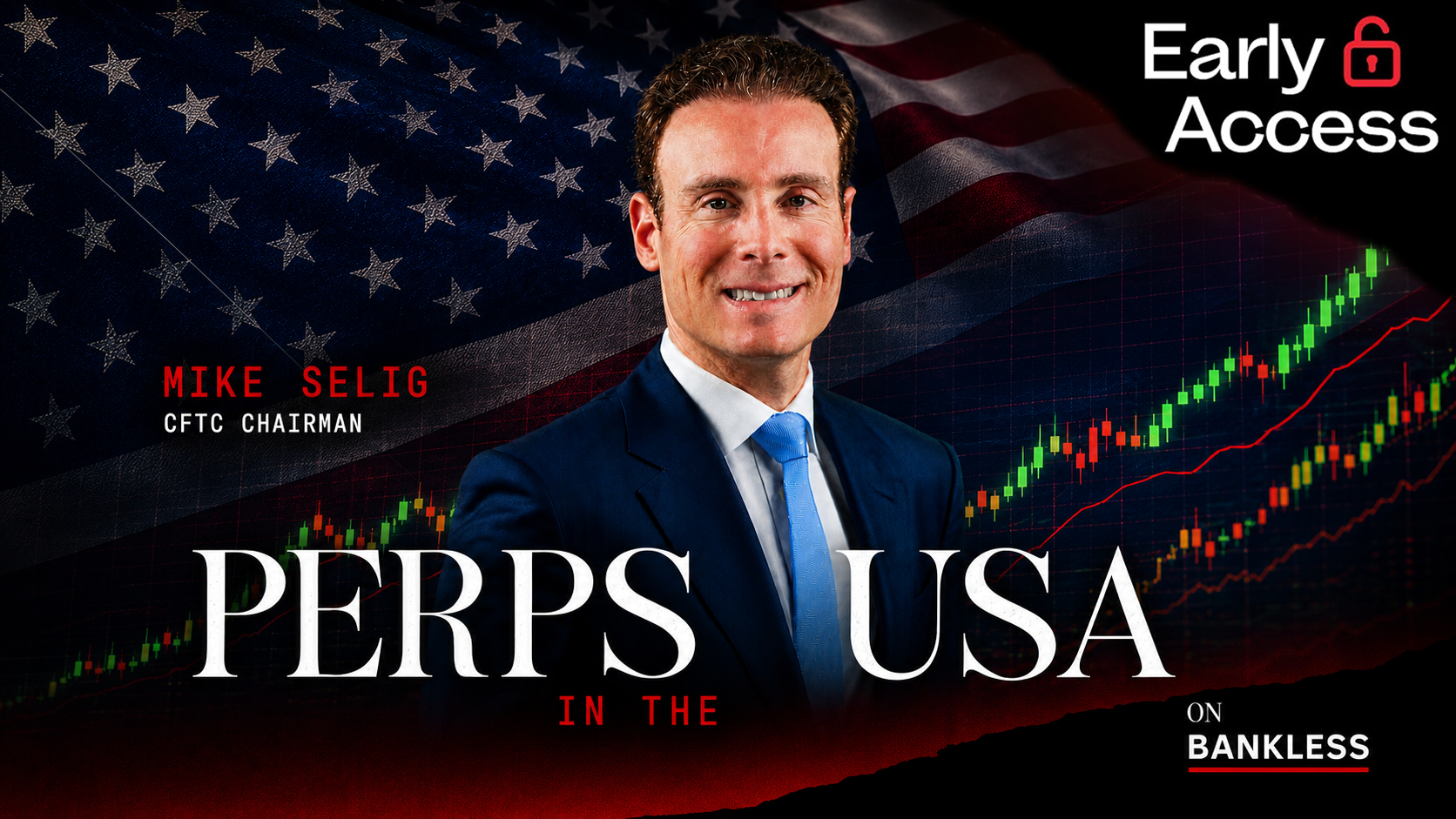
[0:33] Bankless nation i am once again joined by mike selig he is the cftc chairman back on bankless mike great to have you.
Chairman Selig:
[0:39] Glad to be here
David Hoffman:
[0:40] Uh two weeks ago the cftc announced a the order for approval to calci x for the listing of the btc perp contract uh this is a pretty pretty big landmark for the perpetual as an instrument it's also the first onshore u.s bitcoin perpetual futures contract, from a CFTC registered exchange. At the same time, the CFTC also gave Coinbase a no action letter, allowing them to pipe their customers to Deribit in order to access futures, options, and perps on Coinbase access through Deribit. Pretty landmark approval. Mike, are we about to see more of these? Is the CFTC opening up the gate for onshore perps? What can we expect as an industry or people who are just interested in the perpetual future instruments?
Chairman Selig:
[1:27] Well, thanks for having me on the show. And, you know, this is really, as you say, a watershed moment, a pivotal moment where we've turned the tide on the years of regulation by enforcement, a lack of clear rules, kind of this offshoring, pushing things out of the country. And we want it to be here in the United States. We want the industry to survive, to thrive and to build here in the US. And part of that means having a futures market, having perpetual contracts that are tradable on US exchanges under US regulation, on US soil and not something that you have to go use a VPN to be able to figure out how to trade. So that starts with exchanges like Kalshi, exchanges like Coinbase and there's a long list of others who will be launching the product soon. We started off with this initial order for a Bitcoin perpetual contract that was listed on CallStrees Exchange. And we also approved the ability to access through Coinbase's broker offshore perpetual contracts. And all these are regulated products. And that's really the theme here. This administration cares about regulation, but we also care about innovation. So we are opening the doors to new products. And we think this is the beginning. It's certainly not the end. There's many more crypto and other types of products that people want to offer here in the U.S. that for so long have existed only offshore. So this is the beginning and not the end, for sure.
David Hoffman:
[2:50] The beginning and not the end. And I think that's why people, in my neck of the woods, are just so excited. Perps as an instrument, as Perps platforms, incredibly successful as an adoption metric. The adoption of the Perp has gone incredibly well. And Perps platforms are just generating some of the greatest profits out of crypto that we've seen. And so this is why people are excited. You know, first, we can start with Bitcoin, but we have a whole industry of assets that we would like to Perpify, maybe in the same way that we had the ETFs. You know, first we started with Bitcoin and then Ether came and then there are even more ETFs. Is that something that's going to happen with Perps as well?
Chairman Selig:
[3:32] Well, one important point is just in the week since we saw the green lighting of the Bitcoin perpetual contract, we've now seen a number of products self-certified as perpetual contracts in the digital commodity world. So we break down at the SEC and CFTC crypto assets using clear rules, unlike the last administration, the crypto assets in the category. So we have digital commodities, and these are assets that derive their value from a network or a protocol or an application, things like Bitcoin, Ethereum, Solana, Uniswap's token, these types of tokens that derive value from a network or product or application. All of those products with certain requirements around the product being listed, the products have to have a ready market, have to be not readily susceptible to manipulation, and so on and so forth. But provided that the contract meets our requirements, those can be self-certified. That means that the exchange can list those products without having to ask for permission first. They can essentially submit them, and we can reject the contract if we believe there's an issue with our regulations, but they can be listed fairly easily. So we've seen a number of those be listed in the past week.
Chairman Selig:
[4:44] We expect to see more in the future, but then moving into other categories, digital collectibles, for example, meme coins, those sorts of assets. We would expect a process with the staff. We want those to go through our full approval with the CFTC and then moving into things beyond crypto equities, which we can certainly get into metals, other types of products.
Chairman Selig:
[5:08] We would not be expecting those to be listed right away. There will be a process with the staff, but we're interested to engage with the exchanges on listing new products.
David Hoffman:
[5:16] So there are some crypto assets that are being given clarity by clarity. And I think what I heard from you just now is those assets that have already kind of gone through the legislative process are able to be self-certified by CFTC approved platforms already. And this is just kind of how this goes. And so if you are a CFTC compliant exchange, you can self-certify given the asset itself has already been given some sort of approval clarity through Clarity Act. Did I hear that correctly?
Chairman Selig:
[5:47] Well, it's not the Clarity Act itself. So a couple of months ago, or maybe even three or four months ago now, Chairman Atkins and I came together, worked together on an interpretation that divided up crypto assets into categories. And so we have crypto assets that are digital commodities, digital collectibles, digital tools, things like liquid staking receipts, digital securities, tokenized stocks and all of that and stable coins. And so this perpetual order that we granted allows for self-certification of crypto assets in the digital commodities category. And then beyond that, whether it's in crypto or in stocks or anything else, we would expect a process with the staff, but the staff's ready to engage on other asset classes as well.
David Hoffman:
[6:31] I see. Okay. So like the big assets, the ones that are commonly found to be the layer one native assets, Bitcoin, Ether, Solana, one could imagine as well, are all, in that category that you just said of just like it's going to be exchanges are going to be able to self-certify. And then as we maybe get a little bit further into more of the newer or more exotic assets in the crypto industry, that is a little bit of facts and circumstances about the nature of those things.
Chairman Selig:
[6:59] That's absolutely right. And we have seen, I think there's about 17 other assets beyond Bitcoin that we saw self-certified by exchanges or in the process of being self-certified in the past week.
David Hoffman:
[7:09] What are these exchanges? Because there is a bit of a gold rush for the United States perps market that players are just chomping on the bit. Like Coinbase, Robinhood, Kraken, OKX, they all have United States entities that they want to offer perps for. We have the prediction market platforms, Kalshi, which you guys gave the Bitcoin perp contract for originally, but also Polymarket ones in this game as well. But then we also have some of the more crypto native on-chain platforms, like Hyperliquid, Lighter, a few of the other ones. So many players want access to this, the United States perps market. How do you guys delineate between just the different nature of all of these platforms?
Chairman Selig:
[7:50] We're working with virtually all of these platforms. So Coinbase and CallShoot were the first two to launch, but we also have Bitnomial that's had a perpetual style contract for some time now. It's not a true perpetual. You can probably expect them to move in the same direction as well as other exchanges. I believe Kraken and Gemini, which Kraken actually owns, Bitnomial, I believe they've made announcements on social media. So there's many others that are looking to offer the product, and we're excited to work with these different exchanges. And then when you get into the on-chain space, many of the considerations around on-chain products are different, but we're certainly engaging with these protocol developers and firms to help get on-chain markets to the U.S. as well.
David Hoffman:
[8:35] As you would expect, the PERP market has grown offshore, and now we're seeing it come onshore. Is the goal to get all of it onshore, or how do you expect the equilibrium to kind of settle out between some offshore markets will remain offshore? Or, you know, Chairman Mike Selig, is it your job as the chairman of the CFTC, to get everything onshore as much as possible?
Chairman Selig:
[9:00] Well, look, I think my goal as the chairman is to get everything within a regulated market structure here in the US. So to the extent that the product exists offshore, and it's something that there's interest in, in the United States, we want to bring it here, we want the volume, we want the liquidity, we want that ability to engage in productive economic activity here in the United States. But we have to protect investors, we have to make sure customer funds are safe. I do not want another FTX to happen. And I will add on that point, the CFTC regulated FTX entity was the only one that was safe, that protected customer funds. And so regulation works well. This administration believes in regulation, but also in innovation. And so whether it's crypto, AI, prediction markets, new derivatives like perpetuals, we want it here in the U.S., but we're going to set guardrails around it. And those guardrails, we believe, will be best in class, the gold standard we expect other countries to follow. But we are going to lead. We are going to make sure the United States is the leader in innovation.
David Hoffman:
[10:03] How will the perps inside the United States work different than what is typically found offshore? So what are those guardrails that will just kind of change the nature of the perp found in the compliant U.S. market versus what may be found elsewhere?
Chairman Selig:
[10:18] One important consideration is that each of our exchanges is CFTC registered. It has to offer a rulebook. It has to comply with certain core principles that are laid out in our statute. It's overseen by the CFTC. We examine each of these exchanges and then also the clearinghouse. So each contract is run through a central counterparty clearinghouse. And that means that there are certain controls that protect customer funds. Oftentimes, you're using a broker to access the clearinghouse, to access the exchange. You're not going direct to the market. But we are starting to see many exchanges offer direct access, which we also think is a valuable thing for our markets. We like competition. We like optionality. So there's a wide range of regulations that apply here in the U.S. To these platforms relative to, say, something on-chain that doesn't have a regulator.
Chairman Selig:
[11:08] We also, of course, approve contracts for listings. So each contract has to not be readily susceptible to manipulation. I mentioned that some of these go through a self-certification process, which means that we don't have to individually approve each one, but we have the ability to reject when something's submitted for listing. So that's very important. Leverage is a big issue. So leverage offshore, you see 250X, sometimes beyond that even. In the United States, we've seen more 5 to 7X range, sometimes getting up to 10X.
Chairman Selig:
[11:41] Some products like the S&P products moving outside of crypto have a higher leverage. But all this is based on certain parameters that are set by our regulations. And we work with the clearinghouses and with the exchanges on getting right. So for Bitcoin Perpetuals and some of these products, expect to see five to seven, maybe getting up to 10x leverage, but nothing like you're getting offshore. And that's helpful for investors. That does protect customer funds. It may be, you know, not what people are excited about offshore with some of the excessive leverage. But I think for the larger institutions that are looking to get into these contracts and for the average investor, this is a safer product than what you see offshore due to that lack of, you know, excessive leverage. And, of course, our staff are looking at these products on a regular basis. They might make adjustments to that ratio. There's certain calculations based on, you know, a trailing 30 day average of the price and all of that that they're looking at. But rest assured that regulations apply and that's going to help keep customer funds safe.
David Hoffman:
[12:44] One of the big categories that excites me and many others in the crypto industry, is the rise of these on-chain platforms that are on blockchains and therefore are imbued with some of the things that we find exciting about blockchains. They're auditable, they're transparent to the end user, they have just inherent more fairness. And so there are some of these platforms that when they're on a blockchain, I would expect as a regulator are exciting to you because of their transparency, their auditability. You know, some of these things actually want to like open source their code and, you know, be able to show you at the CFTC, but also me as the user exactly how the code operates. Does this change the nature of how the CFTC thinks about regulation in this space when some of these platforms can just, you know, open source their guts and show the world exactly how they operate? How does that change your job, if at all?
Chairman Selig:
[13:41] Well, Bitcoin and blockchain technology really came about on the heels of the financial crisis. And financial crisis, in large part, was this issue of a lack of transparency in our markets because they were super opaque. We now have a number of forced reporting and forced transparency initiatives through our regulations as a result of Dodd-Frank and regulations thereunder. But blockchain technology solves a lot of that using technology instead of kind of the brute force of the regulator. And so I am very excited about that. I think that blockchain offers a ton of benefits for our traditional markets and for some of these new markets that we're seeing on the frontier, things like prediction markets, things like new crypto asset products and perpetuals. I expect to see this technology be used in a very broad way across our markets, whether it's in securities or commodity derivatives or the next new thing in our markets. So yes, I believe that transparency can be achieved through using on-chain data. The one issue that I have as a regulator is, I'll give you an example, if I'm looking to catch a bad actor who's engaging in insider trading or manipulation or fraud, I can get a ton of data on chain and I likely can pinpoint that person with enough research and analytics to figure out who they are because they probably onboarded through one of the exchanges, let's say they're trading in DeFi.
Chairman Selig:
[15:08] But I need to find a way to be able to catch some of these bad actors. So, you know, having tools, analytics tools is very helpful. I think the technology is in its early stages. But I do expect as on-chain technology continues to advance, it will become much easier for regulators to really lean into the technology, for us to replace things like trade reporting to data repositories with on-chain transaction data, because we can see the transaction occurred, that it settled to the Ethereum blockchain or to our layer two or wherever else. And we can figure out with a strong degree of certainty who the traders are and catch bad actors when, for example, they're trading, using insider information or manipulating markets. So I'm excited about it. I think we're in the earlier days, but we're getting there pretty fast. We work with a number of projects on trying to figure out how to substitute some of our existing rules and regulations for technology, how to automate things and really lean into blockchain technology. And of course, you've got cyber risks that we're thinking about constantly, but if we can get all of that right, I believe that blockchain technology really will revolutionize our financial markets in the near future.
David Hoffman:
[16:21] The spearhead of perps has really been pushed forward by, this platform, Hyperliquid, the dominant in volume and adding all these new assets and has really kind of just won the narrative in terms of growing the perp market. And it has a lot of the properties that you just talked about. It is on a blockchain and has some level of transparency as a result of that. But also, it is somewhat decentralized. And therefore, I don't think hyperliquid will ever mandate or enforce KYC as just kind of antagonistic to their platform. So it has some of these amazing properties, but also from the United States side of things, I don't think hyperliquid will ever do KYC. How do you think about bringing hyperliquid onshore inside of the United States when it is built with this particular form factor that doesn't really fit with the pre-existing status quo?
Chairman Selig:
[17:13] Yeah, I saw Hunter Biden's a big fan of that one. Yeah. Look, I think on-chain technology, whether it's hyperliquid or any of these on-chain markets, is something that is going to, as I said, transform our markets. And we're already seeing the global nature of blockchain technology transform the way that we're transacting here in the U.S., the way that our markets are functioning. 24-7 is also something that we greenlit.
Chairman Selig:
[17:42] We've had this in our crypto markets and prediction markets for some time now, but we just put out some guidance on 24-7 because exchanges are ready for it. They're excited about it. And I think that is really driven by blockchain technology, by perpetual sort of accessible 24-7, 365. When you're looking at these on-chain markets, whether it's, perpetuals or other types of derivatives markets that are on-chain, there are different considerations for on-chain markets. Certainly, some things are automated and smart contracts solve a lot of the things that our rules are designed to force. But you do have considerations. We've seen these auto-deleveraging mechanisms cause some cascades of liquidations and really create some adverse consequences that in the US we're not used to. And I'm not going to say that they're worse for investors or better. And in some cases, maybe these mechanisms work very well and they work as designed.
Chairman Selig:
[18:45] And maybe the users trust in that code and they understand that the code will work a certain way and they're happy to trade in that environment. But there, as a regulator, things that we have to think about and consider. So we're very excited to see these markets flourish in the United States. We want to create a path to bring these on-chain markets into the United States, make sure that they comply with some form of regulation. You know, the last administration was so fixated on you have to come in and register and comply with the rules on the books as drafted for, you know, a 1934 exchange, right? We're leaning into the future. We understand that our markets are changing, that technology is changing. We want to tailor fit our rules and regulations for these new products and platforms and exchanges, recognizing that we need to protect investors, we need to make sure that customer funds are safe, or at least that there's an adequate amount of disclosure and people understand what they're trading and how they're trading. So we're working on all that. We've been taking a number of measures at the commission to make sure that self-custodial wallet providers, for example, are able to offer access without having to register as a broker. We're looking at tokenization and the use of on-chain assets for settlement of contracts and all of that. So we're leaning into on-chain technology. We're just getting started, but we are evaluating these platforms and engaging with many of them. We're excited to see the new frontier finance built here in the US.
David Hoffman:
[20:13] One thing we're observing is that real world asset perps are actually dominating volume over cryptos. Perps, I think it's something over 60% of the volume of the perps market is now looking at real-world assets like oil, gold, and now also these pre-IPO stocks as well. So Anthropics, SpaceX, OpenAI, these are all pre-IPO markets that you can trade with these perpetual instruments. These are our American companies. And so it's actually a bit weird that these markets are being hosted offshore. Do you want these markets to come offshore, these pre-IPO markets to come from being offshore to onshore?
Chairman Selig:
[20:49] It's fascinating to see all of this activity offshore. Of course, we want to see that here in the U.S. in a regulated manner, but we're assessing it. So I look forward to working with Chairman Atkins over at the SEC. A number of these products are security-based derivatives, whether they're futures or swaps or another type of product. That's certainly something that we will work through together. But we're excited to make sure that the new frontier finance is built here in the US and that means new products, new services, new platforms and we can't fear that, we have to embrace it and come up with a pathway for it because in my view, if we erect barriers if we push this activity offshore, it will go offshore and it's not gonna benefit the American people because they're gonna go use a VPN and access it anyway and they have none of the protections so if we can come up with a path for it the United States will do it and we're going to certainly work on it.
David Hoffman:
[21:42] These equity PERP instruments that people are getting excited about, it's kind of interesting because it's a PERP. So therefore, it's under the purview of the CFTC, but it's an equity. So it's under the purview of the SEC. It's like a perfectly hybrid instrument, that requires both of your guys' collaboration. But therefore, you know, Project Crypto and the harmonization of the CFTC and SEC. So I'm not really worried about that. But is this unprecedented or are there other contracts, derivative contracts that are around equity instruments that have required CFTC and SEC collaboration in the past, like outside of crypto? Or is this something that's relatively new for these two agencies?
Chairman Selig:
[22:23] Well, security futures, so whether it's perpetual or not, those products require joint authorization by both agencies. So the CFTC regulates the platforms, the exchanges that offer these products, and then the exchange that has to notice register. So it goes through a shortened abbreviated registration process with the SEC and approval process there. So we have collaborated on that in the past. But unfortunately, the CFTC and SEC have always been in these turf battles fighting with one another. And so they've not wanted to work together to bring these products to market. And so usually, the products sort of wind up on the sidelines and don't make it to market. We're working together. We want to get this right. We want to bring security futures, security perpetuals, and other types of assets to market. We are working together to make sure also that persons trying to offer these products and engage in these markets aren't caught in the crosshairs like the Gary Gensler, Russ Benham years where the two agencies were just bringing enforcement actions right and left. You know, you go and comply with the CFTC and then the SEC brings an enforcement action or you comply with the CFTC, you know, and the opposite. It. So we're working to fix all of that. And we're optimistic that we're going to see these products in the near future.
David Hoffman:
[23:39] One thing I might think could be coming down the pike for this PERP instrument, this fight over the PERP, is that the crypto offshore platforms, the startups, the more nimble moving companies have been really first to move here. But a PERP is just an instrument. It is a neutral instrument and can be applied anywhere. And I would actually expect some of the incumbents, like the CME group and the commodities gargantuans that are already out there, are also looking at this. And they own the commodities volume. They own the wheat and oil and all that kind of stuff. How, as a regulator, do you balance the disruptors, the Coinbases, the Robinhoods, the Hyperliquids? Because you want these markets to come onshore and be compliant. But we have these gargantuan incumbents with all the commodities who are just going to be slow to move but, they do all of the actual like delivery of the actual real commodity underlying which is like a nuance that I don't think hyperliquid wants to at all deal with when it trades oil and so there's going to be a little bit of, like Tetris-ing behind who gets what, and I don't really know how that unfolds but as a regulator you're going to be at the center of this I would imagine This is me kind of just like future escaping here.
David Hoffman:
[25:00] Is what I'm talking about real? Is there a real fight down the line between these incumbents and the disruptors over like the turf war of the purpose?
Chairman Selig:
[25:09] Well, look, I think with all of these various products, we want to bring them into the U.S. in a regulated context. I think the two agencies certainly have to work together to get all this right. When it comes to incumbent exchanges, Our mandate as an agency is fair competition. So we're not standing in the way of any incumbents from coming into these markets and offering new products. We love to see innovation. We love to see competition between new entrants and old entrants. So we're here for that. Certainly with some of these exchanges, they're duly registered and there's aspects where the two agencies, the CFTC and SEC will need to work together to make sure they can bring their products to market. But we're excited about that.
Chairman Selig:
[25:55] What I do want to get clear, though, is that when it comes to
Chairman Selig:
[25:59] Some of the allegations around what products are available for trading, we've been very clear. We're starting, and the president also asked for this in his president's working group report. This is something that's very much in line with what the administration has already said many months ago. We're coming to the market with crypto perks. We will consider other products, whether it's agricultural. We are concerned about that. We don't necessarily think that there's a place for corn perpetual contracts. We actually haven't gotten requests for that. But to the extent firms want engaged on that, we'll consider it. But to your point, the deliverable supply issue, looking at the commercial realities, some of these contracts, they're dated for a reason because the commodity comes to harvest during that period. There's other seasonal changes in the market. And so it may not make sense to have a corn or a live cattle perpetual contract. And we certainly have not greenlit any of that. We've been very clear in our release that that's something that we would expect heavy engagement with the staff if someone were to try to bring to market. There are other products that may be closer to crypto that we're happy to engage on. But the two areas where we expect engagement in the near term are additional crypto products and some of these equity products. And that equity engagement will be between the SEC and the CFTC.
David Hoffman:
[27:27] Maybe I'm getting a little bit ahead of myself then in the sense that we have a whole entire crypto industry that we need to bring onshore using the PERP instrument. We will also talk about the equity PERPs because that is simply just relevant. That's here today. And as the PERP grows and the CME group and the incumbents inside of the in Chicago, they'll get to they'll do their PERP things in the future. But let's just worry about that then in 2027, 2028, down the line. And we'll just worry about what's happening here and now. That's what I just heard from you.
Chairman Selig:
[28:01] That's right. Look, some of these incumbents may not like perps, someone offer perps too, and that's totally fine. I think there could be competition between a 24-7 model that someone wants to offer and feels comfortable with versus a perpetual 24-7 model. So I think there will be all sorts of options available to the market and the marketplace will decide. I think it's a free economy and people can go purchase the assets they want to purchase, but we're going to make sure that there's rules and regulations
Chairman Selig:
[28:29] in place to protect investors when they do so.
David Hoffman:
[28:31] On the crypto side of things, crypto volume has really flipped to be about 90%, volume, 10% spot. So it's gotten pretty top heavy. Are we concerned about the derivative markets being so top heavy and potentially causing issues potentially systemic if just the volumes are all derivative based and spot actually kind of thins out?
Chairman Selig:
[28:51] Well, if you look at other commodity asset classes. This is not uncommon because you have so much leverage in the derivatives markets. So our global derivatives markets are actually 1.2 quadrillion notional. So there's a lot of trading volume there. If you think about that as well, it's just a lot more to be traded. So that's correct. But I don't necessarily think it tells the whole story. I think this is something if you mapped on other commodities, that same framework, you'd have a similar amount of leverage in the system a similar amount of volume disparity from spot to the futures market. And also in particular with commodities, the futures market is much more liquid and you've got the ability to go trade on an exchange, whereas with live cattle, you're going to an auction. So it's a little bit different market to market, but it's certainly something that we're looking at and thinking about. The core concern for us is that these markets are not readily susceptible to manipulation. So if we're looking at, for example, Bitcoin relative to, you know, some meme coin of choice, Pepe or something like that, you know, we're going to think about how much supply there is, how much spot trading, how much susceptibility there is to manipulation in the spot relative to the futures.
David Hoffman:
[30:05] Chairman, it's been fantastic having you on once again. I also just appreciate it as a content producer, being able to access people like you and get answers directly from people like you. Gary Gensler never came on the show despite our invitation, so I appreciate you. The crypto industry is pretty bullish perps as a whole, and we kind of think that we're going to perpify everything. The perp is such a strong instrument that everything is going to get perped. How do you think about such a bullish notion like that? Maybe we need to tamper our expectations, or maybe you also think that all of these platforms also might just add perps, maybe a little bit more modest with leverage than we see on the crypto side of things. But nonetheless, everything will get perpified. How do you think about this question?
Chairman Selig:
[30:51] The CFTC hasn't approved a new type of derivative instrument for over a decade. I think it's incredibly exciting that we now have perpetuals in the lineup, and we're going to continue to engage with the exchanges on bringing some more of these products to market. So this is just the beginning, as I said. At the outset, it's not the end. We expect to see more of these products, and we'll continue to monitor the market and make sure that investors are protected, but we're also seeing innovation in our markets. And I'm very excited to have conversations with the SEC about equity, perpetuals, and other types of products. So I think it's a time to be excited. It's certainly a time to be building here in the United States and we'll continue to make sure that the United States is the crypto capital of the world.
David Hoffman:
[31:36] Chairman Mike Selig, thanks for coming on the show.
Chairman Selig:
[31:38] Thanks for having me.
David Hoffman:
[31:39] Bankless Nation, you guys know the deal. Crypto is risky. You can lose what you put in, but nonetheless, this is the frontier. It's not for everyone, but we are glad you're with us on the Bankless Journey. Thanks a lot.