Nifty Gateway's Shutdown

View in Browser
Sponsor: Bitget — New ATH for Gold! Trade gold, silver, and more directly on Bitget.
| Ethereum, the always-on medium 🤔 | ||
|
||
| 📍 Read the full post |


Update: Jan. 27, 2026 (4:00 PM ET) – Following the publication of this article, Nifty Gateway announced changes to its closure process, including plans to migrate NFT metadata and media to Arweave, extend the withdrawal window to April 23, 2026, and introduce a bulk withdrawal tool.
Nifty Gateway is closing up shop. The NFT platform, which launched in 2020 and has been home to art drops from Beeple, Sam Spratt, and beyond, has entered withdrawal-only mode.
Collectors now have less than a month to retrieve their NFTs ahead of the official shutdown on Feb. 23rd, 2026.
That tight withdrawal window is problematic, as it could lead to millions of dollars' worth of losses. Yet unfortunately there are more issues. For example:
- Mandated KYC
You currently can't access Nifty Gateway's withdrawal feature unless you provide all your tax information. - No batch withdrawals
You have to transfer each Nifty Gateway NFT out individually, which is a time-consuming UX nightmare. - No artist sovereignty
Nifty Gateway minted everything on a single shared "omnibus" smart contract, so there are no individual contracts to hand off for artists to take over.
It's too late for Nifty Gateway to decentralize its infra, of course. But it could have offered more notice and more resources.
For instance, a Shakespearean foil here is the MakersPlace marketplace.
When MakersPlace announced its closure, the platform gave users months of notice to withdraw their NFTs, provided a batch transfer tool, and covered the gas costs of withdrawals.
They made the best out of a tough situation by doing what was right by collectors. Yet even if Nifty Gateway streamlined withdrawals and offered more time, there's still an even bigger problem afoot: storage.
NFT storage is a spectrum. Things like Arweave, IPFS, and fully onchain data have respective pros and cons, but they all offer a baseline option of long-term retrievability. In contrast, the least durable route? Private servers.
That's because if the company running a private server shuts it down, the metadata tokenURI link in any NFTs pointing to that server will break, permanently rendering these NFTs imageless and broken.
The bad news, then, is that Nifty Gateway stores the vast majority of its NFT data on its own private server. If it doesn't conduct a migration elsewhere and update all its tokenURIs, hundreds of thousands of NFTs will be lost once this server goes offline.
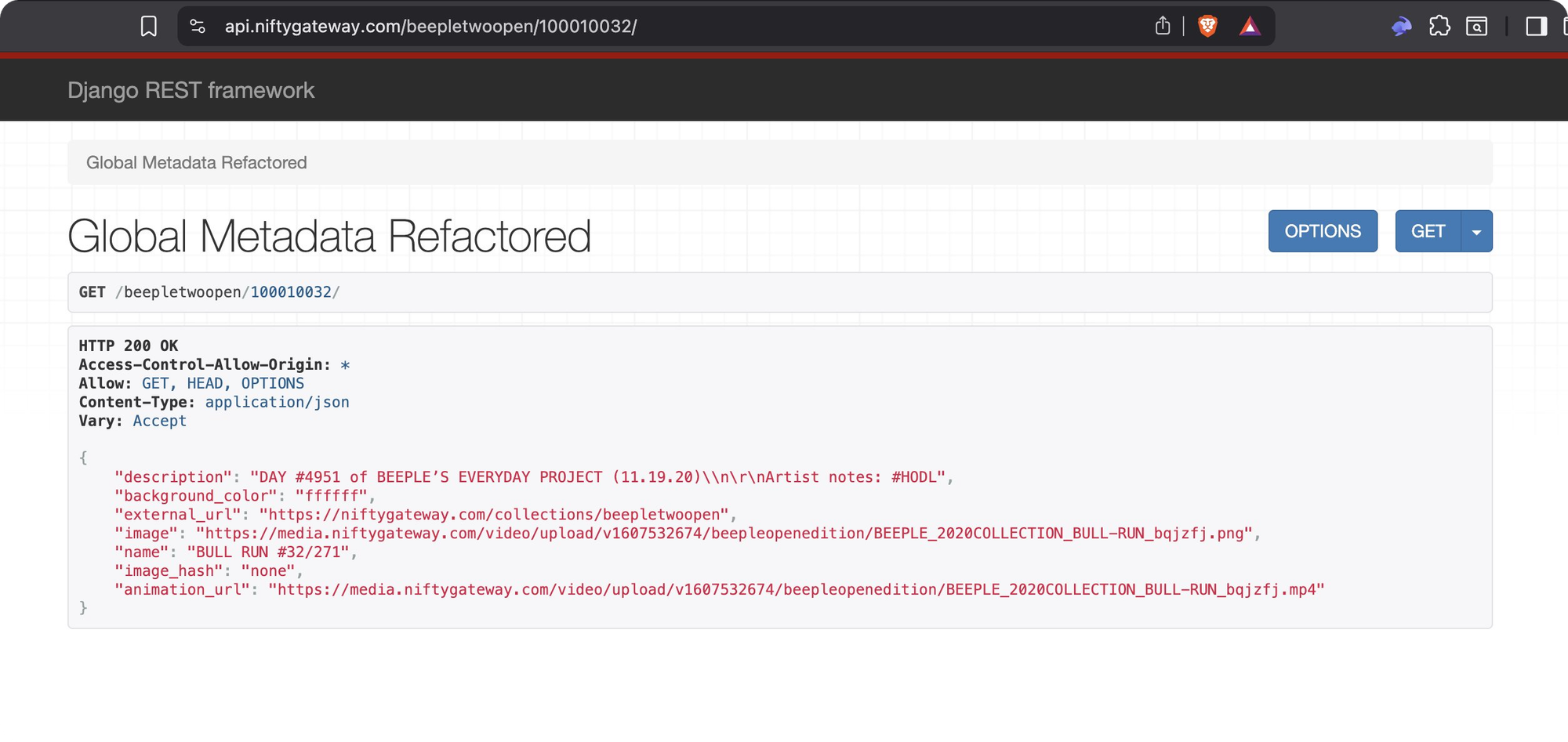
For now, though, it doesn't seem that Nifty Gateway has any plans to migrate or update its data. Per Niftytime, an NFT OG and former employee of Nifty Gateway:
"Apparently there’s a solution that was proposed internally that would preserve the metadata for a min. of 20 years utilizing ipfs/arweave and it’s only estimated to cost $7~8k, but for some reason they aren’t implementing it."
If that's true, it's certainly an abdication of moral responsibility by Nifty Gateway. Not spending a trivial sum to preserve the cultural and financial value of their work is indefensible.
We'll have to wait and see if the team does any course correcting here. But also steel yourself because this closure won't be the last of its kind in the NFT space.
It's not a bad time to learn about pinning IPFS files and checking NFT tokenURIs if you don't already know how. NFTimeless, which will soon be open to everyone, is great for analyzing how your NFTs are stored, too.
Gold and silver are printing fresh highs. Ride the momentum on Bitget: trade 79 macro markets—commodities, forex, and indexes—directly with USDT. Diversify in one app with deep liquidity, low slippage, and up to 500x leverage to match different risk styles.
The rumors of Farcaster's death have been greatly exaggerated. The network's mini apps scene is still arguably the best place in crypto for new projects to reach their first power users and revenues.
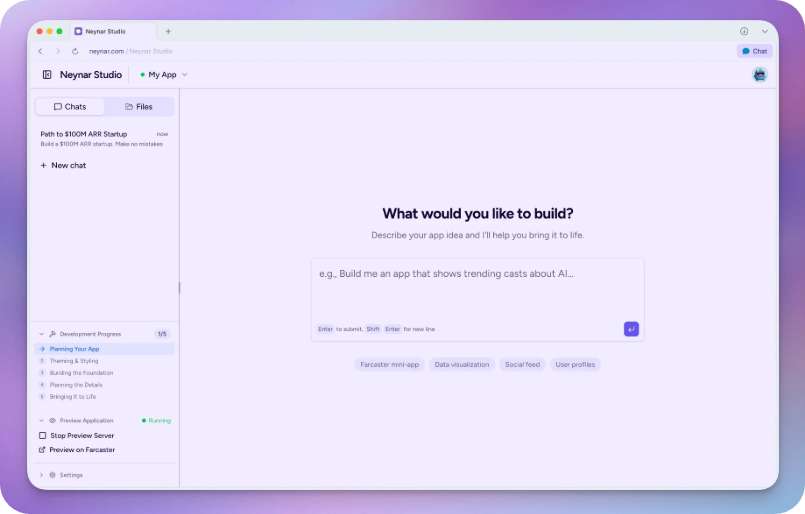
That said, a blocker here hitherto has been needing technical dev experience to build mini apps. Fortunately for all us creatives, Neynar, the new owners of Farcaster, just rolled out Neynar Studio on Web.
It's an AI-based no-code builder for creating and launching Farcaster mini apps right in your browser, and with just text prompts. You'll need a Farcaster and Neynar account to dive in, but it's worth a try if you have some app ideas you've been kicking around.
Not financial or tax advice. This newsletter is strictly educational and is not investment advice or a solicitation to buy or sell any assets or to make any financial decisions. This newsletter is not tax advice. Talk to your accountant. Do your own research.
Disclosure. From time-to-time I may add links in this newsletter to products I use. I may receive commission if you make a purchase through one of these links. Additionally, the Bankless writers hold crypto assets. See our investment disclosures here.