Is the Crypto-Native Era Coming to an End? - Lessons from 10 Years in Crypto with Joey Krug, Founders Fund Partner
Joey:
[0:00] Every single person who interacts with any web service is almost always running Linux in the back end.
Joey:
[0:04] Another lens on this, I guess, is like if you look at like Polymarket, you basically have, you know, Robinhood, Coinbase, and then Polymarket's like three or four in terms of site traffic. Most of those people don't even know it uses crypto. They're just browsing the site to see what the odds are because they're curious because it, you know, informs them in some way throughout their day. And that's like a crypto product that's, you know, touched millions of people. Most people don't even know it's a crypto product.
Ryan:
[0:32] Bankless Nation, Joey Krug is a partner in Founders Fund. This is Peter Thiel's legendary VC firm. I'm sure you've heard of it. He was previously the co-CIO at Pantera Capital. And before that, he was the co-founder of Augur. Safe to say, Joey is a crypto OG, also an Ethereum OG. It's been a while since we've talked to him. Joey, welcome back to Bankless.
Joey:
[0:52] Thanks for having me.
Ryan:
[0:52] All right. So it was 2022, actually, when we last had you on. It was summer of that year and a lot of things going on that summer. But SBF was still running the exchange FTX at that time. So the full gravity of that bear market had not yet hit us. Catch us up. Since 2022, it's summer. What have you been doing?
Joey:
[1:11] Yeah, let's see. So since then, I ended up moving over to Founders Fund. One of the partners here, I spent probably about two-thirds, 70%, something like that of my time on crypto. And then the other third is just assorted kind of, you know, random interesting stuff that people loop me into.
Joey:
[1:30] Some biotech stuff, some AI stuff, things like that.
Ryan:
[1:34] Is crypto still interesting to you, Joey? Like what's interesting about it?
Joey:
[1:37] Yeah, definitely. I mean, I think the thing that interests me about crypto is if you look at kind of the most broken industries, you know, in the world, in my mind, they've always been, you know, basically three things, you know, the government itself, healthcare and finance. And, you know, when I got into crypto, my logic was basically doing something in government seems just really annoying and tough. Healthcare is also a lot of bureaucracy and, you know, it takes a long time to make any dent. And, you know, when I saw crypto in smart contracts, basically applying sort of the idea of programmability to financial markets, I was like, that's an area where, you know, you can actually, you know, have some level of impact on the world And, you know, I think it's went both slower and faster than I thought getting into it. But yeah, I'm still excited about crypto.
David:
[2:28] It kind of seems that we're in an era where finance itself, Wall Street itself, is also realizing that blockchain technology is going to help upgrade it. At the same time, the OGs like us that have been here since 2017, and I think you guys even earlier than me, also feel like some of the magic has left the industry. Like, we don't really have the same imagination, the imaginations that we once did when we were building whatever we were building back in like the 2018 to 2021 era. And now it's things that are like tempo that are really stealing a lot of people's attention and whatever, whatever BlackRock is doing.
Ryan:
[3:07] It's all suit coiners now.
David:
[3:08] It's all suit coin. Suit coin is a new term that we learned from some of our Tradify friends. Have you been feeling that as well? Or maybe is that just like something that we need to get over?
Joey:
[3:19] I mean, I've definitely noticed it, but I think it's sort of, you know, probably a good thing. You know, I think if you look back, how do I forget, six or seven years ago at this point, you know, there was all this like private blockchain craze. And, you know, now there are actually institutions doing real stuff. But for the most part, it's on, you know, public and permissionless chains, right? You have like some of the BlackRock funds that are tokenized on Ethereum and various layer twos. You know, some of that on Solana as well, of course. I think, you know, as far as the different ways that the institutionalization of crypto could play out, which has kind of happened in every sector, right? Even if you go back to the early days of the internet, it was this, you know, super, super cypherpunk, really based awesome thing in the beginning. And then it kind of got more corporatized. I think as far as industries go in terms of getting corporatized, you know, crypto has probably still managed to have started the corporatization process without losing too much of it. I think if you asked me six or seven years ago, I was a lot more concerned, hoping that the private blockchain thing didn't work. Luckily it didn't work. And yeah, yeah, there's more, there's more suits in the room now, but they're, you know, doing, doing stuff that's more,
Joey:
[4:33] more real than people were talking about, you know, six or seven years ago. So I think it's landed in a pretty good spot.
David:
[4:39] Maybe I look back on like the 2018 to 2020 era with rosy colored glasses. Maybe, maybe it's not as, maybe there's not as much nostalgia to be had looking back on that era as I kind of think there, is, but one of the frequent themes of conversations is just the values, the ideals, the cypherpunk ideals of the space. And what can we take, what can we do to export cypherpunk ideals to finance and Wall Street? And there'd be endless debates, like the Bitcoiners and the Ethereans are debating about node size and small nuances like that, where debates would be taken down to the nth conclusion just because of the philosophy of it and the fun of the debate and who's more cypherpunk than, which designs are more cypherpunk. Did all those conversations matter now that Wall Street's here? Like, was that more just like a fun arena of conversation for those who liked to partake in it? Or did they actually produce some, at least some of the net effects that we wanted? Like now that we're all the way in 2025 and like we have tokenization that's
David:
[5:40] going to be legalized in Congress. Did a lot of the blood, sweat and tears that we spent like debating some of these things. Did all that matter?
Joey:
[5:49] I think with all things, it's like most of it didn't matter, but some of it did. And the part that did matter, you know, mattered a lot. And so like what I mean by that is, you know, if you look at some of those debates back in the day about stuff really being, you know, decentralized and trustless. And I remember having these debates, you guys, you guys as well. Not all of it stuck. For instance, I remember back in the day when we were building Augur, and this is still completely impractical to do for the most part, is we had a decentralized front end. And the tech just never really got good enough for most apps don't have decentralized front ends today. But some of the more important stuff like smart contracts and the design of those, I think a lot of those early conversations around stuff like Maker and Compound and Aave, that is still largely stayed true to this day. Maybe there's some more centralization points that people can kind of argue around the margins around. I still don't quite think the Oracle problem has been fully solved. But for the most part, I think a lot of these core primitives have sort of set the groundwork that's going to continue to remain even post further institutionalization of the asset class, like trading tokenized funds or tokenized securities. I think people will use things like you know, Uniswap and automated market makers to trade those. Can't really borrow too much against them on Aave right now, but I think eventually those things will be supported on Aave. And then if you look at, to more directly answer your question, you know, what did crypto bring to the
Ryan:
[7:18] To the traditional financial system.
Joey:
[7:20] You know, I wasn't really trading, I wasn't trading back then, but if you talk to anyone, you know, who was around in 08, like I have friends who, you know, lost money in like the MF global, you know, thing where they went bust. And so like, there is kind of this dynamic of, you know, Wall Street historically has been very trust-based and especially with things like borrowing, lending, margin, et cetera. You know, I would personally rather use a system that's not trust-based. And I think crypto is, like a lot of those features of crypto, I think are going to continue to stay.
Ryan:
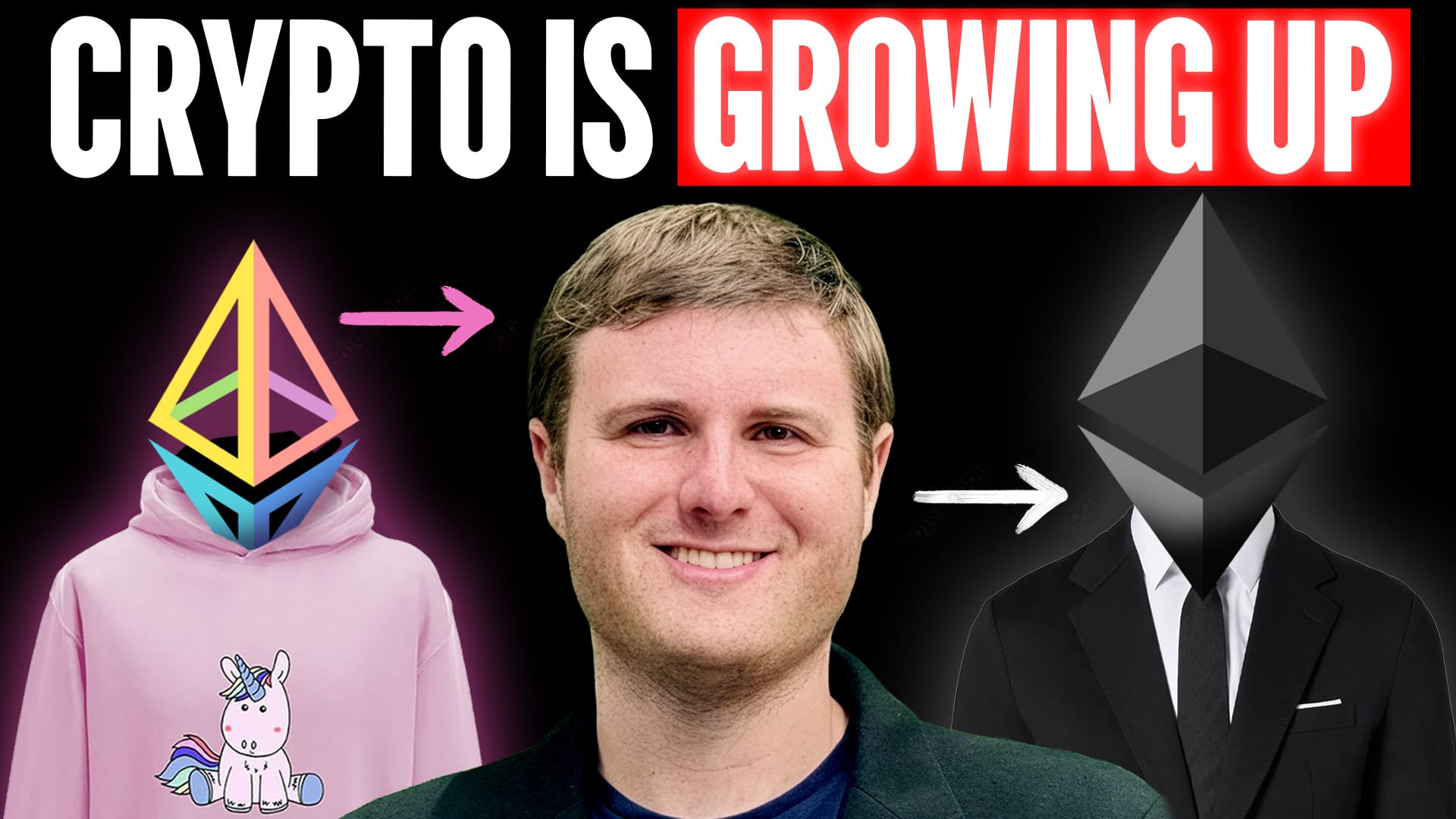
[7:49] It's interesting to reflect back on what battles I think crypto natives won and which ones we've lost. And I was reading this post this morning. I think the entire like,
Ryan:
[7:59] you know, all the crypto natives are sort of in this mood for reflection. It almost feels like we're between cycles again. Prices are down. So you get time to kind of ruminate and reflect. And there's an article by Dougie DeLuca, not familiar with, but he wrote a great article on Twitter. and he basically makes the case that the crypto native era is dead. He said that the crypto natives had this quiet assumption that has carried a lot of us in our careers that over time the world would just become more like us. And that's not how it played out. The user numbers grew, but the culture stayed niche and self-referential. So it was all of these games between fellow crypto natives. We didn't actually onboard everyone else into this system. He said it was a fun world, a great world, honestly, but that it's fundamentally capped. He compared it to a very liquid MMORPG, like a massive multiplayer online game of some sort that we were all playing. But like, our family didn't play, you know, we were still the weird crypto natives, mainstream didn't come.
Ryan:
[9:00] And he said, now we're actually entering an era that even though the crypto native era is dead, the mainstream era is just now rising. And so crypto natives have like one of two options is his conclusion. You can either cling to the insular self-referential industry that we built and hope the world eventually agrees to walk into it. So basically do what we've been doing. Everyone will be like us. Or you can accept that this phase is ending and start building and investing for everyone else. The mission was never to make everyone crypto-native. The mission was to make the
Joey:
[9:34] World with the
Ryan:
[9:35] Tools we built better, even if the world forgets what they're called. That spoke to me. I'm not sure that I entirely agree with it. I'm not sure that I'm ready to accept the idea that our crypto-native tools are kind of dead. But there's something to that, I think. What's your take on this,
Joey:
[9:53] Joey? Yeah, I'll have to read that after. That's an interesting essay. I mean, I think it's directionally right, like in the sense that, you know, I think a lot of the crypto native stuff did remain the same on like the very base protocol layers. Like Ethereum still holds more or less the same values that it held,
Joey:
[10:12] you know, five years ago. But I think if you look at kind of more of the application layer, I think that's where it's evolved and it's going to continue to evolve. And I think like one small example of this is like we invested in this company called Dollar App. and they basically do sort of like Revolut or it's kind of a fintech in Latam. And in the background, they use USDC and other stable coins. But I think probably 95% plus of the users have no clue that they're using stable coins. It just happens to be the best payment rail.
Joey:
[10:47] And if you talk to the founder of that company, he likes crypto, he owns some himself, he uses it, you know but he's not building for like a crypto native audience but on the flip side you know there's a lot of people who are using it and benefiting from it who don't really know that it's that it's crypto underneath i think it's sort of like i know this is a very loose analogy but like if you think about like the amount of people who you know make like a custom linux distro or or install their own you know linux distro on their machine where they make all these custom edits and changes maybe that is like those of us who use metamask and i still think that's like a larger market than the linux distro editor market or whatever but but there's kind of this much much larger market of like every single person who interacts with any web service it's almost always running linux in the back end and i think that started to become the case like another example of this is like another lens on this i guess like if you look at like polymarket you know it's it's then you basically have Robinhood, Coinbase, and then...
Joey:
[11:51] And then Polymark, it's like three or four in terms of site traffic. Most of those people aren't betting. Most of those people don't even know it uses crypto. They're just browsing the site to see what the odds are because they're curious because it informs them in some way throughout their day. And that's like a crypto product that's touched millions of people. Most people don't even know it's a crypto product. Maybe it's a bit different how it played out than we might've thought five years ago. But I guess I've seen some of these conversations on Twitter and I think some people are kind of burnt out because the prices are low. So, Trehanka's, you know, there's validity in that. But also, you know, I feel pretty positive about crypto because when I got involved, I was super into prediction markets. And my thing for like whether crypto succeeded or not, you know, this is kind of personal to me, but it was like, if widespread prediction market use happens, you know, and it uses crypto, then crypto will have done what I wanted it to do. And I'll be happy if that never takes off. You know, it doesn't matter how much the price of Bitcoin goes up, I'll still be somewhat sad that this vision didn't play out. So maybe I would have gotten really unlucky if prediction markets didn't work and I would have been really sad. But since that one use case worked, that was sort of all I needed to be happy about how crypto has been playing out.
David:
[13:04] I'm wondering, Joey, if there was an element of you when Polymarket worked that like, maybe at least in the back of your head, took offense to that. Because the way that you were building Augur was very aligned with like Ethereum's World War III resistant block space philosophy. It's like Ethereum is going to build and be so incredibly anti-fragile as a protocol that nothing will ever be able to take it down. And when you designed Augur, you designed Augur with a pretty similar philosophy of just like, we are going to think about every possible edge case and design around that. And it ultimately made Augur like kind of cumbersome, like this is pre-stable coins and also pre-scaling. And so you were building under constrained environment anyways. But nonetheless, like it had this whole, I mean, Augur had the whole intersubjectiveness that Eigenlayer ultimately like turned into like an actual product. But it was just because like Augur was built to survive a nuclear war. And turns out you don't really need that with prediction markets. You just need a centralized front end and stable coins deposited into an account. And then so I was wondering if you like, When you were watching the rise of Polymarket after working on Arga for so hard and for so long, did the cypherpunk in you like throw a flag and being like, well,
David:
[14:18] they're taking all these shortcuts? Or what did you think? Place us in the shoes of Joey watching Polymarket.
Joey:
[14:24] I think, it's a good question. I mean, I think the way I thought about it was like more kind of a reflective thing of like, basically the thought I had was like, okay, we were just wrong in terms of some of the design trade-offs we made. Part of the reason why it was hard to use and it's really hard to like attribute it you know percentage terms whatever part of the reasons it was hard to use That's because the infrastructure wasn't there. You know, I remember like, even once you could trade on Augur, there were days when it would be $50 to $100 per trade. You know, part of that was because our code was inefficient. Part of that was just because there were no layer twos at the time and stuff like that. And then I think the other part of why it was hard to use was these design decisions that you're talking about, where it was like, you know, made to be this thing where like, in like a post-apocalyptic world, like, you know, the video game Metro 2033 or whatever, like, you know, you could still use something like auger no matter how how destroyed the world was the infrastructure would still run and i i think i think part of the impetus for that was the government was just so anti-prediction markets at the time that if you didn't build it that way you know they would they would try to throw you in jail and then part of the impetus was was you know the cypherpump kind of ideological thing right it
David:
[15:38] Was culturally fit in the moment.
Joey:
[15:39] Yeah And I think so when I saw Polly Market, you know, I think it was like the culture kind of evolved. The government also evolved. I think Shane got the timing kind of just right. You know, like the FBI, you know, rated him and didn't find anything. And it got dismissed this year, you know, and he made a really good expected value bet there. If Kamala won, it might have been very different. You know, and some of those risks were just not, you know, legal risks. I would have would have would have taken because yeah for a lot of reasons but anyway anyway I think I think you know sort of they got the calculus and the timing just just right on a bunch of factors both product and market but also you know regulator and and and kind of government positioning towards towards prediction markets so anyway long story short it doesn't it doesn't make me like you know Saturn hang it's more just reflective of like definitely too early probably went too far on some design decisions, but also it's kind of a catch-22 because if we didn't, the government, especially the Biden admin, probably would have tried to throw us in jail. So it's a tough one.
Ryan:
[16:47] I remember the funny things we used to debate in those days, like the hypothetical, like what if there's an assassination market? Are prediction markets net good or net bad? And I'm sure what Polymarket just does is just not allow those markets on the platform. I'm sure that's how they deal with the prospect of having kind of bad markets.
Ryan:
[17:08] I guess, what's your take on the success of Polymarket? Because it has had an incredible year in 2025. 2024 was certainly a breakout year up to the election. And then, of course, regulatory wins swung in the favor of crypto and Polymarket in general. 2025 has had incredible product market fit. Is this just what prediction markets look like now? Like they're just eating the world. And how far will this go? It does seem like sports betting is a logical area, but now we're at $10 billion for Polymarket, similar for Kalshi. How much bigger will prediction markets get?
Joey:
[17:54] Yeah, I mean, I think there's a few different ways to slice up the market. You know, so one is sort of, I think there's probably like three to four lenses. So one is the sports stuff. I think for sports, there's sort of a different market where the market's much larger than the traditional sports betting market in terms of like volume. I think the best analogy is, you know, if you think about kind of back in the, you know, early 1900s, pre-SEC, there were like these bucket shops where you could trade stocks and, you know, you weren't really trading on the market. It was just like there was a house and you were betting against them and they had all these ways to cut you off and limit your volume if you were winning and all of this stuff. That's sort of like the sports books today. And they also charge really high fees. I think prediction markets kind of steady state will be much more like exchanges in terms of the fees that they charge. And so you'll have a lot higher volume. And then I think so that's kind of the sports thing.
Joey:
[18:48] So I think that can grow multiples larger. And then in terms of other areas, you have the elections, you have kind of like the front page of the New York Times style markets. Those are kind of like the blue ocean stuff. I mean, the elections markets have existed in the past. You know, there were, there's a lot of people who like to reference that, you know, in the, I forget when in the 1900s, but there's one point where election markets did more volume than the stock market. You know, that probably doesn't happen again, but I do think there's a lot of room for election markets. I didn't know that actually. Yeah, they used to show them on the, I forget if it goes to Wall Street Journal, they used to show the latest odds. And then the last category is like, all this interesting, you know, kind of like geopolitical or, you know, economic kind of factor style markets, where those I think, are very early in terms of their adoption. But like long term, I could see there being a lot of capital that wants to trade those. Like if you're a hedge fund, you have some very specific market view on what's going to happen. And you want to bet specifically on that view. Today, you just have to use a proxy.
Joey:
[19:52] And I think as these markets get more liquid, people will start to, in some cases, just bet the direct view. The classic example is, if you read that book about SPF going infinite or whatever, there's a chapter about how Jane Street was trying to predict the election and Sam had his model and they predicted the election right, but they lost on their direct bets. That's a good example of where If you can make a bet very directly on what you believe versus making it via proxies, that's always cleaner as a hedge fund or a capital allocator.
Ryan:
[20:23] So if you combine all of those things together, is that significantly larger than the $20 billion in market cap that Kalshi and Polymarket are doing today?
Joey:
[20:34] Yeah, I think so. I mean, I think the way I would look at them is like, In terms of market caps, you know, they could be comparable to like things like the CME or, you know, ICE, which owns the New York Stock Exchange. I think they're always going to be lower volume than like stocks. But I do think the fees will be a bit higher. And then they're also just, you know, different businesses in the standpoint of it's a lot lower, you know, operational and capital requirements to run these businesses. And so there's some sort of like tech premium that you apply as well. So I think they could be that big. Maybe they could be bigger. I don't know. I haven't thought about it beyond that point because as an investor, you just want to see, is there a line of sight where this investment can 50 to 100x and then sometimes you don't think about it too much more beyond that until later as the market evolves and you get more info. But that's sort of
Joey:
[21:28] how I'm thinking about it right now.
David:
[21:30] What do you think about the debate that basically everyone on prediction markets, they're just gambling. This is just the newest table at the casino. There's nothing socially productive happening here.
Joey:
[21:39] These
David:
[21:39] Are just degens placing bets on their local favorite casino that they enjoy in prediction markets they're just they're just gambling when you see these takes lying around what do you think about that.
Joey:
[21:48] The definitions of gambling like legally have always been really bad in my opinion really like you know i think whether something's gambling or not is sort of defined in two respects like in reality in my view one is what is like the structural edge of like the place you're betting or like who you're betting against. And then two is, you know, from your perspective, like do you have any edge or not? And so like as an example, you know, there's a lot of people who are really great poker players. And if I were to play against them, I would just be gambling. I might be able to win, you know, a few hands or might be able to win over like a 30 minute or hour time horizon. But, you know, play enough hands and they would basically be almost mathematically guaranteed to beat me. And then if you apply this sort of thinking to prediction markets There's
Ryan:
[22:39] Some stuff where
Joey:
[22:39] It's like clearly someone has an edge, like the election market, you know, where that French guy on Polly Market, you know, got a bunch of like private polling data. That's a real edge. It's a proprietary edge other people didn't have. He's clearly not gambling. Might have lost the bet. He ended up winning. But even if he'd lost the bet, I still think he probably had edge and it was a plus EV bet to make. On the flip side, the stuff that gets closer to gambling, in my view, is like if you're... Like Robin Hood calls them combos, but like if you're doing like a five-leg combo or parlay or whatever, But then it's like, there are ways to bet those with edge. Like I know people who make money sports betting parlays, they find where the book is mispriced and stuff like that. But it's really hard to beat them because the spread and the price is like so high. And there's so much edge embedded in something like a parlay, like for most people, most of the time, like betting big parlays is basically gambling. Certainly would be for me, like I don't have an edge in sports betting. And so yeah, it's not a clean answer, but I think it's sort of like, neither the people who say none of this is gambling, nor the people who say all that's gambling are right. It's sort of like this complex thing where, and the same thing applies to like trading options or stocks as well.
David:
[23:51] The far more interesting conversation that's been going around prediction markets, in my opinion, is much more around what kind of regulations do these markets need, if any. We saw the example of when Brian Armstrong from Coinbase was on the earnings call and he just rattled off the words that were being gambled upon, bet upon, as to whether or not he would say it on the call. And he just read all of them. And it was funny. I thought it was funny. But also it does a big broader question of just like, oh, he looked at a market and decided to pick winners and losers. And there's also the conversation of, well, you know, insiders actually know something. Should insiders be allowed to just smash the market buy on something that they have inside knowledge on? And is that insider trading?
David:
[24:38] What do we really need to do to preserve the purity of these markets? Because, you know, isn't the government supposed to have some sort of minimum amount of effective regulation to preserve the sanctity of these markets so that the markets can be perceived to be fair and attract more capital and just do a better job when it comes to the potential of regulation to improve prediction market structure? Do you have opinions on this?
Joey:
[25:06] Let's see. I think there's a few different lenses I have. I mean, one... One lens, you know, before getting into the insider trading thing is, you know, I saw this article recently, which said that, you know, crypto.com was on their prediction market was going to add like a few second delay where the market makers basically have the ability to trade ahead of, you know, the retail participants, like the retailer on a three second delay. That's an example of something that like whether through regulation or or just you know market competition like that market structure you know i hope does not win because that basically makes it you know at least on a three second three to four second time horizon structurally impossible to have a real you know short-term edge as a retail participant you're just going to get adversely selected against i think a speed bump is fine like if you want to reduce the issue of like someone sitting court side you know and watching a game and getting it before the the live feed or whatever and you want to add it into delay that everyone is subject to, I think that's fine. That's one example of like where the government has a role and or, you know, competitive players have a role in differentiating themselves by not doing stuff like that. And then in terms of the insider trading stuff, there's I think two different, two different extremes to this, right? Like one extreme is, you know, all insider trading should be completely banned. If you have any, you know, material or proprietary information, you should just not be allowed to, bet on it in that prediction market.
Joey:
[26:28] The other lens is more like all insider trading should be allowed because that's the best way to improve the market price. And the thing about that argument that is interesting is even if you make insider trading illegal, what you're really doing, you're not getting rid of insider trading. You're just handing rent or profit share to people who are willing to break the law. So it's like this notion that you'd rather have it be legal because you can just get the information in the market really quickly versus if it's illegal, it slowly trickles into the market and the people who are willing to break the law can just siphon up all that edge. I think where this is complicated is things like sports, where...
Joey:
[27:08] You know, you have a player who's like betting against himself on some sort of bet about himself. And, you know, it's like, will this person, you know, throw a pass that lands or not throw on the lands or whatever? And then they, you know, purposely misthrow or, you know, will this player fumble the ball and they purposely fumble to then, you know, win on a bet? I think most people would agree that that is like bad, you know, So it's sort of inherently feels unfair. I think that type of insider trading, you know, there should probably be some rules against that. But like, it shouldn't be, I don't think that should apply to like, as another example, like, say you have a market on who will have the best AI model based on this leaderboard at the end of the year. I think something like that, in my view, people at like OpenAI and Anthropics should be able to trade on that market. Like I want them to trade on that market personally because that gives me useful information. So maybe there's some analogy where you like tie it back to like, it's really tough, man. I actually don't have the perfect, I don't, there's no perfect answer to this one, but I think it's like, it's kind of nuanced.
Ryan:
[28:13] So what do we do about this? Like if there's no perfect answer, I'll throw another example in here, which is interesting. There was word that somebody at Google was dabbling in prediction markets. I'm not sure if this was CallSheet or Polymarket around a release date for the newest Gemini model. And let's assume that this story is true and there's a developer who has insider knowledge within Google about the launch date of their next AI model Gemini upgrade.
Ryan:
[28:42] It's better for markets for us to know, right? And you could actually see the market resolving with the particular date. So I, as a user that wasn't participating in this market, could go to Polymarket, let's say, and get more accurate market information as to the release date of this very important AI model for the market. And I could use that to scale my bets into different AI investments. It's good for the market, good for information. And yet one Google employee disproportionately benefited from that. So it seems like that would create some sort of race condition within Google. You know, who would be first in the product team to actually like start betting on this outcome? Is that even these employees' information to bet on? Is this like proprietary information? I mean, is this against their confidentiality agreements? Something like that. What do you think? Like, can we even, let's say we are able to get in a good place with respect to the ethics or the fairness of these markets. Can we even bright line that in some sort of regulatory wording? Or do we just have to let the market figure this out?
Joey:
[29:51] Yeah, it's a really interesting one. I think it's probably true that, you know, in most cases, that Google employee violated some sort of, you know, agreement in their contract with Google because they're basically using, you know, information that is Google's information to make money in a way that they're sort of leaking that information via the market price to some other, like they're sort of misappropriating corporate, you know, confidential corporate information or something like that.
Ryan:
[30:16] So then maybe Google as an entity should be able to bet on its own market rather than individual employee.
Joey:
[30:21] So this is actually an interesting point. So one idea I always had around insider trading that I thought would be interesting is like, what if, let's just take the stocks as an example, because this is the simplest example.
Joey:
[30:33] What if you allowed execs to make insider trades on, you know, their company's stock, but, and it's like automatically like, you know, noted down and reported using all the SEC reporting systems, probably have to, you know, add some more technology and AI stuff to like actually catch and track all this stuff. But you do that. And then their after-tax profits, the after-tax profits from that basically just go to something like corporate buybacks or dividends for all shareholders. It's basically like in the stock market, and this is not fully thought through, but there are ways you can create a structure where there's like incentives to correct the price. Maybe even the executive who corrects it, you know, gets a little bit higher bonus or something. I don't know. But, and then most of the benefit goes back to the shareholders as opposed to some one individual who broke the law and captured all this value. And then you think about prediction markets, it's a lot harder to do that because it's, you know, there's not like a neat little, you know, thing in each example. And it's a lot harder to, you know, police. But I think maybe there's something there with that idea from the equities world. There are also people who just say you should just allow insider trading to be legal and the prices will correct fast enough that there actually isn't that much profit to be made. Like I do think like, I don't know if anyone's written a paper on this,
Joey:
[31:52] If there is any academic interested in writing it, I would be interested in funding some research on this. But basically, my theory or my hypothesis is that there is more value lost for the average shareholder from insider trading being illegal than if it were legal. Because when it's illegal, say I have information that says NVIDIA should trade 20% higher. And unless I'm like a massive billionaire, you know, worth $100 million, I can't really push the NVIDIA price up 20%. So I can just keep trading on this continuously until I run out of capital and I make all the profits from that when NVIDIA eventually reprices, right? If however, instead of trading were just legal, that information would get out into the market really fast. People would talk about it. Everyone would be kind of rushing to the market to reprice their NVIDIA orders to reflect the information. And I think like the total value captured by insider trading would actually be lower in that universe. Like a simple example of this is like you think of prediction markets on like a sporting event. When one player scores a point, the odds shift really quickly. And so if you allow insider information to be basically just like publicly disseminated, such that anyone can quickly trade off of it and anyone at the company can trade off of it, you know, not, it's not just like the one or two employees that are breaking the law, but like all 500 or whatever. Then I think like the total value loss to it is actually probably smaller. The problem with all this stuff is it's just academic and people don't like the idea because it sounds bad.
Joey:
[33:22] But I think it's actually probably better in practice than the status quo.
Ryan:
[33:26] That's my intuition as well, which is why I am in favor of letting more experiments play out, even experiments in, quote unquote, insider trading, just to kind of see what happens. But to your point, this is a societal conversation. This is also a conversation with the regulators. Maybe on that point of regulation, there is a form of regulation that is protecting citizens, protecting retail, protecting market structure. I think all of us would support that form of regulation to the extent it was useful to those ends. But then there's another form of regulation where regulators say it's those things, but what it actually becomes is incumbent protection. And sometimes it's not quite clear what the actual usage of the regulation is. And so there does seem to be a number of incumbents who are still in the position of anti-prediction markets. And maybe we've won some battles at the federal level with the CFTC regulating these things. Yet we've also seen some state-by-state cases saying that some of these prediction markets are illegal gaming exchanges and they should be under state law. Do you think the battle is over with respect to regulations and prediction markets? Or are we just entering a second phase here?
Joey:
[34:46] I think it's like a second phase. You know, I think the... The way I would describe it is like, there's kind of the existential phase, which is like, you know, are these going to be allowed at all? I think that part's over. But now it's just too, you know, I think probably a much lengthier phase, which is all this like state by state versus federal law questions. And then, you know, you also do have kind of incumbents who have various, you know, incentives to keep the status quo. And so I think over the next, you know, few years, you're going to see lots of anti-prediction market ads, which is kind of funny because it's basically sportsbooks telling you why they're a good place to bet.
Ryan:
[35:29] So these will be funded by the sportsbook incumbents?
Joey:
[35:33] Yeah, there's already some of them already. I've seen a couple online people have posted to Twitter. That argument is kind of completely illogical. I think a lot of these companies think people are stupid. but I don't think people are like, you know, so dumb that they think the sports book is just doing so right by them as a consumer. But nevertheless, I do think this stuff, like all these state battles, you know, the states versus Calci, et cetera, some versus Robin Hood as well, those will eventually, in my opinion, go to the Supreme Court because it's this really complicated question of like, does the federal law preempt the state law in this instance? Yes or no. And the LLMs have gotten pretty good at legal questions recently. And like, even if you ask all of them, which I've done this, you know, if you ask like all their like deep research modes, you know, this specific question, what do you think the odds are at Supreme Court who wins? They'll basically say anywhere from 40 to 60% chance that the prediction markets win. So it's like, it's truly like a novel legal question with no concrete answer.
David:
[36:35] Should spin up a prediction market for that.
Ryan:
[36:37] Yeah.
David:
[36:39] Joey, in 2024 in May, Polymarket raised $45 million in their Series B. And this round was led by Founders Fund. I would imagine that you were very involved in this deal. In this moment, prediction markets were still pretty contrary. Polymarket did not have the numbers that.
Joey:
[36:56] It has today.
David:
[36:56] This is pre-2024 election hype by a good number of months. Well, maybe just two, actually, because later that year is when the volume started to ramp up right into the election. But in that moment, me and a bunch of my friends in my circles saw Polymarket raise $45 million. I'm like, oh, Polymarket had been around. It hadn't really broken out yet. And here we are four years later, without true product market fit that we had evidence for, but they raised a pretty chunky round led by Founders Fund. Place us into your shoes in that moment. What was the bet you were making on and why we make such a large concentrated bet on Polymarket in that moment?
Joey:
[37:36] So the really interesting thing that you know, isn't in the press as well is that we actually made that bet even earlier during the year. And, you know, some other people kind of came into the round and it kind of got all got announced at once, but really invested, I think, in like, you know, maybe February or March of 2024. And the reason why, you know, I'd known Shane for a number of years. He reached out at one point while I was working on Augur with like UI feedback, which was all very, very good. Some of it was impossible to implement with our architecture, but it was still, you know, insightful and useful. And then he eventually started Polymarket, you know, a number of years later. And I remember he reached out fairly early on. And, you know, my, my reaction was basically, you know, the predictor market stuff's really hard. So many people have tried it. You know, it's, it's never really taken off in a super big way. If you if you get to kind of the ballpark range of like you know four or five million dollars in volume bet a week then i think you can get to 50 million a week and and go from there
Joey:
[38:45] And I probably met him like, you know, once every year or so in the intervening years. And then late 2023, he gave me a call and said, Hey, we hit, we hit 5 million a week. You know, it's, it's sort of a relatively diverse set of markets, some election stuff, some, you know, random news events, but we figured out some sort of like marketing engine where we can, you know, make new markets and people will show up and use them. And it's, you know, four to $5 million a week. And he's like, do you want to invest? because I remember you told me you would three years ago or whatever.
Ryan:
[39:18] He's cashing that check in.
David:
[39:20] He had that logged in his head.
Joey:
[39:25] And I was like, yeah, let me, I introduced one of my other partners just to get a second read on it as well. And then I think we called him back like the next day or something and said we wanted to invest. And that's kind of how that round came together. And then, yeah, they just kept scaling from there. Somewhere I have the chart of what the volume was back then and, you know, through the rest of the year, that was basically like the spot I thought was like the start of the inflection was, you know, the lowest point of the volume in the chart.
Ryan:
[39:57] You said that was in 2023,
Joey:
[39:59] Right? Yeah, yeah, it was like December 23.
Ryan:
[40:01] So in 2024, the FBI invaded his apartment. I mean, what was that? Did that take you by surprise? Was that, you know, that was shocking to me.
Joey:
[40:11] Yeah. Yeah. I mean, that was surprising to everyone, including Shane. You don't really go to bed one night and then expect the FBI to knock on your door very aggressively the next morning.
Ryan:
[40:25] He said they weren't just knocking. He said they were beating it down with a battering ram in an interview recently.
Joey:
[40:31] Oh, interesting. Yeah.
David:
[40:33] The lady was asking him about like, what was it like to have the FBI knock on your door? And he goes, knock?
Ryan:
[40:39] They use a battering ram. What?
Joey:
[40:43] Yeah, I mean, it was surprising. I mean, I think the most surprising thing about it was that it was like, you know, a week after the election, which just made it look super politically biased, like everyone was just angry or something.
Ryan:
[40:57] Is that what it was? I mean, I feel like I've never gotten to the bottom of it. Was it just politically biased? Is that the story?
Joey:
[41:04] No, I mean, nobody really knows the answer besides the FBI. You know, I think it was one of those things where that's where I tend to land on it. Like I do think like that this kind of goes back to some of the stuff that, you know, Peter is super into. It's like, you know, Gerard and the idea of the Gerardian scapegoat and everything's so mimetic. And I think in this case, it was like, you know, that admin is just so mad that they lost the election. It's sort of like, you know, oh, here's an easy scapegoat. You know, we ran these articles for months prior to the election saying that it was just completely biased. and that it's just a bunch of users in China trading on it and it turns out they were right. What can we do to vent our anger? Let's arrest them. Something like that. It's never actually that clean in terms of a narrative, but there wasn't really anything concrete that the government had, I guess is how I put it. The new admin got in, looked into it, and ended up dropping it completely this summer.
Ryan:
[42:05] It's incredible, actually, incredible story. I still can't believe that happened. Now, the Polymarket Investment was a classic Founders Fund style of investment, which was like a large, concentrated bet.
Joey:
[42:17] That's what the
Ryan:
[42:18] VC fund has been known for over time, these large, concentrated bets. What's your crypto thesis right now, Founders Fund? Overall, I mean, how would you describe it? What do you think is worth investing
Ryan:
[42:32] in moving forward? Do you have an outlook on where value will accrue? Are there particular segments that you're bullish on? Are you looking primarily at builders? I mean, what's the thesis?
Joey:
[42:45] Yeah, for us, it's mainly about like the founders and the people, you know, sort of in the name. I think right now, you know, I mean, other recent, so we did that, we also doubled down again on Polymarket this summer where we let another financing into them just before the ICE one. And then, you know, another investment we made recently also, you know, about the founder is we invested in this company called Lighter, which is actually one of the more high-throughput layer twos on Ethereum that...
Ryan:
[43:19] It's very exciting. Yeah, we had Vlad on, I think, six weeks ago, right, David? And yeah, they've been doing quite well. They surpassed Hyperliquid in terms of volume for a brief period of time.
Joey:
[43:28] Yeah, so those guys are cool. And then kind of going forward, you know, I think it's sort of no particular thesis, always just trying to find really, really great smart founders. I think the way we invest is sort of there has to be a really, really, really strong founder, which I think You know, one way I describe this, you know, it's sort of when I joined Founders Fund, you know, there's all the historical annual meeting presentations, like all the talks that Peter and other people have given to our LTs. I went and read through all of them. And one of them that was very interesting is there's this like slide about, you know, founder market fit and kind of the U shape of skills that good founders have, which is that, you know, people think that there's like this, you know, founder that checks these certain boxes and, and you have these certain boxes checked and then that makes a good investment. But really, you know, the best founders are extremely good at some things and extremely bad at other things. The well, the well-rounded people never, never really do anything. It's, it's, it's the people who have like the double-edged short effect.
David:
[44:34] Well-rounded people aren't founders is a good takeaway.
Joey:
[44:39] And so I think that's one thing that's interesting about us is if you don't, you know, We don't shy away from companies or founders that don't check all the boxes, which is probably part of why we find interesting stuff. And then that's really the biggest lens which we approach investments through. And then there's this secondary question of does the vision and idea actually make sense and resume and that sort of thing. But we start with the founder first and look at that part after.
Ryan:
[45:05] Founders Fund has been making some headlines recently as well that we noticed throughout this year for investing in various digital asset treasury companies. And I'm wondering what that is, but that has to be less of a founder bet, I would assume, and more like kind of a beta bet for the overall market. I mean, I think there was Tom Lee's fund. There's some press release about Founders Fund being involved in that. You know, Tom Lee's DAT is Ethereum DAT and some others as well. What's the strategy there?
Joey:
[45:36] Yeah, we made a few investments there recently. And the Tom Lee one was the, you know, highest conviction one. You know, I think we probably shouldn't have made the other, should have just put it all on the Tom Lee one. Because that one, the Tom Lee one actually was a, I don't know if founder is the right word, but it was like a team specific bet. And I think like, even though our founder is fun, it's still hard to really, it's hard to overestimate how important the team is for something. Like, clearly we should have just put it on the Tom Lee one, because that was the one we were most, you know, high conviction in the team. So we knew one of the people who kind of put that together is this guy, Shen, who runs a hedge fund called Mosaics. And before that, he was the CEO of a company we invested in a founder's fund called WorkRise. So we knew him a long time. And he's a very smart capital markets guy and trader. And then Tom, I've known less well, but I've also known him for a number of years. And, you know, he's very sharp in terms of like marketing and understanding retail and sentiment and things like that. And so that was a bet where basically we rotated, you know, some of our ETH into it. It's sort of viewed as kind of like a micro strategy for ETH was sort of the bet there. Yeah, that's basically the story there.
Ryan:
[46:54] Yeah, what do you think of these stats? So Tom Lee in particular,
Ryan:
[46:57] I mean, his Ethereum debt has been able to acquire over 3% of ETH supply, which is incredible. We've done that since this summer, like 3.2%. And he came on Bankless last summer and he said his goal was 5%. And at this point, I definitely believe him. I think he's working up to that. What do you think of the digital asset treasury strategy in particular, acquiring assets like Ether? Am I recalling this correctly, Joey, were you involved in Ether Capital?
Joey:
[47:28] A long time ago, yeah.
Ryan:
[47:29] Okay, a long time ago. So this was, as I recall, a company publicly traded based in Canada, so Toronto Stock Exchange. And their strategy before DATS, before this era of DATS, was basically to acquire Ether. I'm not sure what's happened to them, if they've kind of discontinued. But this is an idea that's not new this cycle. What do you think of this idea?
Joey:
[47:50] Yeah, so Ether Capital is interesting. They actually ended up converting it into an Ethereum ETF in Canada. I forget how the structure of all that worked, but I still own some of my shares from back in the day, but they're just basically the Ethereum ETF version. In terms of that idea in general, though, I mean, I think there's sort of like, there's a couple of reasons why the treasury strategy is interesting for ETH specifically. You know, one is that even when the ETFs allow staking, due to the unbonding period, they're not going to be able to stake 100% of their ETH. A treasury company could, in theory, stake 100% or 99% of their Ethereum holdings. There's also some interesting you know tax reasons why that's interesting because instead of having this straight income directly to you as an individual goes to the corporate layer lower tax rate they can compound
Ryan:
[48:46] And you're not paying personal income tax on all the staking yield.
Joey:
[48:51] And then I think the third reason why it's interesting is there is some thing, I think Saylor probably took it too far with all these debt issuances, but there is some validity to the notion that there is demand to basically buy debt or credit instruments where you have exposure to something like Ethereum, but you don't have the full downside of the ETH price action. As far as I know, I don't think that mine's done anything with this yet, but I also don't think they're ruling it out either. But there's probably some value to the market of those sorts of financial instruments. In the same way that like, you know, banks on Wall Street offer these like weird structured products to high net worth individuals who want exposure to something with less of the downside. And then they make money off of, you know, basically the spread on that. I think entities like Bitmine could eventually do things like that.
Ryan:
[49:42] I'll have to say,
Joey:
[49:43] I think it makes sense for these things to trade at a small premium. You know, I don't think it makes sense for them to trade at like 3x and a half, you know, or whatever. So I've kind of always had a more modest, you know, moderate take than a lot of the people in the DAT market. But I also am not one of those people who thinks that they're useless. Like I think they do have a role to play.
Ryan:
[50:01] Now, in order to be bullish on these instruments, the DAFs themselves, whether it's a strategy for Bitcoin or one of Tom Lee's entity, you have to have some underlying thought process as to the value accrual of the token that it's acquiring, right? And so this gets to a question that I feel like was pretty big back in 2018 and, you know, like that cycle, but continues to this day, which is how should layer one assets be valued or priced?
David:
[50:34] It's kind of the question.
Ryan:
[50:36] It still remains the question. It's almost, it's been the founding question, I would say, of this podcast even,
Joey:
[50:43] Right?
Ryan:
[50:43] It's like, do we value these things as money? Is there some sort of discounted cash flow associated with it? Is it based on kind of like narrative or is there some other valuation metric? You've been in this space long enough, Joey. I'm sure you have insights on this. So what's your take on how a Bitcoin or an Ether should be valued, should accrue value? And what are these things worth?
Joey:
[51:06] Yeah, I mean, I think for Bitcoin, it's sort of like this one off where it's sort of managed to get this digital gold narrative thing where it has that narrative.
David:
[51:19] Is that you saying that you believe that Bitcoin is a special snowflake?
Joey:
[51:23] Yeah, I think it's like gold. You know, it's sort of people seem to be allocating some small percentage of their net worth to it because they think other people are going to allocate some small percentage of their net worth to it. In the same way, like nobody really buys gold for the industrial demand or whatever, right? And I think for other assets like Ether, that doesn't necessarily mean that Ether can't have a monetary, a premium associated with it.
Ryan:
[51:50] But I do
Joey:
[51:50] Think the market kind of this cycle has sort of been telling us that it doesn't, there's something that it doesn't like about Ethereum and you can debate what it is, right?
Joey:
[52:02] One of my theories is that I think ETH's monetary premium expands when the market believes that it can also capture some sort of fee or burn revenue. I think people view these as two opposite things, but I actually think they're very correlated, especially among some of the other investors that I know where it's like, if they believed that ETH would capture meaningful revenue, even if it's much smaller as a percentage of market caps than like you know like a publicly traded stock or something i think they would describe more monetary premium to it it's kind of this hand wavy thing that's really hard to describe but when there's no whether whether when the revenue kind of rounds down to zero then people kind of have this attitude that there's no floor and you know there should be no monetary premium versus if you look at points in history where you know there were meaningful transaction fees i mean at some points too high but where there were meaningful fees you kind of saw the monetary premium aspect of it also expand like that narrative also started to take traction the thing that doesn't seem to work in my in my opinion is like the idea that it can just survive with monetary premium and it doesn't need any any sort of fee capture and it'll be like a bitcoin competitor i think i think it's sort of Basically, long story short, I think it can have a monetary premium, but just not without some sort of other narrative to boost the monetary one.
Ryan:
[53:27] So here's the challenge for Ether then in that world where you think kind of it does have a monetary premium, but part of that monetary premium is sort of an amplification of it's basically it's fee revenue. And that fee revenue either comes from transaction fees, so including your transaction into something either from an L2 or on the L1 or block ordering, right? It's an MEV type fee. In a world that Ethereum seems to be entering, where it is just like much more rapidly expanding block space, right? So the supply at some level, if they do it right, this is by design, the supply will always exceed the demand, both in terms of getting your transaction in and also even the ordering of your transaction as well. I mean, trying to minimize MEV as part of the design approach. And
Joey:
[54:16] So in a world where these
Ryan:
[54:17] Are only generated when there's contention, that is when demand exceeds supply and supply is ever increasing, demand may never catch up. And Ether may never actually increase block space revenue substantially. It may never even get to the levels it has in the past. It's possible that it does, of course, depends on what you believe about demand and also supply. But if that's the case, isn't that a real problem for Ether, the asset? And it's either the market is wrong about it and it has to be viewed more like Bitcoin from a just pure monetary premium perspective, or it has to generate significant revenue and it doesn't look like it's going to generate significant revenue anytime soon.
Joey:
[55:01] Yeah, I mean, I think it is a real problem. I mean, I think there's some like tail kind of edge case where Bitcoin just gets crushed by quantum computers in like 2035 and people coalesce around ETH because ETH fixes the quantum stuff and ETH becomes a store of value. But it's not like you probably wouldn't want to bet on that, you know, as like the base case value driver, because that's more of a call option. And then when it comes to the thing about fee revenue, I think that's a valid concern. And, you know, sort of there's this, if we go back to the very beginning of the conversation where we talked about, you know, various cypherpunk narratives and stuff, One of them that I remember that I was super into was this notion that you can't have any rent-seeking. And rent-seeking systems are bad and they should just operate at their exact marginal cost. And in some senses, that idea is very capitalist. In some senses, the idea is very communist. It's kind of this weird idea that sits in this superposition between capitalism and communism.
Joey:
[56:04] And I think if you go to the fee thing, to solve the fee issue, ETH probably does have to decide it wants to jump a little bit more into the capitalist box of that superposition. You know, it doesn't need to become super rent-seeking like JP Morgan or whatever, but you probably do need to have some level of fees, even when it's not, you know, a massive supply-demand imbalance.
Joey:
[56:28] That seems to be some people you talk to in this space that's like they think that's obvious and they're super on board some people are vehemently against it so it's definitely a controversial notion in the culture of you know Ethereum land or whatever
Ryan:
[56:41] I do think, yeah,
Joey:
[56:43] It's possible and wrong and there's just like something that happens, you know, over the next couple of years where ETH gets this massive monetary premium even though there's no fees. But, you know, if I could split my ETH position into like a prediction market where I could, you know, bet some amount of ETH on ETH price being higher conditional on ETH getting real fee revenue, you know, I'd probably put most of my ETH into that bucket. Sort of how I would
David:
[57:09] Describe my view. We were in a very different era than the era where you started as a builder, Joey, in 2025. There's like pretty well-defined categories that we just know work well to either be a builder or an investor. Exchanges is one of them, prediction markets, stable coins, something like this. Like there's not that many activities that encompass something well above 80% of like the total activity that happens in crypto. Hopefully there's more that we haven't discovered. But if you had to, if you were told that you had to leave Founders Fund and go build something, what kind of category would you go build inside of? Or what would you build, if you know?
Joey:
[57:48] I think I would probably build, the first thing that comes to mind it's like a market maker for prediction markets. So, I mean, some of the traditional Wall Street firms are getting into this too, but it's not their full-time focus. And there's a lot of idiosyncrasies of these markets that make them interesting and difficult and complex to trade. And I think when anytime there's kind of a new category of financial market that gets created, there's typically new market makers who specialize in it. That's happened in crypto. So it's also happened like the traditional market making space, like you have, you know, some market makers focus on like futures, some really, really good options. Some are good at, you know, US equity, like Citadel's US equities, and they have some offshore stuff too. But there's some people who focus specifically on like developing markets. It's a prediction market, market maker, which is a mouthful, is probably what I would find interesting to work on.
Ryan:
[58:45] Peter Thiel doesn't weigh in often on crypto, but when he does, it's always something quotable. It's always something memorable. One of his takes on crypto a while ago was crypto is a decentralizing technology and AI is a centralizing technology. What's your take on that and the intersection between crypto and AI?
Joey:
[59:07] Yeah, I mean, I think that's basically right. All the kind of AI stuff that actually has really sizable traction is, is centralized. I mean, there are like some of these open source models and stuff like that, but you know, most day to day usage is on these closed source centralized ones. And then, and they're sort of, and it's sort of like, even, even down to the companies, it's sort of like, kind of has to be centrally planned in a sense where you've raised massive amounts of money and build all this real world infrastructure. And, and, you know, it's, it's kind of hard to have like some like grassroots bottoms up thing for, for building AI.
Ryan:
[59:39] And then for crypto,
Joey:
[59:39] It's kind of the opposite. And I forget, what was the second part of the question?
Ryan:
[59:44] Yeah, I mean, what's the intersection between these two? Some people have thrown out the idea that crypto might serve as a counter ballast to the centralizing tendencies of AI. But when you get into the details of what exactly that means, it's not always clear. I mean, what does that mean? Decentralized GPU clusters? Didn't we try that with Filecoin? Is that actually scalable? Or do you mean things like decentralized identity, where we can kind of recognize who the humans are, some sort of proof of humanity, a world coin type of thing? It starts to get murkier when you get into the specifics of how crypto is in fact decentralizing technology. I don't know if you have any specifics on the interplay. One area that's been interesting has been X402, but that's essentially maybe giving AI agents payment capability. That seems to have some traction and is interesting, at least to us. What's interesting to you
Joey:
[1:00:40] In this intersection? Yeah, I mean, I think, you know, unfortunately, there hasn't been, to your point, there hasn't really been anything that's like directly pushed back on the AI centralization stuff from crypto. It's more like these ancillary things. Like, you know, there's some stuff I think is interesting where people are trying to do like, you know, basically connecting AI up to like your crypto wallet, allowing you to, you know, tell it to do things. and it does the computer use for you so you don't have to manually click a bunch of buttons. Stuff like that I think is useful. There's basic ways that I use AI that are useful. Whenever I want to rebalance my crypto portfolio weights, I'll just give it to an LLM and say what's the most efficient path of trades
Joey:
[1:01:25] Because it has a CSV of my portfolio and it'll output the exact order to do the trades in to rebalance it versus having to calculate it yourself. There's stuff like that, but there's not really... I think that, you know, like the decentralized GPU stuff is very tough. The... I guess the one thing that I think crypto probably does bring to the counterbalance is just the fact that it allows you to make payments in a pretty permissionless way. I don't mean like AI using crypto or whatever, which will happen too. But I mean more like you can envision a world where if everything is just centralized payment rails and everything is connected to AI, that it becomes kind of this like 1984 style state where you can't even make a payment without some AI telling you whether you can or not. I think crypto probably continues to be relatively robust against that dystopian future. But that's sort of all I see in terms of the crypto AI, like fighting back the centralization, you know, communist dynamic of AI or whatever.
David:
[1:02:33] One of the reasons as to why people have felt there's been a malaise in crypto is that AI has kind of stole our attention. Like the crypto industry used to be kind of the hot, hot new financial market on the scene until NVIDIA came in and just, you know, slapped its hammer on the table. And that has just continued with OpenAI having like a half a trillion dollar valuation in the private markets. But then there's other things happening too now. Robots, robotics is becoming a pretty hot investment category also on the private markets, but then there's also Tesla. And it seems to be there's just also a lot of just attention like other sectors, other frontier sectors. There seems to be a lot of really cool technology being built and the future
David:
[1:03:16] is just arriving very quickly, which means.
Ryan:
[1:03:18] If it is true
David:
[1:03:19] That one of the reasons why crypto prices just haven't been astounding to us, hasn't been energizing to us, is because we've had our attention.
Joey:
[1:03:29] Stolen from us.
David:
[1:03:30] Well, it seems to be that that might continue. Robots are going to be just a very loud category. And then there's quantum, there's energy, there's like nuclear fission startups that are like growing in traction. To what degree do you ascribe that like the attention actually matters? And does the dispersion of investing categories, is that also capturing your attention as well? Like how much time do you spend looking at crypto versus other frontier technologies?
Joey:
[1:03:55] Yeah, I probably spend, you know, two thirds looking at crypto now and one third other stuff. But are you the crypto
David:
[1:04:02] Guy at Founders Fund?
Joey:
[1:04:03] Yeah, Bridget and I spend, are the two people mostly focused on crypto.
David:
[1:04:07] Yeah, you and Bridget. Yeah, yeah, yeah. Okay, so the crypto guy spends two-thirds of his time Founders Fund looking at crypto Noted.
Joey:
[1:04:13] Noted And I mean in terms of attention distraction I think the biggest The biggest distraction I think crypto probably goes down next year And the reason I think that is Sort of what you're describing Which is You have SpaceX You know, Anthropic And OpenAI All IPO-ing in the same year And I think there's a lot of people who are going to go You know, oh I own And maybe you've been in crypto for a long time, you got 20% of your net worth in Bitcoin and 5% or 10% in ETH or, I don't know, made up numbers. And they're going to go, well, maybe I want to take 5% of that ETH and throw it into OpenAid and Anthropic. And I want to take 10% of my Bitcoin and throw it in SpaceX or some sort of split, right?
Joey:
[1:04:56] Where even if a lot of people just say, I'm going to sell, whether it's a half, a third, 25%, 20% of whatever my crypto and rotate it into these other assets that are like, Bitcoin's like something you've got to own some Bitcoin or ETH, you know, you've got to own a little bit of ETH. But then if you look at like what's going to happen next year, you're going to have three companies come to a market where you've got to own at least some open AI or Anthropic, you know, hedge against the meme of being the underclass or whatever you see on Twitter. It's the only way to be sure is to own some of those companies. And then, you know, if we're going to become a space-faring civilization, SpaceX is going to be the one to do it, leader and You know, most people don't have any like exposure to space today. Probably got on a little bit of that in your portfolio. And then you run into the same problem that David, you just outlined, which is like, there's going to be continued attention distraction. I think the one positive is maybe that's a low point for crypto because those are three huge events,
Ryan:
[1:05:56] You know, in one year.
Joey:
[1:05:57] And then I don't think, I think the quantum and fusion stuff will kind of, and even some of the small modular reactor stuff will kind of fizzle out because people will get bored of those because the timelines are so long to actually like make, you know, real world infrastructure like that, that maybe you have a bottom next year when everyone's so hyped about AI and it's kind of hard to see a higher maximum hype moment for AI than the year that, you know, SpaceX IPOs with, you know, space-based data centers, anthropic IPOs and OpenAI IPOs, they're all going to launch new models next year. And so maybe that actually kind of makes me bearish crypto short term, but it makes me bullish going into the end of next year.
Ryan:
[1:06:39] If 2026 does turn out bearish relatively, at least on prices for crypto, then this would be yet another four year cycle that has played out. And some people say the cycle isn't real anymore. We have institutions and they are much more disciplined. They're not like retail. They just dollar cost average in. And yet here we are at the end of 2025, and it looks like we are moving into bear territory. Do you still believe in cycles, at least adoption cycles, Joey? And is 2026 going to be a bear just because that's the way the cycle plays out?
Joey:
[1:07:15] I think it could be the case that this was the last four-year cycle. But that can also be consistent with us going down a good amount next year. You know, it's sort of like there's somebody, I think it's someone you guys had in your podcast, like Ben from Into the Cryptoverse or whatever. He had this YouTube video I watched, which is pretty interesting, where he goes back and, you know, looks like the 60s, you know, and the S&P actually had four-year cycles for a while as well. Eventually it got armed out and people stopped, you know, it stopped trading on a four-year cycle. I hate maybe for crypto, now that you have the ETFs and more institutional involvement. This is probably the end of like the four-year cycle per se, but I think we're probably still due for a correction next year due to kind of like other reasons that happen to line up with the four-year cycle. But, you know, sort of if we go down a lot next year, like there's no reason why, like maybe in theory we hit all-time highs again in late 27 or 2028. I mean, I haven't like thought about that deeply. It's more just like an example of like there will probably be something over the next four years that kind of conclusively proves the four-year cycle is dead is sort of my base case.
Joey:
[1:08:22] But I don't view that as inconsistent with us going down next year either. It's sort of where my head's at.
Ryan:
[1:08:27] Joey, as we bring this episode to a close, I want to come full circle on a question maybe we started with. And, you know, on the pretext of, like, what has crypto done over the last 10 years? And maybe is the crypto native era a little bit dead? This is Peter Thiel again. Saw him with an interview with Andrew Ross Sorkin. He was talking about Bitcoin here. And Peter said, I'm not sure that Bitcoin is going to go up dramatically from here. We got the ETF edition, and I don't know who else buys it quickly from here. Maybe Larry Fink with the BlackRock ETF, or maybe Bitcoin's been co-opted by BlackRock.
Joey:
[1:09:02] This is take.
Ryan:
[1:09:03] It's sort of interesting to me, right? Is Peter Thiel turning a little bearish on crypto because it's now suit fi and suit coiners? Is it a marker that the crypto native era is over and crypto has gone mainstream? Yeah, that's part of the success criteria. But also, does it make it so that it's less upside and less interesting? What's your take on that?
Joey:
[1:09:27] Let's see. I think, yeah, that's sort of how I interpreted that as well. If you think of any asset, right, also core to Peter's whole investing philosophy is this the notion of, you know, you want to be both contrarian and right. If you're contrarian and wrong, that does you no good. If you're right and it's consensus, you may make some money, but not a lot because it's mostly priced in. If you're consensus and wrong, you lose money. So you got to be contrarian and right. And then I think the thing that, you know, like based off that quote sort of concerns him about crypto and Bitcoin is that especially, maybe less so today, but especially like right after Trump won as an example. You know, there was kind of this moment where it became really consensus. You had the ETFs, you had Trump, you had the new MN saying, you know, that you're gonna do all this pro-crypto stuff,
Ryan:
[1:10:17] All the kind
Joey:
[1:10:18] Of things that everyone wanted to happen. ETF, you know, favorable government stance towards crypto, those happened. And so then it's sort of like, well, this thing that was contrarian, you know, it's now consensus. The best returns for crypto kind of happen if you bought them when Biden, you know, not Biden, because he wasn't really doing much, but his cronies were trying to throw people in jail. That's what you want to buy when they're trying to throw people in jail. And you want to sell when everyone thinks it's the greatest thing since sliced bread. So I think that's part of the sentiment behind it, which I think there's some truth to. I think eventually it'll become so contrarian again, maybe around these IPOs or whatever, that it becomes an interesting spot to add. But then the other lens of his answer, I think, is more kind of the thing we were talking about at the very beginning. And that's something that I think is just kind of like, that's a new state for the market. Like a lot of the cypherpunk stuff behind Bitcoin is in some sense dead. Like it was supposed to be this kind of pseudonymous monetary system that you could send people money with. But now the U.S. Government owns a bunch, BlackRock owns a bunch, can't really, like, chain analysis tracks at all. And so it's sort of, you know, it has less of this edginess to it, which means it's more consensus, which probably means it's more priced in, something like that.
Ryan:
[1:11:41] Speaking of bullish privacy, are you bullish privacy?
Joey:
[1:11:44] Only, like, if it's, only if it's something where... People are incentivized to use it for some reason that's not privacy. I'm drawing a blank on this. There was some founder I talked to the other day who was building something that, oh, actually, I remember this. It was Eric Voorhees from Venice. And so their LLMs are private or whatever. But he was saying the saying that actually draws people in as users was not the privacy, which he likes for reasons that anyone in Cookville a long time would like. But the reason people get drawn in is the lack of censorship, like where you can ask the model something and it will just tell you the answer. And it doesn't tell you, hey, you know, David, it's really bad that you ask that question. Like, you know, like you really get in trouble for asking that question. You know, instead it just gives you the answer. And so I think the answer on privacy is like privacy, if it's coupled with something else, can be interesting, but not in and of itself.
David:
[1:12:37] Between Ryan and I, I would be the one to ask an AI that would give me that response.
Ryan:
[1:12:42] Yeah, I'm
Joey:
[1:12:43] Like, I wouldn't
Ryan:
[1:12:44] Ask an AI these questions because I'm afraid it's going to narc on me. You never know what it's thinking. Is it dialing somebody? Who's it telling this question to? Joey, it's been a pleasure to have you on the Bankless podcast. I guess, takeaway, you've been in crypto for 10 years at least, so that's a decade under your belt.
Ryan:
[1:13:01] When you zoom all the way out, what do you think we've accomplished in a decade in crypto? And then what do you think the next decade brings?
Joey:
[1:13:08] Yeah. And I think in this In this decade in crypto, you know, you basically have, you know, Bitcoin as this new kind of digital gold alternative. You have Ethereum, which brought basically smart contracts and programmable money. You have the early beginnings of the primitives of like the next phase of the financial system, where you're starting to see early bits and pieces of those current legacy system either be bridged over or, you know, kind of ported over in the case of tokenization, where you have these new financial markets that are actually like a better way to do things like the decentralized exchanges, the decentralized lending protocols. Like that is like just in my view, better than, you know, some sort of customer relationship with a bank or broker where they have to trust you to top up your margin if you're, you know, underwater. And we have, you know, stable coins. I think what we don't have, you know, is I think all this stuff needs to be basically, and we have prediction markets too, which we talked about a lot. Basically, all this stuff needs to be kind of taken to the next level, though, where kind of the average person can use it more. It kind of gets widely integrated and bridged back and forth with the traditional financial system. I think once that happens, I think more people will probably like stay in crypto. Like I tend to have...
Joey:
[1:14:26] You know, I have probably on most days, you know, more money on like Coinbase or whatever than I do on like interactive brokers or whatever, right? And that says crypto is like a better system for me to use day to day. The one downside is I can't trade stocks on Coinbase. So that's why I still have to use interactive brokers.
David:
[1:14:44] I think that'll probably change sometime soon.
Joey:
[1:14:46] And so that's, I think the next decade is basically kind of how do you, how do you, it's kind of this new de novo system. There's some use cases that have taken off. The next 10 years is basically about growing those use cases.
Joey:
[1:14:57] And kind of bridging the legacy system over is sort of my view on it. That's a good take.
Ryan:
[1:15:02] It feels like we've uncovered many of the underlying use cases and now the next era is about distribution. Joey, thank you so much for joining us. It's been a pleasure.
Joey:
[1:15:10] Thanks for having me.
Ryan:
[1:15:11] Gotta let you guys know, none of this has been financial advice, never it is. You know the drill. Crypto is risky, you could lose what you put in, but we are headed west. This is the frontier. It's not for everyone, but we're glad you're with us on the Bankless journey. Thanks a lot.