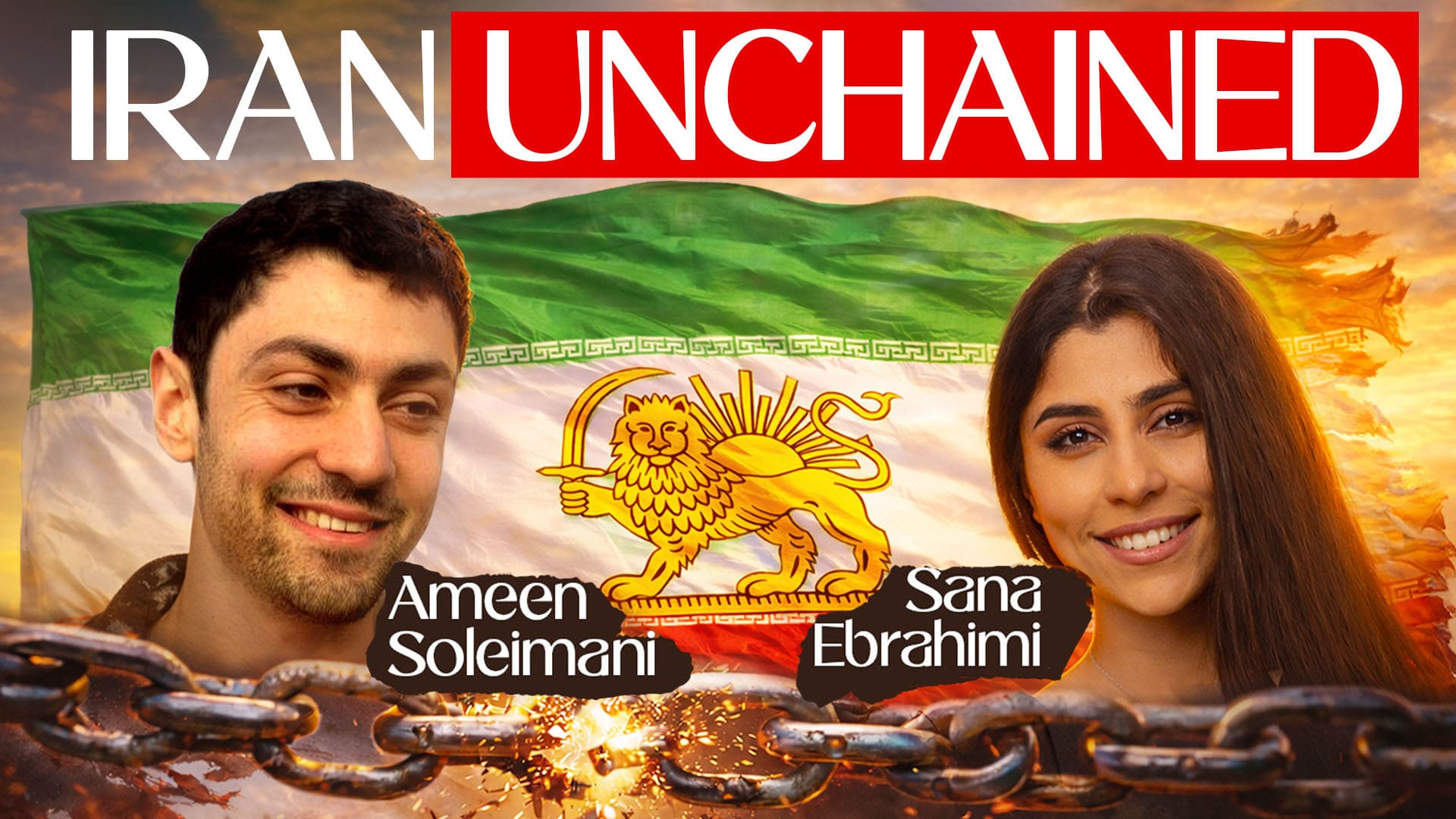
Iran Unchained: How the Islamic Republic Holds Power and Why Protests Keep Returning | Sana Ebrahimi & Ameen Soleimani
Sana:
[0:00] I think what people don't really understand is that we are not dealing with a normal government.
Sana:
[0:07] We are dealing with a terrorist mob. And they are armed to their teeth. And they are not hesitant to use all of those arms and all of those powers on their own civilians. You cannot just stand here and watch and say, let them handle it themselves. Well, they will be killed. What we hear from people on the ground is something above like 30,000 people killed. They killed thousands and if they have to, they will kill millions.
David:
[0:40] Bankless Nation, I'm here with Amin Soleimani and Sana Ibrahimi. Amin, Sana, welcome to the show. Hi. Thanks for having me.
Sana:
[0:47] Thanks for having me.
David:
[0:48] We are going off of our beaten path today to talk about a subject matter I think is critically important for the world. This is usually a crypto podcast. But crypto is about freedom. Freedom from oppression and freedom to exit from systems that we don't agree with or align with. And so maybe there is some overlap between what we typically talk about on the show and what we're going to talk about here on today's episode.
David:
[1:13] Amin, Sana, you guys are both Iranians. How does it feel to be an Iranian right now?
Sana:
[1:20] Right now, being an Iranian in the diaspora feels stressful, feels very tense, alone. Sometimes I feel very guilty to just not be there especially when you see all the names and all the photos of the people who have been murdered and I feel ashamed I genuinely sometimes feel ashamed to be sitting in safety and to have everything that people are fighting for over there and giving their lives. So that's that. And at the same time, I feel very proud. I don't think there has ever been a time that any of us been more proud of being Iranian because of what we see and how our people stood up like genuinely to pure evil, empty handed. That's how I feel these days.
Ameen:
[2:17] Very similar, angry, sad, you know, sad because you open, you know, social media and you see the recordings of, you know, massacres and bodies and morgues filled with bodies of protesters who, you know, were freedom seeking Iranians that stood up to the Islamic Republic and got mowed down with machine guns.
Ameen:
[2:39] And then, you know,
Ameen:
[2:40] It's just like adds up and then angry at, you know, the world for conveniently finding reasons to potentially ignore this. But fury at the Islamic Republic and everybody involved in that organization.
David:
[2:57] I mean, we've had you on the show before at least a couple of times, maybe a long time bankless listeners will remember our episode about Moloch, which is a merit metaphor parable that has some deep roots in bankless DNA. Sana, you are new to the show. You are outside of the crypto industry. Maybe you could just introduce a little bit about yourself, who you are, where you came from, and your life story to kind of give us the context that we need to progress in this conversation.
Sana:
[3:23] So I am 30 years old. I was born and raised in Tehran in a lower middle class family. I was raised in the southern part of Tehran, south towards the middle, very lower middle class upbringing. I went to Sharif University for my undergrad in computer science, and then in 2019, I moved to the States to go to graduate school. Right now, I'm a PhD student in computer science at University of Illinois, Chicago, soon to be graduating. And, yeah, been here, been very vocal. When I was in Iran, I would attend to protest anytime, any chance I got.
Sana:
[4:11] And now, trying my best to be as vocal as I can.
David:
[4:15] Maybe let's start with some foundation that we need to really have in order to, for this conversation, I think, to be effective. I think there's just an education gap, an information gap between the typical Western person about what Iran actually is and why it is that way. So maybe we can start with kind of just like talking about the Iranian regime, because I think that's something that's just so foreign to the average person who's probably listening to this podcast. What actually is the Iranian regime? What does it want for itself? What does it want for the world? Does it have like a North Star that we need to identify? What can we say about what we know about the Iranian regime?
Ameen:
[4:55] The first thing you need to know about the Iranian regime is that it's not Iranian. We call it the Islamic Republic, you know, or just the regime or like it's essentially, you know, a group of Islamic fanatics that came to power after the Shah left in 1979, through, you know, a series of coordinated acts of terrorism against the Iranian people and an alliance with the Marxists who covered for them. And their primary goal is not the interest of the Iranian people. It is the export of the Islamic doctrine and jihad to the world. And so a lot of the reason that the Iranians are so furious with the Islamic Republic is because they essentially rob all of the Iranian people in order to get the resources to execute their jihad and set up their terrorist proxies in Syria and Iraq and Hamas and Hezbollah and Houthis and so forth.
Ameen:
[5:53] And that's what they do.
Ameen:
[5:54] And they rule through theocracy. And the Khamenei, the supreme leader, Ayatollah, it's not a democracy. It's barely a republic. It is essentially, I mean, I would say authoritarian, it's become totalitarian. Like in the last two weeks, we've gone from like China to North Korea. You know, you're essentially, you can't argue with Islamic law. Because that's not how it works. They set the rules and there is, you know, people have tried to protest for decades and ultimately come to the conclusion that there is no fixing this system. It does not want to be fixed.
Sana:
[6:31] To be accurate, whatever Amin said was totally correct, but to be very accurate,
Sana:
[6:38] it's an Islamic theocracy. In an Islamic theocracy, clerics who claim divine authority, like Khamenei and other clerics in Iran, they have direct control over the entire state, and they justify their power over that. In this system, the Islamic Sharia law, oversights everything and everything is governed through that Islamic law that is treated as like this supreme source of legislation. In Iran, the supreme leader who is Khamenei has this ultimate power that basically overrides any other authority like parliament, courts, even the president. So it has like appearance of a republic, but it's actually Islamic theocracy and clerical rules.
David:
[7:42] And this is the Ayatollah. I don't know of the word Ayatollah being used in any other context. What is an Ayatollah?
Sana:
[7:50] Ayatollah is the highest. So clerics have different titles. And Ayatollah is the ultimate, the highest level of a cleric where it has basically divine authority. And Muslims are supposed to, Shia Muslims are supposed to follow them and their orders, say yes basically to everything they say. And they have divine authority, meaning that God has appointed them. So if you are opposing them or raising against them, you are raising against God. That is precisely why in Iran, if you oppose the regime, they will sentence you to death for waging war against God, Muharrabe, because you raised against Ayatollah, who has divine authority by God. So that's that.
David:
[8:55] What about the notion that, you know, sometimes in my replies, since I've gotten very loud about Iran over the last few weeks, sometimes people have given me this response that like, well, the religion really isn't the North Star. It's not the overarching thing. It's just kind of a ruse to project power. You know, what they really want is regional power and oil and money. And, It's the same as all barbaric thugs that have tried to capture people and rule over them as history. Is there anything to that? Maybe the religion is not as important as people think, and it's actually just kind of a cover to just project power and press and control people. Is there anything to that?
Sana:
[9:34] I think it's very hard to distinguish. It has things to do with religion. Because the goal of Khamenei and generally the Islamic Republic is to make this hegemonic religious authority and be the final arbiter of like true Islam in the Muslim world. So the main objective here is to make Iran An Islamic-led country ruled by the clerics where Khomeini, who is the vilayat al-Faqih, rule of the jurist, is the legitimate model of governance of Muslim world. And Iran is treated as this like ideological center in the Muslim world. So like all of these proxy groups, militias that you see is to enforce this vision that Khomeini has and Khomeini had for the Islamic Republic. All of these like anti-Western rhetoric, all this resistance branding you see.
Sana:
[10:49] These are all to serve like this purpose that turns basically clerical authority into like this transnational power. Now, one thing to remember, though, is that Khamenei is facing a really huge obstacle here. Because Khamenei is a Shia Muslim leader. And Shia Muslims are the minority group among Muslims. The majority of Muslims in the world, like 1.2 billion Muslims, majority of them are Sunni Muslims. And majority of Sunni Muslims do not even believe that Shi'ism is the real Islam. So that's why Khamenei has this beef with Saudi Arabia, because Saudi is the hub of Sunni Muslims. And Khamenei is in battle with Saudis to become and claim Islamic authority over the world. Now, why this is important? Because when you are the leader of the Muslim world,
Sana:
[12:00] And people actually believe in you to have like some sort of divine authority, you will have 1.2 billion soldiers around the world that operate at your command. And that gives you an extraordinary, unbelievable power.
Sana:
[12:24] Which is what Khamenei seeks, but it's obviously very ambitious because he's a Shia leader.
Ameen:
[12:32] Like an example of this in action is how Iran, the Islamic Republic came out and tried to be the leader of the sort of anti-Zionist movement, because the unifying meme across Shia and Sunni Islam is anti-Zionism and the destruction of Israel.
Sana:
[12:53] So that was why the October 7th attack, which was engineered by the Islamic Republic, happened, because Saudis were about to get into Abraham Accord, which would basically declare peace between Israel and Saudi Arabia, which is looked at as the leader of Muslim world.
David:
[13:17] Because it's the larger of the two groups.
Sana:
[13:19] Yes, yes. And that's where Islam is from.
Ameen:
[13:23] Medina.
Sana:
[13:24] Maqa, Medina. So that was a huge threat for Khamenei and the Islamic Republic. If these two groups come to peace, they will have no way to hang on to their power in the region.
David:
[13:44] In the West, we have this, you know, freedom of religion, tolerance for religion. And so one might say, it's like, oh, well, you know, the Ayatollah, the Islamic Republic, got into power in 1979. And that's just what the people of Iran want. And we should tolerate that. And who are we to say that, like, you know, maybe they do some distasteful things that we wouldn't do in the West. But that's, I'm not going to judge Islamic culture. I'm not going to judge Shia religion. How would you respond to that?
Sana:
[14:22] To answer that question, we should go back to what actually the Islamic revolution promised, what were the promises, and what they are actually implementing right now, what they're achieving. Now, to go back there, Islamic revolution came into power with a really famous slogan,
Sana:
[14:44] Independence freedom islamic republic now to just like give you an idea for the podcast the funnier the funnier part and let me give you the funnier things I have prepared a note. Let me read you this note that is directly from the Khomeini's website. So Khomeini has this website that is all like his speeches, like everything that he has said. Now, this is directly from Khomeini's page titled The Goals and Main Slogans of the Islamic Revolution. Now, these are the objectives of the Islamic Revolution in his views. One, independence and the elimination of all forms of dependence. The revolution aimed to establish the country's independence from the domination and interference of foreign powers. Now, this is funny because right now, Iran is, Islamic Republic is pretty independent on Russia and China. And Russia owns a lot in Iran. They are getting our Iranians oil with like 30% discount.
Sana:
[15:59] And if China loses Iran, they will basically lose like 25% of the crude oil. The second one is the rule of Islam over society and the promotion of religious values, placing Islam in the position of authority and as the primary criterion for governing society, which is what I would say pretty accurate in terms of what they are doing. Very extreme Islamism, but that's what they are doing with like the clerical system that they built. The third one is, this is very funny, freedom of speech and expression.
Sana:
[16:43] Creating genuine social and political freedoms for the people. They are now killing people for just simply walking out of their home in the protest or chanting something or posting something. Thank you. The fourth one is justice and the elimination of discrimination. The political system must establish justice and eradicate inequality and oppression. Iran, aside from everything, there are so many things happening in Iran right now. A lot of oppression, killing, and crimes against humanity. But just to give you a very basic example, Iran is gender apartheid state. Is literally gender apartheid. Women are treated as second-class citizens. The religious minorities cannot hold an office. They have their representatives in the parliament, but there are so many discriminations against religious and ethnic minorities and women. The fifth one is the expansion of public welfare, economic development, and improving people's living standards. Iran has been living on their 40% inflation for the past God knows how many years. Our currency...
Sana:
[18:11] Went from one U.S. dollar, seven riyols, seven Iranian riyols, to one U.S. Dollars, 1,500,000 riyols. There was this, like, a very famous slogan that Khomeini would say frequently in his speeches, we're going to bring you free water, free electricity, you know, free everything. Free, free, free. Yeah, right now in Iran, people don't have electricity for a couple hours every day.
Sana:
[18:42] There is a water shortage in Tehran and across Iran. People do not have water for hours every day. There is like a schedule they have to follow. The sixth one is the revival of human dignity and the people's role in determining their own destiny. Respecting human worth and enabling real public participation in shaping the country's future.
Sana:
[19:07] This is absurd because Khamenei is an unelected official. He's the supreme leader. He has the ultimate power to override everything else in the country. And he's unelected. And the loop goes this way. There is a Majlis Khobrigan. There is this council that consists of like five or six people. And there is the supreme leader. And there is this crazy loop that Khamenei, the Supreme Leader, picks the members of this council and the members of this council pick the Supreme Leader. And these are not elected officials.
Ameen:
[19:47] It also works the same way for like the president. Like the president, presidential candidates are nominated by the council appointed by the Supreme Leader. Yes, exactly.
Sana:
[19:57] So they have to be approved by this council, Majin Majlis Korbregan, before they even get to be a candidate, a presidential candidate. The seventh one is laying the groundwork for human growth and development in society and removing sources of corruption, promoting ethics, faith, and human flourishing within society. How absurd that is.
David:
[20:24] As we get further along on this list, this seems to be starting to be a list of failures.
Sana:
[20:28] That's it. And that's the list. These were the promises that the Islamic Revolution came to power with. So people who supported the Islamic Revolution were like, oh, this sounds reasonable. I want all of that. Why not? I mean, the economy was booming back then. So in people's mind, it's like, well, it's going to only get better, right? So when people... When people were supporting the Islamic Revolution, it was not them supporting the current system. No one even dreamed of this in their worst nightmare. Like, no one saw this coming. So people were not supporting Islamic theocracy. People do not like an Islamic theocracy.
Sana:
[21:24] There are like a huge population that might be religious but they didn't want religion ruling their life
David:
[21:32] To what degree do we know that was this a lie that whoever was in the first ayatollah the the Khomeini was do we think that he was just lying through his teeth was he maybe being honest at the time or or he no okay aggressive shaking of the head so it was just like straight straight lie through the teeth they will tell these people and
Ameen:
[21:53] Then we will just.
David:
[21:54] That's what they want to hear and then we will just do whatever we want once we actually assume power that was always the plan complete
Sana:
[22:01] Lie and you know how you can tell right after the revolution succeeded all of these freedom of expressions like human growth So Islamists and Marxist groups were working hand in hand. And Marxists were hoping that when the Islamic revolution succeeds, we are also going to hold some power.
Ameen:
[22:24] A lot of them bought in because of the, you know, free this and that and more socialist policy ideas.
Sana:
[22:31] But right after the Islamic Revolution succeeded, Khomeini and his circle started eliminating them and pushing them aside.
David:
[22:40] Eliminating them?
Sana:
[22:42] Yeah. They started killing literally all Marxists and communists and anyone they got their hands on because they were protesting.
Ameen:
[22:54] I can comment on this a bit. my mom was a commie. And I don't mean like modern left wing, you know, Marx, I mean, like, Little Red Book, Leninism, you know, very much influenced by like Russia and China. And so she was anti-Shah. And she, you know, it was born out of not understanding being manipulated by the media. Because, for example, you know, there were acts of terrorism done by the Islamists. There's a famous one called Cinema Rex, where Islamists burned down a movie theater. Why? Because it was playing Western films with like 400 plus people inside and everybody essentially melted. And the communist run newspapers would blame it on the Shah. And they'd say that he was doing stuff like this to cause chaos and so forth. And people didn't know better. There wasn't an internet, you know, it was a lot of broadcast media, right? And so.
Ameen:
[23:56] She was, you know, in the streets against him. And then as soon as the Islamic Republic took power, she described pretty horrific things like, you know, her and her friends were at university and then they import like a truck, like truck buses full of what are now called Besiji, the morality police. And there's like, she remembered telling me there's like a guy with an apron and two butcher knives ready to establish order in her university. You know, this is like, they're like, what is going on? Who are these people that have, you know, come to mess with us? And then the other thing that the Islamic Republic did is went back on all of the progress that had been made towards women's rights. So under the Shah, women in Iran actually had suffrage, I think even before like women in Switzerland. But a lot, you know, and they still have suffered, but like the hijab laws and the...
Sana:
[24:47] Cannot become judges.
Ameen:
[24:49] Yeah, the establishment of women as second class citizens that are mandated to wear a hijab as a sign of their submission to the Islamic Republic and to Islam came right after. And there was some women's marches because they felt betrayed by the Islamic Republic. When we say it's lies, it's that almost immediately afterwards, and, I actually like barely exist because I got lucky because my dad was like a math exchange student in the US and he was like writing love letters to my mom, you know, and during the initial Iran-Iraq war and he essentially flew there, married her, flew her to the America and then like immediately, like the next week, all of her like communist friends got picked up and many of them got executed. And a lot of them were asking that the, the, the government was asking them specifically about my mom.
David:
[25:39] You know, why the Marxists? Why did the Marxists threaten or offend the Islamic regime so much?
Ameen:
[25:46] It's a pretty clear Machiavellian move, right? Right. It's like in the prince, you know, the biggest threat to you are the people who just helped you take power.
Sana:
[25:53] That and also they were, so when Islamists and Marxists were working together, Marxists and communists had like armed groups that would do like armed operations for them, for the revolutionaries. So after the revolution succeeded and they got their beef with the Islamists and with Khomeini in his circle, they started protesting after the first protest was crack. They had a crackdown on their protests.
Ameen:
[26:31] A lot of
Sana:
[26:31] Them got arrested. A lot of them were injured, killed, whatever. They started armed operation in Iran. armed operation on like officials they like killed a few of the officials and that's when they started like heavy crackdown and the crackdown we're talking about was not on these like people that were active in armed operation no my father used to tell me I actually have a similar story to I mean in terms of barely existing my father told me they would pick up
Ameen:
[27:06] High school students who had simply like a poster or a book,
Sana:
[27:11] They were called forbidden books. If they had forbidden books, they would be picked up and executed. So a lot of high school students were picked up. Very young people that had no idea what is happening. And 4,000 plus of them were executed right after the revolution.
Sana:
[27:35] It was that, and then my father was actually the first generation of students who were going to college right after the revolution. One thing that happened after the Islamic revolution succeeded was three years of what was called cultural revolution.
Sana:
[27:53] All the schools were shut down. All the universities were shut down. What they were doing was basically clean up and reset the system. They changed all the textbooks and they basically made the stories, the narrative in a way that benefits them. In this narrative, Israel is the enemy, America is the enemy, the Shah was a monster, all of that. They basically there added their indoctrine to the textbooks. They fired everyone who did not submit to the system, was not loyal and was not religious. So there were two, the most important criterias for being in the educational system was, one, be loyal to the Islamic Republic, and two, be religious. Merit was nowhere to be found. So they fired a lot of teachers,
Sana:
[28:49] Professors, and everything, and they changed the system. They cleaned up the system in a way that benefits them. And then after that, the universities opened. My father passed two rounds of exams, which were really hard, and he got into chemical engineering at Polytechnic. This was like a really good school founded by the Shah. And he went for, they had something called interview, in-person interview. In this interview, they were asked only religious questions, like say a prayer or like read this verse of Quran or like different questions about religious practices,
Sana:
[29:33] Which has nothing to do with being a student. And then after that, there was another level. In the next step, they would go to that person's neighborhood and start doing a background check on them, basically doing a research on their family to figure out their loyalty to the system. So in that step, my father was raised in a very religious family. So he passed the religious part. And then after that, they went to do a background check on his family. And one of their neighbors was said, like basically ratted them out and said, oh, they are not very fond of the regime. And they banned my father from going to school. So they didn't let my father go to school. And then after that, when you're 18 and you're not going to school, you have to do a mandatory military service. And during that time, there was a round of rock war going on. So my father was taken to the war against his will and served for two years in Aertesh, the army. And then after that, he was back. He was arrested and kidnapped by the regime. Now, he was arrested instead of his friend,
Ameen:
[30:54] So it was the wrong person.
Sana:
[30:55] They tortured him for like two, three weeks. No one knew where my father was.
David:
[31:03] Why was he arrested?
Sana:
[31:05] So his friend was like part of this communist system. And they picked him up instead. And then they started like torturing him, trying to get forced confession, saying like, this was you. And this
Ameen:
[31:23] Is a pretty common practice they'll do this with today even with like parents of protesters they'll pick up brothers sisters yeah.
Sana:
[31:30] Yeah so they tortured my father my father would like tell me exactly what they did he said first of all they had their eyes blindfolded he was hanging from his wrist from the ceiling and they would flog him with like a thick cable and then he would pass out from the pain and the injuries, they would throw water at him and start torturing him again, just to get him to sign a forced confession, which my father never did. And he said once like this blindfold went down and I could see a little bit
Sana:
[32:04] and I saw a room that was all the ceiling and the walls were covered in blood, blood of other people. And they even reason my father could get released was one, he never signed that forced confession. Two, my grandfather found like through some of his friends found some connections that could basically get him out. So it was a total miracle. I am barely here. And Davos, like, he's experienced of that. And, yeah.
David:
[32:44] This is, as I understand the system, is you have this oppressive regime as we've identified, but there is also the back alley, back channel corruption of if you know the right person, if you can, like, it's just like there is a spine of a corrupted backbone that, like, maybe even the people are connected to in the sense of, like, can you find the right person in the back end of this regime to help, you know, get a family member free, get yourself free, something like this. That also seems to be a pretty persistent part of like what I understand the Iranian regime to be.
Sana:
[33:16] Basically, if you are not connected to sources of power, you cannot get anywhere. If you're a business owner, if you have anything in any aspect of life, you cannot get anywhere. And they will destroy you.
Ameen:
[33:31] Yeah, like the IRGC, the Islamic Revolutionary Guard Corps, operates as essentially a mafia. And they'll go up to businesses that they don't have a stake in or control and be like, be a shame if something happened, you know, if you don't let us have 20% of your business. And if they don't do it, then destroy it in favor of their competition, you know. Exactly. This whole thing can sort of be described in crypto terms as like a generational rug pull. The thing that even they said going in is not what it became. And the people who understood that started speaking out. But at that point, it was already too late.
Sana:
[34:11] And, you know, in this, there is a lesson, I would say, for Americans, especially New Yorkers. Mamdani's rhetoric was very similar to what Khomeini was promising the people. I mean, all the freedoms, all the welfers for everyone. Free buses, free everything. Cheap housing. Yeah, like, we are familiar with this. And we saw how that turned out.
Ameen:
[34:35] And a lot of the resentment today is just also caused by the corruption and the mismanagement of the country's wealth and resources. If people could, you know, get their water and their food, you know, had economic opportunities, weren't isolated from the whole world, there might not be as much animosity against the government. They can't even manage the country.
David:
[34:58] Yeah. One of the things that Asana read out in the mandate of the Islamic regime was like just, you know, use the resources of the country to better the people. Well, what actually happened is that money, a lot of that money got funneled into some of Iran's proxies. It also got funneled $20 billion is like the chat GBT number for how much money Iran has invested in its nuclear program, which is as far as we understand to be completely destroyed. So, you know, all that investment that could have gone into bridges, infrastructure, clean water, it's worth noting that like there is a water crisis across Iran because the infrastructure across Iran is so terrible, which is, you know, a pretty logical outcome of corruption.
Ameen:
[35:37] I want to, it's not a priority for them.
David:
[35:40] The people are not a priority.
Ameen:
[35:41] It's not like I have a Khomeini quote in front of me. I'll read you real quick. It says, we do not worship Iran. We worship Allah for patriotism is another name for paganism. I say, let this land Iran burn. I say let this land go up in smoke, provided Islam emerges triumphant in the rest of the world. I think it's worth highlighting that.
David:
[36:00] Let this land burn. It's like, I think a lot of people just might naively think that like, you know, maybe if the protests get loud enough, the regime will be like, oh, you know what? Maybe the people are right. Maybe we'll just step down, you know? Whoopsies. Respond to that, I mean.
Ameen:
[36:19] Sure. Unfortunately, the Shah was a much better man and loved Iran much more than the Mullahs. When it came time for the Shah to, in 1979, decide if he wanted to turn his guns on his people or step down, he chose to step down. And one of his final words that he said is, history will, you can't hide the truth from history. And he was betting that the people of Iran would figure out the lies that they were told and how they were misled and eventually find their way. The mullahs are not like that. They have no hesitation, as they've shown, in turning their guns on their people. And if it benefits them and they feel that this is what they need to do in order to survive, they will burn down the country and everybody in it just to be king of the ashes for an extra week.
Sana:
[37:10] I wouldn't even say mismanagement. They actively hate Iran and Iranians. And they are ready to sacrifice that for whatever stupid cause they have in their mind, which is basically like holding power within like Islamic world. And somehow they got Marxists supporting him, which is quite unbelievable, but it happened and we are seeing happening even today.
David:
[37:43] You brought up the gendered apartheid. I want to just touch on that a little bit more because I don't think we really did it justice. In the West, Western liberals really like to use the hands-made tale as like a symbol of something we need to avoid here in America. And to their credit, they are doing a fantastic job inoculating the West against anything close to the hands-made tale story, which is another like theocratic, oppressive, totalitarian, sci-fi, futuristic fiction novel that I think got turned into a TV show about just a theocratic regime. I don't know if this is true, but it seems pretty loosely related to what's going on in Iran. Maybe you can talk about just like, just illustrate, illuminate this like gender and apartheid a little bit more. What are some of the horrors that women have to go through in Iran?
Sana:
[38:28] That was a good example. And I was watching Ham's main tale. I was just telling people, I was watching it, I was like, this is Iran. This is what's happening in Iran. Just to give you some of the examples, in Iran, women cannot hold certain positions. There is an official pay gap between men and women. Women do not have the right to leave the country unless their husbands give them permission. They don't have the right to divorce unless their husband signs and gives them the right to divorce. They cannot, they can even lose their right to the custody rights of having their children if they divorce. There is no, there is a national abortion ban and there are no circumstances for, There is an abortion. Hijab laws, or we cannot even choose what we want to wear.
Sana:
[39:29] You get arrested for that. You get beat up by the morality police for that. You get fined for it.
Ameen:
[39:35] The whole Masa Amini movement happened as a result of just some normal Kurdish woman, Gina Masa Amini, beaten by the morality police for not wearing her hijab. And this happens all the time. and people are sick of it. And that was the motivation to, you know, start protesting, you know, three years ago.
Sana:
[39:58] Just to let you know, like my own experience, like I would go to school every day or take the train, go to school. On my way, there were police stops, like there was this big van, police vans. They had like two women with like covers, like what is called chadders, this like long whale that women cover themselves with like very conservative women and they will come up to you and harass you basically force you to like cover your hair or if you had like let's say short shirt but we call it monto is like a long shirt that we wear it comes to like our knees up to our knees if it was like short shorter than a certain amount they arrest you and basically take you to a police station and your guardian, your parents has to come and like sign something and bring you like new clothing. And then I would get to the university. I would see that on my way.
Sana:
[41:05] And then I would get to the university. We had at Sharif and I think every university in Iran, there were two different doors. One door was for men. Another door was for women. As you are walking through you have to pass through a room where someone is sitting there and basically looking at what you're wearing and if what you're wearing is not appropriate and does not meet their standards they don't let you go into school like if you if I had like as a woman if I had nail polish they would kick me out if my my shirt was short they would kick me out if I was not wearing a certain head covering, they would kick me out. And this happened to me like multiple times. If we were on campus, if we would like lay down on the grass, if women would lay down on the grass, the security would come and basically kick you out or force you to leave. But men were free to lay down anywhere they wanted. And this was like a daily thing over and over again. That was something I lived with every single day, walking through the street, going to university.
Ameen:
[42:20] I can bring up just like one of the more examples that really fucked with me when I learned about it of how women are treated by the police in situations where they are to be executed. The it's apparently a crime in islam to execute a virgin woman and so what they would do is marry her to one of the police officers who would then take her virginity that night and then they would present the family after the execution with a body and a dowry for the marriage and.
David:
[42:56] Yeah does in the detail details are weird here does she have to consent to being married no under that context no she can
Ameen:
[43:07] No marriage.
David:
[43:08] Can happen to her
Ameen:
[43:09] It's a rape that's just essentially sanctioned by the Islamic cleric for there is a concept of temporary marriage in Islam where a cleric can marry you temporarily to somebody and so they would temporarily marry her to one of their, officers and then have her raped and then it would be, by the will of Allah and then they would execute her.
Sana:
[43:36] One thing to notice is in Iran women there's no need for women to consent. No one asks for their consent for marriage. It's not a relevant action as it relates to women. No, they ask their father's consent. So if I wanted to get married, my father would have to give me consent. If my father didn't consent, I was not allowed to get married. And then when it comes to like a situation like what Amin was saying, that's where even your father does not have a right to say anything. That's when clerics have a divine authority over your life to consent for you. And all women get, this is according to textbook of Quran, all women get is the dowry. So it says, you can marry your female slaves with By the way, they had slaves. You can marry your female slaves as long as you pay the dowry. No need for consent.
David:
[44:47] And this is all when they execute, when they rape and execute a woman. This is so that she does not go to heaven.
Ameen:
[44:54] That's right.
David:
[44:55] She doesn't even believe in heaven. That's not even her heaven.
Ameen:
[44:58] No. It's their heaven.
David:
[45:01] Yeah. Right.
Ameen:
[45:02] They want to make sure she doesn't go to their heaven.
David:
[45:04] Right.
Ameen:
[45:05] I left that detail out. Thank you.
David:
[45:06] Yeah. Yeah. There's a movie that I watched not terribly long ago called The Stoning of Soraya M. It follows this journalist who stumbled into this village who a woman tells her the story that just happened as this journalist comes to this village of this woman who was married to this man and this man wanted to be rid of her. And this is not only just a story of just like the complete human rights violations that Ariane has on his women, but also kind of that corruption backbone that I was talking about. Where this man needs to be rid of his wife. He just wants to be rid of his wife so he can go on his way, not have to worry about her, marry somebody else. And so he goes to the local...
David:
[45:49] Mayor of the town, I guess, is the right word. I'm sure there's a more precise word, but like mayor of the town, and there plots a conspiracy to falsely accuse his wife of adultery, which he goes and does. And then the town gathers to have a sort of courtroom, which includes the woman's father. And in the movie, the woman being accused is like, oh, it's my father. He's just going to go along with whatever they say. And so she is sentenced to be stoned falsely after being falsely accused of adultery, which never happened. She's sentenced to be stoned. And her husband and her father and her two sons are given the first rocks to be thrown at her as she is buried halfway up to her waist in the ground so she can't move. And then she dies in that scene. And this is a true story. This is a true story. It happened to be told to a French journalist who was passing through the town the next day. And this happened in 1986. So 40 years ago, maybe Iran's modernized by then, but I'm not optimistic by any means. I think it was just a good anecdote to A, show the brutality and the barbarism and the second-class nature of women, as well as this backbone of corruption where like, okay, sure, you have the laws of the Quran, but not even they matter at times if you know the right people in the right ways.
Sana:
[47:13] Yeah. And you know what they need to prove that like that woman cheated on her husband? You need two eyewitnesses if they are men or four eyewitnesses if they are a woman. So a woman's testimony is half of a man.
David:
[47:35] Hmm. Let's get into modern times, current events, current events. The, we'll talk about protests, but also I want to go through the kind of some
David:
[47:44] of the history of protests as well. There's been 16 major protests. I think if you go to Wikipedia roughly over the last 45 years, I'm guessing that there also just are so many protests that like, why document them all? But it's at least 16 protests that have earned Wikipedia pages at the very least. Of those protests, every single one of them has documented killings from the regime in order to crack down and end the protests. Why do the Iranians continue to go out and protest over and over and over again when they know that somebody is going to die and it could be them? They continue to just go out seemingly like a ritual every one, two, three, four years and protest again and have the regime crack down Again, why do they keep on doing it?
Sana:
[48:32] I would say one is that even if you don't go out, there is no guarantee you're not going to die. You're not going to get killed by the regime. The killings are so random. Anything you do, as much as like saying something on social media, can get you killed. So there are really many ways that you can get killed and there's no guarantee that you won't be killed if you don't go out. And second, I would say the situations are so dire that people feel like they have nothing to lose and there is no other way out of this unless you face it, however you can. That, and one thing is that, I mean, we knew the brutality of this regime. We were very much aware of it. But I think even though we knew it, we are still in this belief and shock of how they cracked down on the people.
Sana:
[49:38] I personally was shocked. I mean, I always, I grew up with my father telling me, these people are not humans. They are wild animals that can do anything, like anything you can imagine and you cannot imagine they are capable of. But I was still in shock of how can you just shot a child? Like, that is unbelievable in any world. But yeah, I think people do not see any other way.
David:
[50:11] The regime shut down the internet maybe basically as soon as the current protests got large and the Iranian regime shuts down protests or shuts down the
Ameen:
[50:21] Internet all the time.
David:
[50:23] And like some of the first explanations I heard is like, why does the Iranian
David:
[50:27] regime shut down the internet? It's like, oh, well, to prevent protesters from coordinating, right? To suppress information. So like, you know, they're just people and they just don't have any information. So it weakens the protests, which is probably also true. I mean, why do you think, what would you say to why the Iranian regime shuts down the internet?
Ameen:
[50:46] If you're about to massacre tens of thousands of people, you don't want these videos getting uploaded. You want time to be able to find everybody and try to mitigate as much of the media distribution as possible. And they are trying to prevent anybody from the inside of contacting people on the outside. There's only maybe tens of thousands of Starlinks in the country, right? I don't know, up to 100K tops, but that's not a lot of people. And so there are reports, for example. Initially, we were like, oh, maybe they killed 2,000 people. We're not sure because we didn't have the internet. These guys aren't dumb, right? They understand news cycles. They understand our social media attention spans, right? And so they know that if they can concentrate as much of their cruelty into a short span of time where afterwards there is a limited amount of, you know, dripped content that is coming out about it that people will move on and forget.
David:
[51:51] Right. So like in a week or two weeks, whenever they decide to turn the internet back on, new videos will surface. Might be two months. And then people in the West will be like, oh, I already heard about the Iranian massacre. Like, that's old news to me. Let me scroll past that video. Right.
Ameen:
[52:07] And the numbers, right? They want to prevent anybody from getting an accurate sense of the scale of the atrocity, right? And so there are like additional reports coming in from smaller towns where nobody has a Starlink that... You know, say those towns were actually hit in some cases the hardest and nobody hears about it because they don't have any contact. You know, it's not, it's not like just the external connection with the internet is down. It's also the internal connections between people are also down in the, you know, oftentimes telephones. And so, you know, the IRGC and the, the apparatus, the state apparatus is running its own intranet. And so they can communicate with each other and coordinate.
Sana:
[52:48] Another thing I think is stopping people from receiving information from outside world. Like, for example, the warning that President Trump sent to the regime was heard by the people. And one motivation for a lot of people to go back after days was that there is this time, there's going to be consequences for the way they crack down on us. So I will go. Or they would receive like news of like, okay, this is getting attention. This is getting momentum. This is getting support from the international community. So we have a chance this time. Like that was what really drove people to the streets that they felt like they have a chance this time. This time is different. This time feels different. For a month, yeah. For a month, they were receiving information about the Islamic Republic losing its militias, like really getting weakened by like after the 12 days war, after the crackdown on Hezbollah. Like people know these things people hear these things now they lost venezuela they lost everything they were weaker than ever so we have a chance we are gaining support they are supporting us we are getting support from the president of the united state unlike any of the other uprisings in the past these are really really important things and another thing is that
Sana:
[54:18] And the regime really operates on propaganda. So when there is nothing going
Sana:
[54:24] out and nothing going in, they can control narrative in both sides. They control narrative outside of Iran saying that, oh, these protesters were not unarmed civilians. They were CIA Mossad agents. They were armed. They were killing officers. They were shooting them. And then from the inside, they can be like, Hey, yeah, we killed it. Everything is now done. You're not receiving any support. No one is coming to save you. So that is why they are like blasting on Iran state media that, oh, we defeated the U.S. We defeated Israel after 12 days war. They literally lost the airspace of Iran. The regime lost the airspace within like, I think, two days, if not less. On the other hand, on Iran state media, they were blasting something complete opposite. Like, look, we are burning Israel down. Israel is defeated. They defeated Israel. We have control over everything.
David:
[55:30] Complete 1984 misinformation.
Sana:
[55:32] So when you are feeding people with that information, then you are basically... Taking their hope away.
David:
[55:40] Yeah.
Sana:
[55:40] That, oh, you're not going to win this. You lost it already.
David:
[55:44] Do the people know? Like, when they see the Iranian broadcast of like, hey, we are burning down Israel, do the people know it's like, that's a bunch of bullshit? Or like, what do you think?
Sana:
[55:53] Yeah, people know. Yeah. Other than like, obviously, the fringe that are regime supporters, religious conservatives, or loyalists, that I would say are very low percentage of the entire country, maybe like less than 10%. Other than those people, the majority of the people, especially young generation, who is in touch with the outside world, they know very well. No one even watches their TV anymore.
Ameen:
[56:20] One of the things that we also saw was like in the initial week of the protest, like Reza Pahlevi, the crown prince, the son of the former Shah, like his Instagram got like, I don't know, 80 million views on like one of his videos. That's everybody. Like there's 90 million Iranians and like maybe 10 million outside. Like everybody saw that. Right. And so if you're the regime and you see that, that scares you. Because then you understand that the people are paying attention to the lead, you know, who we have, you know, described the leader of the opposition, Crown Prince Reza Pahlavi, and that is a credit, like, that is what they're the most afraid of.
David:
[57:05] It's legitimate, yeah. And then when they cut off the internet, those views went from 80 million down to three. Yeah, exactly. Yeah, yeah, yeah, yeah.
Ameen:
[57:16] And then imagine at the same time that you do this in Iran,
Sana:
[57:20] Outside of Iran, they have their networks of what we call regime apologists. There are scholars in American institutions and European institutions. There are journalists. There are think tanks that actively push their propaganda for them. So they try to dominate the narrative here too.
David:
[57:44] I was told a story by one of my Iranian friends who has a relative who is engaged to a Muslim man and she was invited to hang out with. She didn't want to because she knew the nature of this individual. But it was brought up, the Iranian protests were brought up while the three of them were hanging out. And it was said by her relative that like, can't remember, don't know the guy's name, but like my fiance, he says, he thinks the Iranian protests are fake. and I think so too. These two people are here in America. I'm not talking about people in Iran. There's an American Muslim and his fiancee and he is saying like, oh yeah, the Iranian protests, fake, not real. And like my jaw dropped in that like there's people outside of Iran who are also in the Iranian regime's sphere of influence and control. That astounded me.
Sana:
[58:39] Yeah. You know, there is National Iranian American Council, NIAC. It's very famous. It's a non-profit organization. But all they've been doing since their foundation, this is the beginning, I think they were founded in early 2000 by Trita Parsi. And all they do is basically push the Islamic Republic propaganda in the West And they have a really strong influence And they have a lot of connections So like, for example, your journalists go write an article in Financial Times, in New York Times, and they go do interviews at like CNN, CBS, all of these, BBC.
Ameen:
[59:29] They help propagate the Islamic Republic's narrative in the West, you know, and you can see videos of like them talking and.
Ameen:
[59:35] Then like the Islamic
Ameen:
[59:36] Republic people talking, and you're like, they're saying the same thing. Yep. You know, like, why would we listen to this guy?
Sana:
[59:42] Like, right in the beginning, there was this article on New York Times where basically they were saying exactly what the Iran state media was saying. No, everything is OK. I mean, there were some protests, but they were in lower income neighborhoods. But the ski resorts are all open and they were full, like people are living their normal lives. And then we have like some of them actively saying, first, the protests are only for economical reasons. And the economical reasons, the economy is collapsing because of the sanctions. And who's to blame for that? America. So it's all America's fault.
David:
[1:00:27] Right. Western imperialism, right?
Sana:
[1:00:28] Yeah. Western imperialism, imperialist. That's their fault. And some of these armed protesters, like the protesters that were killed, they were armed. They were not killed by the regime for no reason. They were armed. And then you look at the list of the people killed, 16 years old, 17 years old, 15 years old, 3 years old, 5 years old. Are these all armed? Like, these are...
Ameen:
[1:00:56] Some of these protests were like family affairs. There's like people with strollers
Ameen:
[1:01:00] and grandparents, you know.
Sana:
[1:01:01] I know someone whose 12 years old child was shot in the eye
Ameen:
[1:01:11] 12 years old.
Sana:
[1:01:12] These were like going out with their families. And these are very famous talking points of the regime that these organizations and these individuals also blast here in American media.
David:
[1:01:29] Why does the West, the my sphere of social media, so many people seem to be confused about Iran? And to me, as I understand it, the moral clarity here as to like, what is who's on the right side of history and who is evil is night and day. And I go talk to my family. I go talk to, you know, otherwise indifferent people. And they just don't seem to have the same sense of clarity that I have or what you guys have. So it's like, no, no, no, no, no. Don't forget about how evil the Iranian regime is. It's this period. Why are so many people confused about this?
Ameen:
[1:02:11] It depends on what your social media circles are, but I'm going to make some assumptions here. And for a lot of the people who, for example, their identity is now wrapped up in supporting Palestine. They think that the way, you know, Gaza is the most, you know, human rights disaster. It's a genocide. Israel is to blame and therefore resistance is justified and we should, not just being pro-Palestine, but ultimately leaning in favor of justifying October 7th and siding with Hamas. And once you have been indoctrinated in that.
Ameen:
[1:02:50] You know, for three years, then when the Islamic Republic is seen as, you know, committing atrocities, you have this cognitive dissonance about, oh, well, these are the guys who are on my side because they're supporting the axis of resistance. And without the Islamic Republic, then, you know, there might not be an axis of resistance. And so I should support the Islamic Republic. And that, and the way I'll do that is I'll say the protests are fake. The protesters were armed. It's all Mossad. Whatever I can do to live with myself for not having to treat this as a human rights and humanitarian complete disaster and be consistent. And then, I mean, fortunately, there's like other, there's a minority of, which I find myself aligned with, where it's like people who, I think there's a Palestinian guy named John Aziz said something like being pro-free Iran is the most like pro-Palestinian position you could take. And it's For us, it's obvious because we want, you know, peace in the Middle East, right? We don't want the jihadis to continue doing the jihad. And so we want the Islamic Republic to stop funding all the jihadists and doing the jihad so that we can have peace. And for us, it means, okay, well, we should try to figure out how to eliminate or, you know, overcome the Islamic Republic so that we can have peace.
Ameen:
[1:04:17] I think a lot of people who have, you know, either guilt or suicidal empathy have, you know, they hate the West, right? And in hating the West, they come to adopt these positions. And they don't understand that like they are actually supporting the people who would take away their rights and you know their liberty and destroy the western system that actually gives them the right to speak up about this stuff in the first place there's a.
David:
[1:04:47] Couple other vectors that i also want to identify here in addition to all of that there's like influences to like how that came to be everything that you just said one is there is a ton of islamic investment into Western institutions, not just from Iran, but just from local Islamic countries. Maybe you could touch on that a little bit more. And then also talk about, you know, Iran sits right next to Russia and China in information operations, propaganda on the internet, astroturfing, bot armies. And then I have been, as Bankless sisters might know, I've just been very loud about Iran. And I get these bots in my reply with a Palestine flag next to an Ireland flag or a Palestine flag next to a UK flag. And then it's all just like the same kind of form factor of like zero mutual followers, the same kind of I'm being called like a Zionist. I'm not even Jewish. And like all of the same,
Sana:
[1:05:42] Like all of
David:
[1:05:43] The same sort of like profile of these people on Twitter on X trying to just tilt the conversation, tilt the narrative. And then when I see these Iranians, Persians, anyone in the Middle East in my replies, it's like, 17 mutual followers, an artist from California, somebody very tangible to me. And I'm experiencing this astroturfing firsthand. So talk about those other two pillars, if you can, like the Islamic investment into Western institutions and just the information operations that Iran has invested in as well.
Sana:
[1:06:15] As you mentioned, the anti-Western and then this anti-imperialism and this oppressor-oppressed narrative. In this oppressor-oppressed narrative, The only oppressor can be the West, can be America, can be Israel, and then everyone else is oppressed. So in that narrative, Islamic Republic is part of axis of the resistance, cannot be the oppressor. And in any shape or form, we cannot stop supporting them because they were standing against this evil entity, this imperialist entity that is America, meanwhile, supporting the Islamic Republic that is anti-imperialist. But in fact, if you go and read the definition of an imperialist entity is what exports power and influence into other countries, try to control their political systems, their resources,
Sana:
[1:07:13] Their movements, and everything. And it affects daily life of the people in those countries. And that's exactly what Islamic Republic does. Islamic Republic is an imperialist entity that has a Republican cover-up and anti-resistant rebranding and the resistant rebranding. That's all it does. And it's imperialist. And it's just mind-blowing to me that people buy into those narratives, especially people who claim to be intelligent and well-read and educated.
Ameen:
[1:07:49] So I was raised Muslim.
Ameen:
[1:07:53] I went to an Islamic education center in, I don't know, the Potomac area, Maryland, Rockville. And it was like a proper Islamic Iranian education thing, right? And like, I only learned 20 years later, I hated it, right? My sister hated it. You had to wear a hijab. And this is like in the suburbs of DC, right? And like, I would argue with the teacher. I'd be like, why is this? And he's like, God said so. And I'm like, I don't get it. You know, piss people off and, you know, had to learn a whole bunch of Arabic. We didn't understand. I still don't understand what it means. But the, I only found out later, like 20 years later, that my school actually has ties to the Islamic Republic of Iran, where I went to learn Persian in America has ties. And there are many such cases. A lot of money goes through Qatar, and there are all these Islamic studies programs that are set up. And so like in every university, there is some sort of Islamic studies program that is seen as, you know, promoting, look at us, we're so cultured, we have, you know, representatives from all sorts of faiths, and we can study everything. And so they bring the Islamic professor, and then the Islamic professor, it's essentially a political propaganda project supporting all of the same ideas that these guys put out. And then we wonder why our college kids are, you know.
Ameen:
[1:09:21] Parroting, you know, Islamic talking, like Islamic Republic, and also generally anti-Western pro-jihadi talking points. They essentially get a pass. This is the playbook that was created by the communists. And so the KGB and the Russia, they like essentially perfected the system and trained the Islamic the Islamic Republic in this propaganda technique.
Ameen:
[1:09:49] And set them loose.
Ameen:
[1:09:51] And so now you have both on the, you know, like the sort of Marxist type of studies, and then you also have the Islamic studies, and both are doing essentially anti-Western, indoctrination for university students.
Sana:
[1:10:07] Like there is this university professor at, I think it's Princeton, Hossein Mousavian, if you can look his name up. He used to be diplomat for the government in Germany and he got expelled after Mykonos, I think, terror attack in Germany, if I'm not mistaken. And then he came, ended up in America and now is a professor at Princeton. And if you look through his social media activities, you think, oh yeah, checks out. You're looking at Islamic regime propagandists calls Israel Hitler and Jews are Nazis and America is bad, America is awful, even though he lives in America. And imagine he is university professor who teaches people. And there are many examples of this at NYU, Columbia, Yale, like all of these universities. And they are not even like necessarily, some of them are not even like Muslim or religious. Some of them are even not Iranian or have any ties to the region. They are like Americans that are collaborating and pushing this narrative.
David:
[1:11:30] I want to talk about the topic of Western intervention, because there's a debate out there about whether the West should intervene at all, get involved at all in Iran. And I think the first reaction that people have is like the idea of the U.S. Military engaging in a Middle Eastern country. It's like, no, no, no, no, no. We've learned that lesson. We've done this in Afghanistan. We've done this in Iraq. They were both messes. People will say that we have plenty of evidence to suggest that military interventions to the Middle East is a terrible idea and we should never do that again. A quote that was said to me was like, just let the Iranian people deal with it themselves. What's your reaction to this?
Sana:
[1:12:09] One thing that I saw along with that line was Bernie Sanders' reaction that had a list of demands from the Islamic Republic. I think what people don't really understand is that we are not dealing with a normal government. We are dealing with a terrorist mob. You cannot demand things from terrorists. Terrorists kill you if you demand things and if you raise against them. And they are armed to their teeth. And they are not hesitant to use all of those arms and all of those powers on their own civilians. So when you are dealing with something like that, you cannot just stand here and watch and say, let them handle it themselves. Well, they will be killed. Thousands and thousands. What we hear from people on the ground is something above like 30,000 people killed. They kill thousands. And if they have to, they will kill millions. They don't care, essentially. and they have their tools to somehow just convince the Western foreign audience that this is an internal matter. What I think people don't understand is one, that, and then another thing is that This is not only affecting Iranian people.
Sana:
[1:13:37] What the Islamic Republic does with exporting terrorism and extremism, affecting your countries too, is affecting the entire Europe, is affecting the UK, is affecting America, basically. So it's not that they're only killing Iranians. They are trying their best to get to a point that they can kill you in other countries too. If they can, they would. And they have proven that time and time again. They have killed so many Americans over the years. They've killed Israelis. They have done terror attacks across Europe. So yeah, I think people are really missing those points.
David:
[1:14:26] What about this notion that if the United States militarily intervenes, we tend to leave power vacuums? We're not good at nation building. Again, we tried this in Afghanistan. We tried this in Iraq. Total failures. What would you say to this?
Ameen:
[1:14:40] I guess I'm hopeful. I think Iran is a bit different. It has a strong nationalist history, unlike those countries. Like if you look at the borders of Iran, like the Iranian main country has essentially been Iran for something like 2,500 years.
Ameen:
[1:15:01] And so it was bigger, you know, at some points, but the Iran was always there and Iran is not, it's, it's dominantly Persian by ethnicity, about half. There's many different ethnicities in Iran and it's always been a multi-ethnic country. And I think that one of the other advantages is that we do actually have a like opposition leader that has, he is unequivocally the most popular person in Iran. Out of any political leader. And that kind of support was not present in any of the other Iraq or Afghanistan. And the Iranian people themselves, for the most part, like want to essentially be part of the West. We are by and large aligned with Western values, culture, and society, and want the benefits. And it's not just that there are benefits for Iranians too, like not only will the negative, like the downsides of the Islamic Republic go away. Like we, like if Iran is.
Ameen:
[1:16:08] If the Islamic Republic falls, it will stop exporting jihad into all of the neighboring countries. And Iran, as a secular country, would help heal all of the neighboring countries by promoting the secular factions within the neighboring countries. And so there is a huge amount of potential upside to be had. Would it be a mess?
Ameen:
[1:16:34] Personally, I don't think so. I mean, And look, like we said before, the Islamic Republic is not going to go quietly. And so for that to take place, the reason that people want intervention is because largely Iranians are unarmed. But if Iranians were able to secure their own future, then I think we would be essentially responsible guardians of the region and help represent Western interests in the region.
Sana:
[1:17:03] I have a couple points. One is that people tend to look at unsuccessful interventions, but there are so many examples of successful interventions. America intervened in South Korea, intervened in Kuwait, successful. American Revolution happened because of foreign intervention of France. French supported American Revolutionary to the brink of their own collapse and destruction. So there are so many examples of successful interventions. Another important point is that people tend to paint all of these Middle Eastern countries with the same brush. Iran is very distinct and different from other countries in the region, as Amin said, in terms of the borders and the history and cultural demographic issues.
Sana:
[1:17:58] It's very different. For example, if you look at all of these countries around Afghanistan and Iraq, mainly the countries that America had presence in, they are very new. Iraq was created after World War I. There were three provenances, Mosul, Baghdad, and Basra. These provenances used to be under Ottoman Empire, but they had their own local governing bodies that was designed based on their demographics. There were like Kurds, Shias, Sunni Muslims and Shia Muslims. And then when Ottoman Empire collapsed,
Sana:
[1:18:33] Britain took over and basically drew the borders on the map, regardless of the power dynamics, social dynamics, like the ethnicities that they're living in this region. And basically set like the Hashemite king, King Faisal. that was not even from Iraq, was Saudi, set him as like the king. So that was the difference. And then Afghanistan was not only like became, not only became a country, became a country in 1700s, but also culturally is very different. Like something that I hear a lot from people like activists from Afghanistan is that unfortunately what we are dealing with is that there is this huge population in Afghanistan that also have alignment in terms of mentality with Taliban. We do not have that in Iran. Iran's population is very educated and people with like conservative mentalities are in minority. The majority is extremely educated. We have the highest percentage of educated women in the region.
Sana:
[1:19:49] So, yeah, Iran is extremely different. We have a national identity, as Amin said. Like, all of these ethnic groups have been living in that region for thousands of years. And they share the same history with Persians. So, they don't look at themselves as, oh, we are not Iranian or Iran is for Persians.
Ameen:
[1:20:12] No, they are Iranians.
Ameen:
[1:20:14] Iran is like America before America. You know, it was like the multi, you know, ethnic federalist system. Like the Shah was called the Shahan Shah, which means the king of kings, because you're the king of all the other kings that, you know, essentially ancient federalism, you know. But yeah, I, you know, another example, it's like, should the allies have stayed out of World War II? It's like, ah, UK, France, good luck. You know?
Sana:
[1:20:39] Oh, and another thing is that Islamic Republic, like, I mean, Iraq was not successful. one reason was Islamic Republic's presence in that region. The regime really fueled sectarian wars in Iraq and destabilized Iraq more than it was. So bringing down the Islamic Republic helps other countries in the region as well.
Ameen:
[1:21:04] Yeah, that's actually a great and underappreciated point. And I want to expand on it just a little bit. But like what she's talking about is that like part of the reason that the Iraq operation of democracy failed is because the Islamic Republic of Iran filled the power vacuum. General Soleimani, no relation, was going around and like recruiting all of the Iraqis and essentially managing all of Iraq. And he would like call up the American, you know, generals and be like, yo, how did you like those, you know, IEDs that I left on the street? You know, by the way, I run the country. So anything you want to do goes through me. This is the guy that Trump blew up six some years ago.
Sana:
[1:21:45] 2020, yeah.
Ameen:
[1:21:46] Yeah. And so, like, it's not a comparable situation, right? You cut the head off the snake and the other pieces fall in place.
David:
[1:21:53] I think the Iranian diaspora is something like 10 million people, 8 million people, something like this.
Ameen:
[1:21:59] Something like that, yeah.
David:
[1:22:00] An incredibly successful group of people wherever they go. Sana, as you said, like, highly educated, fantastic entrepreneurs, just growing the Persian culture, the Iranian culture, wherever they live. I'm sure they want to maybe not move back home because maybe their identity is now wherever they live, but I'm sure they want to be able to go back home, maybe in the same way that Jews are so grateful that they have Israel as a place that they can go home to and be amongst themselves. Talk about just like the relationship that the Iranian diaspora has with Iran.
Sana:
[1:22:36] So one thing is, again, goes back to our nationalistic identity, even though this has become a loaded word recently, but we have a national identity and we are really proud of that and we will never forget that. So the reason this group of like successful diaspora left Iran was the Islamic Republic. Because like, for example, I was educated at a university. I studied at a university that was called the MIT of Iran. It was a great school. But I had to leave and 95%, this is not a made up number. This is a number that the university reports. 95% of the graduates from our school leave Iran. And the reason is that if we stay, given the situation that the Islamic Republic has created, we won't have any future.
Sana:
[1:23:36] Otherwise, we do not want to leave. Like, if we had a more stable country with a better economical situation, it would be something like before the 70s. Like, you know, people would come to America, study, and then go back. A lot of, like, all those university professors were American educated and would go back to live with their family in their homeland. So, yeah, like, I mean, that's what we want. That's what we are fighting for. And hopefully we'll achieve that and we will have the option, as I said, to just go back. Even if we have like people come here to study, there are a lot of Iranian students here at really great schools in America.
Sana:
[1:24:23] They would go back to Iran to join their family and build a life back in their homeland.
David:
[1:24:31] Sana, I mean, I've learned a lot on this episode. Thank you for coming on and educating me and the audience. As we come into where we are today, we are, as I understand it, there are still occasional protests. Maybe there are more. We wouldn't know because there's an internet blackout. What are you guys hopeful for in the near term? Like maybe for January and also just 2026. What are you hopeful we can get done here?
Sana:
[1:24:52] I hope that America delivers its promise because a lot of people inside Iran are waiting. And with no exception, anyone who gets a connection and gets the message, their first word is, are they going to help us? Are we going to receive help? We are unarmed. We cannot do anything. We need help. These are like hundreds of messages that I personally received from people around. So what I'm manifesting until the end of this month is America delivering its promise, which I trust they will. I trust the words of President Trump and the fact that he will deliver his promise. So that's what I hope I see first. And then hopefully soon enough after that, the regime's been weakened enough that people are able to take back the country. And we are going to start 2026 with the Islamic Republic and its dark legacy begun forever.
Ameen:
[1:26:02] I echo that this is what the people want. It might seem shocking to an outsider to say that the Iranians, the first thing they do on the internet, are they bombing us yet? But they know that like they don't have any other paths to you know regime change in a way that they, achieve their goals and their freedom and so you know it might seem crazy I don't know like there was a 12-day war with Israel and a lot of outsiders were saying oh my god like there was civilian casualties and there were and it's you know nothing erases that and that's it's tragic when it happens but there was like 500 right uh less than that and something i think that's like it was like 200.
David:
[1:26:48] Something is something yeah
Ameen:
[1:26:50] Right and and like the on the other side it's like 40 of the top generals were blown up in the first two days and like several other of the most you know of the higher ups in the irgc and like a lot of their equipment was was destroyed and so it was like 500 of their top people it's like how many iranians would have had to die in an uprising to get those guys.
Ameen:
[1:27:13] We saw tens of thousands die for ultimately, you know, just going out into the streets and chanting. And so for Iranians, we know that this is the path to get to freedom that is, you know, the least amount of bloodshed total. And, you know, they're desperate. They, you know, would love to pay back this debt in a free Iran one day. And the resources would be put to much better use than a free Iran and the wealth created would be astronomically higher and all of us, we have a little chat room in the Iran Unchained group, we were like, ETH Tehran 2020X, where we're like, one day we will go and we will throw our conference and the upside here is that a free Iran is going to be the most baller country ever. It would be the country that most recently paid the cost of its liberation and takes its freedoms completely seriously. And like, I say this, and it's like, blows the minds of Samir. I'm like, maybe one day, like, we'll have European refugees from like, places in Europe that are no longer safe for Europeans, because they have let in the same, you know, Islamic fanatics that we as Iranians.
David:
[1:28:34] Were all running away from.
Sana:
[1:28:35] When Iran is free, the Islamist narrative is going to get destroyed for a very long time and get very weakened. China is going to be affected. Russia is going to be affected. These are Americans' competitors. And if... There's this group of Americans that, rightly so, they care about where their tax monies go. And they are really unhappy that their tax money is going to Israel. Well, why is that? Because Israel is under attack by the Islamic Republic's proxy. So if you destroy that, you don't have to send your tax money to Israel for protection. That's really important here.
Ameen:
[1:29:20] That is some galaxy brain analysis.
David:
[1:29:24] Amin, Sana, what do you have as a request to the listeners? If the listeners feel inspired, motivated, want to help out, what are some ways that they can help achieve this outcome?
Sana:
[1:29:34] I think one of the very important things that we are also trying to do these days is just raise your voice, no matter how small your platform is. Speak up, share the news, and make sure that you do not fall into the regime's propaganda, because it's everywhere. It's in New York Times, Financial Times, it's on CNN, it's everywhere. Just follow some source of information from actual Iranians that have lived in Iran and are trusted sources and just try to amplify their voice that is really important we are fighting we are not only fighting like with the Islamic Republic we are also fighting with Islamic Republic's propaganda and that is very important and it really affects public's opinion And we need that. We need the support from the public. So that would be a huge help for us.
Ameen:
[1:30:30] Follow Sana. Retweet her posts.
David:
[1:30:33] Sana does a fantastic job doing exactly what she just said on Twitter. That's where we found her. And she was an incredible guest to have on the podcast. So yeah, follow her. We'll put Sana's Twitter in the show notes.
Sana:
[1:30:45] Thank you so much.
Ameen:
[1:30:46] Check out iranunchain.com. but we have a list of a couple resources for both fundraising to get you know star links into the country to help establish connectivity as well as you know other like the u.s lobbying program other other donation um.
Ameen:
[1:31:03] Sources that, you know,
Ameen:
[1:31:04] I think will have a positive impact, as well as a couple different news sources that people can use to stay up to speed.
David:
[1:31:10] I think we can also ask the listeners to send this podcast to someone. I think we did a great job, actually. Sana, I mean, thank you so much. This is the podcast that I wanted to produce. And so if the listener has made it to an hour and 39 minutes into the podcast, we request that you send it to someone and ask them to listen to it as well.
Sana:
[1:31:27] Thank you so much for having me. This is really invaluable work and I hope everyone watches this and send it to anyone they can.
Ameen:
[1:31:37] Thank you, David, for being vocal about this. It makes us feel a little less alone. So we appreciate it.
Sana:
[1:31:43] Yeah, we truly appreciate every voice.
David:
[1:31:46] And I look forward to going to Tehran when we all can. Maybe we'll all go together.
Sana:
[1:31:53] See you in free Iran soon.
Ameen:
[1:31:55] Next year in Tehran. Well, this year in I'm sorry, Ron.
David:
[1:31:57] This year, this year in Tehran. Sana, I mean, thank you so much for coming on the show.