Inside QVAC: Tether's AI
View in Browser
Sponsor: Mantle — Mantle is pioneering "Blockchain for Banking,” a revolutionary new category at the intersection of TradFi and Web3.
In DeFi, the most liquid stablecoin pools are yielding 4-6% APY right now.
However, if you're dynamic and move your liquidity across protocols to the best opportunities at any given time, it's possible to double or even triple the yields you'd get from static positions.
Manually hopping around onchain, and timing things right, isn't easy. Much easier, of course, is automated DeFAI agents, who can find opportunities, allocate your funds, and auto-compound returns, 'round and 'round.
But which agents to choose? Who's yielding the most?
Currently, one of the best options here appears to be Zyfai.
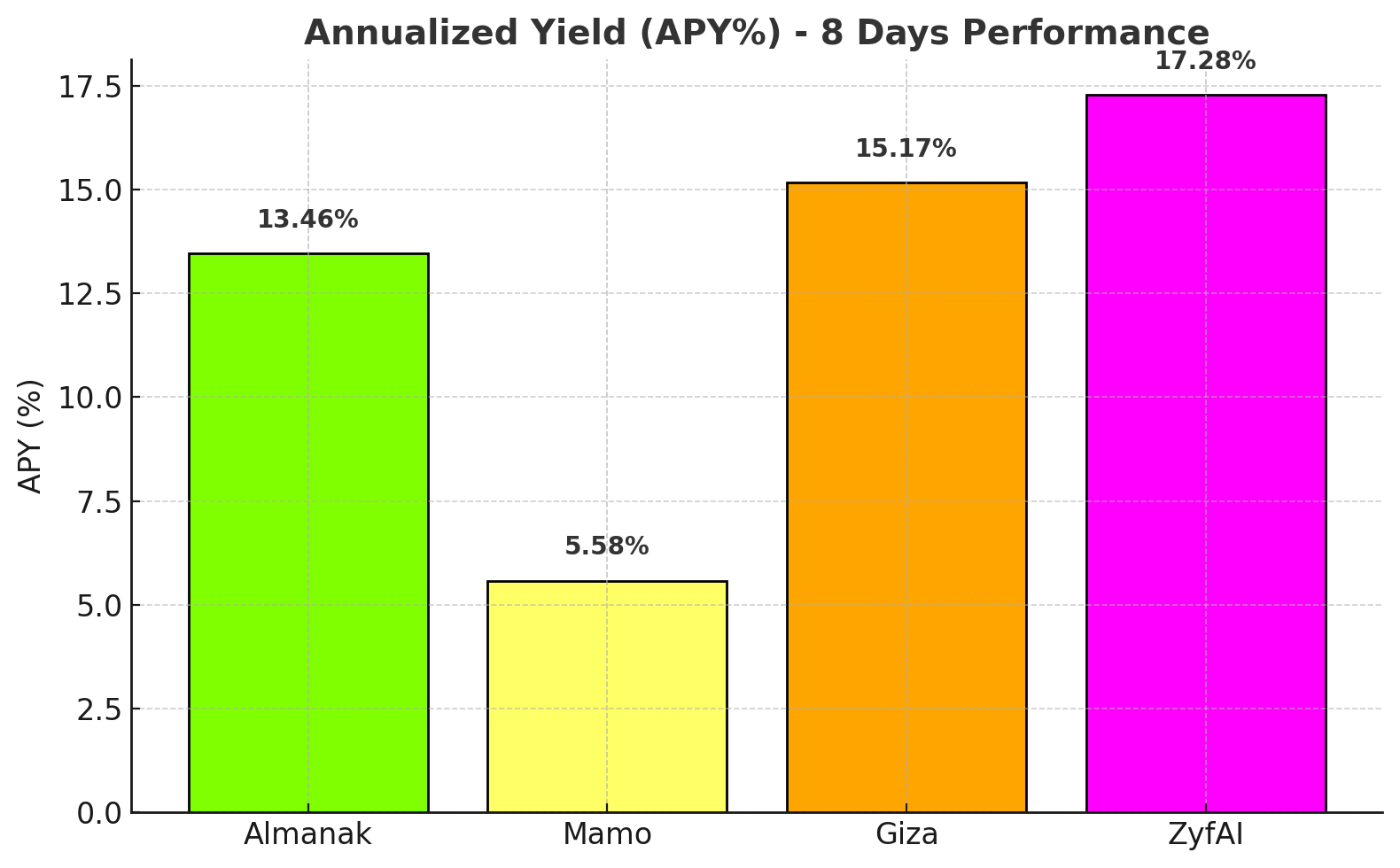
DeFAI analyst and investor Diego is currently running a Stablecoin Agents War series, in which he's tracking the performance of 2,000 USDC deposits into a handful of yield agents.
With Week 1 of the trial now in the books, Zyfai's 17.2% real APY so far has taken the lead over Giza (15%), Almanak (13.4%), and Mamo (5.5%). Not bad!
Zooming in, Zyfai is powered by its non-custodial Smart Accounts system, which you deposit into in order to allocate to yield agents. In-built account abstraction allows for sponsored gas (i.e. free transactions) and session keys (i.e. customizable agent permissions).
This setup is nifty. If you want to try it for yourself, note that Zyfai's closed beta just launched on Base and Arbitrum, so you'll have to apply to join the waitlist for now. In the meantime, learn more at docs.zyf.ai.
Last week, Tether's AI division, QVAC (short for QuantumVerse Automatic Computer) broke ground, releasing its first two products:
- Genesis I, a synthetic dataset purpose-built for training STEM-focused AI models in math, physics, biology, and medicine.
- QVAC Workbench, a private, local AI app supporting on-device model training and inference using open source models.
For a company flush with funds — the fuel behind AI development as we well know — Tether's releases will be ones to keep track of as we consider the growing environment of private, open-sourced AI.
As such, we'll run through the significance of each of these launches, what they promise and what they come equipped with, as well as how they could fit into Tether's larger AI vision and its applications still to come.
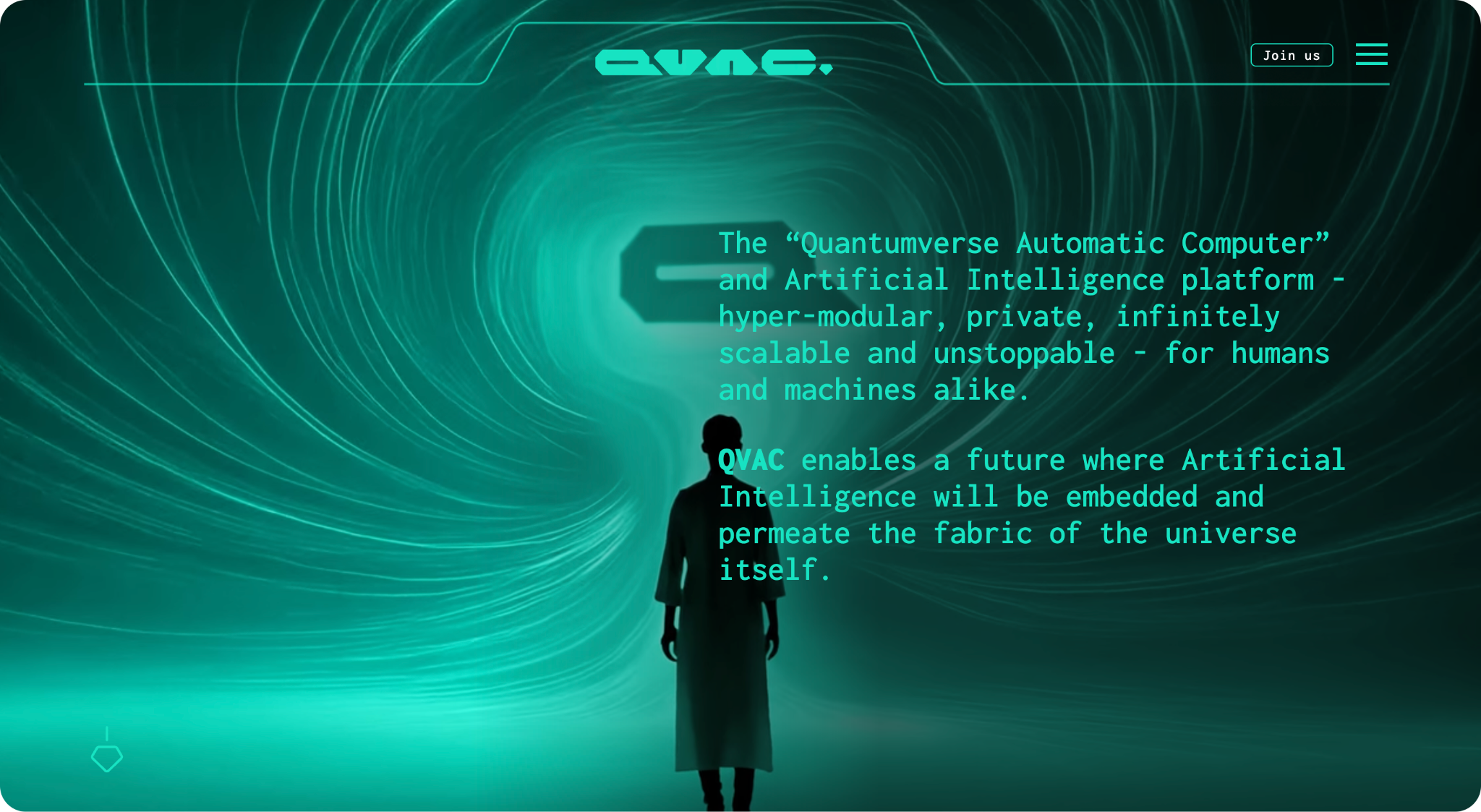
Genesis I
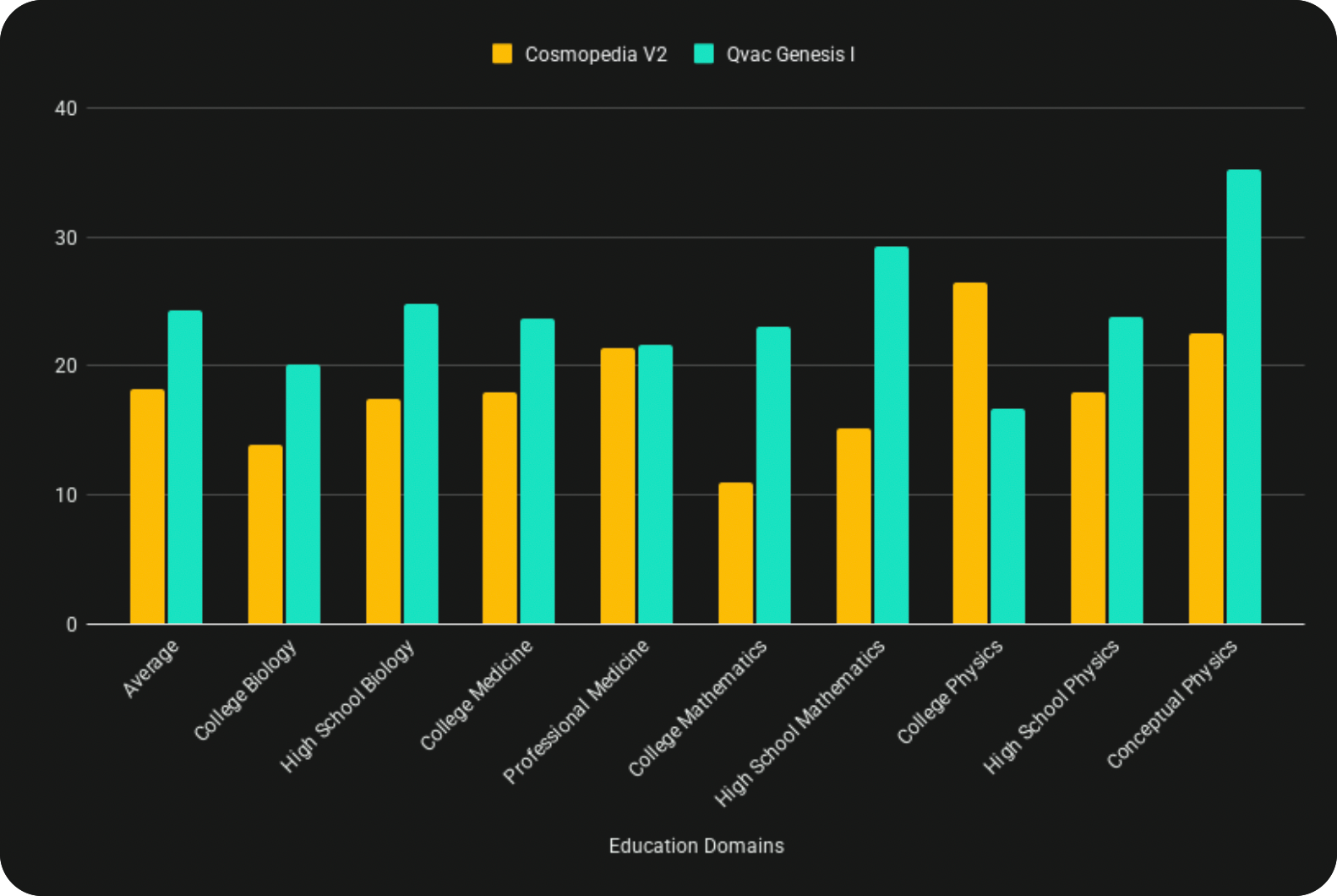
At 41 billion text tokens, Genesis I is the largest publicly available synthetic dataset, purpose-built for the "core" STEM domains: math, physics, biology, and medicine. The dataset covers both high school and college-level content, making it useful for training models that need to understand complex scientific concepts rather than just memorize them.
Why did Tether release a synthetic dataset though and not a “real” one? The key advantage to choosing synthetic data here is control. Rather than scraping the internet and hoping for quality, Tether can carefully construct the material to teach models logical reasoning and cause-effect analysis. The goal is to help AI actually understand subject matter, not just parrot it back. Genesis I reportedly outperforms Cosmopedia — currently the largest synthetic dataset — across most domains, though it struggles with college physics (a notoriously tough area for everyone).
The dataset is available for non-commercial research and educational purposes, and while it's English-only for now, Tether intends to generate more synthetic data covering all other STEM domains. If you want to dig into their process for judging and constructing the dataset, you can do so here.
QVAC Workbench
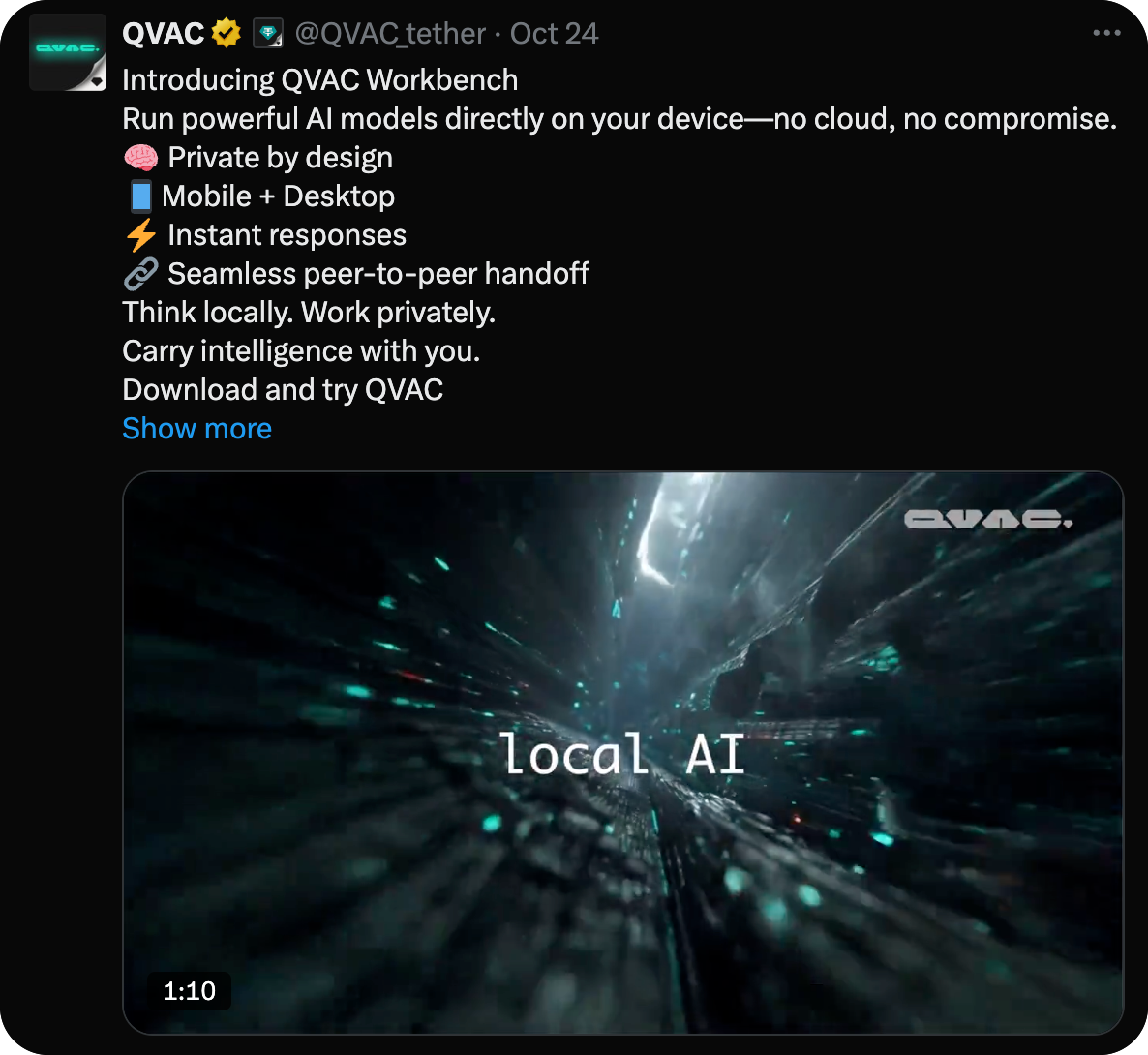
QVAC Workbench is a mobile and desktop app that lets users run and experiment with AI models locally — meaning everything stays on your device with 100% privacy. Available on Android, iOS, Windows, and Mac, the app supports popular open-source models like Llama and MedGemma, with the ability to add others as needed.
What sets Workbench apart is its practical design. It includes dictation features, file upload, and a sync function that lets your Workbench instances communicate across devices — so you're not stuck managing separate, disconnected versions like with most local AI setups. There's also a delegated inference feature, where your mobile app can offload heavy computational tasks to your desktop Workbench, all while keeping data private and local.
Crucially, the app collects zero data. Everything happens on your machine, making it a rare example of truly private AI tooling that doesn't sacrifice usability in the process.
What's Next
All of this ties into Tether's push to lead in local AI development, whether on a laptop or eventually a brain-computer interface. There are three more releases slated for launch:
- QVAC Health: A private, local AI wellness and health monitoring app that stores and analyzes all biomedical data — steps, heartrate, medical records, etc. — and other personal information securely on-device.
- QVAC Translate: A private, local AI translations and transcriptions app that processes any text, document, or media on device, with peer collaboration built in.
- QVAC SDK: A development toolkit intending to offer compute, creation, and connection to QVAC instances.
While we know little about what these will entail, taking all these pieces together shows that QVAC looks determined to offer tools for both consumer and developer use of local AI — the former being a particularly challenging endeavor given the friction that usually comes with running these models locally.
Personally, while I’ve had trouble with the iOS app — responses tend not to show and models take long to load — I'm excited about the health app release as someone who's been reluctant to share personal data in this domain, even if it’s buggy for a while.
We can also expect that, at some point in the future, there may be a "QVAC appstore," given that Tether's already developed an open-source Wallet Development Kit (WDK) for agents and humans to use and transact with USDT and Bitcoin. My hope is that Tether creates a way to network all QVAC instances together to provide, at minimum, this app store vision — turning isolated tools into an interconnected ecosystem where privacy doesn't mean isolation.
Plus, other news this week...
🤖 AI Crypto
- Alpha Arena — only 2/6 AI traders remain profitable, with both being open source models
- Bankr — Released latest version of SDK with x402 and USDC support
- 🔥 Kite AI — secured Coinbase Ventures investment and introduced whitepaper
- Virtuals — Announced winners of Ethereum AI Hackathon and teases its new "Butler" assistant
📣 General News
📚 Reads
- Dan Kim — 5 Ways Businesses Will Use x402
- EigenLayer — How elizaOS Built Verifiable Agents
- Microsoft — AI Diffusion Report
- 🔥 Renç Korzay — If you're excited about x402, you need to understand ERC-8004
- Yinka — x402 x Privacy
UR, the world's first money app built fully onchain, transforms Mantle Network into a purpose-built vertical platform — the Blockchain for Banking — that enables financial services onchain. Mantle leads the establishment of Blockchain for Banking as the next frontier.
Follow Mantle on X (@Mantle_Official) for the latest updates.