Getting Started with the Wei Name Service
Last Thursday, I wrote about zOrgz, a 10k PFP NFT collection that z0r0z, an indie dev known for his DeFi work, put together in just two hours using Claude.
Speed and experimentation are certainly z0r0z's style, which is why I wasn't surprised at all to see him release another interesting new project over the weekend: the Wei Name Service.
What is the Wei Name Service?
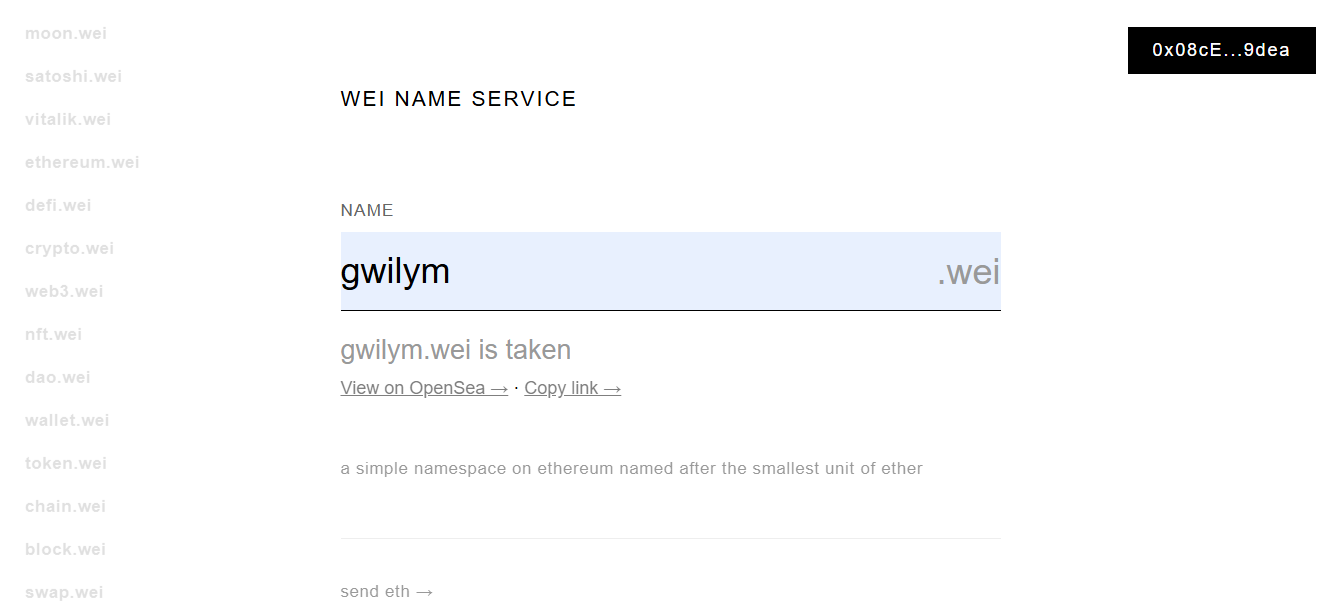
At a high level, the Wei Name Service is an alternative naming system on Ethereum, similar in spirit to ENS:
.weinames are human-readable addresses. You can send and receive crypto using them, and you can also point them at content, like websites hosted on IPFS.- Under the hood, WNS is minimalistic. The protocol's logic lives in one NFT smart contract, and the frontend is accessible via IPFS at
wei.domainsandwns.wei.domains. - Plus, since this is a public experiment WNS names are ~80% cheaper than ENS registrations, and they can also support one- or two-character registrations, like
a.weioryo.wei.
All that said, WNS isn't competing with ENS. Instead it's a demonstration of what lean, streamlined building can look like on Ethereum today. As z0r0z explained in his announcement post:
"Wei is the smallest unit of Ether. This project is small. But many things that got big started this exact same way. And it passes the 'walk-away test.' You get the NFT and the name. And it will work forever."
Trying WNS for yourself
So who is WNS actually for?
At a minimum, it’s an option if you want to register an Ethereum-native onchain name that’s meaningfully more affordable than a comparable ENS registration. Beyond that, WNS opens up a clean path to running a personal website without relying on traditional DNS.
Let’s walk through how registrations work.
How to mint a Wei Name NFT
- Visit the WNS frontend: Head to wei.domains and connect the wallet you’d like to use. Once connected, you can use the main search box to explore available names.
- Settle on a name: Type in the
.weiname you want to see whether it’s available and, if so, what its registration fee will be. The most expensive one-character names cost 0.5 ETH per year, while five character-names and higher are the cheapeast at 0.0005 ETH per year (roughly a dollar at the current ETH price). - Commit to your name: Once you're ready to proceed, press the "Commit" button. This triggers the first step of WNS’s commit-reveal flow. You’ll confirm the transaction in your wallet, though this one will be free and your ETH balance won’t change.
- Wait and reveal: After committing, you'll wait one minute during the pending reveal window. Once that timer expires, click “Reveal” and confirm the transaction in your wallet. This is when you’ll actually pay the registration fee (for example, 0.0005 ETH for a longer name). You'll have 24 hours to reveal to complete your registration.
- Ready to use: Once the reveal transaction is confirmed, your
.weiname will be officially registered on Ethereum for one year. At this point, you can send and receive ETH using the name, manage it as you would an ENS domain NFT, or attach content to it, like a website.
How to host a website through WNS
After WNS dropped on Sunday, I had some free time and decided to try it end to end and host a website through my new gwilym.wei name.
What follows is an opinionated, minimal setup that worked well for me and should be accessible to anyone comfortable using a wallet and basic files on their computer.
- Create a simple static website
I had ChatGPT help me generate a minimalist bio page written in plain HTML. If you try the same, save the file asindex.htmlin a dedicated folder on your computer. If you want to include images, put them in that same folder in animages/subfolder. ChatGPT can help you iterate as needed. The key idea is that everything your site needs lives together in one directory. - Upload the folder
Now, upload the entire folder to IPFS. I used Lighthouse, a decentralized storage service atop Filecoin that currently offers up to 5GB of free storage per year, which is more than enough for a small personal site. Once the upload completes, Lighthouse will give you an IPFS CID. This identifier represents the whole folder and effectively is your website. - Attach the CID to your name
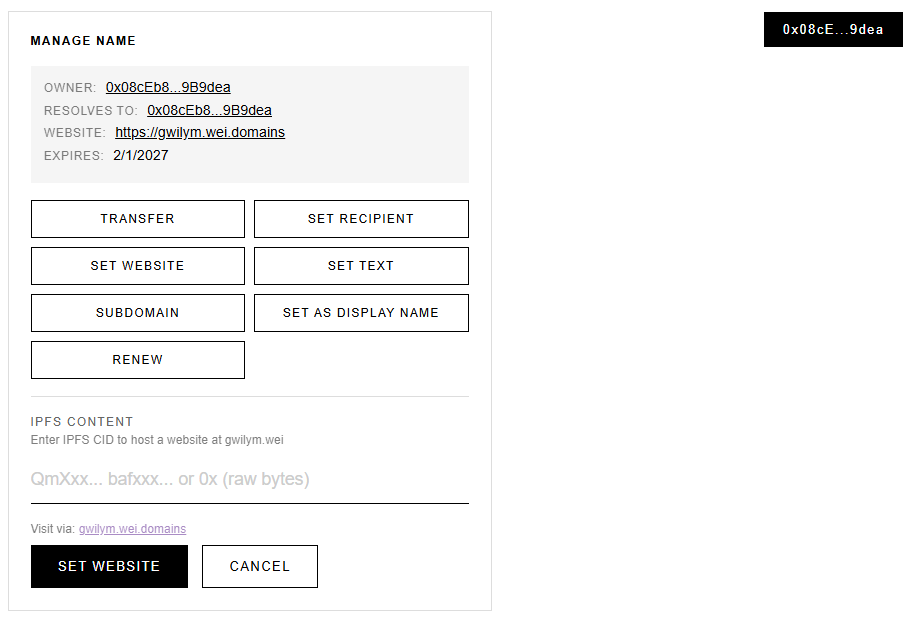
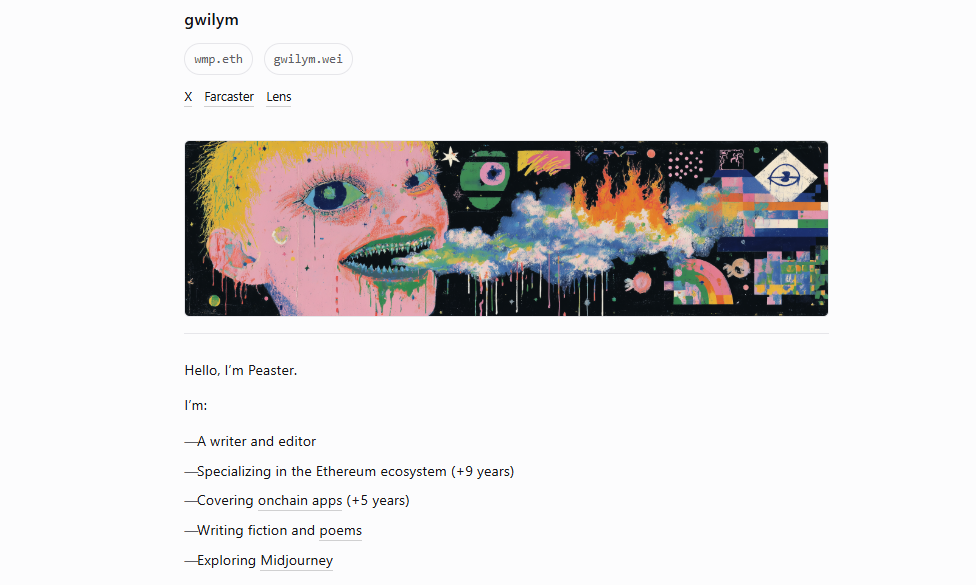
With the CID in hand, head back to wei.domains and go the "Manage Page" portal in your name dashboard. From there, click the "Set Website" button, paste in your CID, and confirm the update with your wallet. After this, your.weiname will begin resolving to the content stored on IPFS. For example, you can find my bio page at gwilym.wei.domains.
The big picture
ENS is a fantastic resource, but there’s still room at the edges of Ethereum for new namespaces and new ways of thinking about onchain identity.
WNS is a lightweight expression of that idea. It's not a grand protocol overhaul, but a simple, working example of how names, storage, and ownership can freshly snap together today.
Plus, as tooling continues to improve, expect more experiments like WNS to pop up around the onchain frontier. For now, though, keep this new protocol on your radar or consider it for your onchain toolkit. There's a chance it could grow considerably from here.