Ethereum's Staking Landscape Shakeup

Crypto staking is slowly infiltrating TradFi through spot ETFs. Long blocked by unclear securities rules, this breakthrough is finally bringing crypto-native yield to the masses.
Grayscale kicked things off in early October, becoming the first to enable staking on its spot ETH ETFs. Two months later, the asset manager has staked over 70% of its $4.7B ETH under management. Meanwhile, BlackRock is now moving into the conversation, taking early regulatory steps by filing for a potential “iShares Staked Ethereum ETF” trust.
With $18B in assets, Ethereum ETFs collectively represent more than five percent of ETH’s market cap and control nearly as much ETH as Lido, the network’s largest staking provider and the largest single holder of ETH, does.
Today, we’re exploring the winner-take-all outcomes underlying crypto staking markets, assessing who will benefit most from ETF staking demand, and examining the concentration dangers these staking inflows could create. 👇
🌐 Winner-Take-All Markets
Two core dynamics in crypto staking naturally push the system toward winner-take-all outcomes, where a single provider can end up dominating the market.
Liquidity Advantages:
The largest staking provider for a given crypto asset can offer its stakers superior liquidity, a top concern for many price-sensitive institutional holders — including ETF managers who must process redemptions.
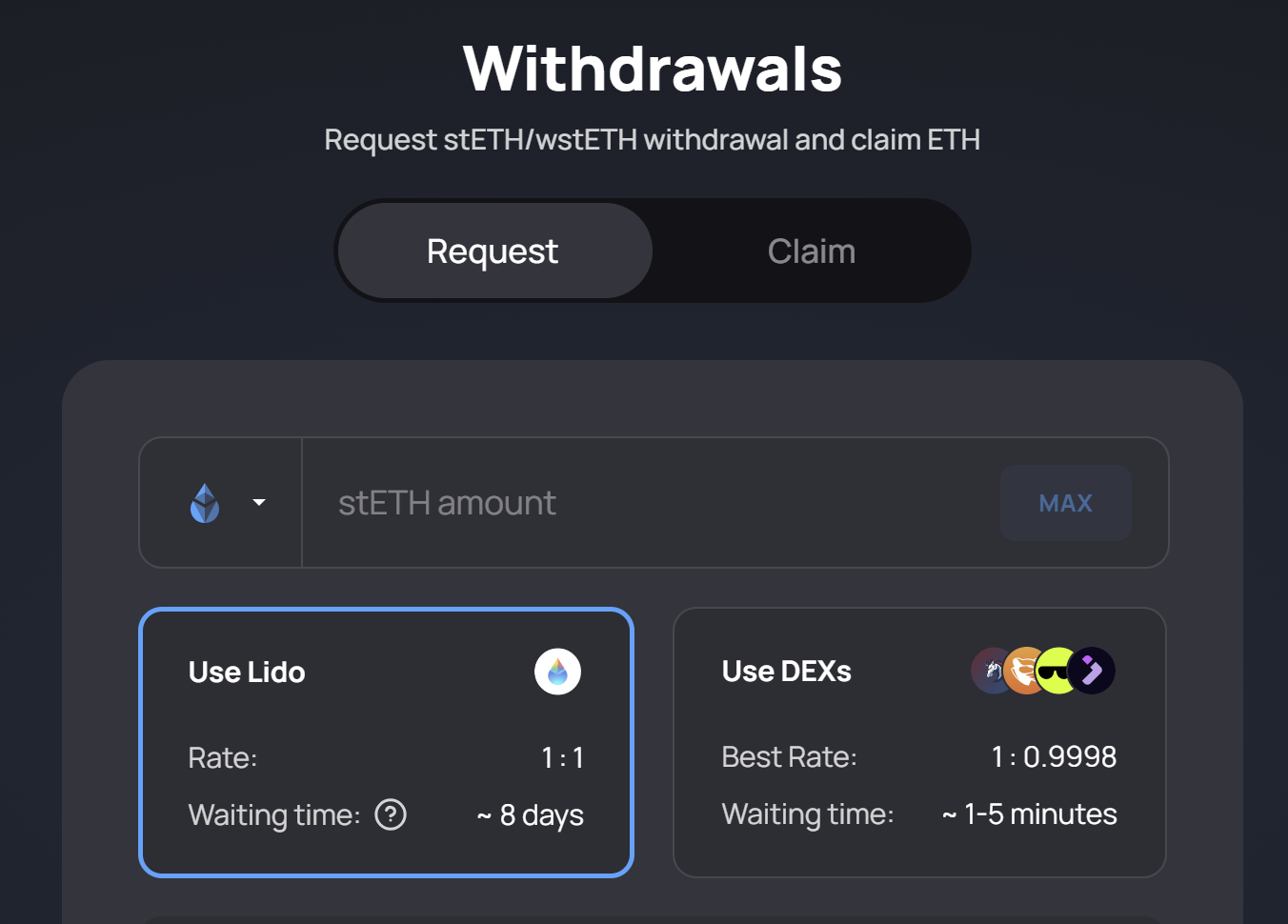
For example, staking with Lido — which controls 24% of all ETH staked — yields stETH, a fungible deposit receipt that can be swapped instantly at market prices or redeemed over a period of days at a 1:1 ratio for ETH. Whether swapping or redeeming, stETH holders typically receive stronger execution than alternatives thanks to its deeper liquidity and larger validator base — factors that enhance swap pricing and speed up redemptions.
Economies of Scale:
Currently, Lido takes a 10% commission on customers’ ETH staking rewards, a lower fee than any other blue-chip staking provider
Although Lido has never reduced commissions as part of a low-cost strategy, a top staking provider could readily pull in more stakers by cutting fees, underpricing rivals while boosting profits as users chase superior rewards.
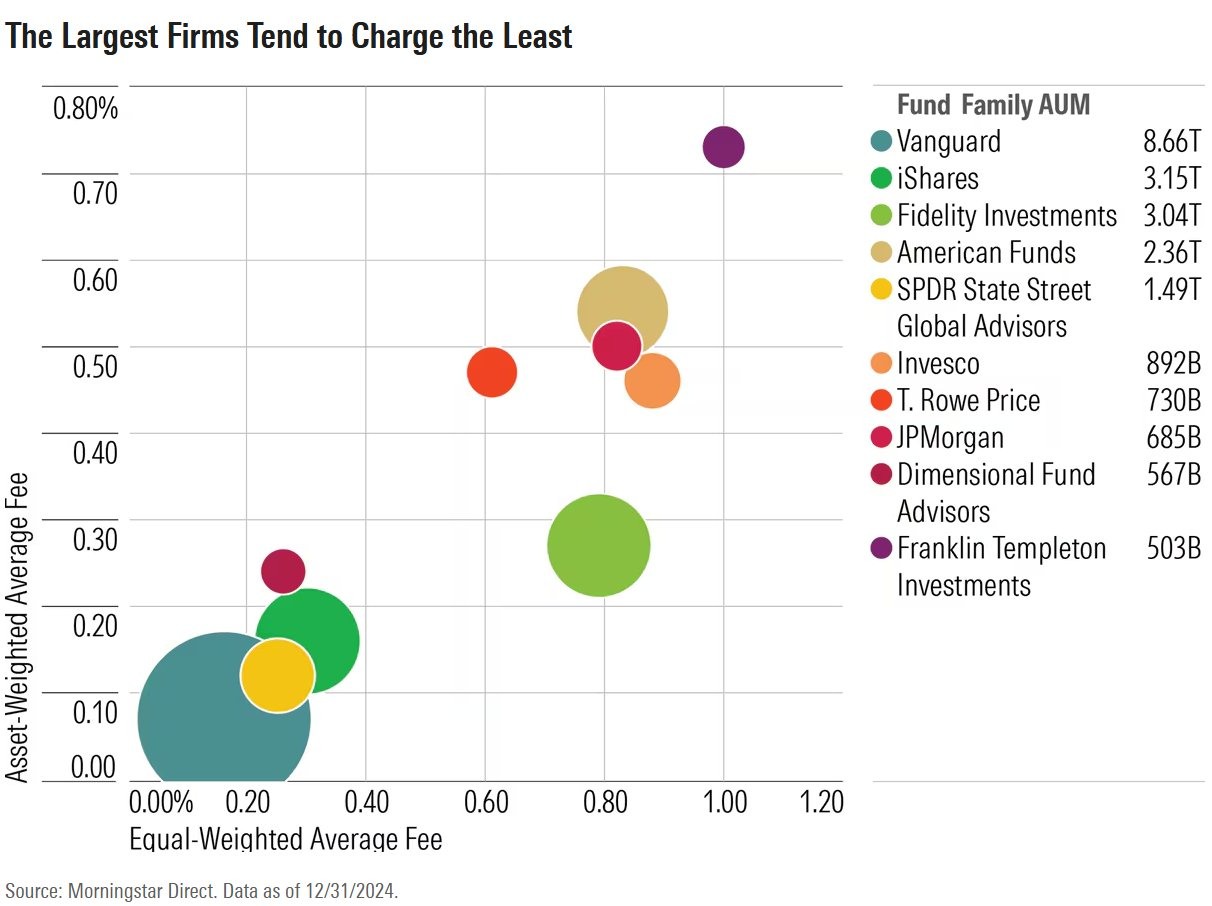
Clear examples of this dynamic exist in TradFi, where Vanguard – ironically slow to embrace crypto ETF trading – cemented its pioneering reputation in the 1980s by introducing low-cost passive indexing. Those products offered better returns than the high-fee active strategies that prevailed then.
Vanguard’s success shows up clearly in the numbers, and today the asset-management landscape is ruled by low-cost passive indexers! The chart below shows an unmistakable link between lower fees and larger assets under management.
🏆 Who Wins?
While Lido is the current standout Ethereum staking provider, as an increasing number of staked ETH ETFs come to market, it is possible the current order is upended.
Coinbase is still well behind the leading ETH staking providers — controlling just one quarter of Lido’s share at 6.3% of total ETH staked — but it remains the clear heavyweight in institutional crypto custody.
As of June, Coinbase custodied 81% of all U.S. ETF crypto asset holdings.
Our institutional team is crushing it - two awesome stats from our QBR this week:
— Brian Armstrong (@brian_armstrong) June 27, 2025
1) 8 of the top 10 publicly traded companies with BTC on their balance sheet use Coinbase Prime.
2) There's $140B of crypto in US ETFs, and 81% of that is stored with Coinbase. We’re tracking > 50…
Although it might be logical to assume that Lido will simply expand its staking dominance with ETF managers incentivized to use Lido for its liquidity advantages and economies of scale — Coinbase is arguably better positioned to capture these flows.
In traditional finance, relationships matter.
ETF managers need a custodial staking partner with a name and face they can trust to withstand regulatory scrutiny, provide audited assurances, and (in a worst case scenario) be summoned to court.
Coinbase spent years cultivating relationships across Wall Street, and successfully embedded itself as the default crypto custodian for institutions in the process. So when those same institutions look for a staking partner, Coinbase may be the natural first call.
😰 Concentration Dangers
If BlackRock, which manages the largest ETH ETF, were to stake its ETH through Coinbase — a firm in which BlackRock’s products hold 7% ownership – the exchange could quickly overtake Lido as the dominant ETH staking provider.
When Coinbase staking products receive inflows from ETFs, the amount of liquidity available for redemptions naturally increases. Additionally, Coinbase can solidify its control over staking markets by dropping staking commissions, providing a financial incentive for even more stakers to make the switch.
In the Ethereum network and many other Proof of Stake blockchains, there are three critical staking dominance thresholds. As a staking group crosses each one, it gains greater influence over the chain and access to higher staking rewards. In turn, these higher yields help to reinforce the leader’s position, discouraging delegation elsewhere and accelerating centralization.
These systemic centralization risks will exist regardless of which operator becomes dominant, but if Coinbase surpassed these thresholds, the outcome would be especially stark — effectively handing total authority over a blockchain designed for decentralization to a centralized corporation accountable only to its shareholders.
Repost -- LSDs above critical consensus thresholds pose risks to the Ethereum protocol
— dannyryan (@dannyryan) May 31, 2023
With withdrawals enabled, it's time to reshufflehttps://t.co/mdMfjKOVgu