Ethereum’s Incredible Position ($)

View in Browser
gm Bankless Nation,
This market is a struggle, but Ethereum was built on resilience. In today's essay, David Hoffman talks about the bright future for Ethereum, thanks to two under-discussed catalysts.
Thanks for being a Premium subscriber,
luma 🫡
Sponsor: MegaETH — Crypto has new apps, finally.

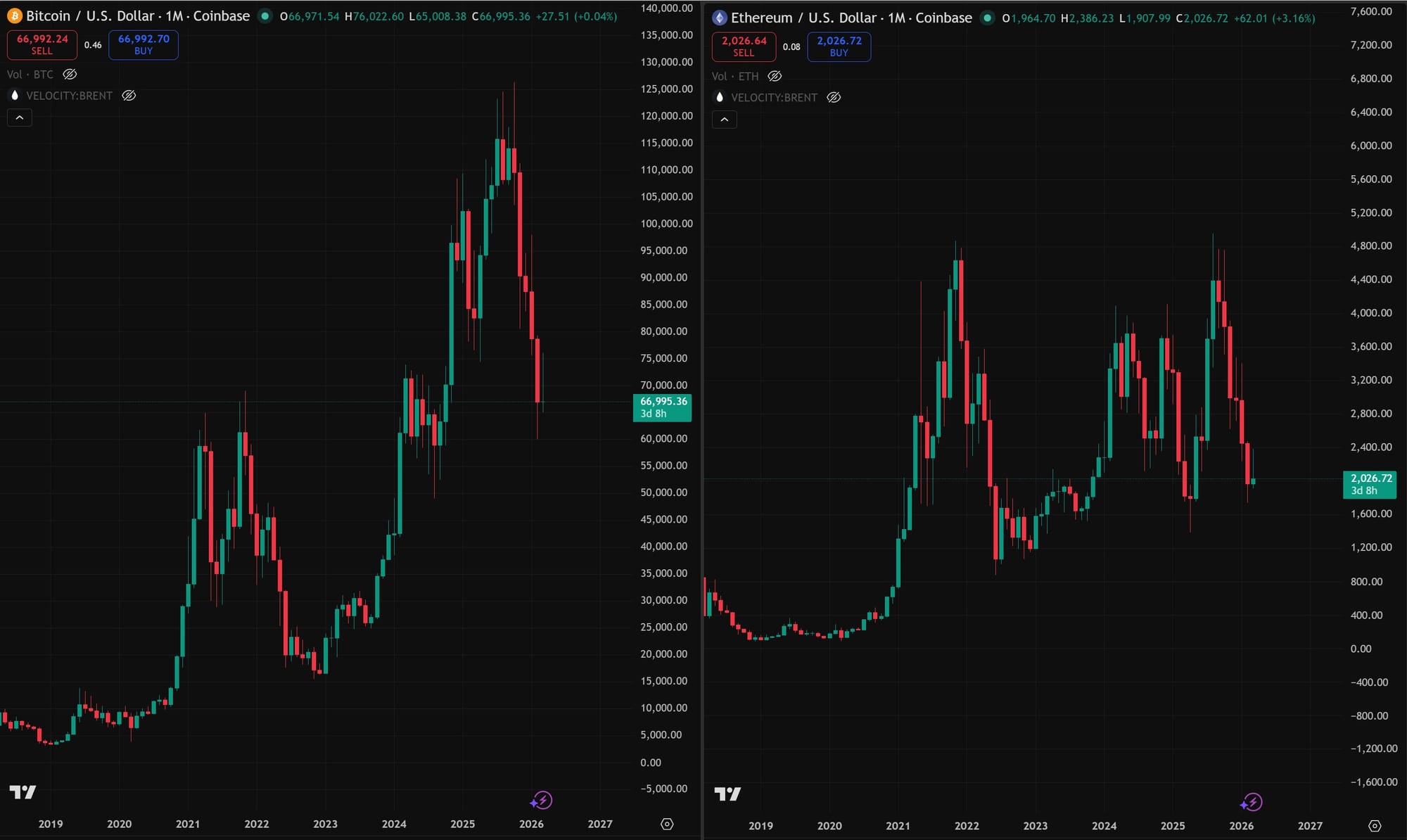
Look – I don’t like the prices right now either.
Sub-$2,000 ETH in 2026 is not what I thought would happen.
Instead, what’s happening is a macro environment that Ethereum has explicitly built defenses against.
Two things are defining this moment:
- Bear Market Apathy
- The Quantum Threat
Bear Market Irrelevance
When the tide washes out, things die.
Gone are the days of easy money, persistent interest in new L1s, and the speculative fervor needed to bootstrap otherwise unnecessary projects. We are no longer in one of those eras, and the industry’s malaise reflects a growing fear that they may be gone for good.
Things may never be easy again.
But Ethereum was never built with a dependency on easy times. Ethereum is built around resilience, and we are in an era in which resilience is paramount.
If a blockchain is not relevant by now… it's probably too late.
Bitcoin and Ethereum have made it… and probably Solana too, but even Solana depends on strength in retail and consumer crypto to protect its fiefdom. Memecoins represent >50% of Solana Application revenue and imo the durability of memecoins as the thing that supports a chain doesn’t exactly exude ‘resilience’ to me.
And then there's Hyperliquid, which deserves credit as the only ecosystem still growing.
That’s kinda it.
Meanwhile, Ethereum’s L2s are protected by Ethereum’s resilience. As we know, the L2 business model is the greatest business model in the industry. Ethereum pays for your security, and all you have to do is ensure you're providing some market value – the bare minimum requirement to survive.
Lately, I’ve been focused on ZKsync's progress – especially its Prividium design and its work with banks on an Ethereum-settled intranet, along with a BitGo partnership for tokenized deposits. Prividium gives the banks all the banky stuff they need (privacy, control, scale), without compromising on all of the blockchain stuff.
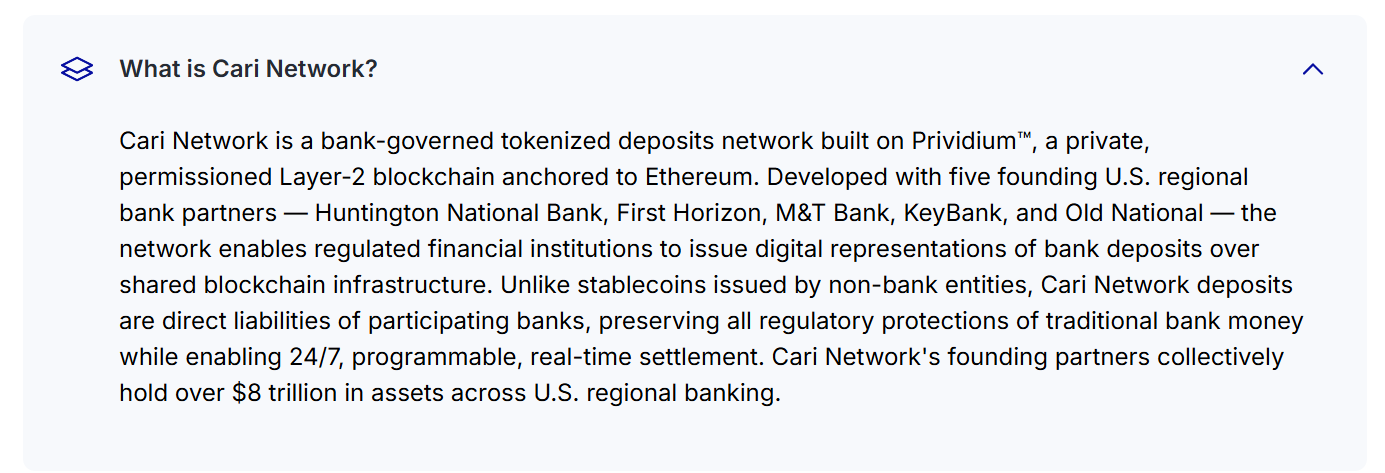
The point I want to make is: Ethereum’s L2s have the flexibility and sustainability they need to build the “blockchain-not-bitcoin” tech stack that TradFi is historically so obsessed with – while still remaining on the public, permissionless, interoperable rails of Ethereum.
This L2 narrative sits alongside a notable surge in Ethereum L1 adoption over the past few months:
- BlackRock:
- 2026 Thematic Outlook: “Ethereum underpins 65% of tokenized assets and could become a "toll road" to blockchain-based markets.”
- Staked Ethereum ETF (ETHB)
- JPMorgan:
- MONY Tokenized Money Market Fund on Ethereum
- JPM Coin (JPMD) Deposit Token on Base
- DTCC: SEC No-Action Letter for Tokenization Services on Public Blockchains
- NYSE/ICE: Tokenized Securities Platform + Securitize Partnership
- Nasdaq: SEC Approval for Tokenized Securities Trading + Kraken Partnership
- Fidelity: FYHXX Tokenized Treasury Fund on Ethereum
- Goldman Sachs: GS DAP Platform with Ethereum Asset Bridge
- Franklin Templeton: BENJI/FOBXX on Ethereum
Some of these adoption gains are shared with Solana, so it’s not completely a slam dunk. But, the broader point is:
- There will be no new relevant L1s
- The utility value of a new L1 is going to be more economically sustainable in Ethereum’s L2 orbit
As more and more tokenized assets come to be deployed on the Ethereum L1, and therefore accessible across Ethereum's L2s, the utility value of being an L2 will also grow.
The Quantum Threat
Concern around quantum is accelerating.
Ethereum researchers have been thinking about quantum since the beginning – Ethereum simply has a very distant lead in becoming ‘quantum-resistant.’
So, zooming into the future, allow me to make a couple assumptions:
1) Ethereum is the first blockchain to overcome the monumental challenge of quantum-proofing itself. It does this by identifying the problem early, acting quickly, and relying on nimble governance.
2) Not all blockchains clear this hurdle, and as a result they become extremely vulnerable places to store money and wealth.
In this world, I see investor and platform confidence in Ethereum reaching new heights.
The BIG question of the industry is whether Bitcoin clears this hurdle. There are solid reasons on either side, but even if Bitcoin addresses its most solvable issues, a large share of existing coins remains quantum-vulnerable – and securing them would likely require a move that is perceived as a major violation of Bitcoin’s social contract.
So even in the best case scenario for Bitcoin, I expect Ethereum to achieve a higher comparative level of investor and market confidence for not having to publicly struggle with these challenges in the first place.
To put it simply, the whole quantum threat to the crypto industry will result in a very good look for Ethereum. Given the elegant and stress-free navigation of Q-Day, Ethereum will simply look good.
Ethereum Looks Good Here
As I said above, this isn’t the market we wanted.
There’s a lot of boomer stuff happening, and the ratio of suits to tee-shirts in crypto has never been worse.
But Ethereum was built to excel in this market environment. On the other side of this, Ethereum will come out incredibly well-positioned to say the least.
We're past "in it for the tech" or "in it for the money." MegaETH is bringing you products worth using, powered by USDM.
📈 The Asset
🏛️ The Protocol
- Ethereum Foundation announced the launch of a dedicated post-quantum Ethereum website, published a primer on the L1 + L2 relationship, and hosted Institutional Ethereum forum in NYC
- EIP-8141 moved to “Considered for Inclusion” status for Hegota
- EF Protocol Support published an EIP champions handbook
- All Core Devs held its #233 execution call and its #75 testing call
📱 The Apps
- Aave now powers yield for Whop
- Balancer published two restructuring proposals
- Better is offering crypto-backed mortgage down payments via USDC/BTC on Coinbase
- Katana acquired IDEX and launched Katana Perps
- Ondo is tokenizing five Franklin Templeton ETFs
- Origin migrating OETH to compounding validators
- Sablier introduced Bobs, i.e. price-gated ETH timelocks that earn yield via Lido
- WalletChan unveiled its WalletChain OS with auto-connecting for wallets
- Resolv Labs had 80M unbacked USR minted through a compromised private key
- Safe hit 60m accounts
- Sudoswap introduced a governance proposal to establish a “ragequit” mechanism for its native SUDO token
- Vyro launched its CDP protocol on Unichain
🤫 The Privacy Stack
🐸 The Culture
- Ethereum.org rolled out a series of revamps, including an expanded gaming page, ETHSkills, and more translations
- owocki outlined Ethereum community civil wars since mainnet launch
- TheDAO Security Fund issued its first ETHSecurity badges, 160 remain
💽 The Tech
- Bitpanda is planning to launch Vision Chain (OP Enterprise L2) later this year
- Solingo launched Solingo (web tool), to learn Solidity via gamified exercises
- Cyfin launched BattleChain
- Polygon introduced PIP-85 to rebalance priority fee rewards
- Public Goods Network (PGN) shutting down, withdraw before April 20
We examine the proposed Clarity Act and its impact on stablecoin yields and crypto finance. Ryan and David discuss geopolitical tensions in Iran and their effects on global markets.
Highlights include Tom Lee's ETH staking venture, the NYSE's stock tokenization, and emerging quantum computing developments. We also touch on Coinbase’s stock dip, Tether’s auditing, and Fannie Mae's acceptance of crypto as collateral.
Tune into this week’s Rollup! 👇
Not financial or tax advice. This newsletter is strictly educational and is not investment advice or a solicitation to buy or sell any assets or to make any financial decisions. This newsletter is not tax advice. Talk to your accountant. Do your own research.
Disclosure. From time-to-time I may add links in this newsletter to products I use. I may receive commission if you make a purchase through one of these links. Additionally, the Bankless writers hold crypto assets. See our investment disclosures here.