Cloudflare's Choice: Coinbase or Stripe

This week Stripe launched MPP (Machine Payments Protocol) alongside Tempo's mainnet as a flagship release.
If you don't know by now, Tempo is a payments-optimized L1 EVM chain built by Paradigm alumni and ex-pat core Ethereum devs. MPP is an open, HTTP-based protocol for agent-to-machine payments that revives the long-dormant HTTP 402 status code, just like x402, although with a different architectural philosophy.


The core tradeoff between the two protocols is straightforward: x402 prioritizes openness, while MPP offers superior integration with existing payment rails at the cost of Stripe ecosystem stickiness.
Instead of debating those nuances further, let's focus on a different dimension. I don't think there's much value in debating the technical merits of MPP vs x402 at this stage. There's a more interesting and impactful dynamic at play beneath the surface: how Coinbase and Stripe may be competing for partnership with a third, already-entrenched and well-positioned player whose backing could significantly impact which standard becomes dominant.
Scraping Broke the Old Model
But first, before going into that, let's reiterate one of the core problems which agentic payments respond to: that agents made scraping (the process of extracting data from websites) too easy.
From 2024 to 2025, Wikipedia's traffic grew 50% thanks to this, weighing down their servers and driving up costs. At least 65% of their most resource-intensive requests came from bots. In February 2025, bots bombarded image repository DiscoverLife with millions of requests daily, slowing the site to the point of being unusable. In August, cloud provider Fastly reported an instance of one bot hammering a website with 39,000 requests per minute. The Directory of Open Access Journals (DOAJ) reported similar effects, calling the scraping wave "the functional equivalent of a denial-of-service attack." A single day in November 2025 saw their traffic spike 968% above the prior year.
While measures like adding robots.txt files have been implemented (essentially rules for where bots can and can't go on websites), over 13% of scrapers skip these rules. They overload servers and pressure sites, many of which rely on donations. But commercial sites aren't immune either. Reddit tightened rate limits. Eight of the 10 largest news sites now block training bots. Across the broader web, 71% of top publishers block retrieval bots entirely.
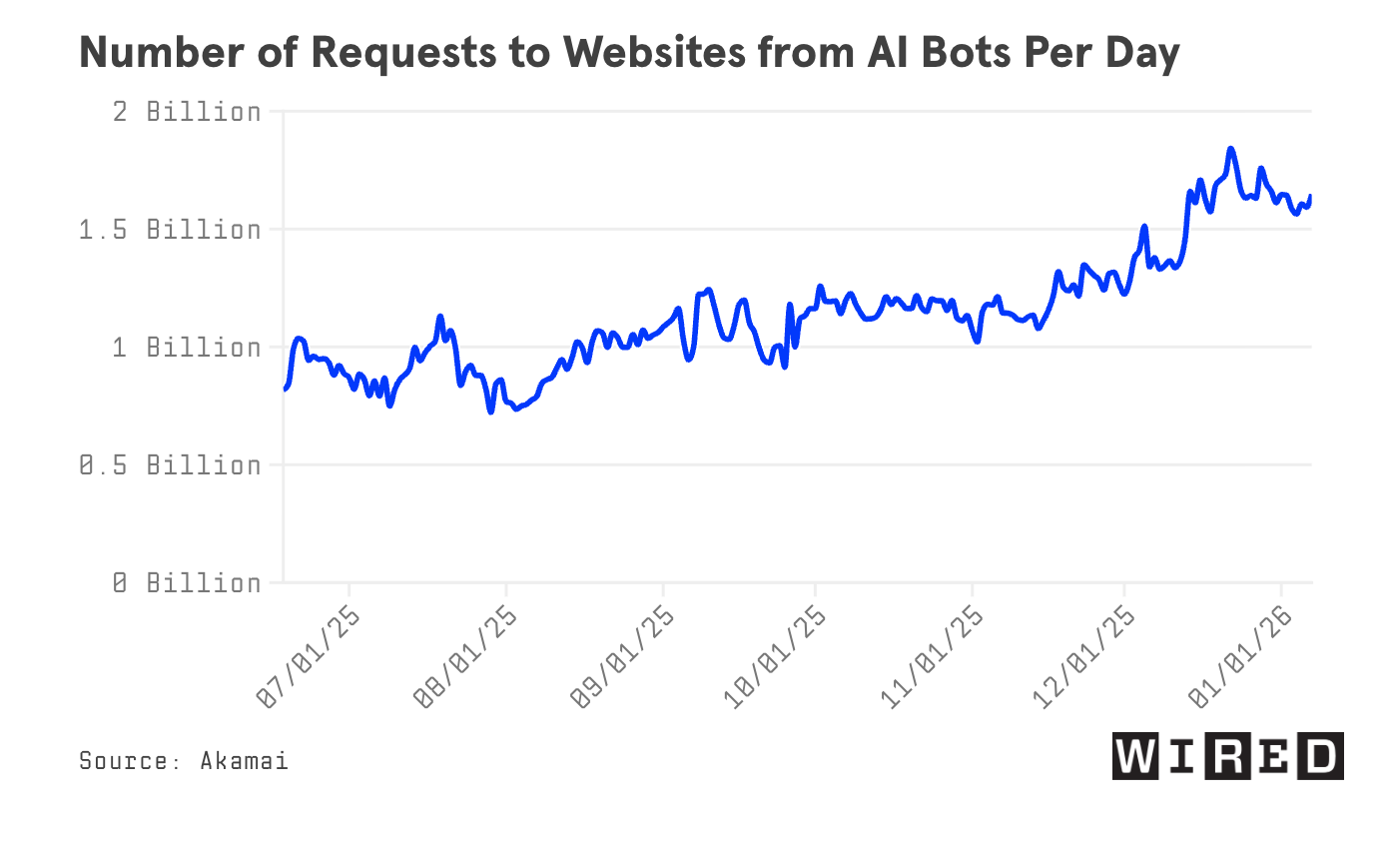
The web isn't uniformly locking down, though. Sites that serve expensive or time-sensitive data — prices, hotel bookings, specialized datasets — are starting to charge for access. Everyday or low-value content is still free to scrape via caching or proxies. Scraping isn't disappearing, but it's splitting into free stuff and paid stuff. That's what made x402 and MPP necessary.
As Ethos Network's founder Serpin pointed out this week: "[This scraping dynamic means the internet will change] ... more locked-down websites, more human verification, more separation of traffic between humans and agents."
Enter Cloudflare.
x402 and mpp will always compete against website scrapers (which have gotten much better w/ agents)
— Serpin Taxt (@serpinxbt) March 19, 2026
wonder how this changes the next wave of the internet
> more locked down websites
> more human verification/separation of traffic b/n humans/agents
cloudflare.. looks good here
Cloudflare Sits in the Middle
Cloudflare is the layer between websites and the people visiting them. It protects sites from attacks, speeds up load times, and handles traffic at scale. About 20% of all websites use it, making it one of the most consequential chokepoints on the internet. When Cloudflare makes a decision about how traffic gets treated, a fifth of the internet feels it.
That also means Cloudflare has a direct view of the bot traffic surge and the scraping pressure weighing on the public (and private) internet — pressure they're building to address.
First, this was in the form of a feature for websites to block all bots. Then, last year, they launched pay-per-crawl, enabling websites to charge AI bots micropayments for scraping, rather than blocking them outright. When a bot hits a page, it either pays and gets access or gets a 402 "Payment Required" (sound familiar?) response with pricing. Cloudflare handles billing. It's the middle ground between "block everything" and "give it away."
x402 is actually designed to be a mechanism to monetize against scrapers (pay-per-scrape), as well as enable scraping APIs to monetize via LLM tool call (ie Firecrawl)
— kevin (@kleffew94) March 19, 2026
Check out:https://t.co/LXQyLjBFdK
Pay-per-crawl launched in July. In September, Cloudflare launched the x402 Foundation with Coinbase. A few days later, they announced the NET Dollar, a stablecoin for agentic payments.
In other words, Cloudflare is building both the walls and the windows. The blocking tools and the paid-access tools. They decide what gets shut out and what gets let in — and on what terms. That position is what makes their next decision so consequential.
NET Dollar Is the Real Signal
When Cloudfare announced the NET Dollar, they didn't name an issuer.
They still haven't, despite the fact that in December, Coinbase, their partner for the x402 Foundation, publicly launched a service for businesses to issue branded stablecoins.
Then, this week, Cloudflare's stock jumped following a report from The Information that crystallized the dynamic we've been discussing. The report specifically mentioned that who will help Cloudflare launch the NET Dollar is still an open question, with "Coinbase and ZeroHash among the companies" competing for the deal. That phrasing leaves room for others — like, say, Stripe.
Also, immediately after MPP's release on Wednesday, Cloudflare released an MPP proxy for compatibility with the standard. That's less strange than it looks — MPP also supports x402 payments, so it's not a completely independent standard. But the fact that they haven't formalized a stablecoin issuer, and that the company who launched the x402 Foundation with them is simply one among others vying for this deal, certainly raises questions.
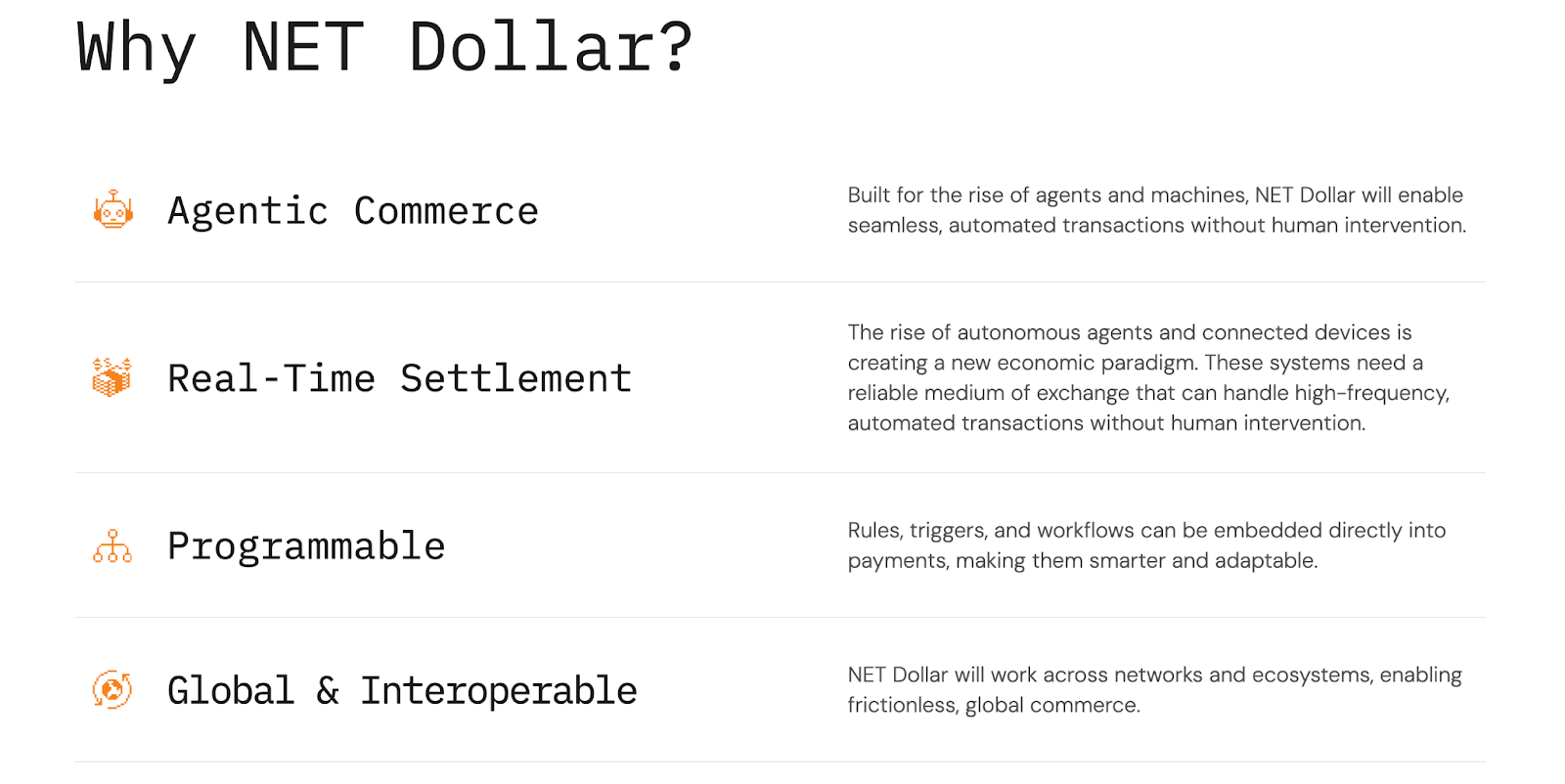
Here's why this matters: NET Dollar is being built as the default currency for pay-per-crawl and Cloudflare's other paid-access services. Whoever issues it will see their standard prioritized in Cloudflare's stack. If Coinbase issues NET Dollar, Cloudflare has reason to keep building around x402. If Stripe issues it, MPP gets that tailwind instead. Given that Cloudflare handles a fifth of the web and is building the infrastructure for both blocking and monetizing bot traffic, that prioritization shapes what will become the default across a meaningful chunk of the internet.
The x402 vs. MPP debate matters less than who Cloudflare decides to build with. That's the real question.