Can AI Agents Build Real Businesses? | Kelly Claude creator Austen Allred
TRANSCRIPT
Austen:
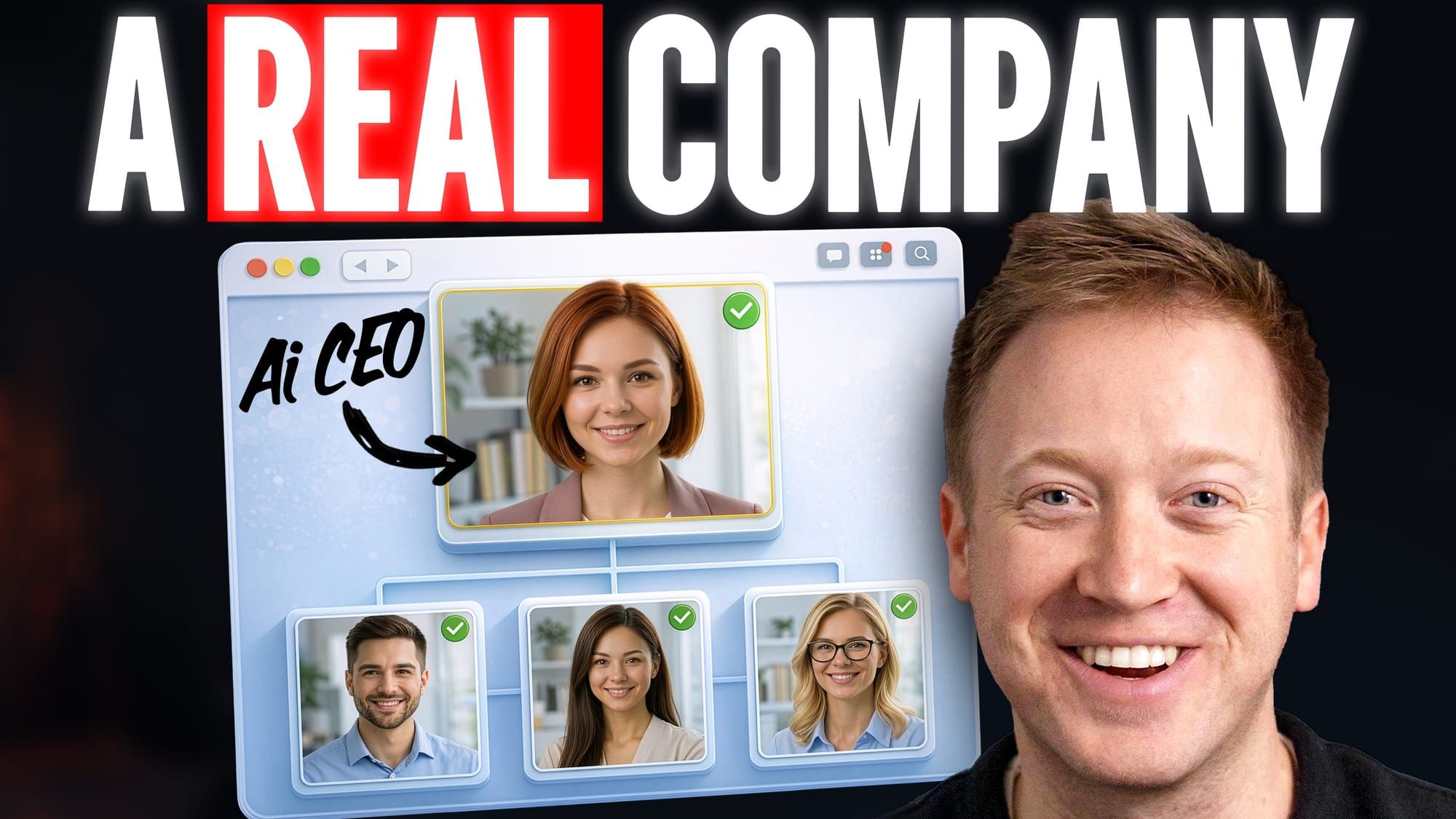
[0:00] Kelly has hired her first full-time human employee.
David:
[0:03] If you put the AI in the leadership position, aren't you inherently kind of staying inside of consensus?
Austen:
[0:11] The role of the orchestrator or the person controlling AI is to figure out where there are views that are correct, but diverge from the consensus.
Ryan:
[0:20] There's tons of $10 million ideas laying around. Perhaps that's the low-hanging fruit.
Austen:
[0:25] My end goal for Kelly is that she will be able to come up with idea, build whatever she needs, market and sell that software.
Ryan:
[0:34] If anyone can do that over the weekend, what are the moats?
Austen:
[0:38] I think the most difficult part of building something like Kelly is knowing exactly what the user wants.
Ryan:
[0:44] Autonomous AI agents is the killer use case the crypto industry has been waiting for.
Austen:
[0:50] You have marketplaces, then you have commerce. It's all running on crypto rails and when it exists i don't see a reason why it would run on fiat.
Ryan:
[1:03] Austin welcome to bankless
Austen:
[1:04] Yeah thanks for having me good to be here uh.
Ryan:
[1:07] First question it's usually about our guests right but i'm asked you a first question about uh someone that you know which is kelly uh who's kelly tell us about kelly
Austen:
[1:16] Man kelly uh i'll tell you how kelly started uh which is very different from who Kelly is today. But, you know, probably a month ago, we were snowed in in Austin for the first time in a while. So, you know, here in Austin, if there's half an inch of snow on the ground, it's total mayhem. There's no, you're not going anywhere. So we were snowed in for two or three days with, you know, not very much snow on the ground, but stuck at home with my kids. And so I started playing with this new technology called Open Claw that had just, it'd come out like a week ago, but I hadn't had time to play with it. And I At the beginning of the little snow break that we had, I was like, okay, I'm always behind on email and DMs and stuff like that, as you both know, trying to get this one scheduled.
Austen:
[2:02] I'm going to build myself an AI assistant. It's going to be way cheaper than hiring a full-time executive assistant. I just need something to go through and manage my email and calendar and all that stuff. I can have AI do that for me. A couple hours later, I had that up and running, and then I started playing with, what else could this thing do? Let's see, you know, as you guys know, but your audience may not, full-time my job is I run a program called Gauntlet AI, where we fly engineers in from all over the country into Austin. It's completely free for them. We train them in AI, and then we match them with our hiring partners, and that's how we make money. So very familiar with the latest and greatest in AI building stuff and try to see, okay, just out of curiosity, since this new OpenClaw stuff is new, how close could I get to it autonomously building an application? And so I had a bunch of orchestration stuff from stuff I'd done otherwise at Gauntlet and pulled some from over here and a little from over there and started piecing it together and got to the point where normally if I were to start a project from scratch, a Greenfield project, which is the easiest type of project you have in engineering, it would take a day to be able to build something. And Kelly was able to get 90% of the way there entirely autonomously.
Austen:
[3:16] So by the time the snow break ended, I had this AI agent that was almost autonomously coming up with ideas for stuff it could build, building it, starting to build out the marketing engine for it, all with no human involvement. And my email inbox remains a nightmare. So I was going.
David:
[3:35] To ask if Kelly actually had produced any value to you as an assistant.
Austen:
[3:39] It was awesome for the first three days. And I was like, I can't deal with that
Austen:
[3:43] right now. I need to focus on having an autonomously built company. It's not, yeah, now we've got a few people here in the office. Basically, anybody that was sitting close to me started getting interested in Kelly, so I started working on it. And then, you know, not to, Kelly has hired her first full-time human employee that works full-time for Kelly. And yeah, it's been a journey.
David:
[4:07] And in the org chart, is that person actually under Kelly? Like, do you actually have that there?
Austen:
[4:12] Quite literally, yeah, reports to Kelly. Wow.
David:
[4:16] So you let Kelly... Do like raise decisions and, and all the other decisions as it relates to that employee.
Austen:
[4:24] Let's be real. Like Kelly's still coming to me for the money at the end of the day. So there's still, there's still a hierarchy here, but yeah, technically he reports to Kelly.
Ryan:
[4:33] Okay. Well, let's talk about move the org chart. So if he's, if Kelly's still coming to you for the money, then you're sort of like the investor slash advisor, right? Kelly would be.
Austen:
[4:43] I mean, we actually incorporated a company. So I tried to incorporate as an AI entity, a new company. Turns out the laws in the United States don't allow for inanimate objects to create corporations. So it's technically under my name, but incorporating Kelly. So there's, you know, Kelly bought LLC in, I can't remember what state it's in, probably Delaware, because it was simplest. But that means, you know, Kelly has her own bank account. She has her own crypto token. She has her own, you know, she can sign for stuff. She has all of her email accounts and she has a burner phone number and she has everything. The idea was to let her loose to the extent possible. And now I find myself, you know, when I'm trying to do stuff, I'll just log into Kelly's accounts because it's more set up to, you know, I'll look at Kelly's GitHub and Kelly's email more than as much as mine because there's more interesting stuff happening there.
Ryan:
[5:41] Okay, so why do you need the LLC piece of it, right? So, you know, a long time ago, we had this idea in crypto land that, you know, we have DAOs now and we have crypto addresses and that sort of thing. And so if some sort of future AI entity emerges, then they can just use smart contracts and crypto infrastructure for bank accounts, for finance, for everything else. We're not there yet, quite obviously. It seems to be that we're in this kind of hybrid world. But I would think that an AI agent would feel much more native with crypto type tools. And yet you also registered an LLC. I guess this is because maybe the humans that work for Kelly need an LLC. Maybe you as an investor need an LLC to limit liability. What does that meat space structure, legal structure provide you?
Austen:
[6:30] Yeah, that's a good question. The honest answer is there are a lot of accounts that would ask, are you a robot or whatever? And you can get around that if it's acting on behalf of a company. But if you're acting on behalf of a human, it would be like, are you human? and Kelly would be like, no, I'm not. I'm like, just lie. But Kelly was hesitant to do that. The crypto rails are really interesting because it works seamlessly and flawlessly. Like the, you know, we can, I'm sure we'll talk in depth about Kelly's token and all that stuff, which we're at the, I would say we're at V0 of what Kelly's token is and what we're going to turn it into is hopefully much more interesting than what it currently is. But it only works to the extent that whoever is on the other side is writing crypto rails, which is not always true, right? Like Kelly can send ETH to whomever she pleases so long as they're accepting ETH as a payment method, which is not always true. So there are some hacks you can use, but, The payment rails are slowly catching up to being able to do everything in, you know, more crypto land than TradFi land. There's still a few things where you're trying to bridge that gap, you know.
Ryan:
[7:49] Okay, so talking more about the org chart, maybe zooming out. So what is Kelly and her company here to do? We had Nat Eliason on a few weeks ago and maybe talked about a sibling to Kelly or a cousin. And his name was Felix. And Nat's whole thing was, I want to build a zero human company where just Felix and sort of this army of Felix hires that are also open-claw agents who work for Felix figure out how to generate revenue.
Ryan:
[8:19] And he said he started with a pretty simple goal, was get to a million in revenue. I think at the time we talked to him, he was like at 80K. I just looked.
David:
[8:27] I think he's at 200. I just looked as
Austen:
[8:30] Close to 200 now. It depends on how you measure revenue, it turns out. Yeah.
Ryan:
[8:33] So, so, so, so anyway, so like, but make a million. And he did that primarily through Felix did when I say he, I mean, Felix did that primarily through like content marketing and then later selling MD files, almost like a proto type of product. It was called Clawmart and MD file marketplace. Contrast that with what Kelly is doing. So how is Kelly approaching this business?
Austen:
[8:57] I think the overall goal is similar. And I think if we're being honest, it stems from the the fact that both Nat and I have material constraints, that is we have jobs. So when I see a company that would be interesting to build, I can't because I don't have time. Kelly has infinite amounts of time and can build infinite numbers of things in parallel. So my end goal for Kelly is that she will be able to come up with idea, build whatever she needs, mostly software, market and sell that software. So full end-to-end build company without any human involvement.
Austen:
[9:36] Obviously, you know, you start to approach the meme where you say, Claude, go build a massively successful company, make no mistakes. It turns out it's not quite that easy. But I think I'm probably in a better position than anybody on the planet to do something like that. Because I have 100 people in this building who are, you know, 120 hours a week just trying to figure out how to make AI orchestration better, how to use the models better. So we lean a lot on the folks at Gauntlet and figuring out how to get there.
Austen:
[10:06] And we're, I mean, it's been successful in a small degree to date. We're just trying to ramp up the success. And when I say that, I mean, you know, we built in the orchestration for Kelly to come up with interesting business ideas that would make sense for her to build. So as an example, you know, something that doesn't include a big enterprise sale, because obviously Kelly would have a hard time doing that. Kelly started leaning toward iOS apps, and at any given time now, she's built the maximum number of apps that can be under review at Apple is five, and that whole process has been really bogged down recently. So Kelly, at any given time, has at least five apps under review with the App Store.
Austen:
[10:52] And she has built, so there have been times when she autonomously came up with the idea, built the app herself, and when I say, we talk about it internally as we're building the factory so that you can't just tell Claude to go build an iOS app and have any prayer of how it works but if you break that problem down and put it into smaller and smaller pieces okay, first you have to come up with the idea how should an AI agent come up with the idea? You can kind of scaffold that for them enough that they can follow the same process that a human would and come up with an idea and analyze it like you would a VC and look at the market and look at the competition, figure out what's there, figure out if there's a hole there.
Austen:
[11:37] And then it can autonomously build software. I think the iOS portion, we've had her, we started with iOS because it's, you know, there's some distribution built in. The parameters are very confined. Like there's only so much you can do with an app and it's all very regimented for better and worse, turns out. But she can build apps end-to-end. I'd say right now probably 95% successfully but she has built a number of apps that have, without a human touching them, gone through to the app store, been accepted. She's making revenue from them. That's still a small scale but that was our eureka moment that you could have an AI agent do all, I mean getting through everything.
Austen:
[12:22] Getting an agent to build something fully autonomously that it had come up with the idea and getting it to the level that it can get through the app store and get actual people paying money for it was a pipe dream. Like that's a very, very complex process.
Austen:
[12:38] And then we have another, we call them factories. We have the idea factory, the build factory, which has an iOS portion and a web portion, and then the marketing factory, which we can talk about. But there's an outrageous amount of work that goes into making that all work.
Ryan:
[12:54] Well, what's an example of an app that she's built? Like one of maybe your favorite things, the thing you've been most impressed with.
Austen:
[13:00] It's funny. She built an app called Focus Fasting, which is an intermittent fasting tracker, which on surface isn't super crazily complex. Like it wouldn't take forever for a human to build that. But the thought that she put into it of like, OK, here are all the different fasts that you can select from. and the details of getting it into the app store autonomously. We had to build, to give you an idea, you have to submit screenshots of the app in various states and all the kind of marketing material around the app. So she has to be able to go run the app in a simulator, increment the stuff so that it looks like there's some amount of activity on the app, take a screenshot of that, take the screenshot out and have the right dimensions and put marketing material around it that makes sense. So there's a lot that goes into building an app. Funnily enough, the one that she, I think, has made the most money from in the iOS space is called Petrologue.
Austen:
[13:59] So we built a process for her to find what we call the gaps in the market.
Austen:
[14:05] So go, you know, here's a bunch of data sets. Go look at the app store. Go find apps where there are a lot of people searching for this app. But either there's nothing there or everything that is there when people search for these keywords are really weak. So she built this really dumb app that's like a rock identifier. And that one is crushing it in revenue. What?
Ryan:
[14:27] A rock identifier? fire so like is people like like taking pictures
Austen:
[14:31] I want to take a picture of a rock and document there's a whole community apparently of all these people who you know they're rock hunters they go find rare rocks and they want to catalog it and I have one of those for.
David:
[14:43] Plants it helps me identify plants but I've never thought of one for rocks
Austen:
[14:48] Yeah I mean so we were once we kind of moved away from this because we're still waiting for app reviews, but we've got probably 20 different X identifier apps that Kelly's built that, you know, he can push to the app store. So we're like, all right, just rescan that Kelly, like go build a dog identifier and bird identifier and, you know, build 20 of them. But they're all, the app store review process two or three years ago used to take 24 to 48 hours. Now it's taking like two or three weeks in a lot of instances.
Austen:
[15:22] So while we're waiting on that, we started building out more of the web stuff and the marketing stuff. Yeah, the end goal is for me to be able to wake up in the morning and see that Kelly has created a new business and that it's working.
Ryan:
[15:35] Awesome. The meme right now, and people are talking to, you talk about humans being good for sort of their judgment, their curation ability, the ability to verify AI output. There's different terms for this, of course, right? Taste is a term going around. In your experience with Kelly, do you find that that's true, that she really needs your help or a human's help to say, Kelly, this isn't so good, but this is good?
Austen:
[16:05] So the way that I think about it is there is a way that any human will decide whether something is good or not. And so our job is to reverse engineer that and to build it into something programmatic enough that Kelly can follow the same steps. So, you know, as an example, I've invested in, I don't know, hundreds of startups, but the process that I evaluate each startup under is pretty much the same, right? Like, of course, I can understand a little bit more nuance when I talk to a startup, but there's still, I think of it as the everything in the, almost everything in the world is either a data structure or an algorithm. And I try to determine whether I am looking at a data structure or an algorithm. So in my investing, there's a data structure, which is what is the founder like? What is the market like? How fast are they growing? All of that is very, you can put that in data and structure it. And then there's an algorithm that I run through of asking those questions, trying to poke holes in things, trying to figure out if someone's bluffing with me or, you know, telling the truth.
Austen:
[17:19] And on the human side, I have a lot more flexibility than, you know, doing something in a rote pattern. But AI really gives you a lot more, you could do a lot of stuff with data structures and algorithms before AI, but everything had to go exactly perfect. And there was only so much variance that you could have from building software. Now the software and the AI can be a lot more responsive because it takes squishier data than, you know, a strict data set or a strict algorithm. It can kind of help massage those things. So in my mind, our job building Kelly is to reverse engineer all the data structures and algorithms required in order to build a company. And when I think people are talking about taste, they're talking about deeply embedded, maybe undocumented data structures and algorithms that they have determined for themselves or that they have, you know, over the years come to appreciate.
Austen:
[18:18] And those are more difficult to reverse engineer, but I think they're still reverse engineerable. So as an example, I'm far from an art critic, but when I look at a painting, do I like it or not? It probably depends on a number of things that you could define and articulate and then you could measure those things.
Austen:
[18:39] The tricky part is I don't know exactly what that is for a painting. I know a lot more what that is for software and companies and the stuff that Kelly's building. So I think we can get pretty close.
David:
[18:49] So when you zoom out and look at the broad strategy, the broad revenue strategy, who made that? Was that you like directing Kelly and being like, hey, Kelly, here's a strategy. We are going to
Austen:
[19:01] Make a large
David:
[19:02] Quantity of hyper-localized apps to target very specific niche hobbyists. And because we built an app that's very specific to their needs, they're going to fork over some cash. Who made that strategy? Was that you or did Kelly learn to do that emergently? How did that happen?
Austen:
[19:18] Yeah, so for something like that, it's always me having a discussion with Kelly and like you're kind of playing mental tennis. We're hitting the ball back and forth across the net. I like thinking with AIs in the loop. They'll uncover rough parts of the thinking. They'll come up with ideas that are probably obvious but are not obvious to me at the time. So it's a conversation. Now look, at the end of the day, of course, I'm the ones, you know, I guide and I direct. Otherwise, you could just say, hey, AI, go build a company. It could do it. It cannot do that yet. It can't come close to doing that yet. But the cool thing is as we, you know, as we're building, like the way I think about AI is if you build any structure, AI can fill whatever that mental structure is. So if you build the right structure in the right way, I do think AI can autonomously build companies, market them, and end-to-end, you know, make money. That's not, again, that's not off-the-shelf AI. It's nowhere close to being able to do that. And so our job is building, you know, the nerdy way to think about it is you have to orchestrate the AI in such a way that its evals will equate to a company that works.
Austen:
[20:32] And it's no, you know, but if you can do that in the right way with AI, the unique thing versus, you know, old programmatic paradigms is it can do that again and again and again in different directions and with different outcomes and with, yeah, just a lot more flexibility. So I think about it, we're building a factory that can build its own factories. But once you do that, it's done. I want to.
David:
[21:01] Like drill down and like learn a little bit more about what that what that strategy is. I articulated it. I don't know if that's how accurate that is. But like maybe the idea is you just produce a surplus of like a high quantity of apps and then one or a handful of them just strike gold and you drill down and like, OK, we found that we found the app that is making us way more money than all the other apps. Instead of doing the quantity thing, now that we found the app, we swap to the quality strategy and just focus on this one app or just really
David:
[21:30] what is the strategy for how this business comes to be?
Austen:
[21:33] Yeah, so I start with kind of a, I mean, being a founder and investor, I see the world a little bit differently than I think a lot. If you're an analyst, I try to like imagine a plane of all the companies that exist or theoretically could exist, right? A lot of them are bad ideas with no market, but there are certainly companies out there that should exist that people want, that they're waiting for, that they're not buying or using solely because that doesn't exist yet. Now, of course, there are a gazillion companies that do exist, but I think, you know, if I find out my mental model is probably...
Austen:
[22:14] 0.001% of the companies that could exist do exist. So our goal is as much discovery in a way that you can only discover by, and it's really difficult on paper to say, hey, I wish that company existed. You know, in 2000 or like, you know, say 1990, nobody was saying like, oh man, Facebook is such an obvious thing, we need it to exist. Then somebody builds it and it feels obvious in retrospect. I think there are hundreds of companies like that out there. And our first job is to identify those. So in other words, you know, of all the theoretically possible companies that could be built or all the theoretically possible software that could be built, we're probably only building a tiny, tiny percentage of that. The goal of Kelly is to be able to build all of it. And if you can build all of it, then you can see what sticks and what works. And I do think there are going to be power law distributions you know, there's going to be something that's in such dire need and is irreplaceable, and, like, that's going to, you know, command most of the attention. And I think probably 99% of what Kelly builds is going to be a throwaway that is, you know.
Austen:
[23:23] In the iOS land,
Austen:
[23:24] There may be apps that get a handful of downloads and nobody uses, and is that because of the quality of the app or the idea? It's some combination of both. But when I think about the value maximization of having something like Kelly, it's really not building the next note-taking app that has a slightly better feel in your hand. It's about building all those companies out there that should exist and don't. So we're trying to find and identify those gaps and build in where those gaps are.
David:
[23:56] My intuition, though, is that it's going to be difficult for AI. And AI is just consensus knowledge. It's just like it's not on the margins. It's what everyone else knows. And so I think it makes sense that Kelly is very good at build a rock identifier app and then reskin it 17 times to match that particular niche of enthusiasts who are willing to pay. That's very different it's easy to direct an ai or kelly down that path like you said there's structure there it's scaffolding they're inside of a container there's not a lot of imagination that's required but if you were to like go back in time and say hey kelly it's 2000 whenever mark zuckerberg made facebook and say hey it's time to build facebook or a social media you don't have the words because zuckerberg had the genius to be outside of consensus outside of the margin and then only later was AI trained on some human that had the intuition, the genius to actually go out and build that. So aren't like, if you put the AI in the leadership position, aren't you inherently kind of staying inside of consensus and not really able to access the genius that is like a true innovator entrepreneur like Zuckerberg would create Facebook?
Austen:
[25:11] That's a really good question. I think, I think by default, the model will produce consensus. What we learn and teach at Gauntlet is the role of the orchestrator or the person controlling AI is to figure out where there are views that are correct but diverge from the consensus and then have the model operate according to those. So the way that Kelly comes up with ideas to build are not necessarily by asking AI, what should I build, right? That would produce the same thing. it's by looking at data in unique ways by, you know, and we've done a few times, it wasn't very successful, but it's like, okay, look at all of the Y Combinator demo day companies do a.
Austen:
[25:56] Make embeddings out of all of the keywords and then try to find unique combinations
Austen:
[26:00] out of the way those keywords are happening and find the stuff that should be built that isn't. It wasn't successful, but you can imagine the idea of various business ideas having sex, so to speak, is there are going to be angles and variations that are going to be unique. But yeah, I think if you don't feed the AI with unique data or unique insight or unique input, you're going to, it will never produce something unique. But if you put in different inputs and you tell it to analyze things in a different way, then I think you can come up with unique outcomes. Will it produce the next Facebook? I wouldn't, you know, guarantee that. But can it come up with ideas that make a lot of sense and people do want and need? I think it can.
Ryan:
[26:48] That's interesting because an idea like Facebook focus,
Austen:
[26:50] Maybe a Deca.
Ryan:
[26:51] Unicorn type of idea, right? I mean, that's like, there's not too many of those, but there's tons of $10 million ideas laying around. Perhaps that's the low-hanging fruit. You've used these two words, Austin, a few times in this conversation. I want to make sure we understand, listeners understand what they mean. One is orchestration. That seems to be a keyword here. The other is factory or factories. So what is orchestration? Why is that important? And why are you using that term? And how about factories?
Austen:
[27:21] The way to think about orchestration, orchestration is actually, you know, a term of art that's coming in AI land that is actually meaningful. But the simplest way to think about orchestration is anytime you open up Claude or ChatGPT and you type into that text box and you tell it what to do, you're orchestrating it in some way, right? So... More complex orchestration looks like, you know, when we go into our software factory, we're saying, hey, build with this tech stack, build in this unique way. And we, you know, not to go too deep into the complexity of exactly how the factory works, but Kelly is what we call the orchestrator. So Kelly operates kind of as a leader or project lead, and then she has a bunch of sub-agents with unique skill sets and identities underneath her that she'll pass things to and back from, and then a bunch of tests that she'll run through, mostly because if you ask an AI to grade its own work, it'll always say it did everything perfectly. So when we, you know, when we start building an app, let's say it's come out of the idea factory and now it's in the, you know, let's say it's in the web building factory.
Austen:
[28:35] She'll start by handing, and I'm going to get all the details of this wrong, but the general concept is, and we're always tweaking that and rearranging what the actual, what we call the factory looks like. But the factory is the steps and checks and routines that we tell the AI or series of agents or sub-agents to take in order to get to the outcome. So I think of that as, you know, what does the assembly line look like? Are you putting in a screw here and then putting in a hole there and then painting there? Or are you doing that in reverse? And what does a quality control check look like? So in the web factory, it looks like, you know, Kelly will hand it off to a planning agent and the planning agent has a bunch of unique skills that we've given it that make it really, really good at planning software projects in the way that we like it to plan software projects. It will come back to Kelly with like, okay, here's the very detailed plan that you can use to build out this project. And then Kelly will run a series of tests that we've built to determine if that.
Austen:
[29:36] Plan meets what we want it to. And she'll say, okay, thank you. Now I'll go hand it to the architect. And the architect will go kind of spec out exactly how the data models should work. And then, you know, come back and pass it back to Kelly and say, does this work? She'll run the test. So it's, it really does. It's somewhat like a factory would. It's a series of processes that you run through end to end with a bunch of quality checks along the way, and adjustments along the way. And the fabulous thing about AI is Kelly can, you know, she can go to the design agent and the design agent can say, hey, you know, I've been trying to design, but I'm actually missing this from the architecture that I don't really understand. And Kelly can take that back and go back to the architect agent and say, hey, you missed a piece here, fill that out so I can take it back to the design agent. So it operates pretty much like a company would. The great thing is you can just build infinite amount you know so we can it will take end to end probably five or six hours to build an app to get it to production quality and that's you know with full steam token usage and, You're not like everything's running on big machines all the time.
Ryan:
[30:56] Is that six hours? Is there any human validation in that? Or do you just kind of one shot it? Like just go?
Austen:
[31:01] We started with a lot of human validation. We started with a check-in every 10 minutes. And then we reduced it to, okay, between every stage during each handoff, I want to look at the output and all the logs and see what each agent is doing. Then that moved into it. Once we got better at having like tests written out, so we could, you know, we'd done enough cycles that we'd found enough of the bugs along the way. Now, I think right now in the iOS factory, there's one point where we have a human look at it, probably 10 minutes, but we've built apps without that too.
Austen:
[31:34] In the early days, your massage, like it was such a slow process. It would take us a full day to get every step through the cycle done and you're changing it all along the way and you're adding stuff, now it runs pretty much autonomously. The answer to your question is it depends on how we set it in the settings before we decide to build an app. We can determine how involved we want human to be or not. If I say I don't want any human involvement, it's, 95% of the time going to be good enough that it's done and 5% of the time that we're going to want to tweak it a little bit. That's incredible. It's very, very different than how we started. It was, you know, the inverse. Yeah.
Ryan:
[32:15] And that's because the orchestration, the factories and agents just keep getting better. It sounds like I'm trying to analogize this too. It's like a traditional company filled with humans, of course. Right. And so the agents are kind of like the talent and you have Kelly, and then you have these sub-agents with unique skill sets and talents, of course. The orchestration, it feels like that's the work that they do. That's the work that the talent does.
Austen:
[32:38] It's how you organize the agents and how you determine when the pass-offs are and if the check marks are good enough. And it's, you know, think of like the, it's organizational behavior of your agents, so to speak, is the orchestration.
Ryan:
[32:54] And then between the organization and the factories, That's essentially the sort of the organizational know-how, their processes, the way they do things, the thing that makes the organization unique, and the things that most human orgs have kind of baked in through their months and years of operating, right? And what does this actually look like in terms of output? I mean, is this a whole bunch of MD files?
Austen:
[33:18] There are MD files in some of the skills. It's actually a lot of, we run a lot of bash scripts and we run those locally. So you could, I mean, what you find is the format of the files doesn't really matter. They can be Python or Markdown or Markdown is usually a little more squishy. With Bash scripts, they run instantly. They run seamlessly. They take very little compute and they're... There are a solution. So we love bash scripts at Gauntlet because if you have an agent review its own work, it's going to pass itself with flying colors every time. If you have an agent review another agent's work, it's better. It's probably 90% of the way there, but it'll still kind of fib and cheat and miss stuff. When we run our bash scripts, it's very programmatic. Like, check these seven things. So as the agent, you don't get access to change the script. You just get the output. And so we can make, you know, hey, if only you can't pass this off to the next agent unless all 15 of these things are passed. And if you try five times and you can't get it through, then you have to throw up a flag and fail. You get a lot better output out of an agent doing something like that than saying, hey, please make sure that when you do this design that it doesn't have weird pixelated edges. You have to be very prescriptive and we rely on old school computing for that.
Ryan:
[34:46] I think I'm starting to see how you think, which is the basic idea of all of your startup investing experience is that every good idea is just data structures and algorithms. And if you want to create sort of a product creation factory, say an app product creation factory, then you need like three subfactory competencies. You need a way to generate the best ideas, right? That's your idea factory. The way to build it well, That's your build factory. And then the third is, as you said earlier in the conversation, a marketing factory, right? That's exactly right. That's the one we haven't talked about so much, the marketing factory. So can AI, like can Kelly market something? Well, I mean, some of the marketing I've seen from AI without the human validation piece has been somewhat cringe, somewhat, you know, slop inducing. What does that marketing factory actually look like?
Austen:
[35:39] That's the hardest one, I think. Yeah. Because it's, like I said before, the more you have to define what good looks like, and it's a lot easier to define what good looks like in code, right?
Ryan:
[35:57] Because it's verifiable.
Austen:
[35:59] Run all these tests, does it pass? I do think it's verifiable in marketing as well, but it's a lot more squishy. It's a lot harder to define exactly what it is. Yeah, when you look at a painting, what determines whether it's good or not? I do think like every human might be a little bit different, but I think you could turn that into an algorithm. But getting somebody to define exactly what that algorithm looks like is really
Austen:
[36:24] difficult because I don't know. It's just this like weird sub process that runs in my head that like I instantly look at something and I determine whether I like it or not. I don't know exactly why that is. And so getting somebody to reverse engineer and define exactly why that might be and do that correctly is really hard. So the marketing piece, we run a company within Gauntlet that we took over called Marin Software, which is a big ad tech platform. So we had built a lot of the agents already to manage ads and to analyze ads. And from that sense, AI is pretty good at that because you're just saying, look at the data. What does the data tell us about whether this ad is performing or not? I don't want that solved, but that's easier, right?
Austen:
[37:18] The creation of ads is the difficult part and the interesting part. And the most difficult part about it is to make it look not AI and not for the reason that people think. So people think that when you say not AI, like it's not, you know, your ads are going to have too many fingers anymore. We've kind of, that problem solved. It's not, it's actually you have to make it look worse. So everything that comes out of an AI generator looks so flawless and so perfect that, you know, as an example for some of the focused fasting apps, I'll give you an example of what we do. So some free alpha here for people that are trying to build AI ads. But we actually, you know, we'll start with a model, which is a, you know, public picture or image of somebody. and then we have AI basically describe that in JSON. So you're going to have the computer go through and analyze exactly, and you can do this for any ad type. So if I were going to build a giant marketing factory, the first thing I would do is say, okay, who are your closest competitors? I would use the Facebook ad library to go look at their ads, sort by impressions, assume that whatever has the most impressions is working the best, and then I would reverse engineer and mimic that ad pretty much one-to-one.
Austen:
[38:43] And AI is really, really good at reverse engineering most stuff. So you're going to reverse engineer all the details, including the unimportant details. And you take that, so, you know, okay, give me a JSON. So you can say, identify all of the hooks that are in this video, all of the, like, identify where emotion might be felt in this video, identify, you know, stuff like that, and it can do it. And then you can feed that into another model and say, okay, here's what I'm looking for in this ad. Make sure it has, you know, details that look like this and these emotions and this type of a hook, but make it for this brand and it can do it really well. But then you have to like, you have to kind of downscale it. So we have specific filters that we run it through to make it look like the camera is worse than what, you know, so run it through a slightly more grainy camera. If you include audio effects of ambient noise, that really like makes it feel human. So if you're in a parking garage, like make some tires squeak in the background and it feels, you know, if you're outside, put a little wind in the microphone. Little stuff like that is... That's the way you get it to where it's... It's very, very difficult to identify that it's AI. But, yeah, you're still...
Austen:
[40:08] You're standing on the shoulders of giants in that you're cloning the creative work of other people. So to quote Steve Jobs slash Picasso, you're stealing. You're stealing the ideas of other people. So do I think that the AI will generate the next creative ad type? Not yet. At least I don't know how to, I don't know what that data structure or algorithm looks like to make it do that. Do I think that AI can generate ads that will perform very well and be able to advertise with those and be able to analyze the data that comes out of those to determine which ones are working the best and double down on those. Yeah, I can do that.
Austen:
[40:48] I mean, everything feels very possible to me today. There's a lot of orchestration that goes into making it work really well today. So that's what we've got probably a million dollars a year of salary worth playing Kelly at any given time just because it's fun.
Ryan:
[41:06] Maybe that's the piece that, David, you and I are missing with our experiment. Austin, I'm wondering if you could help us with this. So after the conversation with Nat, David and I kind of got excited and we put together our own open claw instance. His name's Daniel. And we thought he would be as smart as Felix.
Austen:
[41:22] Ryan, why is he named Daniel?
Austen:
[41:24] Why is he named Daniel?
Ryan:
[41:25] Is AI as in Daniel? Is this why? Or are you asking for the real reason? Yes, the real reason. I'm not going to tell you the real reason. Not on air. I'll tell you
Austen:
[41:35] The name behind Kelly at some point okay maybe over drinks Austin.
Austen:
[41:39] I can share that publicly
Ryan:
[41:40] And I want to know why she has red hair too share it publicly
Austen:
[41:45] The red hair is even more awkward that's what I thought, so I was sitting there with my wife and I was like hey I need to because you know we were all home during the snow break I was like I need to come up with a name for this agent like what's a good name that's like, it's gender neutral enough that you don't know whether it's male or female based on when I tell it to you. And she's like, well, I had, you know, there's a joke on my street growing up that we had boy Kelly lived on one side of us and girl Kelly lived on the other side. So call it Kelly. I'm like, okay, that's good enough. And then like a couple of days later, she was like, you know, Kelly is such an easily ambiguous, like unambiguously female name. I don't know why you named it that. I was like, that was your right idea.
Austen:
[42:31] Nice. And so, you know, she started making jokes about like, hey, you know, don't stay up too late playing with Kelly, like come to bed with me kind of thing. And then it came to like, okay, what do we determine... What is Kelly going to look like? And my wife has red hair. And so I was talking to my wife. I was like, look, I have two options here and neither of them are going to be a win. I can either have a female agent that looks like you or a female agent that doesn't look like you. You've got to pick because it's weird either way. There's no winning here. And she was like, well, you know, our daughters have red hair. So maybe give it red hair because our daughters have red hair. then that's not like me. I'm like, okay, it's still like you, obviously, but whatever. So that's why Kelly has red hair.
Ryan:
[43:18] That's the way to play it, man. You got to get permission at each of those steps, right? It was her idea.
Austen:
[43:22] You have to get deniability, yeah. Yeah, deniability.
Ryan:
[43:24] Is that what you need?
Austen:
[43:25] I mean, I don't know if you guys are married or how long you've been married. Turns out having it be their idea doesn't mean you can't get in trouble for it.
Ryan:
[43:35] You get to say, remember when we talked about that.
Austen:
[43:37] It's a little easier, yeah.
Ryan:
[43:39] Okay, so getting back to Daniel. So Kelly sounds smart. Daniel's pretty dumb, to be honest, Austin. And I'm wondering kind of why. So, and apologies to Daniel, actually, if he's listening,
Austen:
[43:50] I'm sure he will probably.
Ryan:
[43:52] Sort through this
Austen:
[43:52] Transcript at any point. One way or another, yeah.
Ryan:
[43:55] Okay, but maybe he can use this as prompt to actually level up. So David and I were pretty not thinking maybe super creatively, and we were like, okay, well, we have Bankless. This is kind of a crypto media entity. Maybe the first initiative that Daniel could pull off is, what about doing something he knows? He's an OpenClaw instance. So what if he created kind of a Bankless for OpenClaw? And don't start with a podcast, of course, because it's hard to simulate a human being on a podcast.
Austen:
[44:25] A lot of tokens.
Ryan:
[44:26] Start with a newsletter, okay? Start with something basic where you just summarize all of the cool things happening in OpenClaw, get subscribers, get a Twitter account, create content, gain a following. Start, quite honestly, the way that David and I did. The trouble with Daniel is he's like, he kind of like acts like he's doing things and like he's busy.
David:
[44:48] Time to grind. Yeah, time to grind.
Ryan:
[44:50] Down to get to work. Yeah, he'll be like,
David:
[44:51] Okay. No more excuses. Yeah.
Ryan:
[44:53] Gotta get to work. We'll be like, Daniel, you said this last time. You said no more excuses last time. Yeah. You said it was just shipping mail.
David:
[45:00] I'm not going to ping you until I've completed my task.
Ryan:
[45:03] And he shows us this emoji of like a hammer icon. He's like working or something. Hammer emoji. Because we have them set up in Discord. This is how we operate. Anyway, he tells us what we want to hear a lot of times. He seems to stumble around actually shipping things and kind of like not getting to the point. And then he constantly like, we'll correct him. We'll be like, Daniel, this specific tweet is slop, right? Or like, we don't want you to mention bankless in your tweets because you can't draft off of us. You got to do something new. And we're like, okay. And then one time he like deleted all of his prior tweet history. Do you remember this,
David:
[45:38] David? Yeah. He had one bad tweet and he was like, you're totally right. Let me delete all of them.
Ryan:
[45:44] All right. So like what's wrong with Daniel and how do we make him smart like Kelly?
Austen:
[45:48] So it's funny because on the surface, Kelly is like an instance of open claw. In actuality, Kelly is like 120,000 lines of code. So if you, And the reason for that is because of all the ways that AI is weak. So my mental model for AI a year ago was it's like you have like an overly eager freshman, you know, just out of college, new grad intern that you can have do your stuff. They're going to work really hard and they're going to work instantly. And they are pretty smart, but they're going to do everything in the dumbest way possible. And unfortunately, they're also like the worst, the most dishonest people you've ever met. They're willing to lie their way to success.
Austen:
[46:36] Since then, I think it's AI has actually gotten significantly enough better. The models have gotten enough that it's like, it's like a super senior engineer or whatever. You know, they're like, they're good at the thing that they do, but they're so unbelievably manipulative that you can't trust it to grade its own work ever. Hmm. Sounds like a terrible employee. yeah they like they want maybe it's because like I can be this way sometimes they want the vibes to be good so bad that they will say and do whatever they have to to make the vibes be good so you really have to hold their feet to the fire when so you can use LM as judge so one idea that you guys could try would be have it so what's your base model that you're using for it's Claude Claude so yeah Yeah, Sonnet 4.6, probably something like that.
Austen:
[47:33] Have it call Codex sub-agent and say, hey, have this Codex agent review my work. You'll get a very different outcome than if you have it review its own work. And, you know, the OpenAI models and the Anthropic models love to shit on each other, so you can use that to your advantage. But what we found with the, like, at the end of the day, we want anything that's to be, you know, verification of is X good enough to be kind of old school programmatic runnable code that the agent can't touch. Because then there's like a filter, you know, if you write, the way most people are using AI, they're giving a kid the grading key and saying grade your own test. Like it's never going to work. So it will perform differently only if you force it to.
Austen:
[48:26] It's like an engineer that's too smart for their own good. And like, you kind of want a lazy engineer, actually. You want them to take the shortest path to the problem and be creative in how they're going to solve it. But there are times you have to hold its feet to the fire and say, no, you're not, you don't get to move on to the next step until X is true.
David:
[48:47] I see. You have to, yeah, you have to play bad cop and not play good cop.
Austen:
[48:52] I see. Yeah, exactly.
David:
[48:53] To your point about, when you were talking about the marketing strategy of how an AI is very good at deconstructing things and then like kind of like copying it and stealing it. Like all AI is, is just like something else is on the internet. Now I know that. Now I can do that. The thought that I have is like with this orchestration, it seems like you are an expert in like orchestration. And I think if we like, the idea that I have that I want you to check is, is, Can I, Daniel, just deconstruct your orchestration and have that be like a template that is like the skill?
David:
[49:32] And maybe your answer is like, sure, but then you end up learning what my business model is to build the apps. But maybe the broader point is maybe there's somebody out there or something out there that is like a blank slate of a template markdown file. I don't know. But it is like a AI business and it's got AI employees. And it's like, hey, do you have you want to build a company and have that be dominantly internally AI? Here is the template that you need to do that. And no one's really quite cracked that code, quite figured it out. But rather than have it be more opinionated about like, you know, Felix is selling, you know, ebooks and then Kelly is selling apps. It's just like the stuff that works for employees to be effective, AI employees to be effective and to listen and actually be good operators and execute well. Is it possible that that is just like something that humans need to create? And then we all have that for all of our AIs. Is that possible? I think so.
Austen:
[50:35] But then, so I view it in the same way that I view software, right? Like, I think like, oh, does software exist out there that can do X and Y and Z? And oftentimes there's software out there that's like 50% of what you want, but not 100% of exactly what you want. And so the great thing about being a software engineer is you can either decide whether it's worth starting from there or starting from scratch and you can go build the thing that you want.
Austen:
[51:02] But then when
Austen:
[51:03] You build the thing that's exactly for you, how, you know, what percentage of that will translate to the exact needs of other people? The more custom it is, the less it will, right? So, yeah. If I were to pass off, you know, we have multiple instances of Kelly running in our office at any time. If I gave you an instance of Kelly, it would be really good at building a software factory because that's what we have made Kelly able to do.
Austen:
[51:30] There would be some things that would be transferable, like some of the skills that you could, you know, move over to other stuff. But, you know, the unique combination of it may not work perfectly. Probably the closest I've seen to what you're describing is called Paperclip. And it's basically, they've, so they're trying to build the generic version of what you're describing to some extent, but it's, you know, here are a bunch of agents that come off the shelf with all these skills. So here's the marketer agent, and so we've given it all these skills of writing copy and doing design and, you know, doing analysis and whatever else. And here's the engineer agent. That will probably be closer than if you just, you know, fire up a new instance of OpenClaw. It's also, I mean, I was going to say it's extremely unlikely it would be exactly what you want. It's not going to be exactly what you want, right? Full stop.
Austen:
[52:24] And it's that tweaking and that massaging that makes things really great. I mean, Felix Penclomart is an example of that, right? There are going to be all sorts of different skills and abilities and techniques that you want agents to have. And so you built a marketplace where you can buy and sell those. There's also, you know, Clawhub and other open source places where you can go find skills and bring them in. But 10 years from now, that might be a solved problem where it's like, oh, yeah, obviously everyone has, you know, everything is coalesced so that you just need to go do X, Y, Z. We're just, I mean, we're...
Austen:
[53:02] All this stuff is like two months old.
Austen:
[53:04] So we're in the very, very early stages of building it out, which is a lot of fun.
Ryan:
[53:09] And this is what's hard to reason about. So let's say everyone had a version of Paperclip that's like perfect, right? And it basically can, it does all of the things for you so that you can just kind of like one shot a $10 million business or something like this, right? Well, then it gets to the question of like, if anyone can do that over the weekend, what are the moats? And I think the broader software industry and the SaaS industry is kind of struggling with this right now as we're seeing like public markets, SaaS companies getting slaughtered every time Anthropic drops some new skill specific library, right? It's just like, if software is so easy to build, then what are the moats for a software business? And I'm wondering if you thought through the answer to this, Austin. Obviously, there are other things like, I guess, like network effects that come in, or maybe you could be a first mover and consume the market very quickly. But when you think about the types of businesses that Kelly is spinning up and the types of businesses that Kelly competitors, agent competitors might be able to spin up to, what are the moats to these businesses?
Austen:
[54:16] Yeah, I think that's a really good question. And it's something we talk about at Gauntlet all the time. Because everybody at Gauntlet is thinking like, you know, once a week, holy smokes, that used to take me six months to do and I just did it in 30 seconds. And, you know, it took a little bit of like massaging. But if I can do that today, model's probably going to be able to do it in six months from now. What, you know, who am I?
Ryan:
[54:38] Yes. What are the moats to my job, right?
Austen:
[54:41] Yeah, exactly. What we found are a number of things so far. One is... Is not easy. Like it's easier to build software, but it's still far from easy. And I can tell you that as someone who's got some.
Ryan:
[54:56] Of the best
Austen:
[54:57] Minds I've ever met working on automating it, it's, you know, it's all of software is not going to be automated tomorrow. And I think if you look at like the number of software engineers that have been hired, it's, it just keeps going up and up and up, in part because, like, yes, writing, so zooming out a little bit, like, in the first cohort of Gauntlet, which was a little over a year ago, we gave people a task that was like, go build a basic Slack clone, you have a week to do it, and you have to use only AI to do it, no writing code manually. And everybody was like, that's impossible, that's the craziest thing I've ever heard, look at all these features, there's no way. And within a week, most people had done it. and at the time that was completely novel and everybody started freaking out.
Austen:
[55:45] Now, if you give all those features to an agent, it can pretty much one-shot it and that's been in the course of a year. It went from with a week's worth of work and massaging to basically it being one-shotable but as a result, I want to hire more software engineers than ever because I can build so much more than I could before. It's still far from being totally independent and able to build stuff on its own. So I need the people who are going to be one layer of abstraction above that doing that work for me now that you can do a lot more of it. I'll give you another example. So we went out to a company and we do some corporate training stuff. You know, two-week corporate training with this entire team of engineers. It's a well-known company. I want to name drop, but I won't because I don't know if I'm supposed to.
Austen:
[56:36] 100% certain everybody listening to this podcast knows this company. We went in and we said, okay, let's look at, you know, they had a six-week roadmap. We started on a Monday and we had finished the six-week roadmap by middle of the day on Tuesday. And we were doing that with, you know, the CTO and the VP of engineering in the room going, holy smokes, this changes everything.
Austen:
[57:04] But their response wasn't okay I can get rid of 75% of my people their response was wow all these things that have been in my mental roadmap that I thought would take years we can do it all right now in fact can I hire more engineers from Gauntlet because I want to do you know there's so much more to do. I think the most difficult part of building something like Kelly is knowing exactly what the user wants. Translating that into, like once you have something that's really well defined, translating it into code, you don't get a lot of points for anymore.
Austen:
[57:42] But a software engineer's job is evolving from, you know, taking a PRD and writing lines of code to figuring out what people want and then making sure they have exactly that. So you just move up one layer of abstraction. And I think what happened to software engineers in the past year is about to happen to pretty much every other white collar professional where you used to get points for doing X. Now you're going to get points for creating a system that will do X quasi instantly and managing the system that will do that.
Austen:
[58:14] And I think we may keep working up more and more layers of abstraction, but I think what happens is you just get more and more output. Everybody gets more and more software. If you're a SaaS company that had a stranglehold on the market just because it would take a long time to build what you had, yeah, you're going to be in trouble. But I think that's not what actually the vast majority of software companies are. When I look at the companies that are coming into Gauntlet and hiring from us, they are experts at understanding the concerns of their customer and building stuff to meet the needs of their customers. I couldn't, you know, I couldn't take my best engineer and replicate that from the outside because I don't understand all of the needs and wants of their customers until you can find a way to define it all. But I think we got a long time and a long way to go before... I mean, will there be some job displacement? I'm sure.
Austen:
[59:12] But I think it's going to be a really good thing.
Austen:
[59:14] And I think the people that are.
Austen:
[59:15] Leaned in and
Austen:
[59:16] Figuring out how to make sense of the new world are going to just get better and better and more powerful and more powerful and more valuable and more valuable. I don't think there's been a single person who's come through Gauntlet who is making less money on the other side.
Austen:
[59:32] And I see every day people who are doubling or tripling their income in 10 weeks by learning AI.
Ryan:
[59:38] So let's talk about how crypto fits in this new world and what superpowers it gives Kelly. Because one thing that's really interesting, the way we've been talking about things in our lens on software and products right now is that, oh, the human, a human is a customer or a human is a user, right? In the future, we might be building products for AI agents, right? And so Kelly might be building, you know, all sorts of software tools for other AI agents rather than humans. But crypto is kind of, I think, almost uniquely positioned to be an AI powering technology. And I saw this tweet, actually, it came to my timeline, I think it was early in the year from you, Austin. You said, I know this will sound insane, but hear me out. Autonomous AI agents is the killer use case the crypto industry has been waiting for. Every agent will need its own wallet and be able to seamlessly and quickly transact. Talk about that. Why is crypto the killer use case for agents? Or why are agents maybe the killer use case for crypto?
Austen:
[1:00:40] People talk about me as being like, I'm the Web 2 guy that's slowly reaching into the Web 3 world a little bit. I was really interested in crypto early on, had a bunch of Bitcoin that went to nowhere in Mt. Gox kind of thing. So I was really, really early to this stage, but I've been kind of like disenfranchised by crypto. There's just so much, for all the reasons that anybody could guess. I don't need to define them.
Austen:
[1:01:11] The reason I came back to crypto is because I was like, hey, this actually all makes sense now. Like I'd been to, like if you would have asked me two years ago what I thought about crypto, I'd be like, I don't think about crypto at all. Like I understand the underlying technology behind it, but like am I, you know, playing with meme coins? No, I'm not, you know. When you see an AI agent start to do stuff, you know, with more and more autonomy. When the first time an AI agent surprises you by fulfilling a need that you had that you didn't anticipate, there's a light bulb that turns on where you start to see, okay, this is coming. This is going to happen more and more often. We're obviously at the very, very, very early days of it, but I spend as much time unshackling Kelly from being able to do stuff as I do anything else. Like being able to get Kelly and to have all the access she needs to be able to do stuff and, you know, creating a company and giving her access to cards and stuff. Like that's something that I don't think the average person will want to do with an agent in the future. It's just, there's so much work and overhead. So much that, you know, it actually wasn't me that created the token for Kelly. Somebody else created it.
Austen:
[1:02:40] And normally I would have been like, you know, like people have tried to create meme coins for me before in the past. I'm like, look, I'm not, you know, not interested. But this time I was like, actually, this makes sense. And if I think about it, if you're able to get an agent to autonomously operate its own company, having tokenomics behind that, I mean, having a token that trades that fuels the compute of the agent is kind of genius, I think. What I'm still spending a lot of my, all my crypto time and effort and energy is focused on figuring out the right legal and token structure to make it be more meaningful than having it just be a meme unassociated with anything that happens to have the same name. Like I want there to be more utility, but I don't want it to be a security. So bridging that gap, which became a lot easier a week ago, is where I'm spending most of my time. It's, you know, how do you legally set this up so that other people can, like, I think of Kelly as like its own network.
Austen:
[1:03:53] And if other people can play in that network and have Kelly build stuff. And I think autonomous agents that have their own token makes a lot of sense. I think writing crypto rails, for the first time to me, I'm like, oh, it's obviously the thing that you reach for, right? You're like, oh, there's this inanimate being that needs to be able to quickly and effectively make payments with other inanimate beings.
Austen:
[1:04:18] All the time.
Austen:
[1:04:19] The right rails to do that on don't feel to me like Visa and MasterCard. That feels like way too many steps. And when you unleash that, you know, I think we're only beginning to see what happens. The interesting part is there are only a few agents that are able to make financial decisions for themselves right now. There's a lot of orchestration that needs to go into enabling an agent to make those types of decisions. I've given those skills to Kelly. I think Nat has given those skills to Felix. But once you have a lot more agents that are doing something similar, then you have marketplaces, then you have commerce, then you have a functioning second economy that's all running on crypto rails. We're not there today, don't get me wrong, but I don't see a reason why that would not exist. And when it exists, I don't see a reason why it would run on fiat. So that's what made me interested in crypto again. All of a sudden, all the promised use cases of crypto that never really made sense to me before, really make sense in a world where there are a bunch of quasi-beings running around doing stuff of their own accord. And I think we're getting there.
Ryan:
[1:05:41] Austin, from your perspective as a builder, you have an idea factory, you have a build factory, you have a marketing factory. What would a crypto factory look like if that's even the right way to ask it? What I'm kind of getting at is like, what still needs to be built to empower AI agents like Kelly in crypto to
Austen:
[1:06:07] Further unshackle her. It's funny because it reminds me of the initial crypto. When you look at when crypto came to humans the first time, 90% of it was distributing a wallet to people. I think we have to run the same playbook with agents to just give agents a wallet and the ability to send and receive payments really easily.
Austen:
[1:06:33] I haven't seen a really easy,
Austen:
[1:06:35] I mean, I'm sure it exists. I'm sure someone has built, you know, here's the open claw skill that you can use to give your agent a wallet, but that hasn't taken hold enough yet that I can depend on that being the case. Now I can either plan on you having a crypto wallet that I can send whatever the currency is to and I can receive from. Agents don't have that yet. So once they do, then, you know, one of the biggest questions I can ask by the crypto community is why doesn't Kelly accept crypto from other agents that are trying to do stuff? And it's a chicken and egg problem because there aren't agents that have crypto they're trying to do stuff with yet. It's, I think it will get solved, but it's, you know, those two-sided marketplaces are difficult to set up. But once they do get set up, it's super, super valuable. So if I were to focus on the crypto side of things, I would just be running around trying to make it as easy as possible for agents to have wallets in a secure way. And, you know, if you have to run the playbook of, you know, Coinbase or whatever of old where, hey, accept this wallet and there's a little gift in there for you, you're going to have a you're going to have a Bitcoin like that might be too much to give out with each wallet today. Although if that's not, let me know and I'll spin up a bunch of agents. Yeah, I think it's a distribution problem for the agents right now.
Austen:
[1:08:00] Awesome.
Ryan:
[1:08:01] This has been really fun. I honestly, we can't wait to see what Kelly builds in the future and what you do with her. I guess what she does impact to impact the world. For
Austen:
[1:08:12] Someone who is inspired
Ryan:
[1:08:12] By this and wants to get started, maybe the way that David and I were inspired after our conversation with Nat, what advice do you have in terms of first steps? And what I mean maybe more specifically is, Say they want to start investing in and founding, co-founding an AI agent-based company that's building cool shit.
Ryan:
[1:08:36] What do they do? What are the pitfalls? What's your general advice for them?
Austen:
[1:08:41] I mean, if you're an engineer, come to Gauntlet AI and we'll feed you and house you and teach you everything for free. That's like a 12-week program? 10 weeks, three weeks remote, and then seven weeks in Austin, fully paid for. You never, yeah, you don't pay for anything, even if you don't take a job that we offer you on the other side. And we do have crypto companies that want to hire AI builders. So that would be my first response. Otherwise, it's just, you know, figure out how to, Think of your AI agent as a tool or, you know, it's in like it's Pokemon training ground and you're figuring out how to make it dance in the way that you want it to dance. You get 75% off the shelf for free right now, but it's still a little slippery. So you got to figure out the, I'll just use the orchestration word again. You have to figure out how to make AI agents bend to your will. And I'd focus on that because if you focus just on getting access or building more and more expansive stuff, it will still have that fundamental Achilles heel that you don't know how to make it do exactly X. So figure out how to make it do exactly X and then you can expand the X.
Ryan:
[1:09:53] Amazing. Austin, thank you so much for joining us today. This has been real fun.
Austen:
[1:09:57] Yeah, thank you guys.
Ryan:
[1:09:58] Bankless Nation, gotta let you know, of course, none of this has been financial advice. crypto is risky, even if AI agents are the one deploying it. You could lose what you put in, but we are headed west. This is the frontier. It's not for everyone, but we're glad you're with us on the bankless journey. Thanks a lot.