A New Take on Onchain Storage

View in Browser
Sponsor: Ready — Spend USDC worldwide with zero FX fees and up to 3% cashback.
| Ethereum and the protocol underground 🤔 | ||
|
||
| 📍 See the full post |


In the onchain frontier, creating frontends via single-file HTML apps is catching on and comes with various advantages.
Of course, firstly: a single file is a portable artifact. You can host it anywhere, like Arweave, IPFS, Cloudfare, etc. This portability, or "minimum viable infra," makes rehosting and remixing easy.
The minimalism of this static hosting approach is also cheap and resilient to woes like DDoS attacks and DNS hijacks. Frontends built this way are local, highly auditable, and rapidly deployable.
All that said, a builder doing great work here right now is z0r0z, who deployed and is hosting the Wei Name Service and zFi frontends entirely via IPFS through single-file HTML apps.
Plus with AI, anyone can build these sorts of apps in minutes instead of weeks. I have no programming skills, but over the past week I've mocked up multiple toy projects in this vein, like an ASCII landscapes generator.
If I can do it, basically anyone can. A much more tangible example in production comes by way of BREAD, who recently used his OpenClaw agent "crumb" to fork the Wei Name Service into MegaNames, a bespoke onchain domains service for MegaETH.
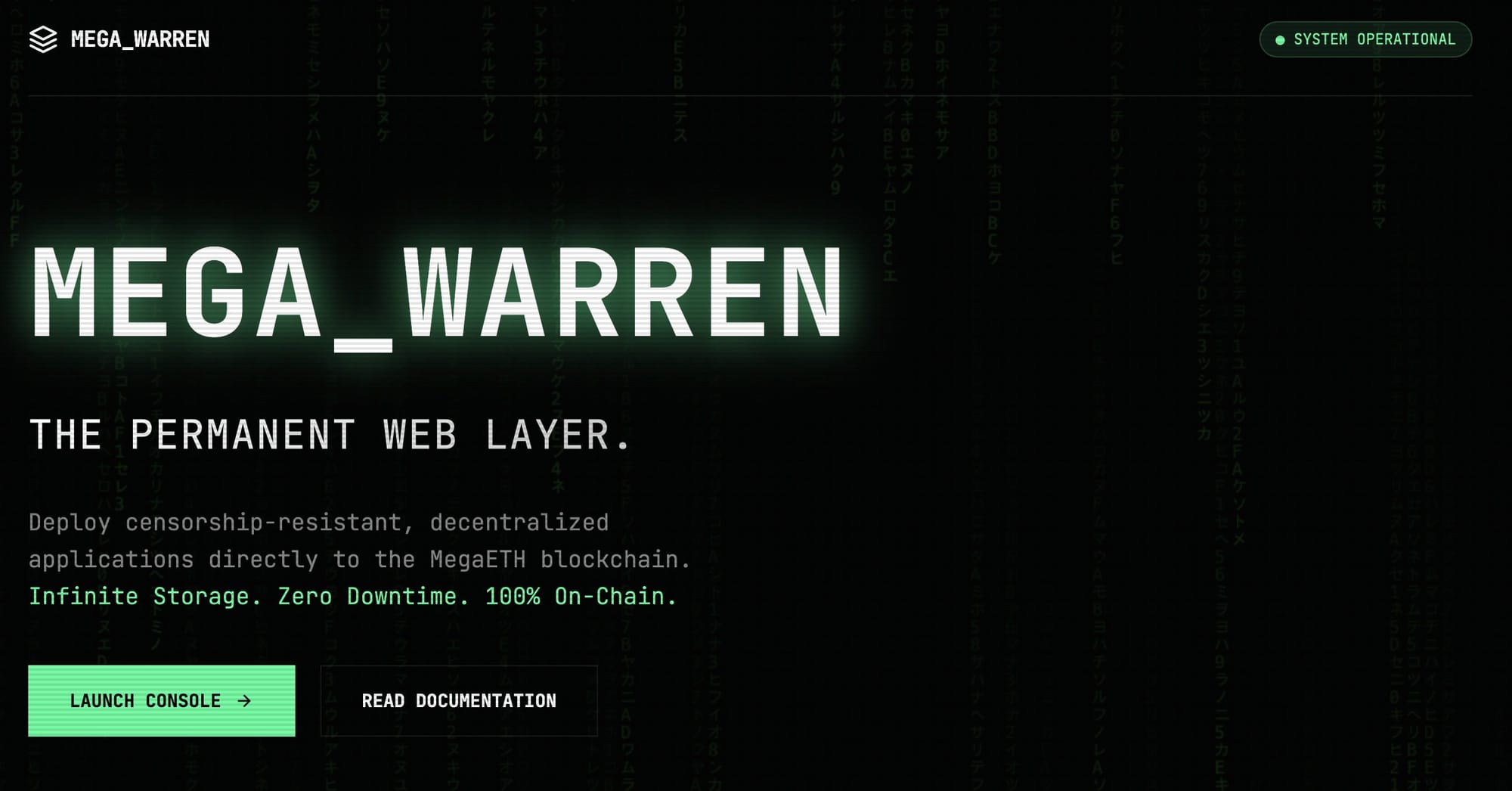
Yet instead of using IPFS for hosting the MegaNames frontend, BREAD used a new project called Warren.
After learning that, I did some digging. And I realized Warren is a really interesting storage solution, whether you're building minimalist single-file apps or have more expansive storage needs. If you're looking to vibecode some quick experiments atop MegaETH in particular, it's a must-try resource.
How Warren Works
You can get great durability and redundancy through IPFS storage, but IPFS doesn't offer indefinite persistence. You have to keep content "pinned" to keep it up here, and many pinning services require monthly or annual subscriptions to maintain your pins.
In contrast, Warren is an onchain storage layer where you make a one-time payment to store content directly in Ethereum Virtual Machine bytecode on MegaETH, so the content will persist as long as the L2 does.
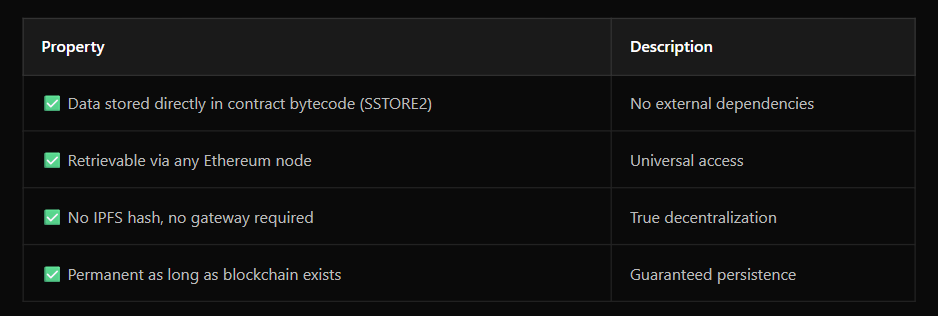
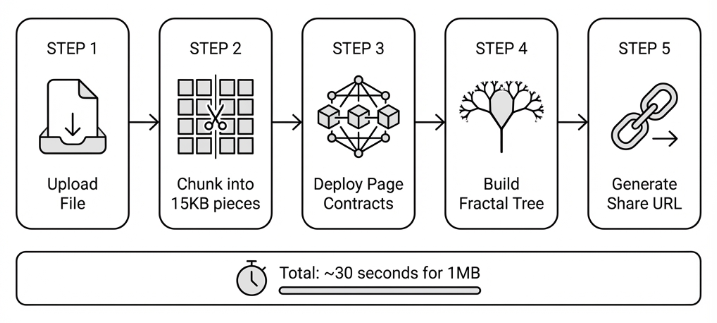
Warren gets around the EVM’s 24KB contract size limit by splitting files into 15KB "chunks."
Each chunk is deployed as its own contract using an SSTORE2-style pattern instead of traditional storage slots, and they are organized into what's called a Fractal Tree structure. A final “Master” contract records the root address, version history, etc.
If that sounds complicated, the user experience isn’t. You upload what you want, whether it's audio (M4A, WAV), images (JPG, PNG, SVG, WebP), video (MP4), or web files (HTML, CSS, JS). Then Warren estimates the gas, you approve the transaction, and your content is deployed and thereafter accessible through a shareable URL. Voila.
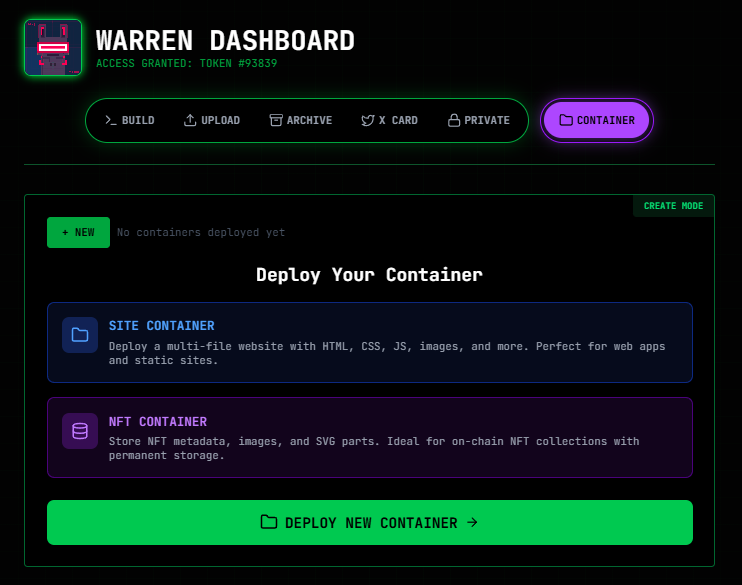
It's a nifty service, especially considering the fact that Warren's storage costs per MB are ~120x cheaper than L1 storage. Yet the project also supports more than just plain uploads. The user dashboard on the platform provides six main offerings:
- Build — Use text prompts to have an AI prepare and deploy an HTML website, or have AI iterate on your existing HTML.
- Upload — Store a single audio, image, video, or HTML file up to 5MB in size.
- Archive — Extract text and images from an existing webpage in order to preserve its info onchain for posterity.
- X Card — Boot an onchain social profile, i.e. NameCard, from your X account with support for onchain posts.
- Private — Upload and encrypt files to protect them from unauthorized access.
- Container — Store and deploy multi-file websites or entire NFT collections, metadata and all, through a single NFT.
Pretty cool, in my opinion. If you're looking to build on MegaETH, or even just to make a website in general, and you care about minimizing external dependencies, Warren's worth experimenting with.
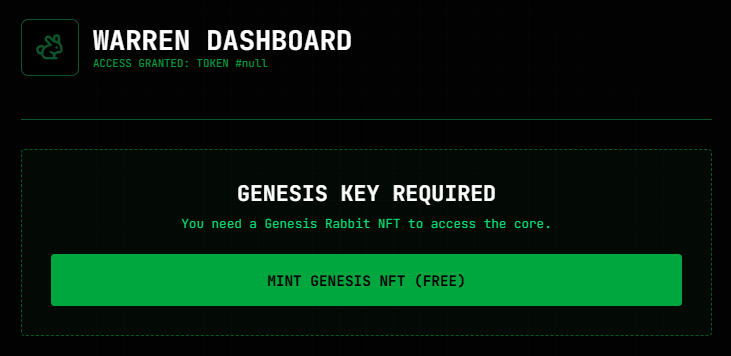
To dive in, just note that you'll first need to mint a Genesis Key NFT to gain access to the Warren dashboard. The NFT itself is free, and gas is negligible. My mint transaction cost me only $0.0008 worth of ETH, so you won't need much to get started here.
Ready makes going bankless simple. With the Ready app, you can buy crypto, earn yield, and stay in control of your assets. Spend USDC anywhere Mastercard is accepted with the Ready Card, with zero fees and 3% cashback. Bankless readers get 20% off Ready Metal with code: BANKLESS20.
Not financial or tax advice. This newsletter is strictly educational and is not investment advice or a solicitation to buy or sell any assets or to make any financial decisions. This newsletter is not tax advice. Talk to your accountant. Do your own research.
Disclosure. From time-to-time I may add links in this newsletter to products I use. I may receive commission if you make a purchase through one of these links. Additionally, the Bankless writers hold crypto assets. See our investment disclosures here.