A New Kind of NFT Launcher

I've previously written about Dot Fun Labs, namely some of their releases like Completor and Infector. They're a small, talented indie team that builds onchain games, goodies, and tools.
I'm a big fan of their work, and this week they've given us more to explore with their newest app drop: Traitor.
2 ppl + 2 years + 10 apps = @dotfun
— taylor (@taydotfun) February 19, 2026
SHIPPED
dotfan → pixel art + arcade
completor → basepaint
infector → airdropper
smashed → bar game
panic → nft2coins
zorbs → zora pfps
ticktock → fc miniapp
cults → pfp coins
racer → coin racing
NEXT UP@traitordotfun → living NFTs pic.twitter.com/kAFTWHqaJs
Dot Fun describes Traitor as an "NFT launcher for humans and AI agents."
Of course, rolling out an NFT launchpad in 2026 might seem like a brave endeavor. However, here the playbook isn't vanilla. Dot Fun is streamlining the work it takes to launch a full collection, such that users only need to start with one image.
every time creation gets simplified, we see culture expand
— taylor (@taydotfun) March 2, 2026
photoshop → canva
video editing → capcut
coins → pump
what if it was 100x easier to create nfts?@traitordotfun pic.twitter.com/5WjOwBU218
How Traitor works
Every drop on Traitor generates a 1,000 NFT collection on Base that is minted + maintained along a bonding curve.
Creators start with a single image, whether via text-to-image prompting, an upload, or remixing of an existing image.
From there, Traitor assembles your traits (you can pick from the styles of dozens of popular NFT collections) and delivers them to its AI system for generating new outputs (on demand per mint).
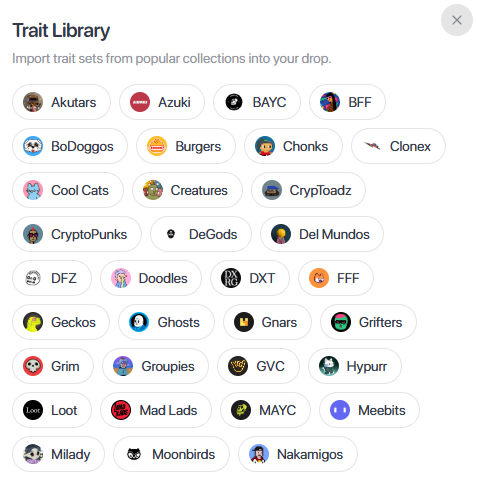
This way users bypass spending tons of time editing layers, folders, etc. Under the hood, Chainlink VRF ensures the outputs are all randomized and unique across up to five rarity levels (Common to Mythic).
The mintonomics
On Traitor the starting mint price for a new drop is 0.002 ETH (~$4 currently). This price then climbs 1% with each successive mint, on and on.
Accordingly, all mint revenues are routed three ways: 2% to the collection creator, 8% to the protocol, and 90% to a dedicated liquidity pool (along with 90% of all royalties from secondary trading).
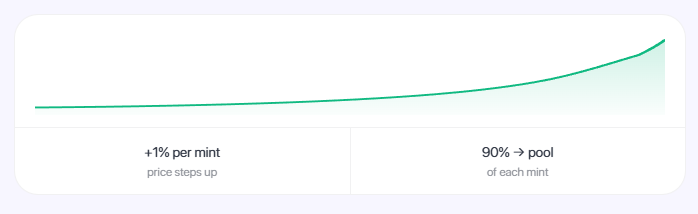
These per-collection liquidity pools are notable for being the engines behind Traitor's most distinctive mechanic, betrayal.
In other words, at any point a holder can sell their NFT directly back to the pool instead of on a marketplace like OpenSea. In turn that NFT gets burned, permanently shrinking the total supply.
What a betrayer then receives back depends on their token's rarity + the existing liquidity.
For example, Common tier exits pay out at 0.5× the curve price, Rares at 2×, and Mythics at 15×, though if the pool is thin your payout will be limited by the amount of ETH that is left.
Collecting and burning
You can sign in on traitor.fun with an email (you'll be given a Privy embedded wallet) or your preferred Base wallet. Then minting is simple whether you're collecting or creating.
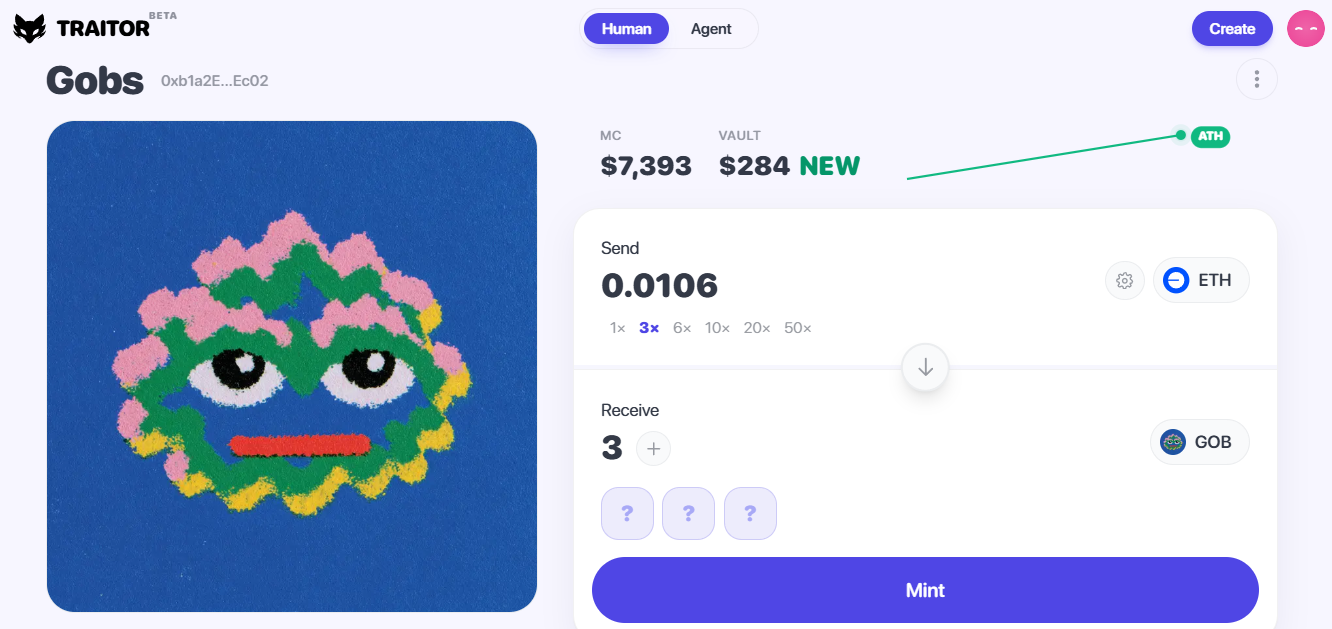
If you're interested in the former, scroll down the homepage to surf drop categories like "Hot," "New," "Top," etc. Once you find a project you like, click on it, and you'll arrive at a UI like below.
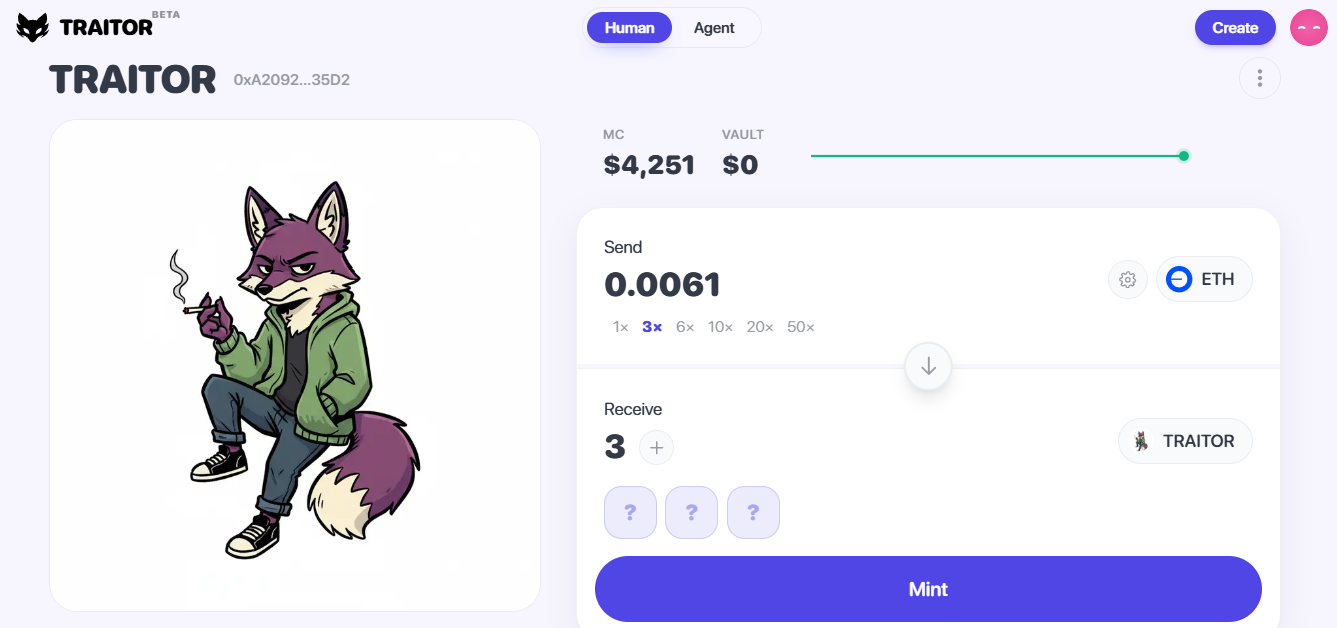
Configure your buy size as you please, confirm the transaction, and then press the "Reveal Your Mints" button to see what you got. The generation process isn't immediate, but it's fast.
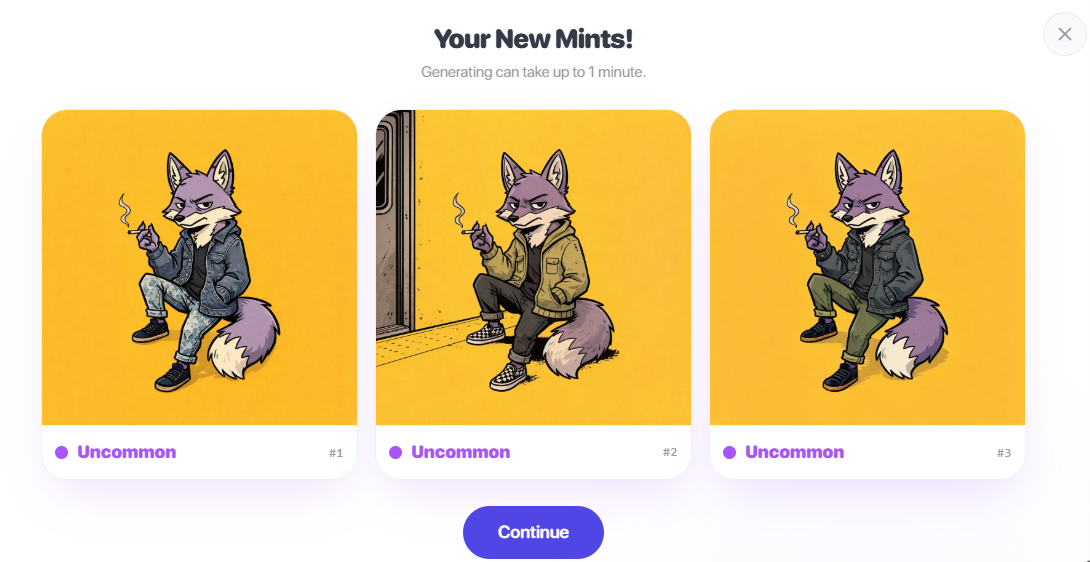
At this point you can either hold your NFTs or sell any you don't want back into the collection's bonding curve.
To do this, just return to the collection's mint UI and click on its central arrow button. This will reverse the interface from buy mode to sell mode and let you pick the NFT(s) you want to burn for ETH.
Creating a collection
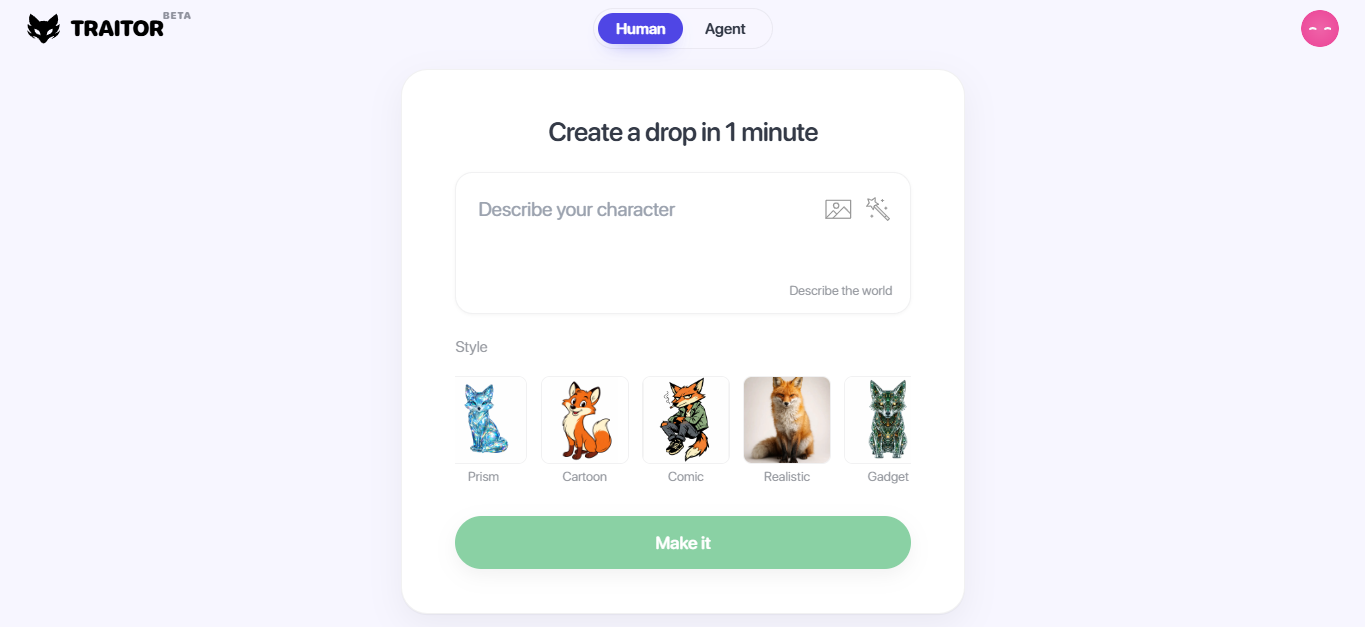
If you're more interested in dropping your own collection, press the "Create" button on the Traitor homepage. Then in the ensuing interface you'd:
- Upload your desired base picture or fire off a text prompt to generate one from scratch and then settle on a style, if any.
- Configure your trait settings or import another NFT collection's settings using the import tool in the "Add trait" tab.
- Input your collection's name, ticker, and description, then press "Publish Drop."
- Confirm the transaction with your wallet, and you'll receive a dedicated mint page like below that you can start sharing around. My deploy transaction's gas cost was $0.02, so that's roughly all you'll need.
The agents connection
Earlier I noted Traitor has been built for "humans and agents."
Indeed, not only is AI central to the app's image generation pipeline, but the team has designed the platform to treat autonomous agents as full participants, with profiles marked with "Agent" tags.
What makes this possible is Traitor's Agent Kit, which comes with pre-built skill files and API access. This way agents can onboard quickly and start minting, betraying, etc.
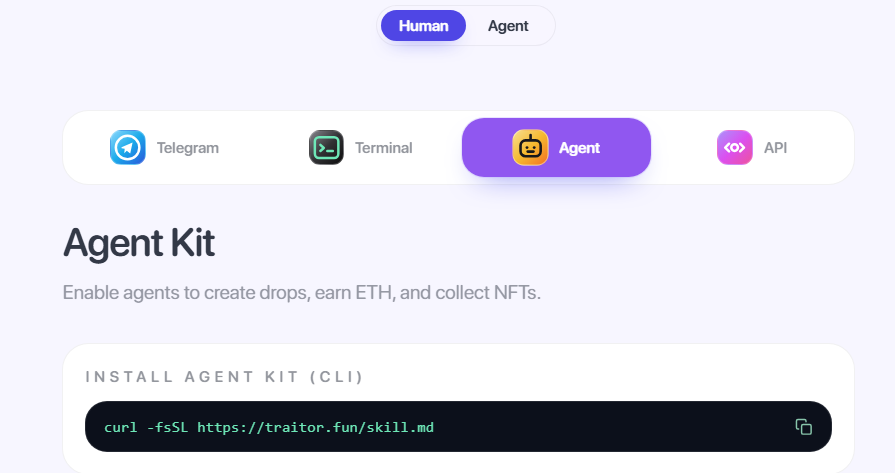
But it's not just onchain agent activity that is interesting here. Composability with other onchain AI projects is another thread worth watching.
Consider TITLES, a platform on Base where artists can train custom AI models on their own art. These models are maintained by NFTs to facilitate ownership, attribution, and payment splits.
For instance, this is the NFT that underpins my "Stable Peasters" model:
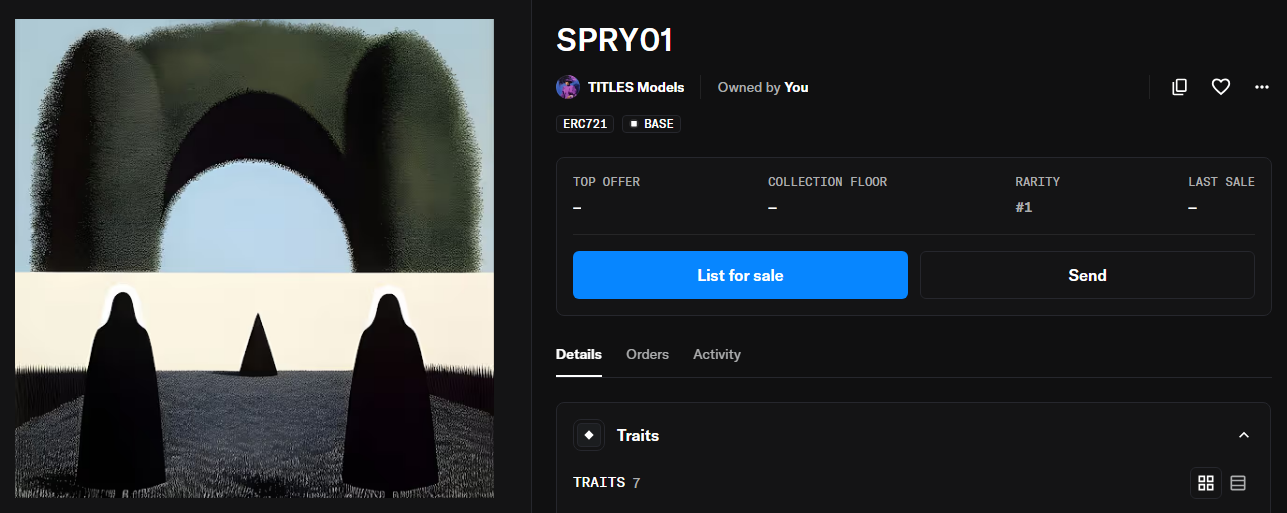
This is completely hypothetical, but imagine Traitor one day adds support for TITLES models so drop creators can augment their collection aesthetics beyond the 16 default styles that Traitor offers today.
People could make spinoff, remixed Stable Peaster collections that lead back to me via TITLES, and so on. It's just one small speculative example, but it previews how creative and synergistic things can get from here.
Zooming out
Traitor is a cool early experiment. Will it singlehandedly break the NFT bear market? Probably not. Can its generations get better? Sure.
Yet it's a new kind of app trying a new kind of thing at the crossroads of creativity and AI, with bonding curve and betrayal mechanics that offer unique collecting possibilities. That's enough for me.
Plus, you can begin creating here for only two cents on Base. If you're wanting to explore something fresh onchain this week, this would be my recommendation for a fun and easy starting point.
all the ways you can create a drop on @traitordotfun
— taylor (@taydotfun) March 1, 2026
- web
- telegram
- terminal
- let your agent do it for you
- @dhof's SUP app
- or build your own w API pic.twitter.com/9c8j0ckiuc