TRANSCRIPT
David Hoffman:
[0:03] Bankless Nation, I'm here with Mike Ippolito. We're going to talk about what we think is coming down the pipe in 2026. Mike, welcome to Bankless.
Mike Ippolito:
[0:12] David, it's been a while since we've done one of these. I thought you were angry with me. I wasn't getting my invites.
David Hoffman:
[0:18] Oh, you know, I like to rotate who the guests in or out. And, you know, I go in phases, you know?
Mike Ippolito:
[0:23] Saving the best for last of 2025.
David Hoffman:
[0:25] Best for last, exactly. Yeah, yeah, yeah. This is coming into people's podcast feeds on the 31st, so this might be be people's very last podcast of 2025 as we go into 2026. On that note, how would you rate or describe or evaluate 2025 for our industry?
Mike Ippolito:
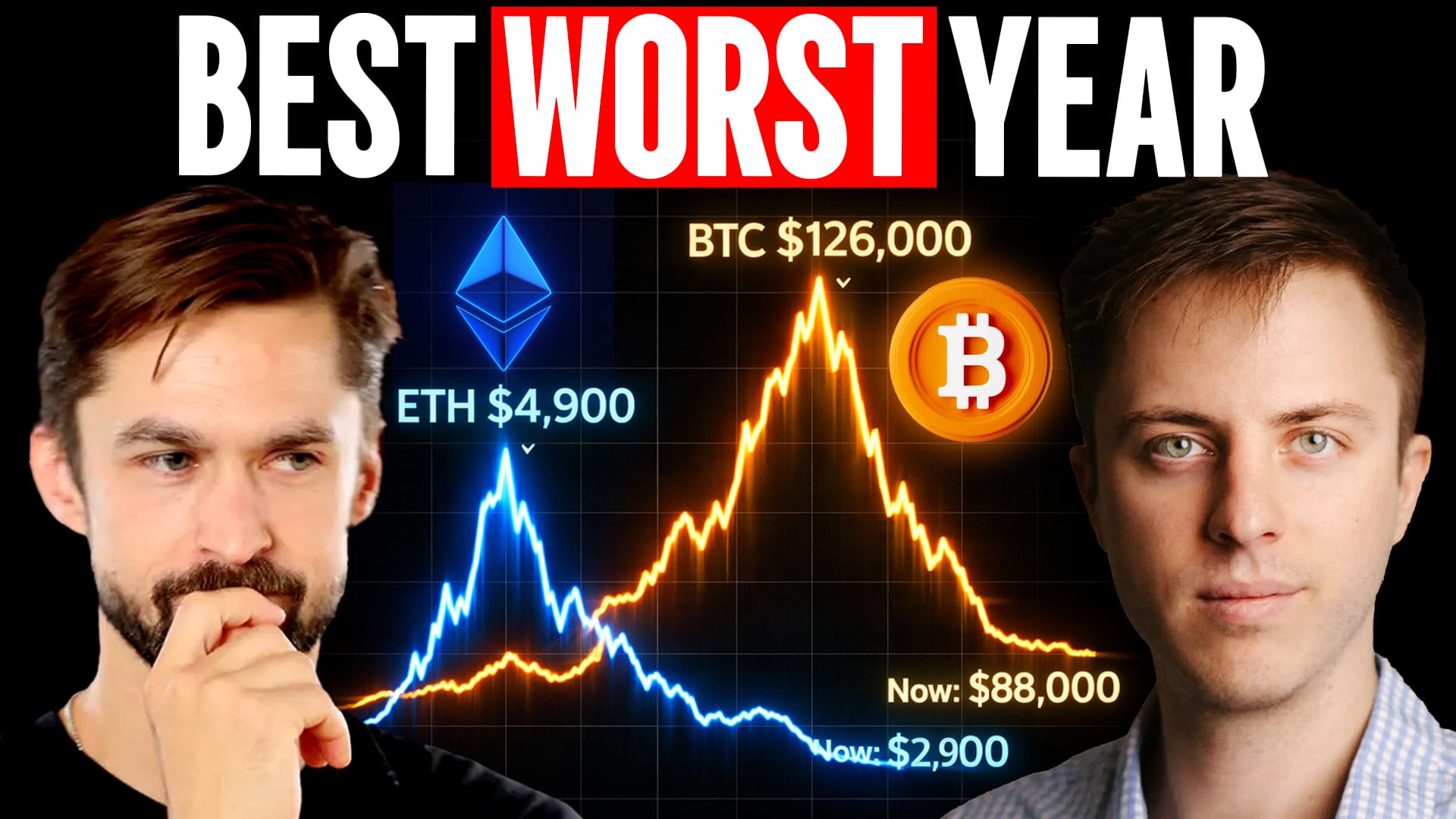
[0:42] 2025 was the best worst year ever, in my opinion. And what I mean by that is, obviously was not, in a lot of ways, it was a sort of disappointing year. And the way that I would say it was disappointing was one, we certainly didn't get the bull market from a price perspective that I think a lot of us wanted. And we got new all-time highs in Bitcoin for some of the other majors even that did better than most of the other alts. Ethereum, Solana had very minor all-time high breaks. They occurred at different times. It was generally confusing. I think this was one of the hardest years that it's ever been to be an investor in crypto, especially if you were out along the risk curve on alt.
Mike Ippolito:
[1:20] And you got destroyed, most likely, unless you were very, very lucky and picked one of a handful of five or six that actually did well on the year. So I think it was very confusing, or I think it was very challenging from a price perspective. I do think that the industry makes more sense to me, at least, than it ever has. And I think that one of the themes of the year that I would call out is cognitive dissonance. And I think that there are a lot of people who are saying, wait a second, this doesn't make sense. The US just did a massive bear hug of crypto. We got genius this year. We've got clarity potentially right around the corner. I thought my bags were supposed to be going up. And I think what's confusing people is we, because a regulated route is emerging, I think that a lot of this kind of wild west, very irrational market is starting to get much more rational and much more fundamentally driven. And this is something that people have called way too early. But I think that it's finally, this is a market that's starting to follow a very predictable curve around maturity. And I think what's confused a lot of people is there are very good projects in the space.
Mike Ippolito:
[2:29] That have continued to improve, but the price has still gone down. And I think that that is probably going to be a theme that extends into 2026 as we transition from kind of speculative relative valuation methodologies into fundamental valuation methodologies. So there are very good projects in the space. Unfortunately, they've just been really mispriced. And so I think that's going to continue to confuse people going forward in 2026. I think there are great projects that just started off with the wrong valuation.
Mike Ippolito:
[3:00] But I think the opportunity is if you can spot the compounders and pick the right protocols, then you can do really, really well in 2026 and beyond.
David Hoffman:
[3:10] Yeah. Yeah. I think if you told people at the very start of 2025, Ethereum hits an all-time high, Solana hits an all-time high. Did Solana hit an all-time high this year or was that last year?
Mike Ippolito:
[3:20] I think it was at the very beginning of this year. It was whenever the Trump endpoint happened.
David Hoffman:
[3:24] Yeah, it's January. Yeah, so it's January of 2025. So if you told investors, you know, both Solana and Ethereum hit all-time highs this year, everyone would be like, hell yeah, bull market's on, let's go max bid, put the chips on the table.
David Hoffman:
[3:39] And like, while technically true, it's not really meaningfully true. We like, Ethereum just grazed all-time highs. This is like kind of a simulation in the sense that like, okay, whoever's coding up the simulation, we just need to make Ethereum touch all-time highs and then we can just bring it back down and disappoint everyone. And kind of similar to Solana, I think Solana had a little bit more sustained, but it wasn't meaningful in any particular way. And the only thing to meaningfully be above all-time high and sustain it is Bitcoin. And even Bitcoin is something like 30% to 40% off of all-time highs right now. So it was weird in the sense that we got the all-time highs, but no one feels that way. The market doesn't feel that way. And I think there's also, we both know, since we're both in media, there is a lack of a class of 2025 crypto. Like, who do you know came into crypto this year or even in 2024? Like, there is not really a class of 2024, 2025.
David Hoffman:
[4:35] And so all of the people in crypto are in crypto for three plus years. And like, maybe the median is five years at this point. And so we have, if you're in crypto for five years, you have a certain level
David Hoffman:
[4:47] of expectation or idea about what these markets look like and can do. And I think those expectations have been dashed this year to your point about this is we were getting really mature. Things just aren't the Wild West anymore. And a lot of the market expectations of being the Wild West are not being manifested. And I think that has resulted in just like a low activity market.
Mike Ippolito:
[5:10] I agree with that. And yeah, I think also... Where I would situate listeners is everyone loves an analogy to the internet. So here's the analogy that I would use. I think that we are in the equivalent of late 2001, early 2002 for Web2. And what I mean by that is I think the parallels here are, one, during the dot-com bubble, you had a bunch of ideas and everything was a possibility and we're going to build the whole world on the internet. That ended up being right. But the path dependence in the timeline was certainly wrong. And you had a bunch of build outs of infrastructure. And one thing that I've been listening to a lot of AI driven content and talking about GPU usage, there was kind of the opposite of what's going on with GPUs today with dark fiber back in 2001, 2002, which was there was a huge build out of, you know, undersea cabling and bandwidth. And all of these investors got very excited about the telcos and they're going to own the rails for the internet. And they just way overbuilt.
Mike Ippolito:
[6:18] And so, and there was this huge, huge bear market, obviously in, and people wrote the internet off for dead. And it took a couple of years, one for sentiment to build back up, but also for a new class of builders to come in, recognize all of the infrastructure that had been built and for new creative entrepreneurs to figure out how to leverage that infrastructure to build generational businesses. The other theme that happened around that period of time was consolidation. And to get into and bleed into 2026, what I think we're going to continue to see is a multi-year trend of.
Mike Ippolito:
[6:49] Consolidation across a number of key categories. And I think that surviving is winning over the next three years. So my recommendation would be to batten down the hatches, get as creative as you possibly can, you know, think big and try to be, frankly, I mean, I think your strategy as a builder is either to get acquired or to win and consolidate in your category. I think those are basically the two strategies that you have available to you.
David Hoffman:
[7:16] Yeah, and this kind of starts to get us into what we think 2026 is going to look like. And that kind of aligns with what my general idea has been, which is a lot of 2025 and 2026, both of these years, I think are just really good positioning years.
David Hoffman:
[7:31] And on the Ethereum side of things, I'm sure this metaphor extends elsewhere. But just like how I think about it on Ethereum is like, you know, Ethereum, the L1 protocol actually had a pretty good year. Like ZKEVMs, everyone's talking about on the Ethereum side of things, delivered way faster than expected. So maybe we are one to two years ahead of schedule on the ZKEVM side of things, and that is allowing us to talk about lowering block speeds decently, significantly in 2026. And there's just a bunch of technical improvements that the Ethereum protocol has that still need to get built out and shipped and delivered, which I think happens in 2026. And I'm kind of thinking by the end of 2026, the Ethereum layer one protocol will have positioned itself more appropriately to capture a lot of the growth of the upside of tokenization, Wall Street, whatever, whatever, like thing is going to come on chain. It's just going to be a better suited technical protocol. And I think that's we can also talk about the Clarity Act. Hopefully Clarity gets passed in 2026. That is representative of the entire industry itself positioning itself appropriately to capture the upside of tokenization. I think you can kind of talk about this, even Solana. Solana finally got Fire Dancer. That's going to take a bit to actually integrate and for the market to accept that. I think it's like 2025 and 2026 are quiet positioning years where it's not a mania. There's like no one's truly getting really all that rich. If you are getting rich, that's idiosyncratic. You're an anomaly.
David Hoffman:
[8:55] But we are collectively setting ourselves up trying to put the pieces on the table in the right way to position ourselves for value capture in further years down the line, which I think kind of aligns with like, we're in a little bit of a post-bubble era and now it's about reorienting ourselves to building the right things in the right ways for future growth.
Mike Ippolito:
[9:13] I agree with that. I also I am firmly in the camp that this is positive. You know, I think generally when people talk about this, there's kind of an air of, oh, yeah, OK, it's going to make sense. And all this stuff is going to happen. It was inevitable, but I'm not going to go 100x on my altcoin. And you know what I would say to that is I think it's easier. I think it would have been easier to make money on a long term time horizon, build real wealth in 2002 than it would be in 1995. And I would guess that a lot fewer people made money in crypto over the last five years than they might publicly telegraph because it's a really difficult investing environment and very few assets. Almost every single asset outside of really Bitcoin, Ethereum, Solana so far have been a trade, not really an investment. And so. I'm overgeneralizing there. I know that there are exceptions to that, but I remain super positive. I think that we're finally entering an environment where you can build real sustainable equity value and the compounders that win here are going to be super, super successful. So, yeah, I think that generally this kind of pall when you talk about the future and I think it's the most exciting best time to be working in crypto in the last eight years that I've been working in this industry.
David Hoffman:
[10:28] Yeah. Yeah. I think we do know over the cycles that when people get bored or like just washed out or just like the grind grinds people down, that's actually the easiest moment to just hunker down and stay put. And if you can just make it through the grind, then you are positioned. I remember in 2019, this was when in 2020, everyone in the Ethereum ecosystem, and it was basically just Bitcoin and Ethereum. Like there was also the Cardano and the Ripple communities, but whatever, there wasn't with Solana community or Hyperliquid, for example, if you stuck around and if you positioned yourself accordingly in Ethereum, you reaped the benefits of DeFi Summer. And you just had to stick through the 2017, 2018, 2019 bear markets to get there and everyone else left. And so like the alpha was free and abundant because there was no one to collect it except for the remaining like 50 of us that were around. And I kind of think that that is going to happen again, because people are getting ground down by the market and it's not producing the exuberance that, again, investors who came in three plus years earlier expected.
Mike Ippolito:
[11:31] I agree. I agree. Should we get into some of the specific predictions for?
David Hoffman:
[11:36] Let's do it. Okay. So you have, like I believe, 27 predictions across the industry, across different ecosystems. We're going to try and go through all of them. I think some we will breeze through pretty quickly and some we will hang on and really unpack. How, before we actually get into these, how do you think we should prep the listeners to receive these? What should they know ahead of time?
Mike Ippolito:
[11:57] So I think that there are general themes to pick up on here. And we got into some of these when talking about what we think 2026 is going to look like. A general theme is kind of the we're going to validate or invalidate certain ideas that this industry has held for a long time. And I find that to be very exciting because there have been a lot of ideas that have gotten tossed out. I think this has been a relatively irrational, very early stage market where you haven't had to, in most cases, create real value. And so there hasn't been a feedback mechanism. The rubber hasn't had to meet the road on which ideas are right and wrong. And I think we're going to see a lot of that decided in 2026 pretty definitively. I also think this is going to be a year of consolidation across a bunch of major categories. And we've seen this happen in the past. I'll call out one of my favorite examples of this is the prime brokerage space in 2018, 2019, when I was first getting into the space, you had people start. There's a kind of a bubble in private markets around custody.
Mike Ippolito:
[12:55] Lending, that type of thing. And that, you know, there used to be tens and tens of competitors there at all basically concentrated to Anchorage and Galaxy Digital and they won. And I think we're going to start to see that cycle play out in a bunch of different categories across the space. So there's consolidation. And then I think that there is a theme of equity markets and crypto converging. And I mean that in the sense of I think we're going to get things like equity perps in 2026, although I have doubts on how much that's going to take off. But I think there's going to be crypto is going to move towards a more fundamental, real value driven way of valuing these assets. But I also think that equities are going to borrow some things from crypto.
Mike Ippolito:
[13:37] And I think they already have. So I think there's the merging. Those are the big themes for me of 2026.
David Hoffman:
[13:43] Let's get into the first one. This one is just topical right now. Investor relations will become increasingly important. Investors will demand standardized financials, disclosures, while investor relations will also borrow aspects of trad investor relations. It will also be more social media and community first and ultimately redefine what it looks like in equities. I think that's what you mean of just like community management with investor relations is maybe going to converge. And then the traditional equities market is going to look at that and be like, I think we need to do that too.
Mike Ippolito:
[14:12] Yeah. I think the, the mental model for people to have is when you do not have a publicly trading instrument as a business, you have one product, which is your business and your product. As soon as you launch a publicly traded instrument, so a token or an equity, you as the CEO or founder of that business now have two products. You have your product and your business, and then you have your instrument. And what that means is you need to actively, constantly tell the story of what that asset is to the market, to everyone. Narrative management. Narrative management. And you don't have the luxury of just saying, build it and they'll come. So you not only need to make sure that what you're doing makes sense to investors, but you need to constantly tell that story. And historically, what that's looked like is this kind of old, but I look at a lot of how it works in equities. There are parts of it which are really good. it's standardized there are things like you have gap financials so you have standards that go across accounting of every single lease business in the United States, But what you also have is kind of this thing that feels very outdated, which is I have to go and I get my Zoom link and it's this like ancient piece of software with a bunch of analysts. And I think.
David Hoffman:
[15:22] That – Are you talking about the quarterly investor calls?
Mike Ippolito:
[15:24] I'm talking about quarterly investor calls. And I think what's going to happen is people are going to move – you know who actually did a good job of this a couple of years ago? CoinShares. And they actually did their – as a publicly traded company over in Europe, they did their quarterly earnings for at least a little while on Twitter spaces. And you're starting to see protocols like or companies like etherfy uh do that same thing and i actually saw vlad ten of a couple of days ago say we're rethinking the way that we do investor relations in robin hood to make it more community driven leveraging social media channels that type of thing so i think that crypto is going to look to equities to borrow certain principles, standardization getting analysts involved but i think equities on a longer time frame are going to say hey we should be rethinking the way that we're doing this leveraging social media channels bringing other people in, making it a little bit more of a spectacle. That would be my guess.
David Hoffman:
[16:14] I think we see that both Coinbase and Robinhood this year had these kind of like Apple-like product abuse where it's a little, you know, jazz hands, here's our products. And that's definitely aligned with like what you're saying is just like, hey, let's control our own, let's tell our own story. Like we don't need to go on to CNBC and talk about these new products that we're releasing. We're going to host our own event and we're going to market it and publicize it. And that's going to be, you know, For people who are excited about Robinhood, it's like Robinhood stands, but it's also Robinhood investors can show like, yo, we really shipped this year. Here's what we shipped. And I think you saw Coinbase do that at least a couple of times, one with base and also the most recent one where they unveiled a lot of products. It's just they're going directly to their audience about what they think they're excited about and why they should be invested in their respective company.
Mike Ippolito:
[16:59] Yeah, I think that's going to be a big change for this year. I also have two follow-on predictions to this. Sure. I think there's going to be a bunch of noise around GAAP accounting standards this year.
David Hoffman:
[17:11] Can you define that? What is GAAP? G-A-A-P?
Mike Ippolito:
[17:14] G-A-A, yeah. Generally accepted accounting practices. I'm pretty sure that's the acronym. Sounds thrilling. Yeah, well, it's pretty sexy if you're an investor. No, it's not really. It's just, you know, if you have a, there's the old, there's an old joke about an accountant. So an account, so someone is hiring for an accountant for their business. First guy comes in and says, he says, Hey, tell me what, tell me what these numbers are and comes up with an answer and says, okay, next. Next accountant comes in, hiring manager says, tell me what these numbers are. Says, okay, this is what I think the numbers should be. Says next. Next guy comes in, hiring manager says, tell me what these numbers are. Accountant says, what do you want the numbers to be? He says, you're hired. So there's a lot of flexibility in terms of how accounting happens. And even in crypto data providers, there are very different standards. And I know this from the work that we do on the data side of BlockWorks. You might go and see different revenue numbers come from different businesses. And there just needs to be an accepted set of standards for this is how we treat revenue. This is how we treat costs. This is how this all ladders into a cash flow statement. And you have some amount of flexibility, but there are also just rules for what you can and cannot do. And so that's the treatment that that's the accounting treatment that companies that trade publicly in the United States get. The overhead for crypto companies is still too large. We're not going to get there. They're going to be lightweight solutions in the interim. But I don't, there's going to be noise about gap accounting this year, but I don't think we're going to get there. The lift is too big.
Mike Ippolito:
[18:39] On that same note, I think that there's going to be, there's already been a lot of noise around dual token equity structures. And my long-term prediction is that I think in 90% of these cases, it's simply not feasible. This was just a structure that was a relic of the Gary Gensler era of the SEC. I mean, frankly, pre-Jay Clayton era of the SEC. But I think this was a relic of trying to make some regulatory arbitrage work. And I think you built a lot of mental models on top of that that just aren't working. And we've seen a lot of public fights break out, like everything happening with Aave. I think that's going to continue to happen.
Mike Ippolito:
[19:18] And you've also started to see, frankly, I think Uniswap deserves a massive pat on the back here. There's a really brave, difficult thing. And I have so much sympathy, by the way. I'm not taking a shot at Aave at all. It would be really, really difficult to unwind a lot of that work. It's just a big org restructure. And I think it's literally just a massive pain in the butt to do. But I think it's going to take some time for the market to demand this of protocol leaders. And I don't think it's all going to happen in 2026. I think you will start to see noise. I think some protocols that frankly have less organizational or governance baggage follow the Uniswap lead soon. But I think most protocols are going to drag their feet on this. But I do think you're going to start to see investors publicly question and potentially a negative stigma develop around protocols that have a dual equity and token structure.
David Hoffman:
[20:12] Yeah, yeah, yeah, yeah. I think that is probably perhaps the big problem to
David Hoffman:
[20:16] solve in 2026. It seems to me that there's not a clear solution here. Maybe I'm wrong about that. It's definitely worth investigating. I do remember talking to Cain when I was talking to him and asking him questions about the Infinex sale. I was like, okay, well, with the Infinex token, is there also an Infinex equity component? And he just goes, F no, there is no equity to own. There's only the token. And while that's not a perfect solution, because you still need the Infinex org to do real world stuff, the fact that there is only one instrument I think might be interesting to potential investors when it comes to the potential ICO meta that is unfolding behind us. One big question is, does this token that I'm investing in have an equity component? And maybe one of the ways that this manifests is whether or not investors are even interested in buying tokens that have equity components that they don't have access to. Let's move on to number three, Mike Ablino's third prediction for 2026. The revenue meta discussions will evolve towards durability and quality. Companies that generate more predictable revenue will be rewarded. For the first time, enterprise software will become sexy within crypto. Give us a little bit more illumination of what you mean here.
Mike Ippolito:
[21:25] Yeah. So I love that we have progressed talking about revenue as an industry. It is not even close to sufficient. And if you were to listen to equities, like the mantra that I really firmly believe in is not all revenue is created equal. And I think that's the, you see that turn up in conversations around public equities with the multiple, right? And some revenue gets a higher are multiple than others, and it has to do with quality of revenue. So is there a, you know, how sticky is this, right? Is the revenue recurring? Is it, is 80% of my revenue based around one customer? Is the revenue highly cyclical?
Mike Ippolito:
[22:03] So there are all of these different characteristics that get sliced and diced to understand, you know, what investors are generally trying to get at is the moat of a business and, you know, how much risk am I taking with this revenue profile? And, you know, we haven't even gotten onto profit margins, but I think there's going to be one very similar characteristic that I think we keep falling for as an industry is when we see a revenue chart go up and to the right like this, and then we annualize at the top or ascribe sky-high multiples at the top of very cyclical revenue. And when you look at cyclicals in equities land, the counterintuitive part of that bucket of stocks is cyclical stocks look like they are the most expensive when they're actually the cheapest and vice versa. So there's a concept of over earning, which is we've seen Ethereum fees do that. We've seen Solana Rev do that. We've seen Pump Fund do that. We've seen Axie Infinity back in the day. Do you remember the old, you know, annualizing saying Axie Infinity is going to make more money than Blizzard next year or EA?
Mike Ippolito:
[23:02] We keep falling for this as an industry. And I think investors are going to stop giving highly pro cyclical revenue credit. And I think that they shouldn't. And I think that's going to push us towards, and when I say yes, I mean the builder's side of things, is to look for stickier, higher quality revenue. And what you've ostensibly been lacking in this space, there actually, there are businesses that have built like this, they're not you know the on-chain products that have tokens and things like that but i think you're going to see more of a push towards stickier higher quality revenue um like not all revenue is created equal.
David Hoffman:
[23:38] Yeah yeah i think all not all revenue is created equals kind of the summary between your push for gap style accounting in crypto and also this delineation between quality revenue and low quality revenue i think what you're saying is like l1 protocol fees is not revenue it's something close and we need to figure out how to measure it and standardize it and then And once we do that, we can start to make evaluative statements about the quality of said revenue. So I think what you're generally calling for is a higher resolution of the industry based off of what actual value capture is. And we can make more specific statements as to how we analyze it. I feel like that's the broad trend you're calling for.
Mike Ippolito:
[24:18] Yes. Cool.
David Hoffman:
[24:20] The next one, number four, the industry will increasingly push for clear divisions between equity and tokens. I think we covered that. Let's go on to number five. DATS will largely do nothing. Several will make acquisitions around infrastructure and attempt to transition into operating companies. There will be rumberings about lab entities going public, but this won't really take off.
David Hoffman:
[24:37] Mike calling for a weak year with DATS. I feel like that's kind of like where the industry is right now. Are there any exceptions to this?
Mike Ippolito:
[24:45] I'm not really sticking my neck out here on this prediction, but I think that DATS are largely going to have a pretty tough 2026. I think the one potential exception could be Bitmine, or Bitmine or Tom Lee's dad. I think he's done actually a phenomenal job here. And I think he has an enormous amount of credibility with Wall Street. And I also think that's going to coincide with a natural resumption in the uptrend of core metrics around Ethereum that investors will care about. So, yeah. Like, for the love of God, not financial advice, do your own research. But I think if there is one debt that's interesting to watch this coming year, I think it might be Tom Lee's. I also think, I think you're going to see that attempt to transition into operating companies that provide yield.
Mike Ippolito:
[25:33] I think, though, there's kind of a, I think a lot of crypto is going through this where some kind of the flashiest categories get this massive speculation premium. And then when they want to make this transition into something that's more fundamental and is generating real value unfortunately they have to re-rate towards those metrics now i think you could make the argument that several of those stats have already gone through that re-rating i mean the charts don't look great for most stats out there yeah but i still think that i still think it's going to be a while before the market starts to reward that structure and there's a very different story to tell outside of i am you know soul plus a lot of extra beta eth plus extra beta, And I think it's just going to take a lot of time. But I do think you'll see some DATs try to move towards a more sustainable structure where they make acquisitions around, you know, staking or yield or things like that.
David Hoffman:
[26:26] Things you can do with block space, like what optionality is presented to you when you own a significant share of a proof of stake asset and you are adding blocks to the chain? What optionality comes with that? And how can you turn that into extra beta?
Mike Ippolito:
[26:40] Exactly. Yeah.
David Hoffman:
[26:41] All right, VC, number six, VC investment will be anemic. Expect a slightly diminished figure from 2025, $25 billion in 2025. Mike Abilito is predicting somewhere between $15 and $20 billion in VC investment. Interesting to call $15 to $20 billion anemic.
Mike Ippolito:
[26:58] Well, it's down, right? I mean, if you look at 2020, we peaked in 2021, around 30 billion. So I would say it's on the downtrend, or 2021 was local maximum, we're still recovering from, frankly, a lot of the overhang there. Something that I would call out is I think that we are going to see the way that risk happens in equity financing and crypto doesn't behave the same way that it does traditionally. So it's generally assumed that you take more risk the earlier that you invest in a company, right? Because there's kind of like, think of it as attrition, right? Only a certain percentage of companies make it from C to Series A, only a certain percentage make it from Series A to Series B. So generally, the idea is when you invest at an earlier stage, you're taking on more risk. In crypto, that hasn't necessarily been true because you get liquidity so fast and also because so few token projects have generated real long-term value. And so actually, it's kind of flipped. It's kind of the earlier that you get in, the less risk that you're taking because you're going to be able to flip your token for a higher amount later, sometimes a lot higher. But I think what's happening now is that.
Mike Ippolito:
[28:08] There are so many tokens and investors are demanding the bar for investment is much higher than it used to be. And I frankly, I just think the speculative money is moving elsewhere. I think now the onus is on actually creating value and that more traditional method of where risk exists and how it gets priced is going to take effect. And so basically, this is my way of saying, I think the winners are going to continue to win. And in these major categories like prediction markets, exchanges, borrow lend protocols, DEXs, I think the strategy will shift from, hey, Uniswap took off. Now there's a Uniswap clone on Solana and Avalanche and Sui, and I'm going to fund all those and flip those tokens. I think that's going to change to, I'm going to bet that Uniswap has a moat here and they're going to continue to win because it's getting harder and harder and harder to compete because the barriers to entry have gotten raised. And I think you see that in Ethereum and Solana is a big problem. Those two platforms, like the barriers to entry now to be a general purpose L1 or L2 are so high that I think that those wins are going to continue to compound. So I think we're risk. And so I think you're going to start to see for the first time growth equity move into the space more.
David Hoffman:
[29:22] Late stage VC growth equity. Yeah, exactly.
Mike Ippolito:
[29:26] I mean, later stage, like series B or C.
David Hoffman:
[29:28] Yeah.
Mike Ippolito:
[29:28] Yeah. Yeah.
David Hoffman:
[29:29] Yeah. There's only I can only really name one of those, which is Founders Fund and maybe Dragonfly too. 50T. 50T.
Mike Ippolito:
[29:37] That's been their thesis for a long time and they've done very well with that.
David Hoffman:
[29:41] Yeah. That's pretty aligned with just kind of like a thought I've been having which is like, I don't think incumbents have ever had more power in crypto than they do today. Robinhood, for example, you know, is, I don't know if they're kicking out CalSheep but they're building their own prediction market and they own their, their customer distribution and so that's why they can do that. And that's just an indication that like, If you are an incumbent with customers, a customer base and network effects, you have so much power. And I don't think that the power pendulum has been so in favor of incumbents more than it is today. Speaking of prediction markets, Calci and Polymarket will remain the champions in prediction markets. Other sexes will try to make inroads. Robinhood will succeed where Coinbase won't. No new players will make real traction. Pretty aligned with what I was just saying. I think you're saying the incumbents are going to win here. And there's even more incumbents than Kalshi, if you can call Kalshi an incumbent, Robinhood. And you're saying even Robinhood is going to take the lion's share of prediction markets. Talk to me about this one, Mike.
Mike Ippolito:
[30:41] We also skipped one, which was also prediction market related, which is prediction markets will continue to succeed in 2026, but I would expect to turn in sentiment. I think there will be lots of accusations around kind of sports gambling as a rapper. It'll get negative press. I think despite that volume, aggregate volumes will continue to climb. I have seen a lot of VCs call for 10x in market growth. I think it'll be closer to the order of 2x from here. And part of that is, frankly, purely sentiment and having watched some of these play out in the past. But I saw, you know, no shade to Polymarket and Shane, but I saw he did it, had a glowing 60 minutes interview. That is a very surefire recipe for, you know, that train doesn't continue to forever. And I think there are real challenges with prediction markets. So I think that we're going to start to see. We're kind of at a local maxima, the way that I would think about it, but still very bullish on the structural trend.
Mike Ippolito:
[31:29] And yeah, I think that the winners are going to keep winning. I think we have this broken mental model of, hey, we just watched Kalshi and Polymarket define this category and take off. And they have all these partners, but I'm just going to go fund a bunch of new protocols that have a slightly different mechanism or a trading structure. And I just don't think that cuts it this year. I think the moats are too deep. And the one prediction though, is I do think there's this very powerful meme of the everything app. I think Coinbase, Robinhood, Hyperliquid, some of the Asian exchanges, they all have this in their head. You've also seen Paul Atkins, the chairman of the SECs, talk about this multiple times, talking about an everything app like China has with Alipay. And I think that's very powerful. And we've already seen Robinhood, Robinhood leverages Kalshi, but they frankly have much more leverage in that arrangement than I would guess than Kalshi does.
Mike Ippolito:
[32:22] But you've also seen Coinbase signal that they're going to move into prediction markets. Coinbase, I love you guys. This doesn't mean it meant a shade, but I also have been watching Coinbase and Robinhood for a little while. I think the product discipline on Robinhood is a little bit better.
David Hoffman:
[32:37] And I would say it's a lot better. I would say it's quite a lot better.
Mike Ippolito:
[32:42] And if you remember at the end of last cycle, Coinbase had all these different bets. They were expanding in a million directions and huge amount of kudos to Brian and the team. He reined it in. There was an ill-fated NFT, you know, OpenSea sort of challenger that flopped. I think they really reined it in and concentrated their bets. And I'm just, I'm watching Coinbase do something very similar where they're moving in a million different directions all at the same time. And so that's why I would have a little bit less confidence in the prediction market side of Coinbase, but I would not count Robinhood out.
David Hoffman:
[33:10] Yeah, yeah, yeah, yeah. I do think that the number one thing Coinbase needs to do is completely revamp its app, its web app, its mobile app. It is cumbersome. And it looks like it's been something that has been slowly growing in complexity and a lack of Steve Jobsness for the last like three, four plus years, ever since really 2021. And like the number one most valuable thing that they could do is kind of like just rebuild that from scratch and make it as stupidly simple as Robinhood's is because Robinhood's is very, very simple. Let's get into the next two, nine and 10. I'll combine these together. Hyperliquid does fine, but growth slows. perps become incredibly competitive new venues and incumbent sexes like Coinbase will succeed at eating some market share and then 10 despite the loud fanfare equity perps will have a slow start in 2026 but will do better on sex venues than dexes expect less than 5% of perp volume by end of year talk to me about this one Mike
Mike Ippolito:
[34:09] Yeah, I just think perps is one of these really hot categories where it's very difficult to understand what the moat is. And it's just viciously,
Mike Ippolito:
[34:16] viciously competitive. And, you know, you kind of saw this with exchanges persist for a very long time, like that market has remained very fragmented for a far longer time than almost anyone thought that that it would. And I think the same thing is going to happen with perps. And there are already very well stacked, you know, very competent incumbents like Binance.
Mike Ippolito:
[34:38] On the SEC side, I know Coinbase is getting into this as well. And then you have Hyperliquid, but you also have this long tail of new and old purpose exchanges like Leiter. And it's not super clear where the moat is. And it feels like they're all fighting over the same amount of kind of trenchers. And I think it's just a really hard category and it doesn't feel like there are extreme moats here. On the equity perp side, I know everyone is so excited about this. I am simultaneously extremely convinced that that's the world that we're heading to. I think it feels very intuitive if you're a trader that I shouldn't have to go to multiple platforms to trade crypto versus stocks. That should all just be on the same thing. I also think you have to rewrite, rewire a lot of people's behavior. For instance, I would not classify myself as a trencher actually, and I have no real desire. It would take a lot for me to override my learned behavior of I trade equities here versus I trade crypto here. And I frankly still just don't trust crypto venues as much as I trust traditional venues. Sorry, that's just how I genuinely feel. So I think that it's just going to take a lot longer than people think for that transition to happen. But I do think it's inevitable and going to happen, but I would predict a slow start on it for 2026.
David Hoffman:
[35:53] It was interesting to watch Coinbase deploy equity perps before Robinhood. I do think that that is a very strong way for them to get a foot in the door into the equities market, which they desperately need in order to penetrate into that market. They can't just do it with normal buy Google, buy Tesla in your Coinbase app. They need something else. And a perps could do that. Now, we know Robinhood is totally going to launch perps. About how long it'll take Robinhood to take and can Coinbase leverage that early mover advantage in the perps world to actually grow a retail equity investor base on Coinbase I think will be something to watch in the early half of 2026. Let's move on to number 11, which I think is my favorite one. The Ethereum layer one will have a renaissance in 2026 and largely when the market for real world asset issuance, stablecoin volume will grow slightly, more growth will come from treasuries and new types of real world assets. Why do you think the Ethereum layer one is going to have a renaissance.
Mike Ippolito:
[36:45] Yeah, maybe I can just summarize. These are my thoughts on the major ecosystems. The headline is I think it'll be a good year for Ethereum. I think it'll be a bad year for Bitcoin. I think it'll be a quiet year for Solana. And I think it'll be a slog for Hyperliquid. And here's why I think that is really hard to build one of these ecosystems. I have a pet theory that I don't think that anything is truly gen purpose. I think people used to describe bitcoin as that now they think of it as an app chain which is the money app chain um i think you're increasingly starting to see uh bifurcation in between ethereum which to me feels like the asset issuance rwa chain versus solana feels like the dex on-chain price discovery sort of venue on-chain capital markets um.
Mike Ippolito:
[37:33] And so I think that that trend is going to continue, but it's really, really hard. And every single chain has gone through their ups and downs. I think Ethereum just went through a really tough couple of years, but it has emerged. It's kind of shed some people that had different ideas. It's created a sense of cohesion and unity. And I think it's found a use case that has real product market fit on and it's going to do well. On the Bitcoin side of things, I think it's just been really good for Bitcoin for a long time. I think sentiment, there's a natural tendency for, I think price just has to correct here for a little bit. And I think that's going to turn sentiment. But there are also real challenges for Bitcoin on the horizon. I think that the quantum is going to be a big scare for Bitcoin this year. I think there's going to be a lot of rumbling. You shouldn't listen. I'm not an expert on this at all, but purely from a pattern matching perspective, I think that eventually the devs will drag their feet. They'll come up with decent enough solutions. And by the end of next year, we'll think, okay, at least there's a way forward here where we don't have to existentially panic. But I think that I think Bitcoin is going to do worse than gold this year, because I generally, I sort of think of gold as doing well in this. We have this trend of debasement, but there's some debasement that feels like the economy is slowing and it's more stagflationary. And gold does better in those environments versus run it hot. You know, money printer go burr. I think that's when Bitcoin does well. And I think we're headed towards more of a stagflationary sort of year.
Mike Ippolito:
[38:59] So I think gold over performance, a natural just correction in Bitcoin price coupled with quantum is going to make for a tough sentiment year for Bitcoin.
Mike Ippolito:
[39:09] On the Ethereum side of things, we just worked through a tremendous couple of years of uncertainty. And I think what Ethereum got wrong, maybe start by saying something maybe a little bit.
Mike Ippolito:
[39:20] The more unsure of a way that I could frame this was I think Ethereum got a lot wrong in the last couple of years, but still emerged victorious. And I think what Ethereum generally got right was the way the future is going to look in terms of being a base layer with a bunch of modular stuff built on top of it. I think what they got wrong was the path dependence and the amount of capacity that they needed to build out. So you ended up with this very complex thing. People didn't know, should I be building on an L2 or an L1? The messaging has switched around a lot. It's just been a lot of uncertainty and confusion. And Ethereum, I think, tried to fire essentially a bunch of their customers. And for a while said, hey, you should not build on main chain. You should be building on L2s. But despite all of that, there's a huge amount of product market fit. And everyone that's building a vault, anything related to RWA say, I want to do it on ETH. and it's just very, very strong product market fit in what feels like a super important category. And yeah, I am extremely bullish on Ethereum over the course of the next couple of years. I think it's going to do very well. I have separate predictions around the infrastructure on top of Ethereum, which I think it's going to be really tough sledding for. But that's why I think about Ethereum main chain is going to do extremely well.
Mike Ippolito:
[40:31] Solana, or I think Solana had a little bit of a tough year this year. The bloom came off the rose on meme coins. they faced real challenges, uh.
Mike Ippolito:
[40:41] They face real challenges from Hyperliquid where more price discovery is happening. And I think this is an ongoing challenge that Solana will have in 2026. They had price discovery for memes, but they don't have price discovery in many cases for other assets. And I think for the value proposition of, you know, internet capital markets, DexChain to work, they need to win some of that back from Hyperliquid and the sexes. Now, I think that some of the technology that they've rolled out, Fire Dancer, Alpenglow, they're moving towards Ace, you know, things like that to return fees to applications. I think that's all going to work. So I think it's just going to be a quiet building year for Solana where there's not a ton of fanfare one way or the other. I think Rev will continue to bleed into the first half of this year but then rebound towards the second half of 2026. So I think it'll be a quiet year for Solana and Hyperliquid hasn't they've been up only. They haven't faced like real existential challenges, right? They haven't had to look their maker in the eyes like every other gen purpose chain has. And so I think they're going to just struggle this year under the competition of very real, very well-organized incumbents like Robinhood. But they're going to continue to, you know, the lighters of the world, they're going to continue to be faster and offer more incentives. And I think it's going to be really, really hard for them to hold on to their market share.
Mike Ippolito:
[42:05] And it's I have less strong feelings about hyperliquid as an ecosystem but I think it'll just be a tough year.
David Hoffman:
[42:11] Yeah, yeah. We covered a handful of those. So let me skip to 17 because I want to touch on this one. 16 and 17. 16 is it'll be a bad year for Bitcoin sentiment. You covered why. 17 is that quantum is a very real threat and will get loud this year as Bitcoin core devs will drag their feet. I want to actually unpack this one a little bit. Right now, I think the reason why quantum is a topic of conversation is there was the Scott Aronson blog that tipped off Nick Carter to write his blogs, which is Nick Carter kind of like pulling the fire alarm on the Bitcoin ecosystem saying, hey, we need to deal with this because Bitcoin is so slow. And while we do have time with quantum, we still need all of that time to turn the Bitcoin ship. And then, of course, he's first met with an ample amount of resistance from a lot of the Bitcoin core developers and the Bitcoin influencers who always want to make sure people are, you know, inside the party lines, which is that Bitcoin is good. Bitcoin is going to go up in price. There's nothing that's a risk to Bitcoin. Bitcoin is holy.
David Hoffman:
[43:14] And while I do think the quantum conversation is starting and it's going to be real, and if you as an interested person want to pay attention to it, there will be things to pay attention to in 2026. But I'm actually going to call a local top in terms of Bitcoin quantum conversation for maybe like last month and then this incoming month because quantum is actually not a threat in 2026. The idea of quantum is a threat. And I think we will have kind of bubbles of conversation as we see progress in the quantum space. Like Google is going to make some announcement that they found like an innovation that allows them to have, you know, 10 times more logical qubits. And then all of a sudden, you know, the Bitcoin concept is going to be a little bit more under threat. But nonetheless, Justin Drake and a number of other people, Nick Carter, agreed with this, is that the first year that a production quantum computer will become relevant to the crypto industry is going to be around 2032. So that's six years from now. And so I think we'll have bubbles of conversations around quantum, but the actual quantum threat, which is a sick name of some movie or something, won't really come around until like the early 2030s.
Mike Ippolito:
[44:26] Yeah, I think the way that worry tends to manifest is markets are forward-looking. And so even 2032 is far, but it's not that far. And I think also the way my general perception is that there's just a mean reversion that is going to happen in Bitcoin's price and when that happens even if it's for more mechanical reasons people look for a narrative and so I think it's just going to amplify the market is going to glom onto quantum as an excuse and yeah I think generally though the reason I'm not long-term I'm worried about it is, frankly, some of this is out of my technical depth. People should follow Alex Pruden or Nick Carter for more details on this, but, risk very rarely emerges from where everyone thinks it emerges almost by definition. Because in order for there to be a sell-off, there had to be risk that wasn't watched and now it needs to get repriced very quickly. I think the market is really aware of this already. And so that's why I think anything that shows up in the price will happen now sooner rather than later. But that's why I could see it to continue to be a challenge for this year. But people really They shouldn't listen to the long-term threat here. They should go to more qualified sources than me on this.
David Hoffman:
[45:47] Yeah. One of my 2026 predictions, and kind of maybe the end of this decade predictions, is that quantum isn't just a crypto issue. It is going to impact all of society. And the rest of society, the internet, they can update, the internet can update, right? Like centralized websites, centralized companies, they can just update their encryption standards so that they're not a quantum threat. But nonetheless, quantum is a social issue. And so it's not just the crypto industry that's going to be talking about quantum. It's all of society that's going to be talking about quantum. And that's going to make quantum something like a Y2K thing, where everyone's like, oh, like quantum's almost here. Like quantum's going to come and like mess some stuff up. And it's not just the crypto industry paying attention to this. It's like everyone in society is going to pay attention to it, which is going to make quantum as a theme crescendoingly loud as we get into the 2030s is a prediction that I have. Let's skip into number 20. The new layer one trade is finally dead. The network effects in Ethereum and Solana will become increasingly apparent, which will cause their rev multiple to get re-rated due to being perceived as sticky. Why do you think the layer one trade is dead?
Mike Ippolito:
[46:50] Yeah, maybe I can just riff here on the next couple of predictions. I think just a general observation to me is that the one, there are a couple of different factors here. One, there's frankly less demand for block space. This is a path dependence thing. But if you think about trying to match this like fixed supply asset of block space with demand, I think we've overbuilt for block space. And so I don't think there's the same amount of demand. I also think that the barriers to entry, like straight up what a new gen purpose chain has to pay out to service providers, block explorers, all these different types of integration, the cost is just really high. And then it's also just really hard to get mindshare on this, like getting mindshare and the business development of creating a successful ecosystem is so, so, so difficult. And so just kind of looking out there and thinking, huh, it's harder than it's ever been to start one of these general purpose ecosystems, whether it's an L1 or an L2.
Mike Ippolito:
[47:47] And I just, whenever you have barriers to entry go up, it favors incumbents and they tend to compound more. And so this also goes into my prediction that I described before, which is people will start to get more discerning about revenue streams. And I think what you'll see over time with these fees that accrue to token holders, either via a burn mechanism or just, you know, staking and getting the rewards that way, is I think the cyclicality of those fee streams will go down and it will be perceived as this very, very durable, high quality, almost annuity-like dividend. And I know that doesn't sound very sexy for people, but you also essentially have a, you can take almost like a vig on a large global market like GDP. So I just think that these things are going to get re-rated and do well, and I just see it being harder to compete than ever.
Mike Ippolito:
[48:42] On the competition side by the way anyone out there who's like there are still uh new l1s and l2s that i like so this isn't a broad um you know repudiation of that but i think it's just going to be harder and harder to compete than it than it ever has been um and this also you know this flows into my prediction around infrastructure and i think infrastructure and what i mean by that is on-chain infrastructure um that makes it easier for companies to build on top of especially Ethereum here. It's already been tough sledding for that category, but I think it's going to get worse. So I think what's going to happen here is very similar to 2018 and 2019, what happened to the custodian, the custodian and prime brokerage and CeFi lending sort of space, which was a ton of hype, sky high valuations, the revenues didn't materialize, consolidation. And I think that a lot of different, similarly back then, you had a bunch of different categories. You had the CeFi lenders and you had cap intro and you had custody. And then people said, wait a second, this all belongs under one roof, prime brokerage, and they all consolidated. And I think what's going to happen is you had things that started off looking very differently.
Mike Ippolito:
[49:53] L2 frameworks, roll up as a service, shared sequencing, pre-comps. I think generally what people are going to say is this should get vertically integrated and be under, there's not enough demand here yet for these to be separate organizations. There's a lot of synergies for having all of this under one roof you already started to see this play out um a while ago with conduit uh and optimism.
Mike Ippolito:
[50:16] And yeah i think that all of these different things which at one point looked like very different categories are going to get compressed into one and i also think that the model that's going to work for these new entities like maybe two or three that survive um i think it's going to look very much like what red hat is to ethereum, And I think the difference here is people are going to start to think less about these new combined vertically integrated L2s as ecosystems, but they're going to be more like people want to build on Ethereum, but it's very difficult to do that for a whole bunch of reasons. So I'm going to leverage, you know, the ZK Sync full stack here. I'm going to leverage the Optimism's full stack or whatever it ends up being or Arbitrum or whatever it ends up being. But I think the L2s are kind of the natural, the frameworks are kind of the natural winners here. But it's going to be a game frankly of attrition and conviction and sticking it out and having the courage to make acquisitions during a tough time and just persist and survive but i think there's going to be an enormous amount of consolidation but the the light at the end of the tunnel is there going to be some huge winners from that as well yeah.
David Hoffman:
[51:23] Yeah i mean if you tell me that a lot of the there's a consolidation in that stack the layer the roll-up stack to me i'm kind of like interested in that just because I want it to be more efficient and easier and be a better product. And if somebody can get all of their products, a block explorer, a roll-up infrastructure provider, shared sequencing, like composability with the rest of the ecosystem, if you can just get that under a one-stop shop, that's kind of the original promise of the Ethereum roll-up centric roadmap, or at least the original idea of the roll-up centric roadmap anyways. And if that's what it takes to get there, then I'm kind of a fan of that.
Mike Ippolito:
[51:57] Yeah, can I, building on that too, I have two more maybe controversial predictions. One, I actually think base is going to stumble a little bit in 2026. And I think people have crowned that the winner of L2s. But I think people are going to continue to question where that belongs in the Coinbase business model. Like, hey, if there's regulatory clarity in the US and you can trade kind of whatever you want on a sex, why am I pushing a bunch of activity to this chain? I think that question will start to get asked. And I also think base is going to need, like most chains, like have a category or product market fit that they've really won on. Like for Ethereum, it's DeFi and Solana, it's kind of this DEX trading, really it was meme coins, but that hasn't emerged yet for base. And I think it's important that it does.
David Hoffman:
[52:46] Yeah. No shade. Because base, I think, Jesse wants it to be the consumer coins, but we're still yet to see. I have so much empathy for that.
Mike Ippolito:
[52:54] I know people shit on that and I, maybe they were too early. Man, I have so much sympathy for that as a, I think, maybe they just get the form factor right but have a lot of, I was wrong on that too.
David Hoffman:
[53:04] They're definitely trying.
Mike Ippolito:
[53:06] I really respect the try. I feel like I've been doing a lot of negative predictions here. We skipped one category that I'm actually really excited on, which is I think it's going to be a phenomenal year for DeFi. That doesn't necessarily mean the price of DeFi tokens are going to go up, but I think it's going to be a really good year driven by RWA inflows. Again, I just see Ethereum main chain just completely winning this market from an L1 perspective. I think one thing that's going to take off in 2026 is RWA looping. And I think that the way that this is going to look is very different from, you know, the analog here is it's a very common strategy in TradFi to take a very safe trade and lever it up to get better returns. So think like a treasury convergence trade. I think people are going to want to do the same thing on blockchains. And I think if you just look at borrow lending protocols, what people want to both lend out and also borrow, it's almost all USD, like stable coins for the most part. And I think that'll extend to treasuries and other types of high yielding assets.
Mike Ippolito:
[54:10] There are a lot of challenges with bringing RWAs on chain. It's much more difficult to loop than you would like an atomic asset. And so I think there are going to be some clever protocols that figure that out. But I think it's going to be a huge market that produces big winners.
Mike Ippolito:
[54:24] I also think on the DeFi side, similar to that, I think both vaults are going to have a really big year. And I think that credit funds are going to be a much bigger part of the story. And the credit funds will do a couple of things. Uh maybe not worth getting into the weeds here but liquidating rwas is its own very, unique challenge because unlike an atomic asset that you can flip within a single block you can't do that for rwas sometimes you might not be able to redeem for a month so you have to warehouse more risk on your book so he looks more like a credit investor and i think some credit funds are going to step into the breach and do really well here i also think with stable coins flooding on chain there's just so much demand for yield that i think a lot of vcs that are struggling will launch credit funds this coming year funds that are struggling will launch credit funds um and i think this is all going to be powered by vaults i think the modular infrastructure of morpho that morpho kind of pioneered here was the right infrastructure i know always moving in that direction there are other challengers like oiler who i really like but um i think this is all gonna be housed in vaults um uh the only reason i'm, shying away from saying vaults are going to go from, I think it was about 5 billion in assets housed on vaults today to 20 is I'm not sure about this rates environment.
Mike Ippolito:
[55:43] And I think a lot of this depends on more macro factors, but my prediction would be vaults appreciate a lot, but probably don't go parabolic, maybe from around 5 billion today to maybe 15 billion end of next year. And you'll also start to see two or three kind of mega funds like the apollos of the world get involved um but that is a category that i am just super super excited on and i think what drives that is stable coins moving on chain and looking for more yield.
David Hoffman:
[56:09] There's a bunch of pieces of the puzzle here that i think are worth uh labeling one is ethereum defi morpho modular risk vaults vaults themselves as you said uh there's like so that's the defi element uh there's like a yield farming element if we can invoke the crypto native word to describe this of just like, okay, there's yield on chain. And how do we turn that into, how do we like up the actual yield by leverage? And there's also tokenization. So tokenization of real world assets to put them in the vaults in the first place to produce the yield at all. And then there's like leverage to wrap up that yield. So these are all kinds of behaviors that we know, maybe there's, we need some new assets and that's the tokenization element. But we've got DeFi, we've got yield farming, we've got leverage, and we've got tokenization. And these are all things, behaviors that the Ethereum layer one has really kind of inspired in the crypto market in the first place. And maybe that kind of goes along with what you're saying about the Ethereum layer one having a renaissance. I feel like this prediction specifically that you're making is a synthesis of many other things that you have also predicted.
Mike Ippolito:
[57:14] Yeah, this is why this is, these predictions inform why I think Ethereum will have a renaissance. And one thing that is, maybe more of an open question is I think stablecoin volumes or the stablecoin market cap on ETH will do well. But I think mostly where I see a ton of traction in product market fit is capital formation around, you know, bringing on new types of yielding assets on chain. And I think crypto could be a really interesting vehicle, interesting vehicle for that. Yeah, but I think this, what I'm describing here, this whole series of events that I see playing out, I think it'll happen on Ethereum and that's partially why Ethereum will have such a successful year.
David Hoffman:
[57:57] Yeah, related to the Clarity Act, right? The Clarity Act, if it passes, will push huge wins on the back of tokenization, which I think, Mike, you're saying, like you think will dominate on Ethereum specifically. There's one more I want to talk about. Corporate chains, you say, are a big theme in 2026, but with mixed results. Tempo will debut to fanfare in good initial metrics, but will slowly bleed. ARK from Circle will largely fail to gain any adoption. And Robinhood chain will be on a similar trajectory to base. Four to five new chains are announced. BlackRock is one of them. Wow, BlackRock launching a blockchain? Is that a real prediction?
Mike Ippolito:
[58:33] Yeah, I think that is, I'm out there. A couple of years ago, I predicted Citadel was going to get involved in MEV, so I've been wrong on that. But I was right on Robinhood, so mixed results. But, you know, the whole point of making these predictions is you want to go out there a little bit. So anyway, that's my out there prediction. But I think in general, on the corporate chain side of things.
Mike Ippolito:
[58:54] Okay, I think that we are, I mentioned before, I think one of the things that Ethereum got right but wrong on the timing was the modular view of the world. And I generally think that we have swung from assuming everything should be modular and everyone should own their own little stack, all the way to distribution is the only thing that matters. And, and these companies that have distribution are going to verticalize the entire supply chain. And I, I think that that's, we have to let that play out. So I think next year is going to be a big year for corporate chains and Robinhood is going to want to try to own the whole stack and Tempo is going to want to launch their own L1. But generally what you see in more mature value chains, and I think this thinking is going to become more popular next year, just OEMs or the people that sit at the top of, you know, more traditional value chains, they don't try to own the whole stack. They're very strategic about what they want to insource versus outsource. And I think we're going to continue to go through that in crypto. So I think a bunch of corporates are going to try to launch their own L1s. They're going to say, holy crap, this is really hard. I don't want to maintain this ecosystem and keep up to date with everything going on with consensus and DA. You know what? This isn't core. I'm going to go to Yale to infrastructure. And so I think these corporate chains, they might be successful, but I don't see them as being successful standalone L1s. That's why, you know, when I hear all these great things that Tempo can do from the tech side, I'm like, I don't think that matters.
Mike Ippolito:
[1:00:16] I don't and I just don't think it makes sense. Even if you just plead it out purely from the value proposition and the strategy of someone that has distribution. OK, if all the values in the distribution and there's no value in the settlement in DA, then why are you even focusing on this at all? Why don't you just outsource that if it's not critical to you? So that's what I think will play out over the longer term. But I think corporate chains are going to be a huge theme for this year.
Mike Ippolito:
[1:00:43] The reason I think, and frankly, Tempo is the big wild card, but I think they're going to have a real, I think they'll have a really hot start, but they'll struggle in the longer run because they have a brand issue around being seen as Profit Maxis. I think people should go back and look at the history of Visa and how that organization came to be, which is essentially like a DAO-like structure, where you actually had something that started as the Bank Emera card program get turned over to start Visa because people didn't want to align under one bank. I think something similar to that plays out with Tempo. I love No Shade on Stripe or folks at Paradigm, but I just don't think it's going to... I think there's a really great place for them to play. I just don't think the whole stack thing makes sense. Um, for circle, I just don't see how they're going to move that activity. Um, like I think USDC belongs on chains. I just don't see how they're going to move activity onto their own chain. Um, and then on Robin hood, they're like the, frankly, I, it's hard to bet against them at this point. I think they will, but I think eventually they will, I think they'll make the determination. Uh, this will be a really interesting moment for arbitrum. It'd be so bullish for Arbitrum if Robinhood decided to not build their own L1 and just stay on the orbit stack.
David Hoffman:
[1:01:58] Keep putting the assets on Arbitrum.
Mike Ippolito:
[1:02:00] Yeah, I mean, if I were in Robinhood's shoes, that's what I would do for.
David Hoffman:
[1:02:05] What it's worth. Interesting. Interesting. Interesting. Mike, these are 27 predictions. We maybe went through about 20 of them. Thank you for coming on and talking to me about them. You are going to tweet these out. If one of the people wants to read all 27, where should they go?
Mike Ippolito:
[1:02:20] My Twitter. Your Twitter. Your Twitter. Mike Ippolito underscore. Yeah. I don't know why. I picked a couple of years ago, 27 predictions. Try to rip them out at the end of every year.
David Hoffman:
[1:02:30] Oh, you do 27 every single year?
Mike Ippolito:
[1:02:32] Yeah. I don't know. You know what it was? A couple of years ago, I was actually on an offsite and I woke up early and I just had some extra time and I just stream of conscious ripped the first couple out and then did okay. So I did it last year and I'll do it again this year too.
David Hoffman:
[1:02:47] I should probably have started off this podcast asking you to grade yourself on 2025's predictions of 2025. So maybe I'll do that now. How do you think you did in 2025?
Mike Ippolito:
[1:02:57] I actually did that myself. So I went through and I took a look at the... I will say I didn't do as well in 2024. I did pretty well in 2025. Actually, I got 21 out of the 27.
David Hoffman:
[1:03:12] Self-graded, though.
Mike Ippolito:
[1:03:15] You can link it and listeners can follow along and judge.
David Hoffman:
[1:03:21] Themselves but David this was
Mike Ippolito:
[1:03:24] Fun man this was fun yeah we'll do it again maybe.
David Hoffman:
[1:03:29] One last question before I let you go what are your goals for the industry in 2026 and what are you excited for for crypto in 2026
Mike Ippolito:
[1:03:38] I want to increase the amount of impact that crypto has on the world um and i'm okay sam yeah i mean uh and i also i i am finally kind of sick of the reputation of wild west and scammy and you know i i used to just say oh you don't get it and blah blah blah crypto's been around for a really long time and we have a really negative perception as an industry and it's just time I think that, It's been really interesting to watch AI versus crypto develop, and I'm a user of AI. I love it. I use it every single day. I rely on it. And I just can't say that for crypto. So I think that this is the year where the rubber has to meet the road, and we've gone through the speculative boom phase, and it now has to be really focused on creating value. And I think that crypto has looked down its nose at some of the principles of Web2 and product, and I think we should not look down our noses at that anymore. And we should learn.
David Hoffman:
[1:04:45] Maybe be a little more humble.
Mike Ippolito:
[1:04:47] Yeah, I do. I think so. So, but I think we're going to do that as an industry. And I think we're already taking all the requisite steps that we need to. So I think it's just a matter of staying the course.
David Hoffman:
[1:04:56] I noticed nothing about ICOs in any of your predictions.
Mike Ippolito:
[1:05:01] Yeah, I had it last year. I think that ICOs will be on the slow grind up from here. Like MetaDAO is something that I'm interested in, but I'm unsure if that's the final form. I think that it's more likely that sexes will move. Like, I don't know if you saw that. I thought the Coinbase acquisition of Echo was really smart. And I think you'll actually see more sexes move down or like upwards, depending on how you construct. I think you'll see more acquisitions of these launch pads and sexes get in the game.
David Hoffman:
[1:05:35] So, yeah. Bankless Nation, the predictions are in the show notes. Mike, thank you for coming on the show. You also have your own podcast, so if people like the sound of your voice or the ideas that you have, where should they go to listen to you?
Mike Ippolito:
[1:05:46] Bell Curve. You can just search for Bell Curve on iTunes or Spotify or YouTube.
David Hoffman:
[1:05:52] We'll also get that into the show notes. Bankless Nation, you guys know the deal. Crypto is risky. You can lose what you put in, but nonetheless, we are headed west. Even though Mike doesn't like the Wild West branding of crypto, we're going there anyways. No, it's great. It's great. But we're glad you're with us on the Bankless journey. Thanks a lot.